-
Dark skies stars
Pixie 7 set at night sight with 4 minute exposure. Southern AZ USA looking south. 08-28-2024
-
Health
Illness that is of a chronic nature has a huge impact on individuals separately, as well as within the context of family systems. Health care systems, being “systems”, have an inability to care for patients on an individual basis. While this impersonal method of heath care is promoted as cost effective, it increases costs in the long run by not holistically treating the client. Impersonal health care adds to the disassociation patients and their families often experience; for the ill body, the new family/life dynamic, the medical profession, and the possibilities of wellness.
In 1990 I worked with Bear, a 38 year old womyn who had a late stage mastectomy. She was dealing with issues of an altered body, of death, her children being motherless, things left undone. During a 10 day group movement based expressive arts residential retreat, she took the opportunity to explore some of these issues. One of her expressions was in the form of a healing ritual. Most of the group stood on one side of a pond, singing the gospel hymn, “Wade on the water”. On the other side, Bear was carried down to the waters edge, wrapped in a blanket, and left there, standing, still wrapped. She slowly undid the blanket and waded into the water, slowly swimming to the other side, where, like a chorus of angels we waited, still singing, and now sobbing.
Bear engaged in a method of healing that falls, far, from the “systems” method of health care. Her methodology embraced her needs, hopes and fears in a manner that can only be facilitated in an open, heartfelt atmosphere. The waves that she stirred that day are still going, still rippling outwards, deeply and profoundly on all those around the pond and beyond.
-
Top Songs I Listened to in 2023: Gian Marco, Rubén Blades – Aún Me Sigo Encontrando
-
a step forward
When you get to the end of knowing what to do, take a step into the unknown …. of creativity. RichardbBrunner

-
Mental health and body image – Overcoming eating disorders and depressio…
-
Resiliency
Resiliency
What does it mean to be resilient? Bounce back, bounce off of, withstand, remain standing. Is it a part of our hereditary, our inborn temperament? Perhaps it’s a positive self concept. An ability to remember the past, live in the present, and look to the future. Could it also involve hitting rock bottom, being aware of limitations, seeking support? Perhaps it’s a mentor, a will to live, a focus on healing.
Could it be that resiliency is a connection with spirituality, a commitment to listen to others, a willingness to be truthful? One thing is certain that resiliency is different for everyone, with some commonality mixed in here and there.
AS a child, I found/rediscovered resiliency outside, often in my favorite tree.
A tree stands alone
Wind rustles leaves together
We sway arm in branch
As an adult, I have found resiliency many places and many ways. Often, in combining the practice of creative movement, tai chi and hatha yoga.
-
Top Songs I Listened to in 2023: Yaeji – For Granted
-
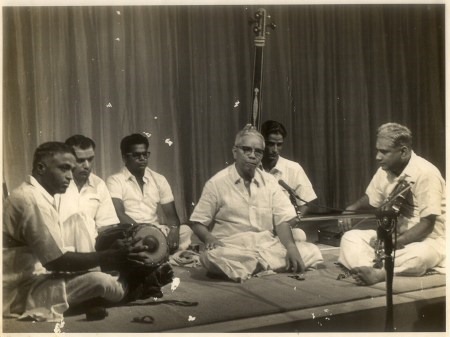
Carnatic Music Ramnad Krishnan
Ramnad Krishnan was a important carntic vocalist of 20th century. He was a great exponent of sankya (relaxed music) school.

Born on 14th September 1918 at Alleppey in Kerala in a family of musicians. His training was under Ramnad Sankara Sivam. His raga singing gave a revelation of the emotional and the intellectual content of the raga . His unique pallavi rendetions in rare and uncommon structures, still haunt the minds of not only the rasikas but even his colleagues.
Ramnad Krishnan was also a great teacher. He served at the faculty of the Govt. College of Carnatic Music at Madras for a few years. He was also a visiting Professor at the Weslyn University, USA for some time where he was reverentially called “the musicians’ musician.
I was first exposed to Carnatic Music as a teenager when I stumbled across an Explorer Series Recording at the local public library. This particular record was; Music of South India: Songs of the Carnatic Tradition. At the time I had been practicing some Raja, Hatha, and Bhakti Yoga and had expanded my practice to listening to music, mostly Ravi Shankar.
Having the chance to listen to Ramnad Krishnan moved my Yoga practice, my heart, mind and soul to a much deeper level. I had no idea why at the time and…still don’t, and I don’t need to know why. It simply is. -
devotion
Sogyal Rinpoche, “Real devotion is an unbroken receptivity to the truth. Real devotion is rooted in an awed and reverent gratitude, but one that is lucid, grounded, and intelligent.”

-
Meditation may physically alter regions of the brain
Meditation may physically alter regions of the brain
Harvard researchers at the Massachusetts General Hospital reported that the practice of mindfulness meditation can physically alter regions of the brain associated with memory, sense of self, empathy, and stress.
The study, published in January 2015, in “Psychiatry Research: Neuro-imaging” indicates that the brain’s gray matter may change as a result of meditation.
“Although the practice of meditation is associated with a sense of peacefulness and physical relaxation, practitioners have long claimed that meditation also provides cognitive and psychological benefits that persist throughout the day,” said Sara Lazar, the study’s senior author. “This study demonstrates that changes in brain structure may underlie some of these reported improvements and that people are not just feeling better because they are spending time relaxing.”
Researchers measured MR images of participants brains during the eight-week “Mindfulness-Based Stress Reduction” program, conducted by the University of Massachusetts Center for Mindfulness. Participants spent an average of 27 minutes in meditation during the program. The program was delivered through recorded audios and guided meditations.
Compared to measurements on MR scans of a control group who did not participate in the program, the participants’ brains showed an increase in gray-matter density in the hippocampus. The hippocampus is the region of the brain associated with learning, introspection, memory and awareness. There also was a decrease in gray-matter density in the amygdala, the region associated with anxiety and stress. However, the Insula, a region of the brain thought to be associated with self-awareness according to earlier research, remained unchanged, and the researchers hypothesize that participants may have to meditate for longer periods of time before any change is noticed in this region.
It has been noted that meditation can reduce stress but according to Britta Hölzel, one of the authors, “Other studies in different patient populations have shown that meditation can make significant improvements in a variety of symptoms, and we are now investigating the underlying mechanisms in the brain that facilitate this change.”
The researchers believe that these findings of physiological change can pave the wave for a better understanding and treatment of stress-related disorders. The study was supported by the BBC, National Institutes of Health and the Mind and Life Institute.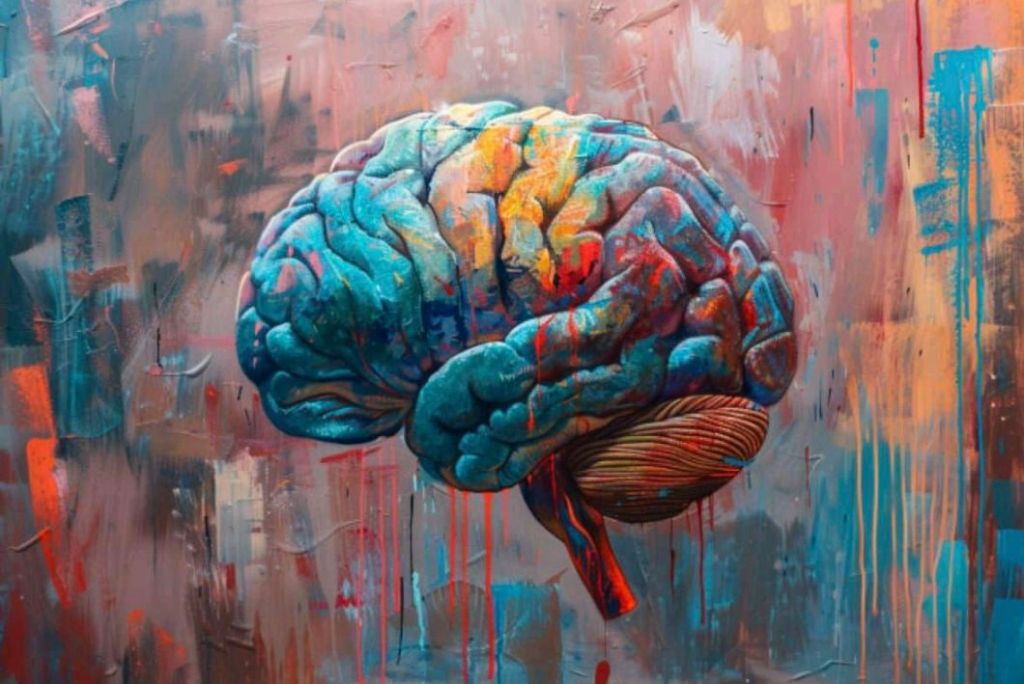
a brain
https://news.harvard.edu/gazette/story/2011/01/eight-weeks-to-a-better-brain/


 RichardbBrunner