
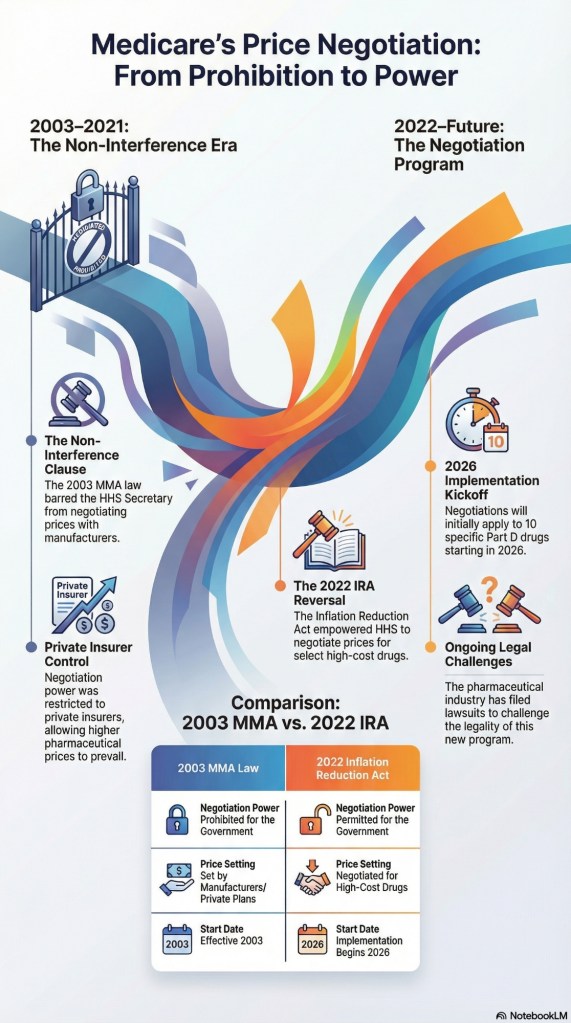
The Medicare Prescription Drug, Improvement, and Modernization Act of 2003 (MMA) included a “non-interference clause” that officially prohibited Medicare from negotiating prescription drug prices directly with manufacturers.
This law established Part D and required private insurers to handle negotiations, allowing higher prices to prevail until the Inflation Reduction Act of 2022 (IRA)
The IRA partially reversed this, enabling negotiations for specific drugs starting in 2026.
Key Details on the Law and Reversal:
• The 2003 Prohibition: The MMA stipulated that the Secretary of Health and Human Services (HHS) could not interfere with negotiations between drug manufacturers and private Medicare plans, effectively barring direct federal price negotiations.
• The Impact: This restriction, often called the “non-interference clause,” allowed pharmaceutical companies to set prices that Medicare plans were forced to accept.
• The Reversal (2022): The Inflation Reduction Act (IRA) allows HHS to negotiate prices for a limited number of high-cost, single-source drugs, beginning with 10 Part D drugs in 2026, and more in subsequent years.
• Ongoing Legal Challenges: The pharmaceutical industry has filed lawsuits to challenge the Medicare Drug Price Negotiation Program created by the IRA.
 RichardbBrunner