• Home
  • Music
  • About
  • Contact
  • CreativeTherapyTools.com

RichardbBrunner

~ creative arts therapist

RichardbBrunner

Category Archives: discovery

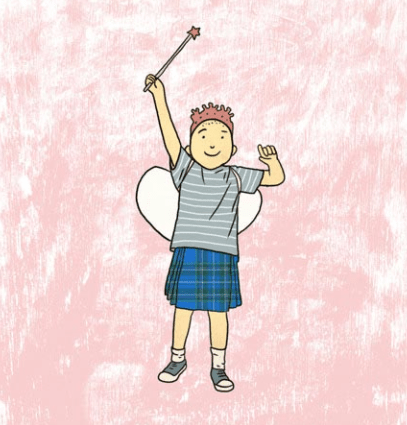
Queen of the Scottish Fairies

14 Tuesday Sep 2021

Posted by RichardB in children, discovery, women

≈ Comments Off on Queen of the Scottish Fairies

Tags

Comic Book, illustrator, Rutu Modan

Rutu Modan, an illustrator and comic book creator, is a chosen artist of the Israel Cultural Excellence Foundation. She has done comic strips for the Israeli newpapers Yedioth Acharonot and Ma’ariv and illustrations for The New Yorker, Le Monde, The New York Times and many other publications. Her first graphic novel, Exit Wounds, has been published. Ms. Modan, usually based in Tel Aviv, is currently in Sheffield, England.queenscotf

Rutu Modan – Queen of the Scottish Fairies

Songs can influence

23 Wednesday Jun 2021

Posted by RichardB in discovery, Music

≈ Comments Off on Songs can influence

Tags

barbara, bbc, Goettingen, heart

From BBC News Magazine:   The post-war reconciliation between France and Germany was enshrined in a treaty signed 50 years ago. But many believe a song recorded the following year did as much to thaw relations.

Barbara was her stage name – she had been born Monique Serf in Paris in 1930. She was Jewish and so a target for the Nazis. But, two decades after the end of the war, she travelled to the German city Goettingen, as near to the heart of Germany as you can get. Read more here….

End of the road for Jeepneys

12 Wednesday May 2021

Posted by RichardB in discovery, Travel

≈ Comments Off on End of the road for Jeepneys

Tags

bbc, Jeepneys, travel

London has the red double-decker bus, New York the yellow taxi, and the Philippines has the Jeepney.

The country’s most popular means of public transport zipping by adds a flash of vibrancy in the often frustrating, gridlocked streets of metropolitan Manila.l-jeepney

With names like Delilah and Rosa emblazoned across the front, each one is individually adorned with religious and nationalistic artwork – no two are identical.

For Ed Sarao, head of Sarao Motors – one of the first makers of Jeepneys – the vehicle represents the multi-cultural history of the Philippines.

“There is bit of Spanish, Mexican traits there; how they incorporate vivid colours, fiesta-like feelings. There is a little of the Americans because it evolved from the Jeep. There is a little Japan because of the Japanese engine. But it was built by Filipino hands,” he says.

But while it was once part of the Philippines’ image and identity, the Jeepney has now become something of a dinosaur – and newer, more economical vehicles are starting to take its place. Read the full story HERE.

Yoga can help girls who suffered childhood trauma

06 Thursday May 2021

Posted by RichardB in creative arts therapy, discovery, Wellness

≈ Comments Off on Yoga can help girls who suffered childhood trauma

Tags

research, trauma, yoga

As a Creative Arts Therapist who specializes in the body and is a former Yoga teacher this article is not at all surprising. Most therapists who have worked with trauma survivors know that people have a tendency to have some level of dissociation with their bodies. Yoga can gently bring a new level of conscious feeling, movement and functionally of the body which can’t be processed with other modalities.

As a teenager, Rocsana Enriquez ran away from home frequently to escape fights with her mother and sexual abuse from her stepfather. She got involved with street gangs and cycled in and out of juvenile detention.

While she was incarcerated in Central California, she started to learn yoga. It became an outlet for her anger and an antidote to the deep insecurity she felt. Before she got into a fight, she reminded herself to take a deep breath. And she loved the way she felt when she stretched into “Warrior II” pose. “It made me feel very strong,” she said.

A new report by the Center on Poverty and Inequality at Georgetown Law School shows that yoga programs can be particularly effective at helping girls who are incarcerated cope with the effects of trauma that many have experienced. Research shows yoga and mindfulness can promote healthier relationships, increase concentration, and improve self esteem and physical health.

Such programs, if offered more broadly, would be a cost-effective way to help one of the country’s most vulnerable groups heal and improve their lives, the report says.

READ MORE HERE

bamboo forest

Fairy tales started long ago

28 Thursday Jan 2021

Posted by RichardB in culture, discovery, Science, Uncategorized

≈ Comments Off on Fairy tales started long ago

Tags

research, stories

They have been told as bedtime stories by generations of parents, but fairy tales such as Little Red Riding Hood may be even older than was previously thought.

Dr Jamie Tehrani, a cultural anthropologist at Durham University, studied 35 versions of Little Red Riding Hood from around the world

A study by anthropologists has explored the origins of folk tales and traced the relationship between varients of the stories recounted by cultures around the world.

The researchers adopted techniques used by biologists to create the taxonomic tree of life, which shows how every species comes from a common ancestor.

Dr Jamie Tehrani, a cultural anthropologist at Durham University, studied 35 versions of Little Red Riding Hood from around the world.

Whilst the European version tells the story of a little girl who is tricked by a wolf masquerading as her grandmother, in the Chinese version a tiger replaces the wolf.2019-63e00007-sm

In Iran, where it would be considered odd for a young girl to roam alone, the story features a little boy.

Contrary to the view that the tale originated in France shortly before Charles Perrault produced the first written version in the 17th century, Dr Tehrani found that the varients shared a common ancestor dating back more than 2,600 years.

He said: “Over time these folk tales have been subtly changed and have evolved just like an biological organism. Because many of them were not written down until much later, they have been misremembered or reinvented through hundreds of generations.

“By looking at how these folk tales have spread and changed it tells us something about human psychology and what sort of things we find memorable.

“The oldest tale we found was an Aesopic fable that dated from about the sixth century BC, so the last common ancestor of all these tales certainly predated this. We are looking at a very ancient tale that evolved over time.”

Dr Tehrani, who will present his work on Tuesday at the British Science Festival in Guildford, Surrey, identified 70 variables in plot and characters between different versions of Little Red Riding Hood.

He found that the stories could be grouped into distinct families according to how they evolved over time.

The original ancestor is thought to be similar to another tale, The Wolf and the Kids, in which a wolf pretends to be a nanny goat to gain entry to a house full of young goats.

Stories in Africa are closely related to this original tale, whilst stories from Japan, Korea, China and Burma form a sister group. Tales told in Iran and Nigeria were the closest relations of the modern European version.

Perrault’s French version was retold by the Brothers Grimm in the 19th century. Dr Tehrani said: “We don’t know very much about the processes of transmission of these stories from culture to culture, but it is possible that they may being passed along trade routes or with the movement of people.”

Professor Jack Zipes, a retired professor of German at the University of Minnesota who is an expert on fairy tales and their origins, described the work as “exciting”. He believes folk tales may have helped people to pass on tips for survival to new generations.

He said: “Little Red Riding Hood is about violation or rape, and I suspect that humans were just as violent in 600BC as they are today, so they will have exchanged tales about all types of violent acts.

“I have tried to show that tales relevant to our adaptation to the environment and survival are stored in our brains and we consistently use them for all kinds of reference points.”

Resiliency

11 Wednesday Nov 2020

Posted by RichardB in creative arts therapy, discovery, Poetry

≈ Comments Off on Resiliency

Tags

Resiliency


What does it mean to be resilient? Bounce back, bounce off of, withstand, remain standing. Is it a part of our hereditary, our inborn temperament? Perhaps it’s a positive self concept.  An ability to remember the past, live in the present, and look to the future.  Could it also involve hitting rock bottom, being aware of limitations, seeking support? Perhaps it’s a mentor, a will to live, a focus on healing.

Could it be that resiliency is a connection with spirituality, a commitment to listen to others, a willingness to be truthful? One thing is certain that resiliency is different for everyone, with some commonality mixed in here and there.

AS a child, I found/rediscovered resiliency outside, often in my favorite tree.


A tree stands alone

1987 Fig 2 Arms Rebound

Wind rustles leaves together 

We sway arm in branch


As an adult, I have found resiliency many places and many ways. Often, in combining the practice of creative movement, tai chi and hatha yoga.

Yoga can help girls who suffered childhood trauma

23 Wednesday Sep 2020

Posted by RichardB in creative arts therapy, discovery, Wellness

≈ Comments Off on Yoga can help girls who suffered childhood trauma

Tags

research, trauma, yoga

As a Creative Arts Therapist who specializes in the body and is a former Yoga teacher this article is not at all surprising. Most therapists who have worked with trauma survivors know that people have a tendency to have some level of dissociation with their bodies. Yoga can gently bring a new level of conscious feeling, movement and functionally of the body which can’t be processed with other modalities.

As a teenager, Rocsana Enriquez ran away from home frequently to escape fights with her mother and sexual abuse from her stepfather. She got involved with street gangs and cycled in and out of juvenile detention.

While she was incarcerated in Central California, she started to learn yoga. It became an outlet for her anger and an antidote to the deep insecurity she felt. Before she got into a fight, she reminded herself to take a deep breath. And she loved the way she felt when she stretched into “Warrior II” pose. “It made me feel very strong,” she said.

A new report by the Center on Poverty and Inequality at Georgetown Law School shows that yoga programs can be particularly effective at helping girls who are incarcerated cope with the effects of trauma that many have experienced. Research shows yoga and mindfulness can promote healthier relationships, increase concentration, and improve self esteem and physical health.

Such programs, if offered more broadly, would be a cost-effective way to help one of the country’s most vulnerable groups heal and improve their lives, the report says.

READ MORE HERE

Or go direct to the Report From Center on Poverty and Inequality

bamboo forest

Popular fairy tales and folk stories are ancient

14 Friday Aug 2020

Posted by RichardB in culture, discovery, Research

≈ Comments Off on Popular fairy tales and folk stories are ancient

Tags

culture, stories

They have been told as bedtime stories by generations of parents, but fairy tales such as Little Red Riding Hood may be even older than was previously thought.

Burning-Feelings.jpg

Dr Jamie Tehrani, a cultural anthropologist at Durham University, studied 35 versions of Little Red Riding Hood from around the world

A study by anthropologists has explored the origins of folk tales and traced the relationship between varients of the stories recounted by cultures around the world.

The researchers adopted techniques used by biologists to create the taxonomic tree of life, which shows how every species comes from a common ancestor.

Dr Jamie Tehrani, a cultural anthropologist at Durham University, studied 35 versions of Little Red Riding Hood from around the world.

Whilst the European version tells the story of a little girl who is tricked by a wolf masquerading as her grandmother, in the Chinese version a tiger replaces the wolf.

In Iran, where it would be considered odd for a young girl to roam alone, the story features a little boy.

Contrary to the view that the tale originated in France shortly before Charles Perrault produced the first written version in the 17th century, Dr Tehrani found that the varients shared a common ancestor dating back more than 2,600 years.

He said: “Over time these folk tales have been subtly changed and have evolved just like an biological organism. Because many of them were not written down until much later, they have been misremembered or reinvented through hundreds of generations.

“By looking at how these folk tales have spread and changed it tells us something about human psychology and what sort of things we find memorable.

“The oldest tale we found was an Aesopic fable that dated from about the sixth century BC, so the last common ancestor of all these tales certainly predated this. We are looking at a very ancient tale that evolved over time.”

Dr Tehrani, who will present his work on Tuesday at the British Science Festival in Guildford, Surrey, identified 70 variables in plot and characters between different versions of Little Red Riding Hood.

He found that the stories could be grouped into distinct families according to how they evolved over time.

 10048_572479486102680_1847627210_n.jpg

The original ancestor is thought to be similar to another tale, The Wolf and the Kids, in which a wolf pretends to be a nanny goat to gain entry to a house full of young goats.

Stories in Africa are closely related to this original tale, whilst stories from Japan, Korea, China and Burma form a sister group. Tales told in Iran and Nigeria were the closest relations of the modern European version.

Perrault’s French version was retold by the Brothers Grimm in the 19th century. Dr Tehrani said: “We don’t know very much about the processes of transmission of these stories from culture to culture, but it is possible that they may being passed along trade routes or with the movement of people.”

Professor Jack Zipes, a retired professor of German at the University of Minnesota who is an expert on fairy tales and their origins, described the work as “exciting”. He believes folk tales may have helped people to pass on tips for survival to new generations.

He said: “Little Red Riding Hood is about violation or rape, and I suspect that humans were just as violent in 600BC as they are today, so they will have exchanged tales about all types of violent acts.

“I have tried to show that tales relevant to our adaptation to the environment and survival are stored in our brains and we consistently use them for all kinds of reference points.”

sailing stones of Death Valley

05 Wednesday Aug 2020

Posted by RichardB in discovery, Environment, Japanese Textile Designs, Research, Science

≈ Comments Off on sailing stones of Death Valley

Tags

research, rocks

The sailing stones of the Racetrack Playa, a dry lakebed in Death Valley, have been the subject of a mystery since the 1940s. The playa is dotted with stones, some as large as 700 pounds (320kg), with long tracks behind them, as though they have been performing a synchronised dance.

Although there have been many theories about how the rocks might be moving on their own — including dust devils, hurricane-force winds, films of slippery algae or thick sheets of ice — none had ever been confirmed, nor had any human seen the rocks actually moving.DSC00220-sm

Until now, that is. A team of researchers from the Scripps Institution of Oceanography at UC San Diego decided they were going to solve the mystery once and for all. In the winter of 2011, they brought in a high-resolution weather station to measure wind at one-second intervals, and brought in 15 rocks fitted with GPS devices (since the National Parks Service would not allow them to use the native rocks).

Read More Here.

Images from NYPL

30 Thursday Jul 2020

Posted by RichardB in art, discovery, library, photos, Social Science

≈ Comments Off on Images from NYPL

Tags

library, ny, public

Carol Burnett 0Want to do some research or just stumble across something interesting? Come and browse the digital stacks of one the worlds premier libraries. Here you will find a large image database which you can search and/or browse by subject or name.

The New York Public Library Digital Library Gallery-see it for yourself – online.

End of the road for Jeepneys

23 Thursday Jul 2020

Posted by RichardB in discovery, Travel

≈ Comments Off on End of the road for Jeepneys

Tags

bbc, Jeepneys, travel

London has the red double-decker bus, New York the yellow taxi, and the Philippines has the Jeepney.

The country’s most popular means of public transport zipping by adds a flash of vibrancy in the often frustrating, gridlocked streets of metropolitan Manila.l-jeepney

With names like Delilah and Rosa emblazoned across the front, each one is individually adorned with religious and nationalistic artwork – no two are identical.

For Ed Sarao, head of Sarao Motors – one of the first makers of Jeepneys – the vehicle represents the multi-cultural history of the Philippines.

“There is bit of Spanish, Mexican traits there; how they incorporate vivid colours, fiesta-like feelings. There is a little of the Americans because it evolved from the Jeep. There is a little Japan because of the Japanese engine. But it was built by Filipino hands,” he says.

But while it was once part of the Philippines’ image and identity, the Jeepney has now become something of a dinosaur – and newer, more economical vehicles are starting to take its place. Read the full story HERE.

Moral determination

02 Thursday Jul 2020

Posted by RichardB in discovery, Research, Social Science, Wellness

≈ Comments Off on Moral determination

Tags

determination, moral, research

When people witness a hurtful action they make a moral determination based on whether it is intentional or accidental instantly, according to a new paper.

The paper says the brain is hard-wired to recognize when another person is being intentionally harmed. It also provides new insights into how such recognition is connected with emotion and morality, according to lead author Jean Decety, Professor of Psychology and Psychiatry at U of Chicago.

The researchers studied adults who watched videos of people who suffered accidental harm (such as being hit with a golf club) and intentional harm (such as being struck with a baseball bat). While watching the videos, brain activity 12balwas collected with equipment that accurately maps responses in different regions of the brain and importantly, the timing between these regions. The technique is known as high-density, event-related potentials technology.

The intentional harm sequence produced a response in the brain almost instantly. The study showed that within 60 milliseconds, the right posterior superior temporal sulcus (also known as TPJ area), located in the back of the brain, was first activated, with different activity depending on whether the harm was intentional or accidental. It was followed in quick succession by the amygdala, often linked with emotion, and the ventromedial prefrontal cortex (180 milliseconds), the portion of the brain that plays a critical role in moral decision-making.

There was no such response in the amygdala and ventromedial prefrontal cortex when the harm was accidental.

“Our data strongly support the notion that determining intentionality is the first step in moral computations,” said Decety, who conducted research on the topic with Stephanie Cacioppo, a research associate (assistant professor) in psychology at U of Chicago.

Other studies with functional MRI scans, including those in Decety’s lab, have shown that those areas of the brain become activated when people see others intentionally harmed, but those studies have been unable to separate or time the way the various parts of the brain may work together.

“High-density ERPs can identify spatio-temporal patterns of communication between regions that contrast analyses (such as fMRI) with low temporal resolution may not detect, and such methods are necessary to advance knowledge of neuroscience of morality,” said Cacioppo.

The ability to recognize and respond emotionally to the intentional infliction of harm is a critical source of morality that is universal across cultures, researchers believe. “It is part of humans’ evolutionary heritage,” Decety said. “The long history of mammalian evolution has shaped our brains to be sensitive to signs of suffering of others. And this constitutes a natural foundation for morality and sensitivity to justice.”

Philosophers have debated the origins of this moral response for ages. Some maintain that moral judgments begin with an immediate aversive reaction to perceived or imagined harm to victims, though the full moral judgment may form only after the fact. Other philosophers maintain that moral principals develop from reason alone and are not connected to emotion.

The new research suggests that emotion and the perception of intentionality, rather than deliberate reasoning, comprise the vital first component of moral responses—at least for responses that stem from care for others Decety said.

The research may help inform other areas of neurodevelopment research, including studies of the moral responses of psychopaths and of children who lack empathy for others, displaying what are called callous-unemotional traits.

Published in the Journal of Neurophysiology. See article here.

Fairy tales started long ago

14 Thursday May 2020

Posted by RichardB in culture, discovery, Science, Uncategorized

≈ Comments Off on Fairy tales started long ago

Tags

research, stories

They have been told as bedtime stories by generations of parents, but fairy tales such as Little Red Riding Hood may be even older than was previously thought.

Dr Jamie Tehrani, a cultural anthropologist at Durham University, studied 35 versions of Little Red Riding Hood from around the world

A study by anthropologists has explored the origins of folk tales and traced the relationship between variants of the stories recounted by cultures around the world.

The researchers adopted techniques used by biologists to create the taxonomic tree of life, which shows how every species comes from a common ancestor.

Dr Jamie Tehrani, a cultural anthropologist at Durham University, studied 35 versions of Little Red Riding Hood from around the world.

Whilst the European version tells the story of a little girl who is tricked by a wolf masquerading as her grandmother, in the Chinese version a tiger replaces the wolf.Fairy tales have ancient origin


In Iran, where it would be considered odd for a young girl to roam alone, the story features a little boy.

Contrary to the view that the tale originated in France shortly before Charles Perrault produced the first written version in the 17th century, Dr Tehrani found that the varients shared a common ancestor dating back more than 2,600 years.

He said: “Over time these folk tales have been subtly changed and have evolved just like an biological organism. Because many of them were not written down until much later, they have been misremembered or reinvented through hundreds of generations.

“By looking at how these folk tales have spread and changed it tells us something about human psychology and what sort of things we find memorable.

“The oldest tale we found was an Aesopic fable that dated from about the sixth century BC, so the last common ancestor of all these tales certainly predated this. We are looking at a very ancient tale that evolved over time.”

Dr Tehrani, who will present his work on Tuesday at the British Science Festival in Guildford, Surrey, identified 70 variables in plot and characters between different versions of Little Red Riding Hood.

He found that the stories could be grouped into distinct families according to how they evolved over time.

The original ancestor is thought to be similar to another tale, The Wolf and the Kids, in which a wolf pretends to be a nanny goat to gain entry to a house full of young goats.

Stories in Africa are closely related to this original tale, whilst stories from Japan, Korea, China and Burma form a sister group. Tales told in Iran and Nigeria were the closest relations of the modern European version.

Perrault’s French version was retold by the Brothers Grimm in the 19th century. Dr Tehrani said: “We don’t know very much about the processes of transmission of these stories from culture to culture, but it is possible that they may being passed along trade routes or with the movement of people.”

Professor Jack Zipes, a retired professor of German at the University of Minnesota who is an expert on fairy tales and their origins, described the work as “exciting”. He believes folk tales may have helped people to pass on tips for survival to new generations.

He said: “Little Red Riding Hood is about violation or rape, and I suspect that humans were just as violent in 600BC as they are today, so they will have exchanged tales about all types of violent acts.

“I have tried to show that tales relevant to our adaptation to the environment and survival are stored in our brains and we consistently use them for all kinds of reference points.”

Regeneration: Nurturing Climate Resilience Around the World

07 Thursday May 2020

Posted by RichardB in Climate Change, discovery

≈ Comments Off on Regeneration: Nurturing Climate Resilience Around the World

Tags

Climate Change

CSIS: Nature-based climate change solutions promise to stabilize agricultural livelihoods, protect environmental resources, and reduce the flow of climate refugees.


Microphone jammer

20 Thursday Feb 2020

Posted by RichardB in discovery

≈ Comments Off on Microphone jammer

Tags

Microphone jammer, privacy

Tired of smart watches, cell phones and digital assistants listening in? Now a wearable microphone jammer that is capable of disabling microphones in its user’s surroundings, including hidden microphones. Our device is based on a recent exploit that leverages the fact that when exposed to ultrasonic noise, commodity microphones will leak the noise into the audible range. By making it wearable, our jammer outperforms existing approaches with an improved coverage and less blind spots.

Los Desaparecidos The Disappeared

16 Thursday Jan 2020

Posted by RichardB in art, discovery, Latin

≈ Comments Off on Los Desaparecidos The Disappeared

Tags

Los Desaparecidos, the disappeared

Los Desaparecidos   The Disappeared

“To disappear” was newly defined during the twentieth century military dictatorships in Latin America. “Disappear” evolved into a transitive verb describing those considered threats to the State who were kidnapped, tortured, and killed by their own military,especially in the 1970s in Argentina, thedisappearedBrazil, Chile, and Uruguay.

The Disappeared brings together the work of twenty-seven living artists from South America who, over the course of the last thirty years, have made art about los desaparecidos or the disappeared.

Environment for the Americas

10 Friday Jan 2020

Posted by RichardB in Americas, discovery, Environment, Justice, poverty, Social Science

≈ Comments Off on Environment for the Americas

Tags

Americas, Bird, Environment, Migratory

Environment for the Americas was created as a result of International Migratory Bird Day’s success. Created in 1993, the celebration has grown to become much more than a one day event. Over 450 events are now hosted from South America to Canada, materials are available year-round, and other projects and programs have been developed to increase bird conservation education.. As a result of Bird Day’s growth, sponsors could no longer house the program. In 2006, formal steps were taken to create a 501(c)(3) organization to provide a permanent home for Bird Day and other exciting efforts. That organization is Environment for the Americas (EFTA)! Today, EFTA works with partners and programs throughout the Western Hemisphere.

EFTA GOALS
At EFTA we strive to make bird conservation education available throughout the Western Hemisphere.

Our Goals are to:
•Create the framework educators need to host bird-focused programs, events, and festivals;
•Develop education materials about birds and their conservation;
•Serve as a network for the exchange of information about successful bird conservation education programs;
•Motivate the public to become involved in bird conserva

Sweet Honey in The Rock – Wade in the Water

14 Monday Oct 2019

Posted by RichardB in discovery, Music

≈ Comments Off on Sweet Honey in The Rock – Wade in the Water

Tags

honey, rock, sweet, wade, wayer

Resiliency

04 Wednesday Sep 2019

Posted by RichardB in creative arts therapy, discovery, Poetry

≈ Comments Off on Resiliency

Tags

Resiliency


What does it mean to be resilient? Bounce back, bounce off of, withstand, remain standing. Is it a part of our hereditary, our inborn temperament? Perhaps it’s a positive self concept.  An ability to remember the past, live in the present, and look to the future.  Could it also involve hitting rock bottom, being aware of limitations, seeking support? Perhaps it’s a mentor, a will to live, a focus on healing.

Could it be that resiliency is a connection with spirituality, a commitment to listen to others, a willingness to be truthful? One thing is certain that resiliency is different for everyone, with some commonality mixed in here and there.

AS a child, I found/rediscovered resiliency outside, often in my favorite tree.


A tree stands alone

1987 Fig 2 Arms Rebound

Wind rustles leaves together 

We sway arm in branch


As an adult, I have found resiliency many places and many ways. Often, in combining the practice of creative movement, tai chi and hatha yoga.

Oliver "Tuku" Mtukudzi: NPR Music Tiny Desk Concert

19 Monday Aug 2019

Posted by RichardB in discovery, Music, YouTube

≈ Comments Off on Oliver "Tuku" Mtukudzi: NPR Music Tiny Desk Concert

Tags

afripop, music, youtube

← Older posts

instagram

Follow RichardbBrunner on WordPress.com
  • Tumblr
  • YouTube

Create a free website or blog at WordPress.com.

Privacy & Cookies: This site uses cookies. By continuing to use this website, you agree to their use.
To find out more, including how to control cookies, see here: Cookie Policy
  • Subscribe Subscribed
    • RichardbBrunner
    • Join 491 other subscribers
    • Already have a WordPress.com account? Log in now.
    • RichardbBrunner
    • Subscribe Subscribed
    • Sign up
    • Log in
    • Report this content
    • View site in Reader
    • Manage subscriptions
    • Collapse this bar
 

Loading Comments...