• Home
  • Music
  • About
  • Contact
  • CreativeTherapyTools.com

RichardbBrunner

~ creative arts therapist

RichardbBrunner

Category Archives: dogs

Doggie MRI

31 Tuesday Dec 2019

Posted by RichardB in dogs, Pets, Research, Science

≈ Comments Off on Doggie MRI

Tags

dogs, pets, research

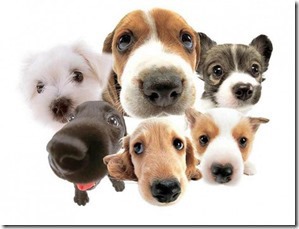
By placing dogs in an MRI scanner, researchers from Hungary found that the canine brain reacts to voices in the same way that the human brain does. Emotionally charged sounds, such as crying or laughter, also prompted similar responses, perhaps explaining why dogs are attuned to human emotions.

clip_image001

The work is published in the journal Current Biology. The full article is @ BBC.

Eleven pet dogs took part in the study; training them took some time. “We used positive reinforcement strategies – lots of praise,” said Dr Andics. “There were 12 sessions of preparatory training, then seven sessions in the scanner room, then these dogs were able to lie motionless for as long as eight minutes. Once they were trained, they were so happy, I wouldn’t have believed it if I didn’t see it.”

One of the newest employees is a golden retriever

15 Friday Nov 2019

Posted by RichardB in dogs, Pets

≈ Comments Off on One of the newest employees is a golden retriever

Tags

pet therapy, wellness

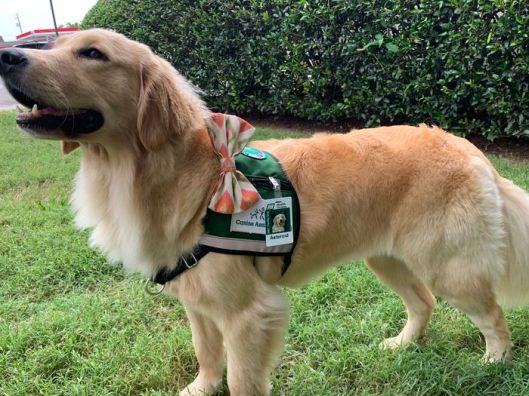
One of the newest employees at Huntsville Hospital for Women & Children has four legs. While her training is highly skilled – she was specially chosen to work in a hospital setting because of her demeanor – her job description is pretty simple: to love and be loved. And in her first few weeks on the job, she’s already made a tremendous difference for her patients, both children and adults, and for the hospital staff who have overwhelmingly embraced her.

Aster is in demand throughout the hospital on a consult basis. “The hard part is when we’re walking down the hall and someone says, ‘Oh, can you come say hi?’” says Stefani, who loves watching faces light up when they see Aster.

She regularly visits children in the emergency department, radiation/imaging, pediatric intensive care, general pediatric unit and neonatal intensive care, where she doesn’t visit with premature babies but does provide family and sibling support. She also visits adult patients in the intensive care and antepartum units.

On an average day, the hospital has 200 pediatric patients, so “we’re filtering through a lot of requests,” says Elizabeth.

The hospital still has its volunteer-driven pet therapy program, in which trained dogs make short visits with patients. “They see way more patients than Aster and I can see,” says Stefani. “Aster and I have medically based goals: reducing pain, helping patients ambulate after surgery, being present in bereavement and trauma. We’re both employees here, which opens the door for us to provide treatment-based services.”

asteroid3

Asteroid, a young golden retriever, is one of the most popular employees at the hospital. (Photo courtesy of Huntsville Hospital for Women and Children)

love deeply

01 Tuesday Oct 2019

Posted by RichardB in cats, dogs, Pets, quote, Uncategorized

≈ Comments Off on love deeply

Tags

cats, dogs, pets, quote

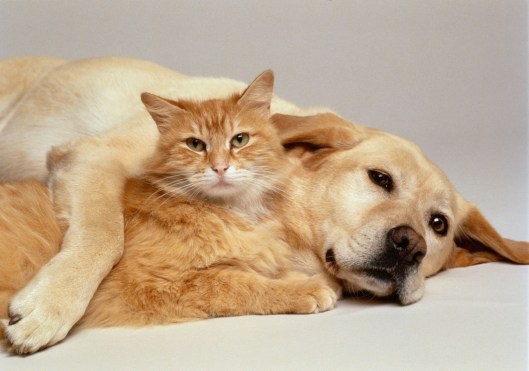
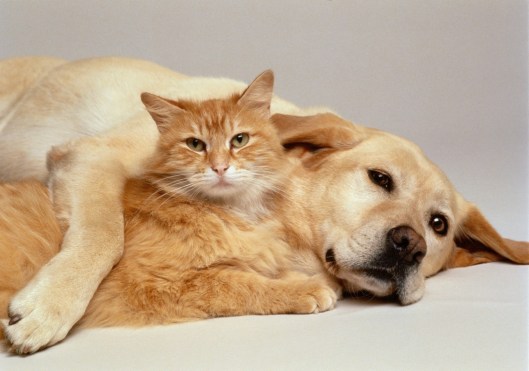
“Each time you love, love as deeply as if it were forever.” Audre Lorde

DogsCats.jpg

The no-kill movement

06 Friday Sep 2019

Posted by RichardB in dogs, Pets

≈ Comments Off on The no-kill movement

Tags

dogs, pets

The no-kill movement began two decades ago in the United States, and it has given millions of dogs a second chance; instead of being euthanized, they are matched with families. Wonderful story about how dogs can be loved and given a second chance. Read it or listen to it here:   NPR

dinazcampbell_sherry

no-kill

12 Friday Jul 2019

Posted by RichardB in cats, dogs, Pets, Uncategorized

≈ Comments Off on no-kill

Tags

cats, dogs, pets

The no-kill movement began two decades ago in the United States, and it has given millions of dogs a second chance; instead of being euthanized, they are matched with families. Wonderful story about how dogs can be loved and given a second chance. Read it or listen to it here:   NPR

dinazcampbell_sherry

All in the Mind: The Animal Mind Audio

14 Friday Jun 2019

Posted by RichardB in Audio, dogs, Pets, Research

≈ 1 Comment

Tags

audio recordings, dogs, pets

From All in the Mind and Australian Broadcasting : Most of us have an intuitive feeling that our pet dogs or cats have thoughts and even feel emotions—but did you know that ants can teach, rats have a sense of humor, chimpanzees can deceive and elephants grieve? Scientists are discovering that animals’ cognitive and emotional processes are far more sophisticated than we once thought.  Listen/Download the audio here. 1902757_719741958047001_1385244069_n

Seeing-eye dogs help blind dog

19 Friday Apr 2019

Posted by RichardB in dogs

≈ Comments Off on Seeing-eye dogs help blind dog

Tags

dogs, pets

On a rough day, Kiaya collapsed on the cold living room floor, unable to make it to her queen-sized dog bed.doggierure

Within minutes, her two “brothers” snuggled up on each side of her.

The sight brought tears to pet owner Jessica VanHusen’s eyes. That’s because life hasn’t been easy for the 10-year-old Akita, who lost both of her eyes to glaucoma over the course of 15 months.

Not only can the 100-pound dog not see, she also has a hard time walking — that is, without help from her “seeing eye dogs.”

The special needs dog didn’t have too much trouble adjusting to her new normal with 8-year-old Cass and 2-year-old Keller by her side. Without any commands, the dogs decided on their own to be her guides.

“The boys both respect her fully,” VanHusen told CBS News. “[They] allow her to eat first, they lean her up against the side of the car when we are traveling to stabilize her.”

Wherever Kiaya is, “middle-child” Cass is not far behind.

The dog has been by Kiaya’s side ever since her first eye was removed in July 2013. He would constantly follow her around in their backyard, standing next to her “blind side.”

“He became more attentive to her needs, leaning on her and cuddling,” VanHusen explained. “He even cleans her ears and face, where her eyes used to be.”

It took Keller a little longer. At less than 2 years old, the dog wasn’t fully attentive at first, VanHusen said, but he’s getting there.

“It’s amazing to watch,” Blue Pearl Veterinary Partners Ophthalmologist Dr. Gwen Sila, who performed Kiaya’s surgeries, said in a news release. “It’s clear the other dogs are trying to protect her. Their sense of loyalty is really remarkable.”

VanHusen said she has never considered training the pair to be service dogs. For now, they’ll just continue to take care of their sister, Kiaya, who turns 11 next month.

“She may be a special needs dog, but to us she’s just special,” VanHusen said. “When we ask her where her eyeballs went, she replies: ‘They’re in the garbage, I didn’t need them anymore.'”

With her brothers stepping in to assist her, that statement couldn’t be more true.

Nonverbal communication with Pets

05 Friday Apr 2019

Posted by RichardB in dogs

≈ Comments Off on Nonverbal communication with Pets

Tags

cats, dogs, pets

Nonverbal communication is a gift that all living beings share, one you’ll need to reawaken to better interact with and care for your animal companions. Most dog and cat lovers already understand canine and feline body language, which is one non-verbal technique. But you can use your other, natural, nonverbal communication skills, and actually begin to see things through your dog or cat’s eyes, and become his/her voice. DogsCats.jpg

You can learn animal communication by taking a class or reading some of the great books available today on the subject. But many of the basics are so simple that we can easily begin nonverbally communicating right away. Remember, long before humans had spoken language, we were able to communicate among ourselves and with the animals; it is a kind of heart to heart communication skill that we all possess.

Did you ever know a set of twins who said they each knew what the other was thinking, or you heard your mother say she had “woman’s intuition” or “just knew something was wrong.” Have you ever had an image of a friend come to mind and then received a phone call from that very person saying, “I was just thinking about you and wanted to say hello”? These are all examples of nonverbal communication.

More here.


Science proves that you love your dog like a baby

08 Friday Mar 2019

Posted by RichardB in dogs, Pets, Science

≈ 1 Comment

Tags

dogs, pets, Science

Interesting article about pets and how humans react/respond to them. From the abstract:

Neural substrates underlying the human-pet relationship are largely unknown. We examined fMRI brain activation patterns as mothers viewed images of their own child and dog and an unfamiliar child and dog. There was a common network of brain regions involved in emotion, reward, affiliation, visual processing and social cognition when mothers viewed images of both their child and dog. Viewing images of their child resulted in brain

clip_image001

activity in the midbrain (ventral tegmental area/substantia nigra involved in reward/affiliation), while a more posterior cortical brain activation pattern involving fusiform gyrus (visual processing of faces and social cognition) characterized a mother’s response to her dog. Mothers also rated images of their child and dog as eliciting similar levels of excitement (arousal) and pleasantness (valence), although the difference in the own vs. unfamiliar child comparison was larger than the own vs. unfamiliar dog comparison for arousal. Valence ratings of their dog were also positively correlated with ratings of the attachment to their dog. Although there are similarities in the perceived emotional experience and brain function associated with the mother-child and mother-dog bond, there are also key differences that may reflect variance in the evolutionary course and function of these relationships.

Stoeckel LE, Palley LS, Gollub RL, Niemi SM, Evins AE (2014) Patterns of Brain Activation when Mothers View Their Own Child and Dog: An fMRI Study. PLoS ONE 9(10): e107205. doi:10.1371/journal.pone.0107205

http://www.plosone.org/article/info%253Adoi%252F10.1371%252Fjournal.pone.0107205

Is That a Real Service Dog?

23 Wednesday Jan 2019

Posted by RichardB in dogs, Humans, people, Social Science, Therapy

≈ Comments Off on Is That a Real Service Dog?

Tags

Service Dog

Is That a Real Service Dog?


The Hidden Dog

21 Friday Dec 2018

Posted by RichardB in dogs, Pets

≈ Comments Off on The Hidden Dog

Tags

dogs, pets

Dogs were the first non-human members of the human group. They are our original companions. The first animals we domesticated, they share a 40,000 year history with humans. To them humanity owes its very survival and evolution through enhanced meat acquisition dogs made possible via hunting, as a consequence of which humans grew physically and intellectually.

 BD12669_.JPG

It was co-evolution of both species which shows up in the parent-child relationship between dog and human, as psychological research has recently uncovered. Only after the agrarian revolution when the importance of the dog to food acquisition declined did we see a loss of status of the dog.

Read the entire story here.

Science proves that you love your dog like a baby

13 Friday Jul 2018

Posted by RichardB in Do, dogs, people, Pets

≈ Comments Off on Science proves that you love your dog like a baby

Tags

dogs, people, pets

Interesting article about pets and how humans react/respond to them. From the abstract:

Neural substrates underlying the human-pet relationship are largely unknown. We examined fMRI brain activation patterns as mothers viewed images of their own child and dog and an unfamiliar child and dog. There was a common network of brain regions involved in emotion, reward, affiliation, visual processing and social cognition when mothers viewed images of both their child and dog. Viewing images of their child resulted in brain dogclothactivity in the midbrain (ventral tegmental area/substantia nigra involved in reward/affiliation), while a more posterior cortical brain activation pattern involving fusiform gyrus (visual processing of faces and social cognition) characterized a mother’s response to her dog. Mothers also rated images of their child and dog as eliciting similar levels of excitement (arousal) and pleasantness (valence), although the difference in the own vs. unfamiliar child comparison was larger than the own vs. unfamiliar dog comparison for arousal. Valence ratings of their dog were also positively correlated with ratings of the attachment to their dog. Although there are similarities in the perceived emotional experience and brain function associated with the mother-child and mother-dog bond, there are also key differences that may reflect variance in the evolutionary course and function of these relationships.
Stoeckel LE, Palley LS, Gollub RL, Niemi SM, Evins AE (2014) Patterns of Brain Activation when Mothers View Their Own Child and Dog: An fMRI Study. PLoS ONE 9(10): e107205. doi:10.1371/journal.pone.0107205

http://www.plosone.org/article/info%253Adoi%252F10.1371%252Fjournal.pone.0107205

Newer posts →

instagram

Follow RichardbBrunner on WordPress.com
  • Tumblr
  • YouTube

Create a free website or blog at WordPress.com.

Privacy & Cookies: This site uses cookies. By continuing to use this website, you agree to their use.
To find out more, including how to control cookies, see here: Cookie Policy
  • Subscribe Subscribed
    • RichardbBrunner
    • Join 491 other subscribers
    • Already have a WordPress.com account? Log in now.
    • RichardbBrunner
    • Subscribe Subscribed
    • Sign up
    • Log in
    • Report this content
    • View site in Reader
    • Manage subscriptions
    • Collapse this bar
 

Loading Comments...