• Home
  • Music
  • About
  • Contact
  • CreativeTherapyTools.com

RichardbBrunner

~ creative arts therapist

RichardbBrunner

Category Archives: Minfulness

Meditation may physically alter regions of the brain

14 Wednesday Aug 2024

Posted by RichardB in Minfulness, Wellness

≈ Comments Off on Meditation may physically alter regions of the brain

Tags

meditation, wellness

Meditation may physically alter regions of the brain
 
Harvard researchers at the Massachusetts General Hospital reported that the practice of mindfulness meditation can physically alter regions of the brain associated with memory, sense of self, empathy, and stress.


The study, published in January 2015, in “Psychiatry Research: Neuro-imaging” indicates that the brain’s gray matter may change as a result of meditation.
“Although the practice of meditation is associated with a sense of peacefulness and physical relaxation, practitioners have long claimed that meditation also provides cognitive and psychological benefits that persist throughout the day,” said Sara Lazar, the study’s senior author. “This study demonstrates that changes in brain structure may underlie some of these reported improvements and that people are not just feeling better because they are spending time relaxing.”
Researchers measured MR images of participants brains during the eight-week “Mindfulness-Based Stress Reduction” program, conducted by the University of Massachusetts Center for Mindfulness. Participants spent an average of 27 minutes in meditation during the program. The program was delivered through recorded audios and guided meditations.

Compared to measurements on MR scans of a control group who did not participate in the program, the participants’ brains showed an increase in gray-matter density in the hippocampus. The hippocampus is the region of the brain associated with learning, introspection, memory and awareness. There also was a decrease in gray-matter density in the amygdala, the region associated with anxiety and stress. However, the Insula, a region of the brain thought to be associated with self-awareness according to earlier research, remained unchanged, and the researchers hypothesize that participants may have to meditate for longer periods of time before any change is noticed in this region.

It has been noted that meditation can reduce stress but according to Britta Hölzel, one of the authors, “Other studies in different patient populations have shown that meditation can make significant improvements in a variety of symptoms, and we are now investigating the underlying mechanisms in the brain that facilitate this change.”
The researchers believe that these findings of physiological change can pave the wave for a better understanding and treatment of stress-related disorders. The study was supported by the BBC, National Institutes of Health and the Mind and Life Institute.
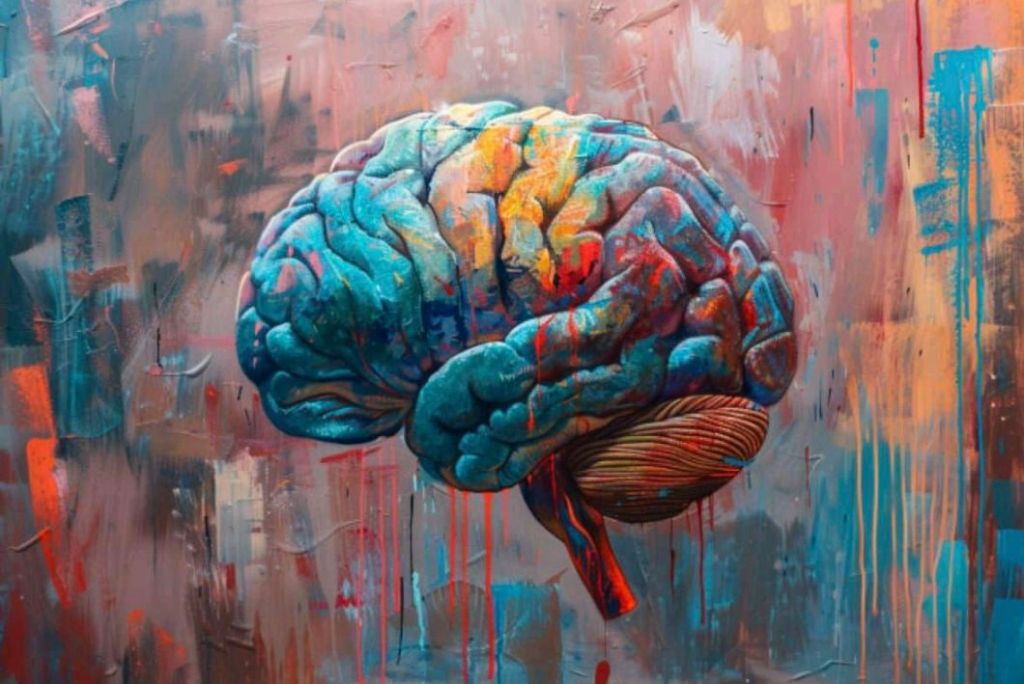
a brain


https://news.harvard.edu/gazette/story/2011/01/eight-weeks-to-a-better-brain/

Meditation and creative thinking

22 Wednesday May 2024

Posted by RichardB in Minfulness

≈ Comments Off on Meditation and creative thinking

Tags

mindfulness

Certain meditation techniques can promote creative thinking, even if you have never meditated before. This is the outcome of a study by cognitive psychologist Lorenza Colzato and Dominique Lippelt at Leiden University, published in Mindfulness.
 
Long-lasting influence
The study is a clear indication that you don’t need to be an experienced meditator to profit more from meditation. The findings support the belief that meditation can have a long-lasting influence on human cognition, including how we conceive new ideas. Besides experienced meditators, also novices may profit from meditation.

Different techniques, different effects
But the results demonstrate that not all forms of meditation have the same effect on creativity. Test persons performed better in divergent thinking (= thinking up as many possible solutions for a given problem) after Open Monitoring meditation (= being receptive to every thought and sensation). The researchers did not see this effect on divergent thinking after Focused Attention meditation (=focusing on a particular thought or object.)

Setup of the study
40 individuals participated in this study, who had to meditate for 25 minutes before doing their thinking tasks. There were both experienced mediators and people who never meditated before. The study investigated the influences of different types of meditative techniques on the two main ingredients of creativity:
        ◦ Divergent thinking Allows for many new ideas to be generated. It is measured using the so-called Alternate Uses Task method where participants are required to think up as many uses as possible for a particular object, such as a pen.
        ◦ Convergent thinking Convergent thinking, on the other hand, is a process whereby one possible solution for a particular problem is generated. This is measured using the Remote Associates Task method, where three unrelated words are presented to the participants, words such as ‘time’, ‘hair’ and ‘stretch’. The participants are then asked to identify the common link: in this case, ‘long’.

Lorenza S. Colzato, Ayca Szapora, Dominique Lippelt, Bernhard Hommel. Prior Meditation Practice Modulates Performance and Strategy Use in Convergent- and Divergent-Thinking Problems. Mindfulness, 2014; DOI: 10.1007/s12671-014-0352-9

What is Mindfulness ? 2

15 Wednesday May 2024

Posted by RichardB in Minfulness

≈ Comments Off on What is Mindfulness ? 2

Tags

mindfulness

In mindfulness, you learn to see thoughts as just thoughts rather than as facts or situations you must react to. Thoughts commonly come and go in the mind, and if you treat all thoughts as true and assign them all the same level of importance, you’re more prone to feel down in the midst of negative or self-judgmental thoughts and highly elated in the midst of positive thoughts. This rollercoaster ride of emotions and energy often seems to trace the same path as bipolar disorder’s ups and downs.

By practicing mindfulness, you notice that both types of thoughts are just thoughts, and you don’t need to react to them or even give them your full attention. After all, thoughts arise merely out of your perception of reality or are borne out of your own thought process. You’re not required to give them the full status of being true. Mindfulness involves watching thoughts and stepping back from them – like watching clouds passing through the sky. This enables you to become a disinterested observer, and thoughts lose some of their control over your emotions.
Switching modes of mind

Mindfulness also emphasizes learning to switch modes of mind. Normally you operate in “doing mode,” which is all about setting goals and trying to achieve them. Many people get stuck in this mode and never realize they have the option of shifting to “being mode,” which is all about allowing and accepting things just as they are, rather than working hard to change them.

Being mode is particularly helpful in the realm of emotions. If you’re feeling sad and don’t accept it, you can end up fighting to change the experience. This can lead to a deeper feeling of sadness and trigger a negative thought cycle. By being with the experience and mindfully accepting the emotion, you allow the feeling to dissipate in its own time.

Mindfulness looks like a potentially effective way of managing bipolar disorder, especially the depressive pole, which may be the most difficult to treat with medication alone. Mindfulness exercises and meditations are useful for people with bipolar disorder (manic depression) because mindfulness:
 
    • Decreases the relapse rate for depression.
    • Reduces stress and anxiety, which contribute significantly to the onset of both mania and depression and may worsen the course of the illness.
    • Improves a person’s ability to manage thoughts and feelings and increases awareness of the way the person tends to internalize external stimuli.

Mindfulness exercises include guided body scan meditation, mindful walking, mindfulness of breath, and mindfulness of thoughts and feelings.

What is Mindfulness ?

08 Wednesday May 2024

Posted by RichardB in Minfulness

≈ Comments Off on What is Mindfulness ?

Tags

mindfulness

Mindfulness is a concentrated state of awareness that can help us see and respond to situations with clarity and without getting carried away by emotions or the constant chatter in our heads. Mindfulness enables us to:
· Better manage tension and stress
· Enhance objectivity, mental focus
· Communicate and make decisions more effectively
· Improve productivity
· Quiet’s noise in the mind
 
 
Meditation
 
Meditation is the tool we use to cultivate mindfulness. With meditation, you intentionally pay attention to a particular object as a way to strengthen concentration. There are thousands of meditative techniques: Tai Chi, yoga, focusing on the breath and using a mantra are all examples. People often think that meditating “correctly” means clearing all thought from the mind. This is a myth. The mind never stops thinking – it’s when we get caught up in our thoughts that we lose mindfulness. By witnessing thoughts, allowing them to pass, and returning to your chosen object of focus, you can actually build the muscle of concentration. Think of meditation as a fitness routine for the mind.

Are there other benefits to mindfulness?

In addition to boosting brain power, numerous research studies have shown significant physical benefits including:
· Reduced blood pressure
· Lowered cholesterol levels
· Enhanced immune function
· Reduced headache, migraine, back pain
· Improved respiratory function

Mindfulness does not require a particular set of beliefs in order to learn and practice – it is a quality of mind, accessible and available to all.
Mindfulness allows us to live every moment fully without the filters of bias, judgment or emotional reaction.
Mindfulness helps the body cope with physical challenges such as headaches, back pain and even heart disease.

Mindfulness keeps us from reacting too quickly – it helps increase the gap between impulse and action.

Study shows gene expression changes with meditation

19 Wednesday Jul 2023

Posted by RichardB in Minfulness

≈ Comments Off on Study shows gene expression changes with meditation

Tags

meditation, mindfulness

1378006_10151699852947169_1244682694_nWith evidence growing that meditation can have beneficial health effects, scientists have sought to understand how these practices physically affect the body.

A new study by researchers in Wisconsin, Spain, and France reports the first evidence of specific molecular changes in the body following a period of mindfulness meditation. The study investigated the effects of a day of intensive mindfulness practice in a group of experienced meditators, compared to a group of untrained control subjects who engaged in quiet non-meditative activities. After eight hours of mindfulness practice, the meditators showed a range of genetic and molecular differences, including altered levels of gene-regulating machinery and reduced levels of pro-inflammatory genes, which in turn correlated with faster physical recovery from a stressful situation.

“To the best of our knowledge, this is the first paper that shows rapid alterations in gene expression within subjects associated with mindfulness meditation practice,” says study author Richard J. Davidson, founder of the Center for Investigating Healthy Minds and the William James and Vilas Professor of Psychology and Psychiatry at the University of Wisconsin-Madison.

“Most interestingly, the changes were observed in genes that are the current targets of anti-inflammatory and analgesic drugs,” says Perla Kaliman, first author of the article and a researcher at the Institute of Biomedical Research of Barcelona, Spain (IIBB-CSIC-IDIBAPS), where the molecular analyses were conducted.

The study was published in the journal Psychoneuroendocrinology.

Mindfulness-based trainings have shown beneficial effects on inflammatory disorders in prior clinical studies. The new results provide a possible biological mechanism for therapeutic effects.

The results show a down-regulation of genes that have been implicated in inflammation. The affected genes include the pro-inflammatory genes RIPK2 and COX2 as well as several histone deacetylase (HDAC) genes, which regulate the activity of other genes epigenetically by removing a type of chemical tag. What’s more, the extent to which some of those genes were downregulated was associated with faster cortisol recovery to a social stress test involving an impromptu speech and tasks requiring mental calculations performed in front of an audience and video camera.f-193

Perhaps surprisingly, the researchers say, there was no difference in the tested genes between the two groups of people at the start of the study. The observed effects were seen only in the meditators following mindfulness practice. In addition, several other DNA-modifying genes showed no differences between groups, suggesting that the mindfulness practice specifically affected certain regulatory pathways.

However, it is important to note that the study was not designed to distinguish any effects of long-term meditation training from those of a single day of practice. Instead, the key result is that meditators experienced genetic changes following mindfulness practice that were not seen in the non-meditating group after other quiet activities — an outcome providing proof of principle that mindfulness practice can lead to epigenetic alterations of the genome.

Previous studies in rodents and in people have shown dynamic epigenetic responses to physical stimuli such as stress, diet, or exercise within just a few hours.

“Our genes are quite dynamic in their expression and these results suggest that the calmness of our mind can actually have a potential influence on their expression,” Davidson says.

“The regulation of HDACs and inflammatory pathways may represent some of the mechanisms underlying the therapeutic potential of mindfulness-based interventions,” Kaliman says. “Our findings set the foundation for future studies to further assess meditation strategies for the treatment of chronic inflammatory conditions.”

Study funding came from National Center for Complementary and Alternative Medicine (grant number P01-AT004952) and grants from the Fetzer Institute, the John Templeton Foundation, and an anonymous donor to Davidson. The study was conducted at the Center for Investigating Healthy Minds at the UW-Madison Waisman Center.

Journal Reference:

Perla Kaliman, María Jesús Álvarez-López, Marta Cosín-Tomás, Melissa A. Rosenkranz, Antoine Lutz, Richard J. Davidson. Rapid changes in histone deacetylases and inflammatory gene expression in expert meditators.Psychoneuroendocrinology, 2014; 40: 96 DOI: 10.1016/j.psyneuen.2013.11.004

Mindfulness Minds

08 Tuesday Dec 2020

Posted by RichardB in Handout, Minfulness, Wellness

≈ Comments Off on Mindfulness Minds

Tags

mindfulness

I have been practicing meditation since the mid-70’s and started a mindfulness meditation practice in the mid-90’s. Mindfulness has to do with the quality of awareness that we bring to what we are doing and experiencing, to being in the here and now.  It has to do with learning to focus on being in the present, to focusing our attention on what we are doing and what is happening in the present.

Many of us are distracted by images, thoughts and feelings of the past, perhaps dissociating, worrying about the future, negative moods and anxieties about the present.   It’s hard to put these thing away and concentrate on the task at hand.

I started teaching mindfulness to patients/clients a few years ago and often used the following as a hand out:

Mindfulness has to do with states of mind. Reason Mind, Emotion Mind, and Wise Mind. Reason Mind is your rational, thinking, logical mind. It plans and evaluates things logically. It is your “cool” part. Reasonable Mind can be very beneficial. It is easier to be in Reasonable Mind when you feel good. It is much harder to be in Reasonable Mind when you don’t feel good.

You Would Use Your Reasonable Mind To:

Build a bridge

Figure out how to double a recipe

Balance your checkbook

Figure out the fastest way from point “A” to point “B”

SONY DSC

Emotion Mind describes times when emotions are what influence or control your thinking and behavior. Emotional Mind can also be very beneficial. Emotions are what motivate us to action. Emotions are what keep us attached to others and building relationships.

Emotion Mind can be aggravated by:

Illness, Lack Of Sleep, Tiredness, Drugs, Alcohol, Hungry, Overeating, Poor nutrition and/or lack of exercise, Environmental stress and threats, not taking your meds.

Both Emotion and Reasonable Mind Are Equally Important And Valuable

Reasonable mind gives you a way to solve your problems.

Emotion mind gives you a reason (motivation) to want to solve them.

Wise Mind is the integration of emotional and reasonable mind. Wise mind is that part of each person that can know and experience truth. It is where the person knows something to be true or valid. It is where the person knows something in a centered (balanced) way. It is almost always quiet and calm in this part of the mind.

Everyone Has A Wise Mind!

Some people have simply never experienced it.

No one is in Wise Mind all of the time.

Wise Mind – An Analogy for Wise Mind is like a deep well in the ground. The water is at the bottom of the well. The entire underground is an ocean called Wise Mind. But on the way down, there are often trap doors that stop progress. Sometimes the trap doors are so cleverly built that you actually believe that there is no water at the bottom of the well. The trap door may look like the bottom of the well. Perhaps it is locked and you need a key. Perhaps it is nailed shut and you need a hammer. Perhaps it is glued shut and you need a chisel.

instagram

Follow RichardbBrunner on WordPress.com
  • Tumblr
  • YouTube

Blog at WordPress.com.

Privacy & Cookies: This site uses cookies. By continuing to use this website, you agree to their use.
To find out more, including how to control cookies, see here: Cookie Policy
  • Subscribe Subscribed
    • RichardbBrunner
    • Join 491 other subscribers
    • Already have a WordPress.com account? Log in now.
    • RichardbBrunner
    • Subscribe Subscribed
    • Sign up
    • Log in
    • Report this content
    • View site in Reader
    • Manage subscriptions
    • Collapse this bar
 

Loading Comments...