• Home
  • Music
  • About
  • Contact
  • CreativeTherapyTools.com

RichardbBrunner

~ creative arts therapist

RichardbBrunner

Category Archives: Pets

Pets

10 Friday May 2019

Posted by RichardB in Pets, Therapy

≈ Comments Off on Pets

Tags

article, pets, therapy

Wonderful article written by Joseph Burgo, Ph.D. who has practiced psychotherapy for more than 30 years, holding licenses as a marriage and family therapist and clinical psychologist.msclip-003

“…Although Sigmund Freud’s psychoanalytic method encourages the analyst to present a blank screen, concealing all details of his personal life, thoughts and feelings, Freud himself practiced from his home and included Jo-Fi, his favorite chow chow, in many of his sessions. Freud supposedly relied on his pet’s reaction to a client for help in assessing the person’s character. He also felt that a dog’s presence helped to calm his clients.”

Read more here: The Pets in My Practice

Science proves that you love your dog like a baby

08 Friday Mar 2019

Posted by RichardB in dogs, Pets, Science

≈ 1 Comment

Tags

dogs, pets, Science

Interesting article about pets and how humans react/respond to them. From the abstract:

Neural substrates underlying the human-pet relationship are largely unknown. We examined fMRI brain activation patterns as mothers viewed images of their own child and dog and an unfamiliar child and dog. There was a common network of brain regions involved in emotion, reward, affiliation, visual processing and social cognition when mothers viewed images of both their child and dog. Viewing images of their child resulted in brain

clip_image001

activity in the midbrain (ventral tegmental area/substantia nigra involved in reward/affiliation), while a more posterior cortical brain activation pattern involving fusiform gyrus (visual processing of faces and social cognition) characterized a mother’s response to her dog. Mothers also rated images of their child and dog as eliciting similar levels of excitement (arousal) and pleasantness (valence), although the difference in the own vs. unfamiliar child comparison was larger than the own vs. unfamiliar dog comparison for arousal. Valence ratings of their dog were also positively correlated with ratings of the attachment to their dog. Although there are similarities in the perceived emotional experience and brain function associated with the mother-child and mother-dog bond, there are also key differences that may reflect variance in the evolutionary course and function of these relationships.

Stoeckel LE, Palley LS, Gollub RL, Niemi SM, Evins AE (2014) Patterns of Brain Activation when Mothers View Their Own Child and Dog: An fMRI Study. PLoS ONE 9(10): e107205. doi:10.1371/journal.pone.0107205

http://www.plosone.org/article/info%253Adoi%252F10.1371%252Fjournal.pone.0107205

Cats are

21 Thursday Feb 2019

Posted by RichardB in Pets

≈ Comments Off on Cats are

Tags

cats, snow

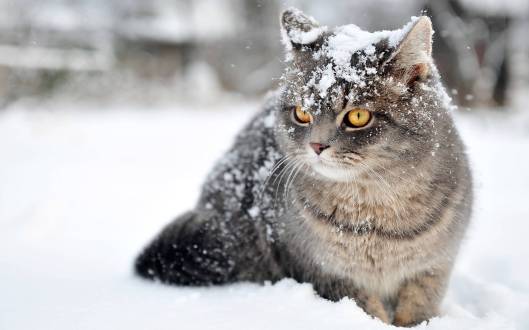
Cats are smarter than dogs. You can’t get eight cats to pull a sled through snow. Jeff Valdez

catsnoww

Animals & Mental Illness

08 Friday Feb 2019

Posted by RichardB in Pets

≈ Comments Off on Animals & Mental Illness

Tags

cats, dogs, pets, wellness

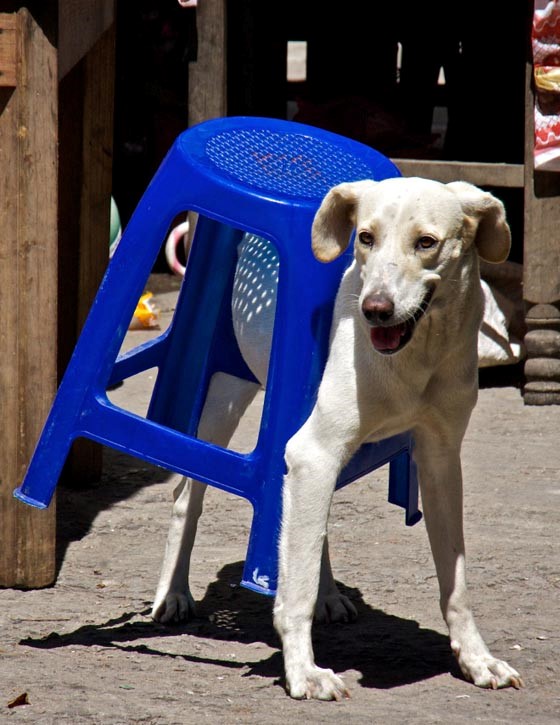
Everyone who has a pet thinks at some point that their feline/canine friend is, well … crazy. From poop in the shoes to chewed up pillows our furry buddies can sometimes cause us to react with confusion, anger, and frustration. chairdog

Maybe you’ve had or heard about a pet cat on Prozac, or a dog that doesn’t quite seem like itself in the weeks following the death of another animal in the home. On the one hand, it’s hard not to question whether there is some owner-projection or anthropomorphism happening here. But on the other, as the BBC reports, some scientists are starting to seriously investigate the inner lives of animals, including potential signs of mental illness.

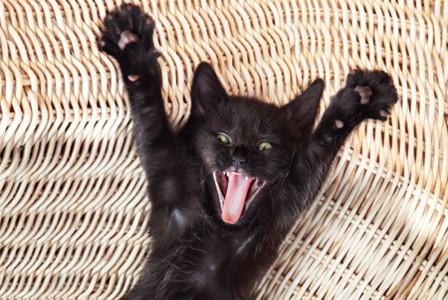
Some researchers have argued that there are observable behaviors in animals that look a lot like the behaviors in humans with certain mental illnesses: There are pet birds that pluck out their own feathers, dogs that won’t quit licking their tails or paws, and bonobos that pull out their own hair. Some military dogs that have been in combat may even show signs of PTSD, such as a dramatic change in temperament. crazekitty

Pets

04 Friday Jan 2019

Posted by RichardB in Pets

≈ Comments Off on Pets

Tags

pets

Wonderful article written by Joseph Burgo, Ph.D. who has practiced psychotherapy for more than 30 years, holding licenses as a marriage and family therapist and clinical psychologist.

“…Although Sigmund Freud’s psychoanalytic method encourages the analyst to present a blank screen, concealing all details of his personal life, thoughts and feelings, Freud himself practiced from his home and included Jo-Fi, his favorite chow chow, in many of his sessions. Freud supposedly relied on his pet’s reaction to a client for help in assessing the person’s character. He also felt that a dog’s presence helped to calm his clients.”

Read more here: The Pets in My Practice

The Hidden Dog

21 Friday Dec 2018

Posted by RichardB in dogs, Pets

≈ Comments Off on The Hidden Dog

Tags

dogs, pets

Dogs were the first non-human members of the human group. They are our original companions. The first animals we domesticated, they share a 40,000 year history with humans. To them humanity owes its very survival and evolution through enhanced meat acquisition dogs made possible via hunting, as a consequence of which humans grew physically and intellectually.

 BD12669_.JPG

It was co-evolution of both species which shows up in the parent-child relationship between dog and human, as psychological research has recently uncovered. Only after the agrarian revolution when the importance of the dog to food acquisition declined did we see a loss of status of the dog.

Read the entire story here.

Science proves that you love your dog like a baby

13 Friday Jul 2018

Posted by RichardB in Do, dogs, people, Pets

≈ Comments Off on Science proves that you love your dog like a baby

Tags

dogs, people, pets

Interesting article about pets and how humans react/respond to them. From the abstract:

Neural substrates underlying the human-pet relationship are largely unknown. We examined fMRI brain activation patterns as mothers viewed images of their own child and dog and an unfamiliar child and dog. There was a common network of brain regions involved in emotion, reward, affiliation, visual processing and social cognition when mothers viewed images of both their child and dog. Viewing images of their child resulted in brain dogclothactivity in the midbrain (ventral tegmental area/substantia nigra involved in reward/affiliation), while a more posterior cortical brain activation pattern involving fusiform gyrus (visual processing of faces and social cognition) characterized a mother’s response to her dog. Mothers also rated images of their child and dog as eliciting similar levels of excitement (arousal) and pleasantness (valence), although the difference in the own vs. unfamiliar child comparison was larger than the own vs. unfamiliar dog comparison for arousal. Valence ratings of their dog were also positively correlated with ratings of the attachment to their dog. Although there are similarities in the perceived emotional experience and brain function associated with the mother-child and mother-dog bond, there are also key differences that may reflect variance in the evolutionary course and function of these relationships.
Stoeckel LE, Palley LS, Gollub RL, Niemi SM, Evins AE (2014) Patterns of Brain Activation when Mothers View Their Own Child and Dog: An fMRI Study. PLoS ONE 9(10): e107205. doi:10.1371/journal.pone.0107205

http://www.plosone.org/article/info%253Adoi%252F10.1371%252Fjournal.pone.0107205

airborne cats

06 Friday Jul 2018

Posted by RichardB in cats, Pets, photos

≈ Comments Off on airborne cats

Tags

cats, pets, photos

Ever wondered what airborne cats looked like? Wonder no more.

BD12713_

Newer posts →

instagram

Follow RichardbBrunner on WordPress.com
  • Tumblr
  • YouTube

Create a free website or blog at WordPress.com.

Privacy & Cookies: This site uses cookies. By continuing to use this website, you agree to their use.
To find out more, including how to control cookies, see here: Cookie Policy
  • Subscribe Subscribed
    • RichardbBrunner
    • Join 492 other subscribers
    • Already have a WordPress.com account? Log in now.
    • RichardbBrunner
    • Subscribe Subscribed
    • Sign up
    • Log in
    • Report this content
    • View site in Reader
    • Manage subscriptions
    • Collapse this bar
 

Loading Comments...