-
Dobsonfly Coloring Page

-
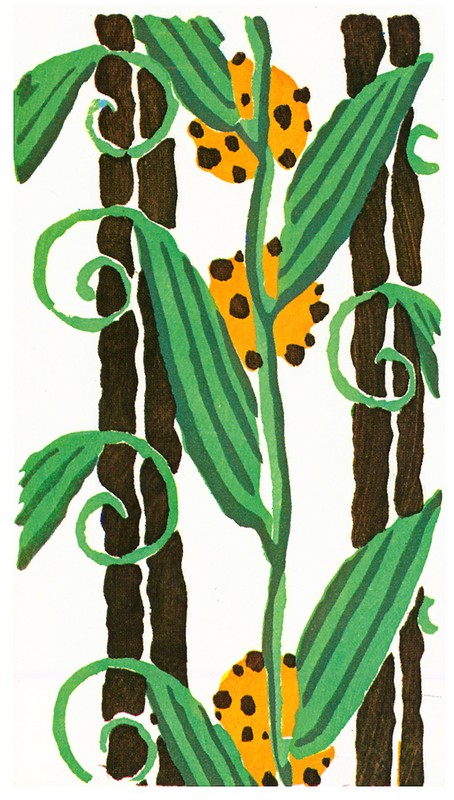
Seguy Art Deco Designs 103
-
Chinese Poems with English Translation
Bamboo Adobe
 I sit along in the dark bamboo grove,
Playing the zither and whistling long.
In this deep wood no one would know
Only the bright moon comes to shine.
Wang Wei tr. Liu Wu-chi -
allow us to realize
“Artists provide the contemporary metaphors that allow us to realize the transcendent, infinite, and abundant nature of being as it is.” Joseph Campbell
-
Yoga Benefits
Many people hear “yoga”, and think Zen gardens, meditation, and free spirits. But you may be surprised to find that one recent study showed that those who incorporated yoga into their life had improved stress levels and lower blood pressure. Yoga was ultimately developed to combine controlled breathing and poses to achieve physical, mental, and spiritual strength and unity. In fact, Michelle Obama even attributes her sleek physique to frequent yoga sessions. There are multiple types of yoga, but Hatha Yoga is the most commonly practiced type in the United States.

Here are some surprising health benefits of practicing yoga that you may have never known!
Relief of Back Pain: More than 60 million Americans suffer from chronic back pain. Yoga is one of the best exercises to help alleviate pain. This is due to the increase in core stability (abdominal muscles) and the reduction of pressure across the lower back and surrounding muscles. Yoga also helps to release endorphins throughout the body that can calm inflammation. Practicing yoga for just two sessions a week may reduce or even eliminate back pain. Many individuals also report an increase in pain tolerance after attending sessions for only three weeks.
Heart Healthy: Further research also demonstrates that even one yoga session can produce a calming effect on the body, and individuals in one study showed reduction in their systolic blood pressure after only 12 weeks of two yoga sessions per week. Additionally, incorporating yoga into a cardiac rehabilitation program after a heart attack or bypass surgery has also shown promise in maintaining lower levels of stress and healthy blood pressure levels.
Increased Flexibility: You may be thinking, “No Duh”, on this one, but the benefits may be surprising. Practicing poses like downward dog, and tree pose can improve balance and flexibility. This can directly strengthen and protect your larger joints (knees, hips, back, neck) from injury and reduce inflammation in the smaller joints (fingers and ankles). This can also help reduce falls in the elderly, and ultimately avoid fractures in this age group.
Mood Booster: In addition to mental clarity and relaxation, yoga has been shown to improve depression, anxiety, and chronic stress. A small German study reviewed in the Harvard Mental Health Letter demonstrated that at the end of a three-month period, women perceived less stress, depression, anxiety, and fatigue. A few yoga classes could leave you happier and less stressed. Increased happiness alone is reason enough to give it a try!
As with any new exercise, always consult your physician before you begin. This is to ensure your body can safely complete the activity. I also recommend you attend a beginner class or view a video with some common poses. This will make you feel more confident during your first class and ensure you obtain the most benefit.
-
Stressed?
I’ve been teaching a stress less/relaxation class for years and below is one the handouts that participants report is most helpful.:

Change the situation: Avoid – Alter. Change your reaction: Adapt – Accept
1. Avoid unnecessary stress
Not all stress can be avoided, and it’s not healthy to avoid a situation that needs to be addressed.
Learn how to say “no” – Know your limits and stick to them.
Avoid people who stress you out –Limit the amount of time you spend with people that cause you stress.
Take control of your environment – If the evening news makes you anxious, turn the TV off.
Avoid hot-button topics –If you repeatedly argue about the same subject with the same people, stop bringing it up or excuse yourself when it’s the topic of discussion.
Pare down your to-do list –If you’ve got too much on your plate, distinguish between the “shoulds” and the “musts.”
2. Alter the situation
If you can’t avoid a stressful situation, try to alter it. Figure out what you can do to change things so the problem doesn’t present itself in the future.
Express your feelings instead of bottling them up. If something or someone is bothering you, communicate your concerns in an open and respectful way.
Be willing to compromise. When you ask someone to change their behavior, be willing to do the same.Be more assertive. Deal with problems head on, doing your best to anticipate and prevent them.
Manage your time better. Plan ahead and make sure you don’t overextend yourself.
3. Adapt to the stressor
If you can’t change the stressor, change yourself. You can adapt to stressful situations and regain your sense of control by changing your expectations and attitude.
Reframe problems. Try to view stressful situations from a more positive perspective.
Look at the big picture. Will it matter in a month, or a year?
Adjust your standards. Set reasonable standards for yourself and others, and learn to be okay with “good enough.”
Focus on the positive. When stress is getting you down, take a moment to reflect on all the things you appreciate in your life, including your own positive qualities and gifts.
4. Accept what you can’t change
Some sources of stress are unavoidable, in such cases; the best way to cope with stress is to accept things as they are. Acceptance may be difficult, but in the long run, it’s easier than railing against a situation you can’t change.
Don’t try to control the uncontrollable. Focus on the things you can control such as the way you choose to react to problems.
Look for the upside. As the saying goes, “What doesn’t kill us makes us stronger.” When facing major challenges, try to look at them as opportunities for personal growth.
Share your feelings. Talk to a trusted friend or make an appointment with a therapist.
Learn to forgive. Accept the fact that we live in an imperfect world and that people make mistakes.
-
Addiction Hijacks the Brain
You’ve probably heard of the brain’s reward network. It’s activated by basic needs — including food, water and sex — and releases a surge of the feel-good neurotransmitter dopamine when those needs are met. But it can also be hijacked by drugs, which lead to a greater dopamine release than those basic needs.

But the reward network isn’t the only brain network altered by drug use. A new review concluded that drug addiction affects six main brain networks: the reward, habit, salience, executive, memory and self-directed networks.
In 2016, a total of 20.1 million people ages 12 and older in the U.S. had a substance-use disorder, according to the National Survey on Drug Use and Health, an annual survey on drug use. And drug addiction, regardless of the substance used, had surprisingly similar effects on the addicted brain, said the new review, published yesterday (June 6) in the journal Neuron.
The review looked at more than 100 studies and review papers on drug addiction, all of which studied a type of brain scan called functional magnetic resonance imaging (fMRI).
More than half of the studies out there look at the effects of drug use on the reward network, said Anna Zilverstand, lead author of the new review and an assistant professor of psychiatry at the Icahn School of Medicine at Mount Sinai in New York City. [7 Ways Alcohol Affects Your Health]
“Because we showed that the effects are very distributed across the six different networks … [we can conclude that] an approach that only looks at one of these networks isn’t really justified,” Zilverstand told Live Science. “This [finding] will hopefully lead other researchers to look beyond the reward network.”
For example, the memory network is pretty much ignored in research on substance-use disorders, Zilverstand said. This network allows humans to learn non-habit-based things, such as a new physics concept or a history lesson. Some research has suggested that in people with substance-use disorders, stress shifts the person’s learning and memory away from the memory network to the habit network, which drives automatic behavior, such as seeking and taking drugs.
Another less-studied network is the self-directed network, which is involved in self-awareness and self-reflection, the review said. In people with addictions, this network has been associated with increasing craving.
Two other networks are involved in substance-use disorders: The executive network is normally responsible for goal-maintaining and execution, but drugs can alter this network as well, reducing a person’s ability to inhibit their actions. The salience network picks up important cues in a person’s environment and redirects the individual’s attention to them. (In people with drug addiction, attention is redirected toward drugs, increasing craving and drug-seeking.)
Which comes first, the brain activity or the drug use?
“For me, the most surprising [finding] was how consistent the effects were across addictions,” Zilverstand said. What’s more, “the fact that the effects are quite independent of the specific drug use points to them being something general that might actually precede drug use rather than be a consequence of drug use.”
Zilverstand said she hopes that more studies will look at whether some people have abnormal brain activity in these six networks naturally and if that activity just gets exacerbated if they begin drug use. It’s important to know if some of these traits precede drug use; if that’s the case, it might be possible to identify people who are prone to addiction and intervene before an addiction begins, she said.
Some research has pointed toward this possibility already. For example, studies have shown that some people have “difficulties … inhibiting impulsiveness before drug use,” Zilverstand said. “Some of these impairments precede drug use, and they may become worse with more drug use, but they exist before the problem escalates.”
The good news, however, is that activity in four of these networks — executive, reward, memory and salience — moves back toward “normal” once drug use ends. “We know that four of the networks (partially — not fully) recover but not yet what happens to the other two networks,” Zilverstand said in an email.
Zilverstand added that she’s particularly excited about an ongoing study called the Adolescent Brain Cognitive Development (ABCD) Study, which is tracking 10,000 children across the U.S. from around ages 9 or 10 to age 20 (the children are now around 13). Some of these individuals will inevitably become addicted to drugs, most likely marijuana or alcohol, Zilverstand said.
“We’ll be able to see if the effects that we found [in the review] exist in youth who have not yet abused drugs,” she said, and she predicted that researchers will be able to find a lot of the effects identified in the review in the six brain networks.
The authors noted that because some regions of the brain are very small — for example, the amygdala, which is found toward the center of the brain — the studies can’t identify strong signals from those areas on brain scans. So, it’s possible that drugs affect additional networks in the brain that are hidden because of the limitations of our technologies, Zilverstand said.
“We don’t want to conclude that [those effects] don’t exist,” she said.
-
Coronavirus Crisis: Prospects for U.S.-China Cooperation in Combating the Global Economic Downturn
As the COVID-19 pandemic presents unprecedented challenges to every level of the global economy, the National Committee on U.S.-China Relations is bringing together leading American and Chinese experts on economics and trade to share analysis and projections on the issues. We invite you to join us for a series of virtual programs, Coronavirus Crisis: What it means for U.S.-China Economic & Trade Relations, over the next month.
-
art can

“Progressive art can assist people to learn not only about the objective forces at work in the society in which they live, but also about the intensity social character of their interior lives. Ultimately, it can propel people toward social emancipation.” Angela Y. Davis
-
Pink flowers



 RichardbBrunner