-
change
“Every great dream begins with a dreamer. Always remember, you have within you the strength, the patience, and the passion to reach for the stars to change the world.” Harriet Tubman

-
more snow plants

-
Japanese Textile Designs 119

-
Pomeranian & Chiuahua Coloring Page

-
Yoga & Depression
From an article on the Yoga International web site:

Anyone who has suffered from depression understands how deep, abiding sadness or worthlessness can infiltrate and affect every aspect of our being. Our psychological makeup, physical health, mental outlook, and even our ability to interact with friends and family and be present to the world around us can get shaken to their core. Why? Because we identify with and attach ourselves to things that will inevitably change. As our feelings and other symptoms of depression persist, we have an increasingly difficult time imagining a life in which we break free from their spell and avoid “becoming” them.
Yoga teaches us that we aren’t our feelings or our symptoms but live in multidimensional relationship with them. One way to grasp this paradox is to picture the Self (purusha or pure, undifferentiated awareness) as pervading all nine interlocking and interdependent spheres of influence without being any one of them. See More here.
https://yogainternational.com/article/view/yoga-for-depression-an-integrated-practice
-
Relaxation & stressless
Stress is one reason people report relapsing and using substances/intoxicants. I’ve been teaching a stress less/relaxation class for years and below is one the handouts that participants report is most helpful.:
Change the situation: Avoid – Alter. Change your reaction: Adapt – Accept
1. Avoid unnecessary stress
Not all stress can be avoided, and it’s not healthy to avoid a situation that needs to be addressed.
Learn how to say “no” – Know your limits and stick to them.
Avoid people who stress you out –Limit the amount of time you spend with people that cause you stress.
Take control of your environment – If the evening news makes you anxious, turn the TV off.
Avoid hot-button topics –If you repeatedly argue about the same subject with the same people, stop bringing it up or excuse yourself when it’s the topic of discussion.
Pare down your to-do list –If you’ve got too much on your plate, distinguish between the “shoulds” and the “musts.”
2. Alter the situation
If you can’t avoid a stressful situation, try to alter it. Figure out what you can do to change things so the problem doesn’t present itself in the future.
Express your feelings instead of bottling them up. If something or someone is bothering you, communicate your concerns in an open and respectful way.
Be willing to compromise. When you ask someone to change their behavior, be willing to do the same.Be more assertive. Deal with problems head on, doing your best to anticipate and prevent them.
Manage your time better. Plan ahead and make sure you don’t overextend yourself.
3. Adapt to the stressor
If you can’t change the stressor, change yourself. You can adapt to stressful situations and regain your sense of control by changing your expectations and attitude.
Reframe problems. Try to view stressful situations from a more positive perspective.
Look at the big picture. Will it matter in a month, or a year?
Adjust your standards. Set reasonable standards for yourself and others, and learn to be okay with “good enough.”
Focus on the positive. When stress is getting you down, take a moment to reflect on all the things you appreciate in your life, including your own positive qualities and gifts.
4. Accept what you can’t change
Some sources of stress are unavoidable, in such cases; the best way to cope with stress is to accept things as they are. Acceptance may be difficult, but in the long run, it’s easier than railing against a situation you can’t change.
Don’t try to control the uncontrollable. Focus on the things you can control such as the way you choose to react to problems.
Look for the upside. As the saying goes, “What doesn’t kill us makes us stronger.” When facing major challenges, try to look at them as opportunities for personal growth.
Share your feelings. Talk to a trusted friend or make an appointment with a therapist.
Learn to forgive. Accept the fact that we live in an imperfect world and that people make mistakes.
-
Microphone jammer
Tired of smart watches, cell phones and digital assistants listening in? Now a wearable microphone jammer that is capable of disabling microphones in its user’s surroundings, including hidden microphones. Our device is based on a recent exploit that leverages the fact that when exposed to ultrasonic noise, commodity microphones will leak the noise into the audible range. By making it wearable, our jammer outperforms existing approaches with an improved coverage and less blind spots.
-
Opioid Use & Pain
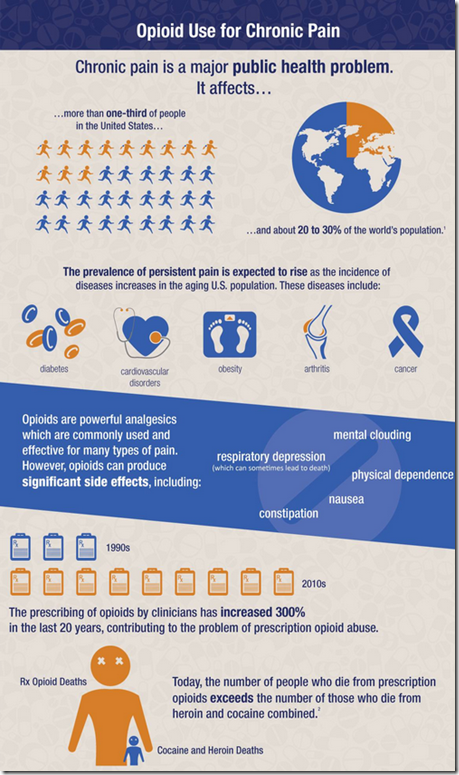
Opioid prescriptions have increased three-fold over the past two decades, and we have seen how this skyrocketing availability of medications has helped create a new drug abusing population, some of whom suffer severe health consequences. More deaths now occur as a result of overdosing on prescription opioids than from all other drug overdoses combined, including heroin and cocaine. The opioid epidemic is tied closely to another epidemic in our country, that of chronic pain—although the ties are very complex. Read More HERE
-
Meditation and creative thinking
Certain meditation techniques can promote creative thinking, even if you have never meditated before. This is the outcome of a study by cognitive psychologist Lorenza Colzato and Dominique Lippelt at Leiden University, published in Mindfulness.
Long-lasting influence
The study is a clear indication that you don’t need to be an experienced meditator to profit more from meditation. The findings support the belief that meditation can have a long-lasting influence on human cognition, including how we conceive new ideas. Besides experienced meditators, also novices may profit from meditation.

Different techniques, different effects
But the results demonstrate that not all forms of meditation have the same effect on creativity. Test persons performed better in divergent thinking (= thinking up as many possible solutions for a given problem) after Open Monitoring meditation (= being receptive to every thought and sensation). The researchers did not see this effect on divergent thinking after Focused Attention meditation (=focusing on a particular thought or object.)
Setup of the study
40 individuals participated in this study, who had to meditate for 25 minutes before doing their thinking tasks. There were both experienced mediators and people who never meditated before. The study investigated the influences of different types of meditative techniques on the two main ingredients of creativity:
- Divergent thinking Allows for many new ideas to be generated. It is measured using the so-called Alternate Uses Task method where participants are required to think up as many uses as possible for a particular object, such as a pen.
- Convergent thinking Convergent thinking, on the other hand, is a process whereby one possible solution for a particular problem is generated. This is measured using the Remote Associates Task method, where three unrelated words are presented to the participants, words such as ‘time’, ‘hair’ and ‘stretch’. The participants are then asked to identify the common link: in this case, ‘long’.
Lorenza S. Colzato, Ayca Szapora, Dominique Lippelt, Bernhard Hommel. Prior Meditation Practice Modulates Performance and Strategy Use in Convergent- and Divergent-Thinking Problems. Mindfulness, 2014
-
Joseph Campbell the Art of Living
“Nietzsche was the one who did the job for me. At a certain moment in his life, the idea came to him of what he called ‘the love of your fate.’ Whatever your fate is, whatever the hell happens, you say, ‘This is what I need.’ It may look like a wreck, but go at it as though it were an opportunity, a challenge. If you bring love to that moment—not discouragement—you will find the strength is there. Any disaster you can survive is an improvement in your character, your stature, and your life. What a privilege! This is when the spontaneity of your own nature will have a chance to flow.
“Then, when looking back at your life, you will see that the moments which seemed to be great failures followed by wreckage were the incidents that shaped the life you have now. You’ll see that this is really true. Nothing can happen to you that is not positive. Even though it looks and feels at the moment like a negative crisis, it is not. The crisis throws you back, and when you are required to exhibit strength, it comes.”
Joseph Campbell, A Joseph Campbell Companion: Reflections on the Art of Living.



 RichardbBrunner