-
Coloring Page Borzoi Dog

-
Highland Clearances
The highland clearances was the depopulation of the Highlands of Scotland between, roughly, 1785 and the late 1850s, by landowners evicting small farmers from their property and replacing them with huge sheep farms. -
MSU study finds surprises about drug use
Conducting an economic analysis of drug use is a particularly difficult endeavor, but for Michigan State University professor and economist Siddharth Chandra, it just meant taking a look at the history books.
“You can’t simply go to Wal-Mart and look at the sticker price, and people don’t want to talk to you because drugs are illegal and they think they’ll get in trouble, ” Chandra said. “Our study is the first time the subject of how populations of consumers switch between drugs is being studied with data considered reliable.”

To find reliable economic data on drug use, Chandra, also the director of the Asian Studies Center at MSU, had to look back to early 20th century India, when the region was still part of the British Empire.
“One hundred years ago these products were legal. In British India the government was actually selling these things to the public, and they kept meticulous records,” Chandra said.
In his study – the first of its kind – Chandra pored through stacks of 100-year-old ledgers, called Excise Administration Reports, kept by the governments of the various provinces of India. Interpreting these data, he found surprising results about the economics of drug use behaviors. Despite the stark differences in the effects of opium vs. cannabis on the human body, the study shows that users would switch between the two drugs when the price of one went up – in economics, a phenomenon called substitution.
“The time, place and context are different, but the phenomenon is there. You might think consumers would treat them differently,” Chandra said. “But just because the two drugs used are very different, doesn’t mean people won’t switch.”
Opium, used legally to make the pain medicine morphine and illegally to make the drug heroin, is a highly addictive and potent depressant with potentially lethal side effects. Cannabis, also known as marijuana, is a less potent drug that produces a sense of relaxation and euphoria when used, usually through smoking or ingestion. These differences only came into consideration when analyzing cannabis in its weakest form, a drug called bhang, which consumers would not substitute for the more potent opium.
“There are many policy implications for these results,” Chandra said. “Targeting a particular drug with policies and enforcement might backfire.”
Chandra pointed to the epidemic of heroin, a product of opium that is relatively inexpensive and is devastating some communities in the United States.
“Many people know someone who has been affected by heroin – it is a very dangerous drug,” Chandra said. “But prohibiting harmful drugs selectively can be ineffective. Consumers may switch.”
-
waking up

Beyond living and dreaming
there is something more important:
waking up. Antonio Machado
-
Wise, Reason, Emotional Mind
I have been practicing meditation since the mid-70’s and started a mindfulness meditation practice in the mid-90’s. Mindfulness has to do with the quality of awareness that we bring to what we are doing and experiencing, to being in the here and now. It has to do with learning to focus on being in the present, to focusing our attention on what we are doing and what is happening in the present.
Many of us are distracted by images, thoughts and feelings of the past, perhaps dissociating, worrying about the future, negative moods and anxieties about the present. It’s hard to put these thing away and concentrate on the task at hand.I started teaching mindfulness to patients a few years ago and often used the following as a hand out:
Mindfulness has to do with states of mind. Reason Mind, Emotion Mind, and Wise Mind. Reason Mind is your rational, thinking, logical mind. It plans and evaluates things logically. It is your “cool” part. Reasonable Mind can be very beneficial. It is easier to be in Reasonable Mind when you feel good. It is much harder to be in Reasonable Mind when you don’t feel good.You Would Use Your Reasonable Mind To:
Build a bridge
Figure out how to double a recipe
Balance your checkbook
Figure out the fastest way from point “A” to point “B”Emotion Mind describes times when emotions are what influence or control your thinking and behavior. Emotional Mind can also be very beneficial. Emotions are what motivate us to action. Emotions are what keep us attached to others and building relationships.
Emotion Mind can be aggravated by:
Illness, Lack Of Sleep, Tiredness, Drugs, Alcohol, Hungry, Overeating, Poor nutrition and/or lack of exercise, Environmental stress and threats, not taking your meds.Both Emotion and Reasonable Mind Are Equally Important And Valuable
Reasonable mind gives you a way to solve your problems.
Emotion mind gives you a reason (motivation) to want to solve them.
Wise Mind is the integration of emotional and reasonable mind. Wise mind is that part of each person that can know and experience truth. It is where the person knows something to be true or valid. It is where the person knows something in a centered (balanced) way. It is almost always quiet and calm in this part of the mind.
Everyone Has A Wise Mind!
Some people have simply never experienced it.
No one is in Wise Mind all of the time.
Wise Mind – An Analogy for Wise Mind is like a deep well in the ground. The water is at the bottom of the well. The entire underground is an ocean called Wise Mind. But on the way down, there are often trap doors that stop progress. Sometimes the trap doors are so cleverly built that you actually believe that there is no water at the bottom of the well. The trap door may look like the bottom of the well. Perhaps it is locked and you need a key. Perhaps it is nailed shut and you need a hammer. Perhaps it is glued shut and you need a chisel.
-
Yoga may boost your brain power
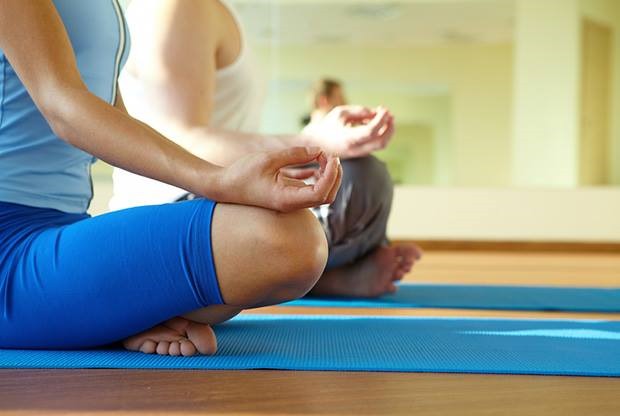
Yogis may be enjoying a surprising benefit when they unroll their mats and strike a pose. A new study finds that just 20 minutes of hatha yoga stimulates brain function.
Researchers from the University of Illinois at Urbana-Champaign enlisted 30 subjects to take tests of working memory and inhibitory control, two measures of brain function associated with the ability to focus, retain, and use new information, the researchers said.
Subjects who took a single, 20-minute yoga session were significantly faster and more accurate on their tests than subjects who walked or jogged on a treadmill for 20 minutes.
Participants on the treadmill exercised with the goal of maintaining 60 to 70 percent of their maximum heart rate throughout the exercise session. “This range was chosen to replicate previous findings that have shown improved cognitive performance in response to this intensity,” the researchers said.
“Yoga is an ancient Indian science and way of life that includes not only physical movements and postures but also regulated breathing and meditation,” said study lead Neha Gothe. “The practice involves an active attentional or mindfulness component but its potential benefits have not been thoroughly explored.”
Subjects who practiced yoga performed a 20-minute sequence of seated, standing, and supine yoga postures, with the class ending in a meditative posture and deep breathing.
“It appears that following yoga practice, the participants were better able to focus their mental resources, process information quickly, more accurately and also learn, hold and update pieces of information more effectively than after performing an aerobic exercise bout,” Gothe said.
“The breathing and meditative exercises aim at calming the mind and body and keeping distracting thoughts away while you focus on your body, posture or breath,” she said. “Maybe these processes translate beyond yoga practice when you try to perform mental tasks or day-to-day activities.”
Findings, announced June 5, appear in the Journal of Physical Activity and Health.
A separate study published last month finds that twice-weekly yoga sessions can reduce high blood pressure. In the study, researchers led by Dr. Debbie Cohen of the University of Pennsylvania tracked 58 women and men, aged 38 to 62, for 24 weeks.Another study published earlier this year in the journal Frontiers in Psychiatry found that the practice may soothe depression and help sleep problems.
Read more:A 20-minute yoga session may boost your brain power – The Denver Post
-
Self-Care and #Depression
As a clinical psychologist, Mary Pipher, PhD, designed “healing packages” for her patients: activities, resources, and comforts to help them recover from trauma. Then, after Dr. Pipher’s book Reviving Ophelia became a runaway best-seller, she herself suffered from an episode of major depression and designed a healing package of her own. “The essence of my personal healing package,” she describes in her book Seeking Peace, “was to keep my life as simple and quiet as possible and to allow myself sensual and small pleasures.” She created a mini-retreat center in her home and modified the ancient ways of calming troubled nerves to fit her lifestyle. Pipher’s healing package looked like this:
She accessed the healing power of water by walking at Holmes Lake Dam, swimming at the university’s indoor pool, and reading The New Yorker magazine in the bathtub every morning.

She cooked familiar foods, dishes that reminded her of home: jaternice, sweetbreads, and perch; and cornbread and pinto beans with ham hocks.
She unpacked her childhood teacup collection and displayed it near her computer desk to remind her of happy times and of people who loved her.
She reconnected with the natural world by walking many miles every week on the frozen prairie, watching the yellow aconites blossom in February and the daffodils and jonquils in March, following the cycles of the moon, and witnessing sunrises and sunsets.
She read biographies of heroes like Abe Lincoln, and read the poetry of Billy Collins, Robert Frost, Mary Oliver, and Ted Kooser.
She found role models for coping with adversity.
She limited her encounters with people and gave herself permission to skip holiday gatherings and postpone social obligations. She erased calendar engagements until she had three months of “white space” in her future.
She embraced her body through yoga and massage. She started to pay attention to tension in her neck and other cues from her body and let those signals teach her about herself.
 She meditated every day.
These activities were exactly what she needed to emerge from the other side of depression. She writes:
After taking care of my body for several months, it began to take good care of me. My blood pressure improved and my heart problems disappeared. After a few months of my simple, relatively stress-free life and my healing package of activities, I felt my depression lifting. I enjoyed the return of positive emotions: contentment, joy, calmness and new sparks of curiosity and energy. I again felt a great tenderness toward others.
Psychiatrist James Gordon, MD, discusses similar healing packages in his best-selling book Unstuck. At the end of his first meetings with all of his patients, he will write out a “prescription of self-care,” which includes instructions on changing diet, advice about specific recommended meditations or exercises, and a list of supplements and herbs. “Among my recommendations, there are always actions, techniques, approaches, and attitudes that each person has told me — which she already knows — are helpful,” he explains. At the end of his introduction, he suggests each reader take some time to write out his or her own prescription. He supplies a form and everything.
Each person’s healing package is unique. Many people have benefited from more meditation and mindfulness exercises, psychotherapy sessions, and therapies like Eye Movement Desensitization and Reprocessing (EMDR) that help unclog the brain of painful memories. Some people do better with more physical exercise and nutritional changes. While mindfulness and meditation have certainly helped many become aware of my rumination patterns, the most profound changes in others recovery have come from the bags of dark, green leafy vegetables, yoga, and breathing exercises.
It’s empowering to know that we don’t need a doctor or any mental health professional to design a healing package for us. We are perfectly capable of writing this prescription ourselves. Sometimes (not always), all it takes are a few simple tweaks to our lifestyle over a period of time to pull us out of a crippling depression or unrelenting anxiety.
-
Dil Gira Dafatan from Delhi 6
-
Heavy marijuana use may harm the brain
New NIDA-funded research shows that heavy marijuana use (at least four times per week over the past six months) is linked to adverse changes in the function and structure of brain areas associated with reward, decision making, and motivation. Heavy marijuana use can also enhance some brain circuits – possibly to compensate for reduced function in specific brain regions. This effect was more pronounced in those who started using at a young age, indicating that developing brains are particularly vulnerable to marijuana’s effects.

Although further long-term studies are needed to determine whether marijuana caused these effects, these scientific findings add to the growing literature showing that heavy marijuana use may harm the brain.
For a copy of the abstract (published online November 10), go to www.pnas.org/content/early/2014/11/05/1415297111.abstract.
-
Seguy Art Deco Designs 106



 RichardbBrunner