-
Opportunities 4 mindfulness
For most of us, a typical day begins when we get out of bed, wash, and then start our activities. At some point, we get a bite to eat, walk somewhere, and talk to someone. Often, by the end of the day we find ourselves stressed out and physically exhausted. It doesn’t have to be that way!
Everyday activities can be an opportunity for a meditation moments; bringing mindfulness, clarity, and peace into your day while energizing yourself and reducing stress.
A study published in the journal Consciousness and Cognition found: “Brief meditation training reduced fatigue, anxiety, and increased mindfulness. Moreover, brief mindfulness training significantly improved visuo-spatial processing, working memory, and executive functioning.”
These brief mindfulness meditations can be done anywhere or anytime …well using common sense. Just like you should not text and drive I would not meditate and drive either.
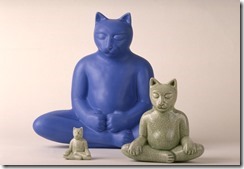
Here are two examples of how to add meditation without taking time out of your schedule.
- When you get up in the morning, you usually wash. Let’s use washing your face for our first meditation opportunity. Feel the temperature of the water on your hands. Focus on the temperature as you add a little soap. Notice how the suds feel on your hand. When a thought comes in, think of it as someone else’s phone ringing. You hear it, but you don’t have to answer it. Next, feel your soapy hands or the washcloth on your face. Focus on that sensation as you wash your face. Next, feel the rinse water on your face — how does it feel? Is it too cold? Too hot? Just right? If your mind wanders, there is no need to judge, just go back to focusing on the feeling of the water on your face. As you towel off, feel the sensation of the air on your face. It’s that simple, you just meditated.
- As you go about your day, you are most likely waiting in line or in traffic, so take a moment to breathe. Everyone has to breathe, and there is no way the person in front of you in the coffee line will know you are meditating! Sense the breath coming in and out of your nose or mouth. Don’t worry about thoughts; you know what to do, think of your thoughts as someone else’s cellphone ringing. Some people like to label their thoughts as “thought” and then let them go. The important thing is returning to sensing your breath coming in and out of your body. You will feel your shoulders relax and your patience returning.
-
Bird on a branch

-
Coloring Page

-
Red River Women

Each year, dozens of Canadian Aboriginal women are murdered or disappear never to be seen again. Some end up in a river that runs through the heart of Winnipeg. One of them was a 15-year-old school girl called Tina Fontaine, whose body was found in August 2014.
Read about Canada’s Red River Women.
-
Narrow Indication for Abuse-Deterrent Morphine
The latest opioid approved by FDA will be “expected” to reduce abuse by only one route — injection — in its official labeling.
In a carefully-worded press release, drugmaker Egalet said its extended-release morphine drug Arymo ER “increased resistance to cutting, crushing, grinding or breaking using a variety of tools. Due to its physical and chemical properties, Arymo ER is expected to make abuse by injection difficult.”

In an FDA advisory committee meeting last year, participants voted that the drug could deter abuse via the oral, nasal, and intravenous routes of abuse. But there were several reasons only the intravenous route won labeling.
An FDA spokesperson told MedPage Today that MorphaBond, another morphine product, has “marketing exclusivity for labeling describing the expected reduction of abuse of single-entity, extended-release morphine by the intranasal route due to physicochemical properties.” MORE HERE
-
Animals & Mental Illness
Everyone who has a pet thinks at some point that their feline/canine friend is, well … crazy. From poop in the shoes to chewed up pillows our furry buddies can sometimes cause us to react with confusion, anger, and frustration.
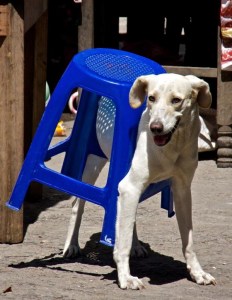
Maybe you’ve had or heard about a pet cat on Prozac, or a dog that doesn’t quite seem like itself in the weeks following the death of another animal in the home. On the one hand, it’s hard not to question whether there is some owner-projection or anthropomorphism happening here. But on the other, as the BBC reports, some scientists are starting to seriously investigate the inner lives of animals, including potential signs of mental illness.
Some researchers have argued that there are observable behaviors in animals that look a lot like the behaviors in humans with certain mental illnesses: There are pet birds that pluck out their own feathers, dogs that won’t quit licking their tails or paws, and bonobos that pull out their own hair. Some military dogs that have been in combat may even show signs of PTSD, such as a dramatic change in temperament.

-
I cannot say
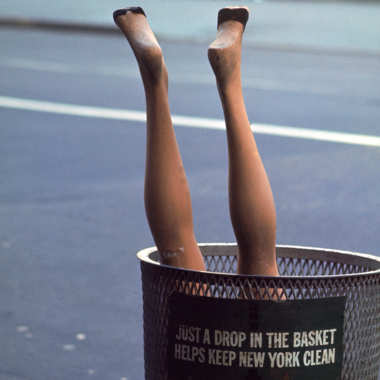
I cannot say whether things will get better if we change; what I can say is that they must change if they are to get better. Georg Lichtenberg
-
believe
“We do not believe in ourselves until someone reveals that deep inside us something is valuable, worth listening to, worthy of our trust, sacred to our touch. Once we believe in ourselves we can risk curiosity, wonder, spontaneous delight or any experience that reveals the human spirit.” E.E. Cummings
-
Self-control and Success
 Most of us believe that a certain amount of self-control is crucial for success. In order to succeed in the modern world, you need expertise in some area. Gaining that expertise requires work and practice. The discipline to work or practice at something means that you have to give up things that might be fun right now in order to engage in actions that will be rewarding in the future.
Research by Walter Mischel, Yuichi Shoda, and their colleagues supports this link.
They looked at the relationship between the delay of gratification task developed by Walter Mischel in the 1960s and later performance.
See more at: http://www.creativitypost.com/psychology/self_control_and_success -
Applying Mindfulness-Based Cognitive Therapy to Treatment






 RichardbBrunner