-
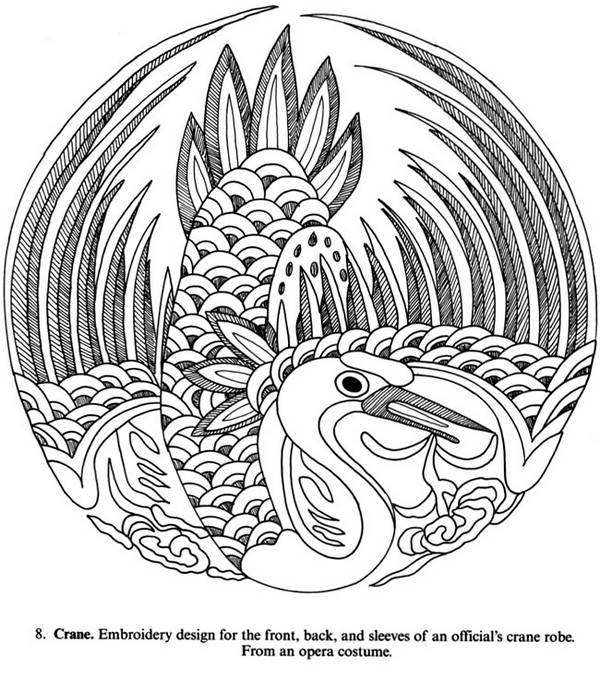
Coloring Page Mandala
-
Fear
“Fear is a natural reaction to moving closer to the truth” ~ Pema Chodron
-
Art therapy: a world beyond creative expression | Carol Hammal
-
You and Me
You and Me
I hear you
I know you
I have walked in your shoes

I am walking with your feet
Your skin is my skin
I hold you
You hold yourself
I ask you
You ask yourself
We listen together
Our ancestors tell a story
of laughter from long ago
when we were all babies
alone swaddled in blankets
waiting for the breast
We watch as you move
I call out the signs
You give me your hand
We hold them together
and wave good bye
-
What is
What is life? It is the flash of a firefly in the night. It is the breath of a buffalo in the wintertime. It is the little shadow which runs across the grass and loses itself in the sunset. Isapo-Muxika (Crowfoot)

-
The mindful way through depression
-
Being Creative & Meditation
Certain meditation techniques can promote creative thinking, even if you have never meditated before. This is the outcome of a study by cognitive psychologist Lorenza Colzato and Dominique Lippelt at Leiden University, published in Mindfulness.

Long-lasting influence
The study is a clear indication that you don’t need to be an experienced meditator to profit more from meditation. The findings support the belief that meditation can have a long-lasting influence on human cognition, including how we conceive new ideas. Besides experienced meditators, also novices may profit from meditation.
Different techniques, different effects
But the results demonstrate that not all forms of meditation have the same effect on creativity. Test persons performed better in divergent thinking (= thinking up as many possible solutions for a given problem) after Open Monitoring meditation (= being receptive to every thought and sensation). The researchers did not see this effect on divergent thinking after Focused Attention meditation (=focusing on a particular thought or object.)
Setup of the study
40 individuals participated in this study, who had to meditate for 25 minutes before doing their thinking tasks. There were both experienced mediators and people who never meditated before. The study investigated the influences of different types of meditative techniques on the two main ingredients of creativity:
- Divergent thinking Allows for many new ideas to be generated. It is measured using the so-called Alternate Uses Task method where participants are required to think up as many uses as possible for a particular object, such as a pen.
- Convergent thinking Convergent thinking, on the other hand, is a process whereby one possible solution for a particular problem is generated. This is measured using the Remote Associates Task method, where three unrelated words are presented to the participants, words such as ‘time’, ‘hair’ and ‘stretch’. The participants are then asked to identify the common link: in this case, ‘long’.
Lorenza S. Colzato, Ayca Szapora, Dominique Lippelt, Bernhard Hommel. Prior Meditation Practice Modulates Performance and Strategy Use in Convergent- and Divergent-Thinking Problems. Mindfulness, 2014; DOI: 10.1007/s12671-014-0352-9
-
A Child’s View of Sensory Processing
-
The Ten Rules For Being Human
1. You will receive a body.2. You will be presented with lessons.3. There are no mistakes, only lessons.4. Lessons are repeated until learned. 5. Learning does not end.6. “There” is no better than “here.”7. Others are only mirrors of you.8. What you make of your life is up to you.9. All the answers lie inside of you.10. You will forget all of this at birth.



 RichardbBrunner