• Home
  • Music
  • About
  • Contact
  • CreativeTherapyTools.com

RichardbBrunner

~ creative arts therapist

RichardbBrunner

Category Archives: Creativity

The science of improving your brain’s creativity | Nick Skillicorn

08 Monday Apr 2019

Posted by RichardB in Creativity, YouTube

≈ Comments Off on The science of improving your brain’s creativity | Nick Skillicorn

Tags

Creativity, youtube

Speaking of Psychology: The neuroscience of creativity

19 Tuesday Mar 2019

Posted by RichardB in brain, creative arts therapy, Creativity, mental health

≈ Comments Off on Speaking of Psychology: The neuroscience of creativity

Do you have to be intelligent to be creative? Can you learn to be more creative? In this episode, we speak with neuropsychologist Rex E. Jung, PhD, who studies intelligence, creativity and brain function. He discusses why – even if it sounds counterintuitive – intelligence and creativity may not have all that much in common.

Transcript of interview with Audrey and Rex Jung from the APA website.

Audrey Hamilton: Do you have to be intelligent to be creative? Can you really learn to be more creative? In this episode, we speak with one neuropsychologist who studies intelligence, creativity and brain function. He talks about why – even if it sounds counterintuitive – intelligence and creativity may not have all that much in common. I’m Audrey Hamilton and this is “Speaking of Psychology.”

Rex Jung is an assistant professor of neurosurgery at the University of New Mexico and a practicing clinical neuropsychologist in Albuquerque. He studies both brain disease and what the brain does well – a field of research known as positive neuroscience. His research is designed to relate behavioral measures, including intelligence, personality and creativity to brain function and structure. He has published research articles across a wide-range of topics including traumatic brain injury, lupus, schizophrenia, intelligence and creativity. Welcome, Dr. Jung.

Rex Jung: Thank you, Audrey.

Audrey Hamilton: Could you first of all explain neuroimaging and tell our listeners how it helps researchers understand how people think and act?

Rex Jung: Sure. So, neuroimaging is the tool that we use to measure the brain and there’s lots of different neuroimaging techniques. I use three main neuroimaging techniques – the first that I learned in graduate school was magnetic resonance microscopy, which sounds kind of complicated. But, it is a technique that basically looks at the chemicals in your brain. It’s in a standard MRI machine like you would go to get your knee scanned. But, using some sophisticated techniques you can look at certain chemicals in the brain. Some of those chemicals are very involved in important neuronal processes. And we’ve correlated those with behavior.

A different technique is called diffusion tensor imaging, which allows us to look at water movement in the brain. And this is important because there’s lots of tubes going through your brain like the wires that connect up your computer to the Internet. And these tubes, called axons, are connecting up different processing modules of your brain and those have to be healthy. So, we can look at the health of those axons, those myelinated axons, the fatty sheath like the insulation that surrounds those tubes.

The third technique that we use is just structural magnetic resonance imaging and that allows us to look at the processing modules of the brain – the cortical thickness – the computers that are on the surface of the brain and how much or little of that you have on the surface of the brain. Those are the three main techniques that I use. There’s functional imaging, fMRI, that most people have heard of where you’re looking a blood flow, as well. Those are ways that we measure brain structure and function and this gives us the ability to do scientific measures that then we can correlate to behavioral measures in psychology.

Audrey Hamilton: Does being highly creative mean you’re also more intelligent?

Rex Jung: Not necessarily. There’s a controversy about this in the psychological literature and some people have found correlations between creativity and intelligence. They’re usually pretty low, this association. And some people make a lot of that, this low association. But usually, because this association between creativity and intelligence is low, it means that you don’t necessarily have to be intelligent to be creative. So, I spent over a decade studying intelligence. It’s one of the reasons I started studying creativity because it seemed like something distinctly different and interesting than intelligence, which I have studied. I work with very highly intelligent people in academia and scientists and not all of them are creative. Why is that? If they do go together I would be working with all of the creative people in my city in Albuquerque, but that wasn’t the case so creativity seemed to be something different.

Audrey Hamilton: Can a person learn to become more creative or simply gain intelligence?

Rex Jung: There are some tools and techniques that can help people to be more creative. We’re starting to learn more about creativity and it’s one of the things that I’m excited about in terms of creativity is that there might be ways to increase your creative capacity.

Intelligence unfortunately seems to be much more under tight genetic control. The genetic correlates of intelligence are high, like .75. So, if you have twins – they’re going to be identical twins – their correlation of their intelligence with one another is going to be very, very high. So that implies that the genetic involvement of that capacity is under much more tight control than the environment would be.

With creativity, we don’t have that information and I’m hopeful that you can modulate or modify creative cognition much more than intelligence. There are studies out there that have shown increases in intelligence scores of two, maybe three points on a particular measure, which are not particularly high. But those are also controversial. Some have been replicated. Some haven’t been replicated. And we really don’t see that in terms of intelligence. With creativity, there’s a pitched effort to try to increase creativity scores on some of these measures and we’re seeing some good initial results and I’m very hopeful about that.

Audrey Hamilton: How does the way a person’s brain works and is structured influence how creative or intelligent he or she is?

Rex Jung: The research that we’ve done shows that the brain organization of intelligence and creativity are quite different. So, when you think about those measures that I talked about, those neuroimaging measures, the brain of someone who is intelligent – think of bigger, better, stronger, faster – all the measures are pointing to higher integrity of the brain of someone who has high intelligence. So, the cortical mantle is thicker, the white matter, the wires are more myelinated, the water can travel faster and in a coherent direction, you have more of these certain chemicals that I was talking about.

Audrey Hamilton: It’s beefed up.

Rex Jung: It’s beefed up, yes. So you can have a better organized brain.

With creativity, the story was different. In different regions of the brain, we were seeing weaker connections, thinner cortex and different levels of these same biochemicals. So, it was really clear from these studies that intelligence and creativity were different because we were seeing different pictures in the measures we were taking of the brain. But I tend to look at creativity and intelligence as two different kinds of reasoning. That creativity is kind of reasoning without all of the information present. So, call it abductive reasoning. But, you have hypothesis testing about how the world could work without all of the information present. So, you have to use abstraction and metaphor and stuff like that about this might look like this or this might be this way.

With intelligence, you’re using deductive reasoning, where it’s rule-based reasoning where a equals b and that’s the way it goes. You have a rule for how this relationship works. So, creativity and intelligence are probably different types of reasoning. Both are very adaptive, but they’re just different for different types of problems that you have to solve out in the world.

Audrey Hamilton: Is real creativity rare? How about genius?

Rex Jung: So, creativity is common and genius is a lot more rare than we would believe. The term genius gets thrown around a lot. But, I think genius is rare because that combination of brain organization where you have high fidelity, beefed up brain in certain regions and then kind of down regulated brain in other regions is really going to be kind of rare where that is present in the same brain. So, to have that back and forth between intelligence and creativity, the ability to do both of those reasoning processes well, where you can do first approximations, hypothesis testing, abstraction and then create a rule, a novel and useful rule out of nothing before is rare and that is true genius.

Audrey Hamilton: Well great. Thank you so much for joining us, Dr. Jung. It’s been very, very interesting.

Rex Jung: Great. Thank you, Audrey.

Your brain’s creativity

15 Friday Feb 2019

Posted by RichardB in brain, create, Creativity, YouTube

≈ Comments Off on Your brain’s creativity

Tags

brain, Creativity

Self-control and Success

06 Wednesday Feb 2019

Posted by RichardB in Creativity, self control

≈ Comments Off on Self-control and Success
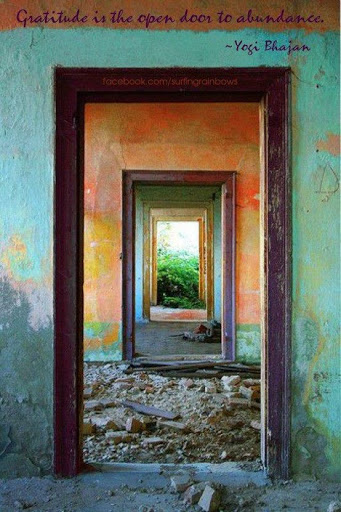
Most of us believe that a certain amount of self-control is crucial for success. In order to succeed in the modern world, you need expertise in some area. Gaining that expertise requires work and practice. The discipline to work or practice at something means that you have to give up things that might be fun right now in order to engage in actions that will be rewarding in the future.
Research by Walter Mischel, Yuichi Shoda, and their colleagues supports this link.
They looked at the relationship between the delay of gratification task developed by Walter Mischel in the 1960s and later performance.
See more at: http://www.creativitypost.com/psychology/self_control_and_success

Vincent Walsh – Neuroscience and Creativity

30 Wednesday Jan 2019

Posted by RichardB in Creativity

≈ 1 Comment

Tags

Neuroscience, youtube

Is an Optimistic Mind Associated with a Healthy Heart?

30 Wednesday Jan 2019

Posted by RichardB in Creativity, Healthy Heart

≈ Comments Off on Is an Optimistic Mind Associated with a Healthy Heart?

“Health is a state of complete physical, mental, and social well-being, and not merely the absence of disease and infirmity.” — World Health Organization (1946) Many poets, philosophers, and thinkers throughout history have recognized the intimate link between physical and mental health. The ancient Roman poet Juvenal once declared “A healthy  mind in a healthy body”.

However, until relatively recently, most psychological research has focused on the link between psychological difficulties (e.g., anxiety, depression) and physical health. But things are changing. Over the past few decades, a growing number of studies demonstrate that merely alleviating anxiety and stress don’t necessarily lead to better life outcomes. Positive characteristics, such as optimism, vitality, meaning, and subjective life satisfaction are immensely important in their own right. The related fields of positive psychology and health psychology focus on rigorous scientific investigations of how people adapt to life’s inevitable challenges, and how that is related (or even leads to) a better quality of life. This process of resilience across life is the idea of thriving, successful aging, or flourishing.
See more at: http://www.creativitypost.com/psychology/is_an_optimistic_mind_associated_with_a_healthy_heart

Behavior Influences Attitudes

16 Wednesday Jan 2019

Posted by RichardB in Attitudes, behavior, creative, Creativity

≈ Comments Off on Behavior Influences Attitudes

It’s true that our behavior influences our attitudes. Tibetan monks say their prayers by whirling their prayer wheels on which their prayers are inscribed. The whirling wheels spin the prayers into divine space. Sometimes, a monk will keep a dozen or so prayer wheels rotating like some juggling act in which whirling plates are balanced on top of long thin sticks. Many novice monks are not that all emotionally or spiritually involved at first. It may be that the novice is thinking about his family, his doubts about a religious vocation or something else while he is going through the motions of spinning his prayer wheel. When the novice adopts the pose of a monk and makes it obvious to themselves and others by playing a role, their brain will soon follow the role they are playing. It is not enough for the novice to have the intention of becoming a monk: the novice must act like a monk and rotate the prayer wheels. If one has the intention of becoming a monk and goes through the motions of acting like a monk, one will become a monk.
The great surrealist artist Salvador Dali was described by his fellow students at the Madrid art academy as “morbidly” shy according to his biographer Ian Gibson. He had a great fear of blushing and his shame about being ashamed drove him into solitude. It was his uncle who gave him the sage advice to become an actor in his relations with the people around him. He instructed him to pretend he was an extrovert and to act like an extrovert with everyone including your closest companions. Dali did just that to disguise his mortification. Every day he went through the motions of being an extrovert and, eventually, he became celebrated as the most extroverted, fearless, uninhibited and gregarious personalities of his time. He became what he pretended to be.
The Greek philosopher Diogenes was once noticed begging from a statue. His friends were puzzled and alarmed at this behavior. Asked the reason for this pointless behavior, Diogenes replied, “I am practicing the art of being rejected.” By pretending to be rejected continually by the statue, Diogenes was beginning to understand the mind of a beggar. Every time we pretend to have an attitude and go through the motions, we trigger the emotions we create and strengthen the attitude we wish to cultivate.
If you want to become an artist and go through the motions of being an artist by painting a picture every day, you will become an artist. You may not become another Vincent Van Gogh, but you will create the attitude of an artist and you will become more of an artist than someone who has never tried.
 
Mona Lisa’s Smile
Think, for a moment, about social occasions-visits, dates, dinners out with friends, gatherings, birthday parties, weddings, etc. Even when you’re unhappy or depressed, these occasions force us to act as if we were happy. Observing other’s faces, postures, and voices, we unconsciously mimic their reactions. We synchronize our movements, posture, and tone of voice with theirs. Then my mimicking happy people, we become happy. You begin to behave like the people who surround you, and that behavior influences your attitude.
Leonardo da Vinci also observed that it’s no mystery why it is fun to be around happy people and depressing to be around depressed people. He also observed the melancholy that painters usually give to portraits. He attributed that to the solitariness of the artist and their joyless environment. According to Giorgio Vasari (1568) that while painting the Mona Lisa Leonardo employed singers, musicians and jesters to chase away his melancholy as he painted. The musicians and jesters forced him laugh and be joyful. This behavior created the attitude of joy and pleasure as he painted. As a result, he painted a smile so pleasing that it seems divine and as alive as the original.
 
Even Facial Expressions Can Change Your Emotions
CIA researchers have long been interested in developing techniques to help them study facial expressions of suspects. Two of the researchers began simulating facial expressions of anger and distress all day, each day for weeks. One of them admitted feeling terrible after a session of making those faces. Then the other realized that he felt poorly, too, so they began to keep track. They began monitoring their body during facial movements. Their findings were remarkable. They discovered that a facial expression alone is sufficient to create marked changes in the nervous system.
In one exercise they raised their inner eyebrows, raised their cheeks, and lowered the corner of their lips and held this facial expression for a few minutes. They were stunned to discover that this simple facial expression generated feelings of sadness and anguish within them. The researchers then decided to monitor the heart rate and body temperatures of two groups of people. One group was asked to remember and relive the most sorrowful experience in their life. The other group in another room was simply asked to produce a series of facial expressions expressing sadness. Remarkably, the second group, the people who were pretending, showed the same physiological responses as the first.
The CIA researchers in a further experiment had one group of subjects listen to recordings of top comedians and look at a series of cartoons while holding a pen pressed between their lips an action that makes it impossible to smile. Another group held a pen between their teeth which had the opposite effect and made them smile. The people with the pen between their teeth rated the comedians and cartoons much funnier than the other group. What’s more, neither group of subjects knew they were making expressions of emotion. Amazingly, an expression you do not even know you have can create an emotion you did not choose to feel. Emotion doesn’t just go from the inside out. It goes from the outside in.
Try the following thought experiment.
•Lower your eyebrows.
•Raise your upper eyelid.
•Narrow the eyelids.Press your lips together.
Hold this expression and you will generate anger. Your heartbeat will go up ten or twelve beats. Your hands will get hot, and you will feel very unpleasant.
The next time you’re feeling depressed and want to feel happy and positive, try this.
•Put a pen between your teeth in far enough so that it’s stretching the edges of your mouth back without feeling uncomfortable. This will force a smile. Hold it there for five minutes or so. You’ll find yourself inexplicably in a happy mood. Then try walking with long strides and looking straight ahead. You will amaze yourself at how fast your facial expressions can change your emotions.

Is an Optimistic Mind Associated with a Healthy Heart?

16 Wednesday Jan 2019

Posted by RichardB in Creativity, Healthy Heart

≈ Comments Off on Is an Optimistic Mind Associated with a Healthy Heart?

“Health is a state of complete physical, mental, and social well-being, and not merely the absence of disease and infirmity.” — World Health Organization (1946) Many poets, philosophers, and thinkers throughout history have recognized the intimate link between physical and mental health. The ancient Roman poet Juvenal once declared “A healthy  mind in a healthy body”.

However, until relatively recently, most psychological research has focused on the link between psychological difficulties (e.g., anxiety, depression) and physical health. But things are changing. Over the past few decades, a growing number of studies demonstrate that merely alleviating anxiety and stress don’t necessarily lead to better life outcomes. Positive characteristics, such as optimism, vitality, meaning, and subjective life satisfaction are immensely important in their own right. The related fields of positive psychology and health psychology focus on rigorous scientific investigations of how people adapt to life’s inevitable challenges, and how that is related (or even leads to) a better quality of life. This process of resilience across life is the idea of thriving, successful aging, or flourishing.
See more at: http://www.creativitypost.com/psychology/is_an_optimistic_mind_associated_with_a_healthy_heart

creative thinking

14 Monday Jan 2019

Posted by RichardB in create, Creativity, Research

≈ Comments Off on creative thinking

Tags

creative thinking, Creativity

When the task at hand requires some imagination, taking a walk may lead to more creative thinking than sitting, according to research published by the American Psychological Association.

“Many people anecdotally claim they do their best thinking when walking,” said Marily Oppezzo, PhD, of Santa Clara University. “With this study, we finally may be taking a step or two toward discovering why.”

While at Stanford University’s Graduate School of Education, Oppezzo and colleague Daniel L. Schwartz, PhD, conducted studies involving 176 people, mostly college students. They found that those who walked instead of sitting or being pushed in a wheelchair consistently gave more creative responses on tests commonly used to measure creative thinking, such as thinking of alternate uses for common objects and coming up with original analogies to capture complex ideas. When asked to solve problems with a single answer, however, the walkers fell slightly behind those who responded while sitting, according to the study published in APA’s Journal of Experimental Psychology: Learning, Memory and Cognition.

While previous research has shown that regular aerobic exercise may protect cognitive abilities, these researchers examined whether simply walking could temporarily improve some types of thinking, such as free-flowing thought compared to focused concentration. “Asking someone to take a 30-minute run to improve creativity at work would be an unpopular prescription for many people,” Schwartz said. “We wanted to see if a simple walk might lead to more free-flowing thoughts and more creativity.”

Of the students tested for creativity while walking, 100 percent came up with more creative ideas in one experiment, while 95 percent, 88 percent and 81 percent of the walker groups in the other experiments had more creative responses compared with when they were sitting. If a response was unique among all responses from the group, it was considered novel. Researchers also gauged a participant’s total number of responses and whether a response was feasible and appropriate to the constraints of the task. For example, “Putting lighter fluid in soup is novel, but it is not very appropriate,” Oppezzo said.

In one experiment with 48 participants, each student sat alone in a small room at a desk facing a blank wall. When a researcher named an object, the student came up with alternative ways to use the object. For example, for the word “button,” a person might say “as a doorknob on a dollhouse.” The students heard two sets of three words and had four minutes per set to come up with as many responses as possible. To see how walking might affect more restricted thinking, the researchers also had the students complete a word association task with 15 three-word groups, such as “cottage-Swiss-cake,” for which the correct answer is “cheese.” Participants repeated both tasks with different sets of words first while sitting and then while walking at a comfortable pace on a treadmill facing a blank wall in the same room.

With a different group of 48 students, some sat for two different sets of the tests, some walked during two sets of the test and some walked and then sat for the tests. “This confirmed that the effect of walking during the second test set was not due to practice,” Oppezzo said. “Participants came up with fewer novel ideas when they sat for the second test set after walking during the first. However, they did perform better than the participants who sat for both sets of tests, so there was a residual effect of walking on creativity when people sat down afterward. Walking before a meeting that requires innovation may still be nearly as useful as walking during the meeting.”

Students who walked in another experiment doubled their number of novel responses compared with when they were sitting. The 40 students in this experiment were divided into three groups: One sat for two sets of tests but moved to separate rooms for each set; another sat and then walked on a treadmill; and one group walked outdoors along a predetermined path.f-202.jpg

To see if walking was the source of creative inspiration rather than being outdoors, another experiment with 40 participants compared responses of students walking outside or inside on a treadmill with the responses of students being pushed in a wheelchair outside and sitting inside. Again, the students who walked, whether indoors or outside, came up with more creative responses than those either sitting inside or being pushed in a wheelchair outdoors. “While being outdoors has many cognitive benefits, walking appears to have a very specific benefit of improving creativity,” said Oppezzo.

More research will be necessary to explain how walking improves creativity, the authors said. They speculated that future studies would likely determine a complex pathway that extends from the physical act of walking to physiological changes to the cognitive control of imagination. “Incorporating physical activity into our lives is not only beneficial for our hearts but our brains as well. This research suggests an easy and productive way to weave it into certain work activities,” Oppezzo said.

Marily Oppezzo, Daniel L. Schwartz. Give your ideas some legs: The positive effect of walking on creative thinking.. Journal of Experimental Psychology: Learning, Memory, and Cognition, 2014; DOI:

Creativity

12 Saturday Jan 2019

Posted by RichardB in Creativity, photo, quote

≈ Comments Off on Creativity

Creativity is piercing the mundane to find the marvelous. Bill Moyers


Self-control and Success

11 Friday Jan 2019

Posted by RichardB in Creativity, self control

≈ Comments Off on Self-control and Success

Most of us believe that a certain amount of self-control is crucial for success. In order to succeed in the modern world, you need expertise in some area. Gaining that expertise requires work and practice. The discipline to work or practice at something means that you have to give up things that might be fun right now in order to engage in actions that will be rewarding in the future.
Research by Walter Mischel, Yuichi Shoda, and their colleagues supports this link.
They looked at the relationship between the delay of gratification task developed by Walter Mischel in the 1960s and later performance.
See more at: http://www.creativitypost.com/psychology/self_control_and_success

Advice on how to get out of a rut

09 Wednesday Jan 2019

Posted by RichardB in creative, Creativity, Rut

≈ Comments Off on Advice on how to get out of a rut

1. “Get out of the studio… far away from the computer and look for the fabulous in the mundane. Mini road trips to antique malls and thrift shops provide some of the most amazing juxtapositions of function, color, shape and materials, as well as time to ponder them. Not to mention, the drive itself forces an unplugged brain cleanse that makes space for the new ideas to get in.” — Bob Faust, Principal/Designer,Faust Ltd.
2. “I like to have several things going at once. That way, if one’s not coming I can work on something else. If none of them have any life to ’em, the best thing to do is to just take a break. There’s nothing worse than trying to force it and the world doesn’t need any more bad art; there’s already plenty of that.” — Dmitry Samarov, Painter and Writer
3. “I make a cup of coffee instead of miming one. I stop ripping out my hair in large tufts and watch it grow in. I take a walk and get a life. The rut will pass. Not creating with a gun to your head works, too.” — Susan Messing, Improvisor, Messing With A Friend
4. “I always reach out to my mom to get inspiration if I’m in a rut. Childhood memories are big part of our restaurants. At Urbanbelly, menu item number #15 “Rice Cake” is from a street vendor when I was growing up in Seoul, Korea. So my mom reminds me about certain dishes or even tells me a recipe that she has used.” — Bill Kim bellyQ , Urbanbelly, and bellyshack.
5. “After attending a great play, or great musical concert, I tend to become creatively inspired. After listening to someone like Stevie Wonder in concert for 2 hours, it’s kind of hard not to.” — Billy Branch, Three-time Grammy Award Nominee
6. “The most difficult thing for me is to get started on a big creative project. I have many ideas, but putting them into clear form is a true challenge! In those cases, I need to clear my mind of all other life concerns, and I give myself the time to take a nice walk or do some meditation so that my mind is clear of all the little stresses that get in the way. Then, I reserve a good chunk of uninterrupted time to work, as the big creative projects require intense focus to be formulated.”  — George Lepauw, President and Artistic Director of the International Beethoven Project
7. “To dig my way out of a creative rut, I close the door to my hayloft studio…and hit the closets to play “Keep & Toss.” Once everything is bagged & tagged for donation, I pour a red beverage and turn off my brain in front of an old movie;Mommy Dearest paved the way for Spring ’13!” — Peach Carr, Project RunwaySeason 8 & All Star
8. “In order to come up with new dishes, I fast and go for long runs. Being very hungry brings clarity to exactly what I crave and want to eat. Refinements of these ideas often end up on my menus.” — Gray McNally, Tortoise Club
9. “I lock myself in a dance studio, put on good music and improvise.  Without setting any rules, I simply dance, allowing myself the space to move free of judgment.  Removing the pressure of creating on a deadline or for a specific reason, frees me up, resulting in more spontaneous and rich movement.” — Stephanie Paul, Be the Groove, Co-Founder/Artistic Director
10. “Sometimes when I find myself in a creative rut, I look to my cookbook collection. I more often than not go to the books that I bought when I started cooking, like Alfred Portale’s 12 Seasons, Alain Ducasse’s Grand Livre de Cuisineor even recent publications like anything from Stephane Raynaud. Sometimes just a glimpse at a picture can start the creative juices flowing, and get me back on track.” — Sean Pharr, Chef de Cuisine NoMI Kitchen
11. “When I’m in a creative rut, it is frustrating and tortuous because it can lead to self-doubt and the thought, ‘has my artistic well run dry?’ When it happens, I step away from my work, clear my mind through meditation and have a good laugh watching Modern Family.” — Stacy Bowie, Painter
12. “I believe creative ruts are often related to overtiredness and being overloaded. Rest, breath, laughter and nature for rejuvenation are my go-to solutions, and I often spend time with kids playing because it cleanses my mind and starts me at a free, playful, creative place. Taking quiet time with my animals also puts me in a place to start any creative process, and then I trust.” — Melissa Veal, Wig and Make-up Designer, Chicago Shakespeare Theater
13. “It’s easy to get into a rut when you are conceiving and designing shows a lot, back to back. The nature of commercial theatre dictates that you think really far ahead and sometimes that is very limiting. For me, the final creative answers can’t come until you are in the room, so it’s a matter of balancing the practical with the creative.” — Rachel Rockwell, Director/Choreographer
14. “I spend some time outdoors hiking, foraging, camping or fishing. Nature puts me back on track!” — Paul Virant, Chef/owner Vie Restaurant, Chef/partnerPerennial Virant
15. “Navigating out of a creative ‘rut’ means taking an afternoon away from my studio to sit in a hotel lobby and sketch people. I can immerse myself in seeing a variety of fascinating subjects, interesting fashion looks, all while madly capturing them with pencil on paper. Afterwards, I feel creatively refreshed-ready to tackle new fashionable opportunities.” — Rosemary Fanti, Fashion Illustrator
16. “I take a shower. There is something about the rote activity of washing your hair that frees up your mind.” — Jared Van Camp, Executive Chef Nellcote
17. “When I feel stuck creatively, it’s generally because I’ve been at it for too long. When that happens, I delve into another art form for awhile (i.e., if I’m stuck on a painting or drawing, I might go and write a poem or short story, immerse myself in cooking a wonderful meal, or meditate for a bit.) Switching it up really helps. A fresh look is invaluable when you return, and you come back with renewed perspective.” — Lyn Pusztai Co-owner / Co-designer of Roulette 18 jewelry and Freelance Painter/Illustrator
18. “Distraction works best. When I’m out on the road I crave the quiet of the painting studio and vice versa. Making art is my job and mostly I don’t have time to get to all the nonsense bubbling in my skull.” — Jon Langford, Artist and Musician
19. “When I am in a creative rut, I go to art museums and art shows, and look at other people’s art. I also look at books with pictures in them to get the visual part of my mind working and activated. Going out in nature always stimulates my senses and my mind, so I do that to find inspiration, as well, and I usually come back with some new ideas. Also, going to lectures, movies, taking a walk in the city, and listening to some music seems to help free my mind a bit, so that some inspiration can float in when I am diverted and not trying so hard. I am the most creative when I am relaxed and not trying.” — Victoria Fuller, Artist/Musician
20. “One way that I get out of a creative rut is to sit down with super forward-thinking books, as well as ones from cooking school (the fundamentals). It helps me find my center. Usually hyper-focusing on an upcoming season like Spring and Google-searching images helps create a positive flow of thoughts.” — Pat Sheerin, Executive Chef/Partner, Trenchermen
21. “After dinner, I head to the studio for ‘concepting time.’ When I feel the creative rut creeping in, I put on Chicago Tonight and break out a sketch book. That show always provides a variety of intellectual stimulation to get my mind and imagination warmed up. If after an hour my sketches are lame, at least I saw/heard an excellent show!” — Jeff Zimmermann, Artist
22. “I read poetry… Rumi, Neruda, Rilke, and my own poetry, to remind myself of my own art. The words help me to see shapes, colors, form, which then inspire me to write, paint and create.” — Arica Hilton, Poet/Artist
23. “Usually, when I need inspiration, I get more collaborative, working with all members of the team can help spark some initial burst of creativity. Or, I’ll cook something with my wife and children to help drown out all of the noise (budgets, P&L statements, deadlines, etc) that fills my head and I can focus on what I enjoy the most. My kids have amazing palates, too – they let me know if anything is off balance in a dish, so I really focus on clean, simple, well prepared items.” — James O’Donnell, Michael Jordan’s Steak House
24. “If I get into a creative rut, I take a long bath, light a candle, and listen to soft music followed by a nice long slumber. After a restful night’s sleep, I often wake to a morning of refreshing ideas!” — Dee Alexander, vocalist
25. “I choose to spend my time with brilliant people, who excel in many different areas, and this helps me get out of my creative rut. From restauranteurs to investment bankers and from musicians to engineers, the people with whom I surround myself inspire me to create new pieces and come up with ideas that meld different types of art.” — Josephine Lee, President and Artistic Director of Chicago Children’s Choir
26. “To get inspired I love going to some of my favorite Italian restaurants like Balena or Piccolo Sogno and when I can, I also love going to New York to visit my Italian favorites like Lupa, Keste or Il Buco. Going back to my favorite cookbooks, like Babbo and A16, also helps me get new thoughts and inspiration.” — Chris Macchia, The Florentine
27. “I destress. I take the pressure off of creating just for creation purposes. At times, we can focus on the business aspect or the productivity of our craft so much that it sucks the passion out of us. I go have fun and stop thinking so hard. I let life take it’s course and fill me with experiences that shape my art. Also, our competitive nature can block creativity. I remind myself that I’m not competing to win a contest. I remind myself that this is what I love and how and why I fell in love with it.” — Marco The Poet, Poet, co-founder of Speak Life Movement
28. “On the rare occasion that I’m uninspired about a piece I’m practicing, I play something else, and return to the original piece feeling more refreshed. I love talking about music, but can find it challenging to write essays or articles on the subject. My solution is to just write something, anything, and once I get going, I find it usually isn’t so bad after all!” — Rachel Barton Pine, international violin soloist
29. “I go to the movies, go see live theater or music.  I find that experiencing the creativity of others is most inspiring.” — Lynne Jordan, vocalist

Cédric Villani on the 7 Ingredients of Creativity

02 Wednesday Jan 2019

Posted by RichardB in Creativity, YouTube

≈ Comments Off on Cédric Villani on the 7 Ingredients of Creativity

Tags

Creativity, youtube

Behavior Influences Attitudes

28 Friday Dec 2018

Posted by RichardB in Attitudes, behavior, creative, Creativity

≈ Comments Off on Behavior Influences Attitudes
It’s true that our behavior influences our attitudes. Tibetan monks say their prayers by whirling their prayer wheels on which their prayers are inscribed. The whirling wheels spin the prayers into divine space. Sometimes, a monk will keep a dozen or so prayer wheels rotating like some juggling act in which whirling plates are balanced on top of long thin sticks. Many novice monks are not that all emotionally or spiritually involved at first. It may be that the novice is thinking about his family, his doubts about a religious vocation or something else while he is going through the motions of spinning his prayer wheel. When the novice adopts the pose of a monk and makes it obvious to themselves and others by playing a role, their brain will soon follow the role they are playing. It is not enough for the novice to have the intention of becoming a monk: the novice must act like a monk and rotate the prayer wheels. If one has the intention of becoming a monk and goes through the motions of acting like a monk, one will become a monk.
The great surrealist artist Salvador Dali was described by his fellow students at the Madrid art academy as “morbidly” shy according to his biographer Ian Gibson. He had a great fear of blushing and his shame about being ashamed drove him into solitude. It was his uncle who gave him the sage advice to become an actor in his relations with the people around him. He instructed him to pretend he was an extrovert and to act like an extrovert with everyone including your closest companions. Dali did just that to disguise his mortification. Every day he went through the motions of being an extrovert and, eventually, he became celebrated as the most extroverted, fearless, uninhibited and gregarious personalities of his time. He became what he pretended to be.
The Greek philosopher Diogenes was once noticed begging from a statue. His friends were puzzled and alarmed at this behavior. Asked the reason for this pointless behavior, Diogenes replied, “I am practicing the art of being rejected.” By pretending to be rejected continually by the statue, Diogenes was beginning to understand the mind of a beggar. Every time we pretend to have an attitude and go through the motions, we trigger the emotions we create and strengthen the attitude we wish to cultivate.
If you want to become an artist and go through the motions of being an artist by painting a picture every day, you will become an artist. You may not become another Vincent Van Gogh, but you will create the attitude of an artist and you will become more of an artist than someone who has never tried.
 
Mona Lisa’s Smile
Think, for a moment, about social occasions-visits, dates, dinners out with friends, gatherings, birthday parties, weddings, etc. Even when you’re unhappy or depressed, these occasions force us to act as if we were happy. Observing other’s faces, postures, and voices, we unconsciously mimic their reactions. We synchronize our movements, posture, and tone of voice with theirs. Then my mimicking happy people, we become happy. You begin to behave like the people who surround you, and that behavior influences your attitude.
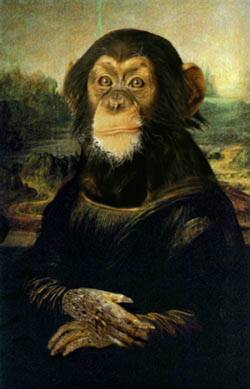
Leonardo da Vinci also observed that it’s no mystery why it is fun to be around happy people and depressing to be around depressed people. He also observed the melancholy that painters usually give to portraits. He attributed that to the solitariness of the artist and their joyless environment. According to Giorgio Vasari (1568) that while painting the Mona Lisa Leonardo employed singers, musicians and jesters to chase away his melancholy as he painted. The musicians and jesters forced him laugh and be joyful. This behavior created the attitude of joy and pleasure as he painted. As a result, he painted a smile so pleasing that it seems divine and as alive as the original.
 
Even Facial Expressions Can Change Your Emotions
CIA researchers have long been interested in developing techniques to help them study facial expressions of suspects. Two of the researchers began simulating facial expressions of anger and distress all day, each day for weeks. One of them admitted feeling terrible after a session of making those faces. Then the other realized that he felt poorly, too, so they began to keep track. They began monitoring their body during facial movements. Their findings were remarkable. They discovered that a facial expression alone is sufficient to create marked changes in the nervous system.
In one exercise they raised their inner eyebrows, raised their cheeks, and lowered the corner of their lips and held this facial expression for a few minutes. They were stunned to discover that this simple facial expression generated feelings of sadness and anguish within them. The researchers then decided to monitor the heart rate and body temperatures of two groups of people. One group was asked to remember and relive the most sorrowful experience in their life. The other group in another room was simply asked to produce a series of facial expressions expressing sadness. Remarkably, the second group, the people who were pretending, showed the same physiological responses as the first.
The CIA researchers in a further experiment had one group of subjects listen to recordings of top comedians and look at a series of cartoons while holding a pen pressed between their lips an action that makes it impossible to smile. Another group held a pen between their teeth which had the opposite effect and made them smile. The people with the pen between their teeth rated the comedians and cartoons much funnier than the other group. What’s more, neither group of subjects knew they were making expressions of emotion. Amazingly, an expression you do not even know you have can create an emotion you did not choose to feel. Emotion doesn’t just go from the inside out. It goes from the outside in.
Try the following thought experiment.
•Lower your eyebrows.
•Raise your upper eyelid.
•Narrow the eyelids.Press your lips together.
Hold this expression and you will generate anger. Your heartbeat will go up ten or twelve beats. Your hands will get hot, and you will feel very unpleasant.
The next time you’re feeling depressed and want to feel happy and positive, try this.
•Put a pen between your teeth in far enough so that it’s stretching the edges of your mouth back without feeling uncomfortable. This will force a smile. Hold it there for five minutes or so. You’ll find yourself inexplicably in a happy mood. Then try walking with long strides and looking straight ahead. You will amaze yourself at how fast your facial expressions can change your emotions.

Creative Play for Kids Art and Drama Therapy for Children – Coping with Trauma

17 Monday Dec 2018

Posted by RichardB in children, creative arts therapy, Creativity, trauma, YouTube

≈ Comments Off on Creative Play for Kids Art and Drama Therapy for Children – Coping with Trauma

For more visit:
American Art Therapy
Drama Therapy
Dance/Movement Therapy
Play Therapy

How to Build Your Creative Confidence | David Kelley | TED Talks

14 Friday Dec 2018

Posted by RichardB in Creativity, YouTube

≈ Comments Off on How to Build Your Creative Confidence | David Kelley | TED Talks


Being Creative & Meditation

12 Wednesday Dec 2018

Posted by RichardB in Creativity, Meditation, mindfulness

≈ Comments Off on Being Creative & Meditation

Certain meditation techniques can promote creative thinking, even if you have never meditated before. This is the outcome of a study by cognitive psychologist Lorenza Colzato and Dominique Lippelt at Leiden University, published in Mindfulness.

Long-lasting influence

The study is a clear indication that you don’t need to be an experienced meditator to profit more from meditation. The findings support the belief that meditation can have a long-lasting influence on human cognition, including how we conceive new ideas. Besides experienced meditators, also novices may profit from meditation.

Different techniques, different effects

But the results demonstrate that not all forms of meditation have the same effect on creativity. Test persons performed better in divergent thinking (= thinking up as many possible solutions for a given problem) after Open Monitoring meditation (= being receptive to every thought and sensation). The researchers did not see this effect on divergent thinking after Focused Attention meditation (=focusing on a particular thought or object.)

Setup of the study

40 individuals participated in this study, who had to meditate for 25 minutes before doing their thinking tasks. There were both experienced mediators and people who never meditated before. The study investigated the influences of different types of meditative techniques on the two main ingredients of creativity:

  • Divergent thinking Allows for many new ideas to be generated. It is measured using the so-called Alternate Uses Task method where participants are required to think up as many uses as possible for a particular object, such as a pen.
  • Convergent thinking Convergent thinking, on the other hand, is a process whereby one possible solution for a particular problem is generated. This is measured using the Remote Associates Task method, where three unrelated words are presented to the participants, words such as ‘time’, ‘hair’ and ‘stretch’. The participants are then asked to identify the common link: in this case, ‘long’.

Lorenza S. Colzato, Ayca Szapora, Dominique Lippelt, Bernhard Hommel. Prior Meditation Practice Modulates Performance and Strategy Use in Convergent- and Divergent-Thinking Problems. Mindfulness, 2014; DOI: 10.1007/s12671-014-0352-9

Being Creative & Meditation

05 Wednesday Dec 2018

Posted by RichardB in Creativity, Meditation, mindfulness

≈ Comments Off on Being Creative & Meditation

Certain meditation techniques can promote creative thinking, even if you have never meditated before. This is the outcome of a study by cognitive psychologist Lorenza Colzato and Dominique Lippelt at Leiden University, published in Mindfulness.418234_10151301447999689_275921219_n

Long-lasting influence

The study is a clear indication that you don’t need to be an experienced meditator to profit more from meditation. The findings support the belief that meditation can have a long-lasting influence on human cognition, including how we conceive new ideas. Besides experienced meditators, also novices may profit from meditation.

Different techniques, different effects

But the results demonstrate that not all forms of meditation have the same effect on creativity. Test persons performed better in divergent thinking (= thinking up as many possible solutions for a given problem) after Open Monitoring meditation (= being receptive to every thought and sensation). The researchers did not see this effect on divergent thinking after Focused Attention meditation (=focusing on a particular thought or object.)

Setup of the study

40 individuals participated in this study, who had to meditate for 25 minutes before doing their thinking tasks. There were both experienced mediators and people who never meditated before. The study investigated the influences of different types of meditative techniques on the two main ingredients of creativity:

  • Divergent thinking Allows for many new ideas to be generated. It is measured using the so-called Alternate Uses Task method where participants are required to think up as many uses as possible for a particular object, such as a pen.
  • Convergent thinking Convergent thinking, on the other hand, is a process whereby one possible solution for a particular problem is generated. This is measured using the Remote Associates Task method, where three unrelated words are presented to the participants, words such as ‘time’, ‘hair’ and ‘stretch’. The participants are then asked to identify the common link: in this case, ‘long’.

Lorenza S. Colzato, Ayca Szapora, Dominique Lippelt, Bernhard Hommel. Prior Meditation Practice Modulates Performance and Strategy Use in Convergent- and Divergent-Thinking Problems. Mindfulness, 2014; DOI: 10.1007/s12671-014-0352-9

Is an Optimistic Mind Associated with a Healthy Heart?

14 Friday Sep 2018

Posted by RichardB in Creativity, Optimistic, personality, Wellness

≈ Comments Off on Is an Optimistic Mind Associated with a Healthy Heart?

Tags

Creativity, Healthy Heart

“Health is a state of complete physical, mental, and social well-being, and not merely the absence of disease and infirmity.” — World Health Organization (1946) Many poets, philosophers, and thinkers throughout history have recognized the intimate link between physical and mental health. The ancient Roman poet Juvenal once declared “A healthy f-555 mind in a healthy body”. However, until relatively recently, most psychological research has focused on the link between psychological difficulties (e.g., anxiety, depression) and physical health. But things are changing. Over the past few decades, a growing number of studies demonstrate that merely alleviating anxiety and stress don’t necessarily lead to better life outcomes. Positive characteristics, such as optimism, vitality, meaning, and subjective life satisfaction are immensely important in their own right. The related fields of positive psychology and health psychology focus on rigorous scientific investigations of how people adapt to life’s inevitable challenges, and how that is related (or even leads to) a better quality of life. This process of resilience across life is the idea of thriving, successful aging, or flourishing.

See more at: http://www.creativitypost.com/psychology/is_an_optimistic_mind_associated_with_a_healthy_heart

The Creative Life and Well-Being

24 Friday Aug 2018

Posted by RichardB in Creativity, Wellness

≈ Comments Off on The Creative Life and Well-Being

Tags

Creativity, wellness

The Creative Life is full of new possibilities, discoveries, exploration, experimentation, self-expression, and invention. It’s a habit, a way of being, a style of existing. But is the Creative Life full of well-being?

Depends on how you define well-being.

In recent years, psychologists have taken a deeper look at well-being. The traditional approach to well-being focuses on hedonic pleasures and positive emotions. However, while positive emotions often accompany happiness, the mere experience of positive emotions is not necessarily an indicator of happiness, and the presence of negative emotions doesn’t necessarily decrease one’s well-being. This deeper approach to well-being, often described as “eudaimonic well-being”, focuses on living life in a full and deeply satisfying way.

What are the dimensions of eudaimonic well-being? Psychologist Carol Ryff makes the case for no less than six dimensions of eudaimonia:

  1.  Autonomy (“I have confidence in my opinions, even if they are contrary to the general consensus“)
  2. Environmental mastery (“I am quite good at managing the many responsibilities of my daily life”)
  3. Personal growth (“I think it is important to have new experiences that challenge how you think about yourself and the world”)
  4. Positive relations with others (“People would describe me as a giving person, willing to share my time with others”)
  5. Purpose in life (“Some people wander aimlessly through life, but I am not one of them”)
  6. Self-acceptance (“I like most aspects of my life”)

See more at: http://www.creativitypost.com/psychology/the_creative_life_and_well_being

← Older posts
Newer posts →

instagram

Follow RichardbBrunner on WordPress.com
  • Tumblr
  • YouTube

Blog at WordPress.com.

Privacy & Cookies: This site uses cookies. By continuing to use this website, you agree to their use.
To find out more, including how to control cookies, see here: Cookie Policy
  • Subscribe Subscribed
    • RichardbBrunner
    • Join 491 other subscribers
    • Already have a WordPress.com account? Log in now.
    • RichardbBrunner
    • Subscribe Subscribed
    • Sign up
    • Log in
    • Report this content
    • View site in Reader
    • Manage subscriptions
    • Collapse this bar
 

Loading Comments...