The intestine – The body’s underappreciated control center | DW Documentary
21 Wednesday May 2025
Posted in Health and wellness, Wellness
≈ Comments Off on The intestine – The body’s underappreciated control center | DW Documentary
21 Wednesday May 2025
Posted in Health and wellness, Wellness
≈ Comments Off on The intestine – The body’s underappreciated control center | DW Documentary
12 Wednesday Feb 2025
Posted in Health and wellness
≈ Comments Off on How Healthcare Woes Forced One of New York’s Top Restaurants to Close | …
Tags
31 Friday Jan 2025
Posted in Health and wellness
≈ Comments Off on A Hospital in the Cloud Bringing Health Care Anywhere in the World | watch Tedx
24 Friday Jan 2025
Posted in Health and wellness
≈ Comments Off on How Private Equity in Healthcare Puts Patients at Risk | Amanpour and Co…
Tags
Why I have and will only work for NGO or GO in human services.
16 Wednesday Oct 2024
Posted in culture, Developmental Psychology, Health and wellness, Psychology, Research, Science
≈ Comments Off on Is there a genius in all of us?
Tags
Great article about research on where and how people become geniuses. It’s the nurturing that makes the nature of things.
From the BBC article: “Where do athletic and artistic abilities come from? With phrases like “gifted musician”, “natural athlete” and “innate intelligence”, we have long assumed that talent is a genetic thing some of us have and others don’t.”

Taken with my phone looking south.
But new science suggests the source of abilities is much more interesting and improvisational. It turns out that everything we are is a developmental process and this includes what we get from our genes.
28 Wednesday Aug 2024
Posted in Health and wellness
≈ Comments Off on Health
Tags
Illness that is of a chronic nature has a huge impact on individuals separately, as well as within the context of family systems. Health care systems, being “systems”, have an inability to care for patients on an individual basis. While this impersonal method of heath care is promoted as cost effective, it increases costs in the long run by not holistically treating the client. Impersonal health care adds to the disassociation patients and their families often experience; for the ill body, the new family/life dynamic, the medical profession, and the possibilities of wellness.
In 1990 I worked with Bear, a 38 year old womyn who had a late stage mastectomy. She was dealing with issues of an altered body, of death, her children being motherless, things left undone. During a 10 day group movement based expressive arts residential retreat, she took the opportunity to explore some of these issues. One of her expressions was in the form of a healing ritual. Most of the group stood on one side of a pond, singing the gospel hymn, “Wade on the water”. On the other side, Bear was carried down to the waters edge, wrapped in a blanket, and left there, standing, still wrapped. She slowly undid the blanket and waded into the water, slowly swimming to the other side, where, like a chorus of angels we waited, still singing, and now sobbing.
Bear engaged in a method of healing that falls, far, from the “systems” method of health care. Her methodology embraced her needs, hopes and fears in a manner that can only be facilitated in an open, heartfelt atmosphere. The waves that she stirred that day are still going, still rippling outwards, deeply and profoundly on all those around the pond and beyond.
21 Wednesday Aug 2024
Posted in Health and wellness
≈ Comments Off on Resiliency
Resiliency
What does it mean to be resilient? Bounce back, bounce off of, withstand, remain standing. Is it a part of our hereditary, our inborn temperament? Perhaps it’s a positive self concept. An ability to remember the past, live in the present, and look to the future. Could it also involve hitting rock bottom, being aware of limitations, seeking support? Perhaps it’s a mentor, a will to live, a focus on healing.
Could it be that resiliency is a connection with spirituality, a commitment to listen to others, a willingness to be truthful? One thing is certain that resiliency is different for everyone, with some commonality mixed in here and there.
AS a child, I found/rediscovered resiliency outside, often in my favorite tree.
A tree stands alone
Wind rustles leaves together
We sway arm in branch
As an adult, I have found resiliency many places and many ways. Often, in combining the practice of creative movement, tai chi and hatha yoga.
02 Friday Feb 2024
Posted in Health and wellness
≈ Comments Off on America’s Rural Healthcare Crisis | If Dreams Were Lightning | Watch
29 Friday Sep 2023
Posted in Health and wellness
≈ Comments Off on Watch “Improving Access to Care for People with Developmental Disabilities”
15 Friday Sep 2023
Posted in Health and wellness, Over 65
≈ Comments Off on Watch “Health Matters 2023: How 21st Century Science Is Improving How We Age”
25 Friday Aug 2023
Posted in Health and wellness
≈ Comments Off on Watch “How harmful can ultra-processed foods be for us? – BBC News”
Tags
26 Friday May 2023
Posted in Health, Health and wellness
≈ Comments Off on Cleveland Clinic: How to Avoid ‘Tech Neck’ | Andrew Bang, DC
12 Friday May 2023
Posted in Health and wellness, Over 65
≈ Comments Off on Watch “A Multidisciplinary Panel Discussion of Peripheral Artery Disease (PAD)” from Cleveland Clinic.
15 Wednesday Dec 2021
Posted in Health and wellness, Research
≈ Comments Off on Narrative Medicine
From Wikipedia: Narrative medicine is a medical approach that utilizes people’s narratives in clinical practice, research, and education as a way to promote healing. It aims to address the relational and psychological dimensions that occur in tandem with physical illness, with an attempt to deal with the individual stories of patients. In doing this, narrative medicine aims not only to validate the experience of the patient, but also to encourage creativity and self-reflection in the physician.
Excerpt below from Philosophy, Ethics, and Humanities in Medicine: Exploring perception and usage of narrative medicine by physician specialty: a qualitative analysis.
Background
Narrative medicine is a well-recognized and respected approach to care. It is now found in medical school curricula and widely implemented in practice. However, there has been no analysis of the perception and usage of narrative medicine across different medical specialties and whether there may be unique recommendations for implementation based upon specialty. The aims of this study were to explore these gaps in research.
Fifteen senior physicians who specialize in internal medicine, pediatrics, or surgery (5 physicians from each specialty) were interviewed in a semi-structured format about the utilization, benefits, drawbacks (i.e., negative consequences), and roles pertaining to narrative medicine. Qualitative content analysis of each interview was then performed.
Excerpt from : Exploring perception and usage of narrative medicine by physician specialty: a qualitative analysis.
07 Wednesday Oct 2020
Posted in Health and wellness, Meditation, mindfulness
≈ Comments Off on What is Mindfulness ?
Mindfulness is a concentrated state of awareness that can help us see and respond to situations with clarity and without getting carried away by emotions or the constant chatter in our heads. Mindfulness enables us to:
· Better manage tension and stress
· Enhance objectivity, mental focus
· Communicate and make decisions more effectively
· Improve productivity
· Quiet’s noise in the mind
Meditation
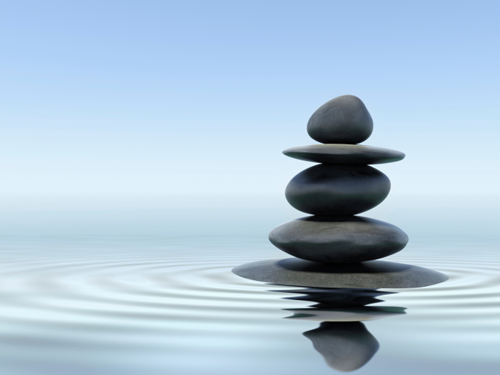
Meditation is the tool we use to cultivate mindfulness. With meditation, you intentionally pay attention to a particular object as a way to strengthen concentration. There are thousands of meditative techniques: Tai Chi, yoga, focusing on the breath and using a mantra are all examples. People often think that meditating “correctly” means clearing all thought from the mind. This is a myth. The mind never stops thinking – it’s when we get caught up in our thoughts that we lose mindfulness. By witnessing thoughts, allowing them to pass, and returning to your chosen object of focus, you can actually build the muscle of concentration. Think of meditation as a fitness routine for the mind.
Are there other benefits to mindfulness?
In addition to boosting brain power, numerous research studies have shown significant physical benefits including:
· Reduced blood pressure
· Lowered cholesterol levels
· Enhanced immune function
· Reduced headache, migraine, back pain
· Improved respiratory function
Mindfulness does not require a particular set of beliefs in order to learn and practice – it is a quality of mind, accessible and available to all.
Mindfulness allows us to live every moment fully without the filters of bias, judgment or emotional reaction.
Mindfulness helps the body cope with physical challenges such as headaches, back pain and even heart disease.
Mindfulness keeps us from reacting too quickly – it helps increase the gap between impulse and action.
01 Friday Nov 2019
Men’s health may be compromised by weight stigma, finds the latest research from the University of Connecticut.
As many as 40% of men report experiencing weight stigma, but little is known about how this stigma affects their health. This study found that men experiencing weight stigma have more depressive symptoms, are more likely to binge eat, and have lower self-rated health. Read More at Science Daily

16 Tuesday Jul 2019
Posted in Health and wellness, Meditation, mindfulness
≈ Comments Off on What is Mindfulness ?
Mindfulness is a concentrated state of awareness that can help us see and respond to situations with clarity and without getting carried away by emotions or the constant chatter in our heads. Mindfulness enables us to:
· Better manage tension and stress
· Enhance objectivity, mental focus
· Communicate and make decisions more effectively
· Improve productivity
· Quiet’s noise in the mind

Meditation
Meditation is the tool we use to cultivate mindfulness. With meditation, you intentionally pay attention to a particular object as a way to strengthen concentration. There are thousands of meditative techniques: Tai Chi, yoga, focusing on the breath and using a mantra are all examples. People often think that meditating “correctly” means clearing all thought from the mind. This is a myth. The mind never stops thinking – it’s when we get caught up in our thoughts that we lose mindfulness. By witnessing thoughts, allowing them to pass, and returning to your chosen object of focus, you can actually build the muscle of concentration. Think of meditation as a fitness routine for the mind.
Are there other benefits to mindfulness?
In addition to boosting brain power, numerous research studies have shown significant physical benefits including:
· Reduced blood pressure
· Lowered cholesterol levels
· Enhanced immune function
· Reduced headache, migraine, back pain
· Improved respiratory function
Mindfulness does not require a particular set of beliefs in order to learn and practice – it is a quality of mind, accessible and available to all.
Mindfulness allows us to live every moment fully without the filters of bias, judgment or emotional reaction.
Mindfulness helps the body cope with physical challenges such as headaches, back pain and even heart disease.
Mindfulness keeps us from reacting too quickly – it helps increase the gap between impulse and action.