-
Brain Map
-
believe in ourselves
“We do not believe in ourselves until someone reveals that deep inside us something is valuable, worth listening to, worthy of our trust, sacred to our touch. Once we believe in ourselves we can risk curiosity, wonder, spontaneous delight or any experience that reveals the human spirit.” E.E. Cummings
-
Relaxation
I started engaging in relaxation tools as a teenage in the mid 1970’s when I first started practicing Hatha and Raja Yoga. After 38 years I can say with confidence that it works for me. Since 1983 amongst other things I have taught Hatha Yoga, and relaxation techniques.
In the past 30 years, there has been considerable interest in the relaxation response and how inducing this state may benefit health. Research has focused primarily on illness and conditions in which stress may play a role either as the cause of the condition or as a factor that can make the condition worse.

Currently, there is some scientific evidence that relaxation techniques may be an effective part of an overall treatment plan for some disorders, including:
- Anxiety. Studies have suggested that relaxation may assist in the treatment of phobias or panic disorder. Relaxation techniques have also been used to relieve anxiety for people in stressful situations, such as when undergoing a medical procedure.
- Depression. In 2008, a major review of the evidence for relaxation in the treatment of depression found that relaxation techniques were more effective than no treatment for depression, but not as effective as cognitive-behavioral therapy.
- Headache. There is some evidence that biofeedback and other relaxation techniques may be helpful for relieving tension or migraine headaches. In some cases, these mind and body techniques were more effective than medications for reducing the frequency, intensity, and severity of headaches.
- Pain. Some studies have shown that relaxation techniques may help reduce abdominal and surgery pain.
Relaxation involves practice and willingness to fully engage in the process of relaxing. Stay tuned for some great relaxing tools.
-
neuroscience & conflict resolution
For many of us, the flood of tribal hate and violence in the news can lead to a feeling of inevitability, that we human beings are inherently at the throats of those unlike us, and that it will be forever so. But for those in the conflict resolution field, there is a quietly growing effort to find hope in a new area: neuroscience.
Some who work with ethnic, racial and religious conflict are pairing with neuroscientists to understand how small advancements in brain research can help explain how we experience emotions like prejudice and disgust and fear. It will be a while before researchers are able to devise many specific strategies for using that knowledge of how the brain works in the peace-building process. But simply teaching people that there is a neurological basis for prejudice has the potential to help them view the deep-seated roots of their conflicts more objectively, says Timothy Phillips, co-founder of the conflict resolution organization Beyond Conflict.
“There is something deeply powerful about knowing it’s not just about culture, race, ethnicity – that all those things sit on an operating system called the human brain, and that that is universal,” says Phillips. “Contrary to social and political science that says humans are rational, we are deeply emotional beings. What drives our behavior is deeply emotionally based but we don’t even have access to what drives us.”
-
Top songs I have listened too in 2019: Sílvia Pérez Cruz – Grito Pelao
Sílvia Pérez Cruz is a Spanish singer. In 2012, she recorded her first solo album, 11 de Novembre, which was nominated for album of the year in both Spain and France. One of her compositions, “No Te Puedo Encontrar”, received a Goya Award for best original song. In 2014, she released her album Granada. Both releases have been in collaboration with Raül Fernández Miró.
I have a 16,000 plus digital audio collection and I use Media Monkey to manage my files. One feature of Media Monkey is you can sort your collection based on the number of times played. This playlist is based on the top music and/or music video files I played/listened/streamed from my server in 2019. Complete Playlist HERE
-
Spring ending in New England 2

-
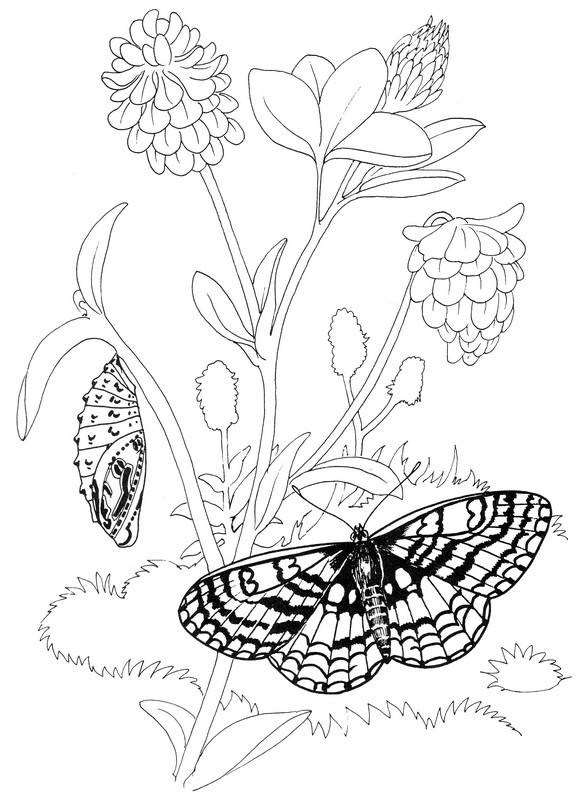
Chalcedon Checkerspot Coloring Page
-
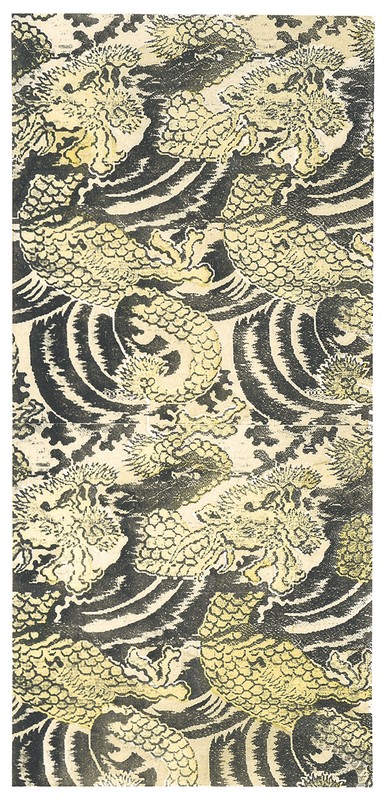
Japanese Textile Designs 113
-
Jun Teaching his cats to ring a bell
-
Artists have differently structured brains
 Brain scans revealed artists have more grey matter in parts of their brains
Artists have structurally different brains compared with non-artists, a study has found.
Participants’ brain scans revealed that artists had increased neural matter in areas relating to fine motor movements and visual imagery.
The research, published in NeuroImage, suggests that an artist’s talent could be innate.
But training and environmental upbringing also play crucial roles in their ability, the authors report.
As in many areas of science, the exact interplay of nature and nurture remains unclear.
Lead author Rebecca Chamberlain from KU Leuven, Belgium, said she was interested in finding out how artists saw the world differently.
“The people who are better at drawing really seem to have more developed structures in regions of the brain that control for fine motor performance and what we call procedural memory,” she explained.
In their small study, researchers peered into the brains of 21 art students and compared them to 23 non-artists using a scanning method called voxel-based morphometry.
 One artist who has practiced for many years is Alice Shirley – here is a detail of her Giant Lobster
These detailed scans revealed that the artist group had significantly more grey matter in an area of the brain called the precuneus in the parietal lobe.
“This region is involved in a range of functions but potentially in things that could be linked to creativity, like visual imagery – being able to manipulate visual images in your brain, combine them and deconstruct them” .
‘I grew up in an arty family’
Alice Shirley – artist
“I had a very arty family. My mother was an art historian and my dad a photographer.
“I grew up surrounded by art and was encouraged to draw from a very young age, and I liked it so I did more of it. It was a combination of encouragement and enthusiasm that made me interested in pursuing art.
“It’s just in the blood.”
Participants also completed drawing tasks and the team looked at the relationship between their performance in this task and their grey and white matter.
A changing brain
Those better at drawing had increased grey and white matter in the cerebellum and also in the supplementary motor area – both areas that are involved with fine motor control and performance of routine actions.
Grey matter is largely composed of nerve cells, while white matter is responsible for communication between the grey matter regions.
But it is still not clear what this increase of neural matter might mean. From looking at related studies of other creative people, such as musicians, it suggests that these individuals have enhanced processing in these areas, Dr Chamberlain added.
“It falls into line with evidence that focus of expertise really does change the brain. The brain is incredibly flexible in response to training and there are huge individual differences that we are only beginning to tap into.”

Another author of the paper, Chris McManus from University College London, said it was difficult to distinguish what aspect of artistic talent was innate or learnt.
“We would need to do further studies where we look at teenagers and see how they develop in their drawing as they grow older – but I think [this study] has given us a handle on how we could begin to look at this.”
Commenting on the small sample size, Prof McManus said: “Since the results were statistically significant then clearly there was the power to find something, which almost by definition means it was large enough.
“And also of interest is that other people have also had hints at effects in similar locations. Obviously in an ideal world we’d like 1000 subjects, but that isn’t realistic. It’s always a compromise between cost, practicality and interest.”
No ‘right’ side
Ellen Winner of Boston College, US, who was not involved with the study, commented that it was very interesting research.
She said it should help “put to rest the facile claims that artists use ‘the right side of their brain’ given that increased grey and white matter were found in the art group in both left and right structures of the brain”.
“Only a prospective study could get at the question of innate structural brain differences that predispose people to become visual artists, and this kind of study has not been done as it would be very difficult and very expensive to carry out.”


 RichardbBrunner