-
Dances of Universal Peace Video
Ayesha Jeanne Lauenborg was my mentor with the Dances of Universal Peace. Thank you Ayesha for all that you taught me, I think of you often.
-
Stanford Medicine: Mood Disorders Across the Lifespan
Dr. Katherine Williams, Director of Stanford’s Women’s Wellness Clinic, addresses Women’s Health Forum attendees on mood disorders in women.
-
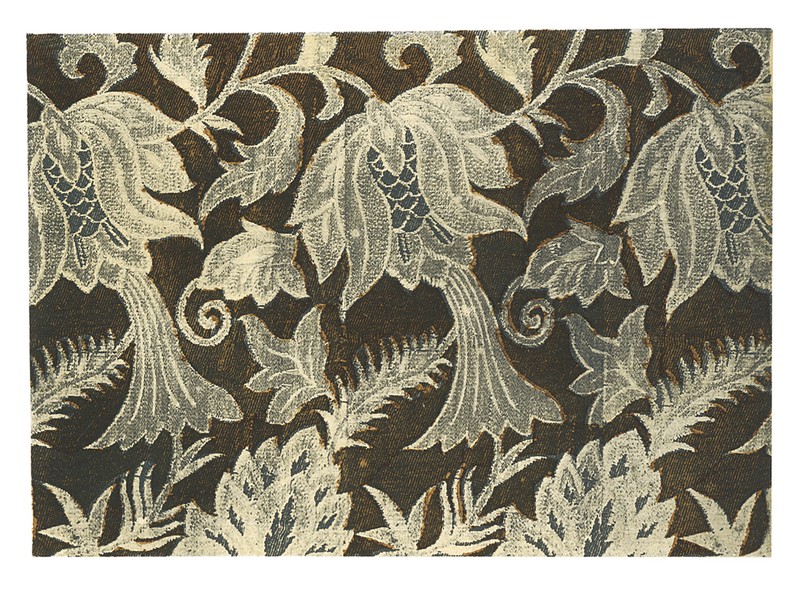
Japanese Textile Designs 126
-
water flows
Study how water flows in a valley stream, smoothly and freely between the rocks. Also learn from holy books and wise people. Everything – even mountains, rivers, plants and trees – should be your teacher. Morihei Ueshiba

-
Art used to connect with dementia patients
Something happened when Brant Kingman handed his mother a colored pencil.In the three years since Polly Penney, 87, was diagnosed with dementia, she had lost much of her short-term memory and some of her language. So she would ask Kingman the same question again, then again. Out of “absolute out-of-my-mind frustration,” Kingman, an artist, decided to try drawing together. Penney grew quiet. Her shoulders loosened. “It silenced her so we could sit together,” Kingman said. “And then every now and then, lucid thoughts would appear to her.”Almost unintentionally, he tapped into a national trend: using art as therapy for people with Alzheimer’s disease and other forms of dementia. There are now art workshops for Alzheimer’s patients. Painting, poetry and pottery classes are tailored to dementia’s tics. Giving Voice Chorus, a pair of Twin Cities choirs for people with dementia, has created a tool kit so other cities might start their own.Neurological disorders that attack memory and verbal communication can spare creativity, some research shows. In special cases, Alzheimer’s and frontotemporal dementia can even kick artistic ability into overdrive, said Dr. Bruce Miller, a neurologist at the University of California, San Francisco. If the disease attacks circuits on one side of the brain, he said, it might spark an interest or ability in the other side.“It’s all about the geography,” said Miller, director of the university’s Memory and Aging Center. “It’s where the disease hits that is a determinant of what is lost — but sometimes what is gained.”Partly because it offers another way to communicate, art therapy is “going to become, more and more, a regular part of how we look after people,” he said. MORE HERE
 -
Walking and creativity
When the task at hand requires some imagination, taking a walk may lead to more creative thinking than sitting, according to research published by the American Psychological Association.
“Many people anecdotally claim they do their best thinking when walking,” said Marily Oppezzo, PhD, of Santa Clara University. “With this study, we finally may be taking a step or two toward discovering why.”While at Stanford University’s Graduate School of Education, Oppezzo and colleague Daniel L. Schwartz, PhD, conducted studies involving 176 people, mostly college students. They found that those who walked instead of sitting or being pushed in a wheelchair consistently gave more creative responses on tests commonly used to measure creative thinking, such as thinking of alternate uses for common objects and coming up with original analogies to capture complex ideas. When asked to solve problems with a single answer, however, the walkers fell slightly behind those who responded while sitting, according to the study published in APA’s Journal of Experimental Psychology: Learning, Memory and Cognition.
While previous research has shown that regular aerobic exercise may protect cognitive abilities, these researchers examined whether simply walking could temporarily improve some types of thinking, such as free-flowing thought compared to focused concentration. “Asking someone to take a 30-minute run to improve creativity at work would be an unpopular prescription for many people,” Schwartz said. “We wanted to see if a simple walk might lead to more free-flowing thoughts and more creativity.”
Of the students tested for creativity while walking, 100 percent came up with more creative ideas in one experiment, while 95 percent, 88 percent and 81 percent of the walker groups in the other experiments had more creative responses compared with when they were sitting. If a response was unique among all responses from the group, it was considered novel. Researchers also gauged a participant’s total number of responses and whether a response was feasible and appropriate to the constraints of the task. For example, “Putting lighter fluid in soup is novel, but it is not very appropriate,” Oppezzo said.
Marily Oppezzo, Daniel L. Schwartz. Give your ideas some legs: The positive effect of walking on creative thinking.. Journal of Experimental Psychology: Learning, Memory, and Cognition, 2014; DOI: 10.1037/a0036577 -
Doggie MRI
By placing dogs in an MRI scanner, researchers from Hungary found that the canine brain reacts to voices in the same way that the human brain does. Emotionally charged sounds, such as crying or laughter, also prompted similar responses, perhaps explaining why dogs are attuned to human emotions.

The work is published in the journal Current Biology. The full article is @ BBC.
Eleven pet dogs took part in the study; training them took some time. “We used positive reinforcement strategies – lots of praise,” said Dr Andics. “There were 12 sessions of preparatory training, then seven sessions in the scanner room, then these dogs were able to lie motionless for as long as eight minutes. Once they were trained, they were so happy, I wouldn’t have believed it if I didn’t see it.”
-
Cornelius – Audio Architecture (Live)
-
Clients find healing, self-expression through restorative art program
Hung on the walls of the Sister Mary Alice Murphy Center for Hope, you can see — and even purchase — Jim Lucas’ saving grace.
The formerly homeless Fort Collins man is a recovering addict who has been clean for four years after a 15-year struggle with meth, his “drug of choice.” He hasn’t had a drink in 11 years. He found his way off the streets around the same time he became clean.

“Funny how that works out,” he said.
The struggle to go back to methamphetamine and substance abuse is always there, but Lucas, 53, has the best sober companion he could ask for: art. He’s one of around 15 artists participating in ArtSpe@k, a restorative art program at the Murphy Center in partnership with Front Range Community College’s community studio that encourages Murphy Center guests to tap into their creative side. For more click.




 RichardbBrunner