-
Seguy Art Deco Designs 118

-
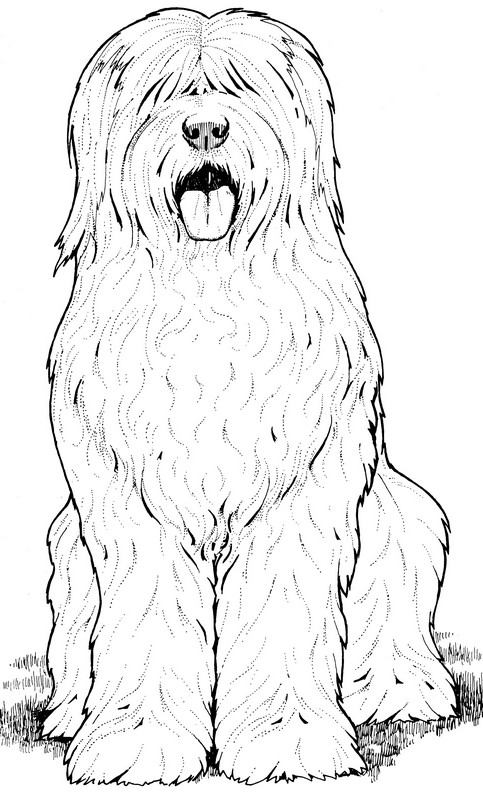
Old English Sheepdog-Coloring Page
-
Brain’s happiness region
Happiness is the meaning and the purpose of life, the whole aim and end of human existence,” the ancient Greek philosopher Aristotle once said. But how does one reach this goal? According to a new study by researchers from Japan, a person’s happiness may depend on the size of a specific brain region.
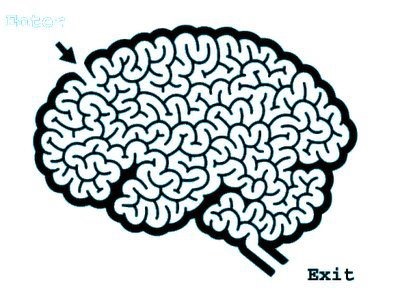
Researchers found people who were happier had larger gray matter volume in the precuneus region of the brain.
Study leader Dr. Wataru Sato, of Kyoto University in Japan, and colleagues publish their findings in the journal Scientific Reports.
The definition of happiness has been debated for centuries. In recent years, psychologists have suggested that happiness is a combination of life satisfaction and the experience of more positive than negative emotions – collectively deemed “subjective well-being.”
But according to Dr. Sato and his colleagues, the neurological mechanisms behind a person’s happiness were unclear.
“To date, no structural magnetic resonance imaging (MRI) investigation of the construct has been conducted,” they note.
“Identification of the neural substrates underlying subjective happiness may provide a complementary objective measure for this subjective construct and insight into its information-processing mechanism.”
Meditation may boost happiness by targeting precuneus brain region
To address this research gap, the team used MRI to scan the brains of 51 study participants.
After the scans, subjects were asked to complete three short questionnaires that asked them how satisfied they are with their lives, how happy they are and how intensely they feel positive and negative emotions.
 The researchers found that individuals who had higher happiness scores had larger gray matter volume in the precuneus of the brain – a region in the medial parietal lobe that plays a role in self-reflection and certain aspects of consciousness – than their unhappy counterparts.
What is more, the researchers found that one’s happiness may be driven by a combination of greater life satisfaction and intensity of positive emotion – supporting the theory of subjective well-being.
“These results indicate that the widely accepted psychological model postulating emotional and cognitive components of subjective happiness may be applicable at the level of neural structure,” they add.
These findings, the researchers say, indicate that individuals may be able to boost their happiness through practices that target the precuneus, such as meditation:
“Previous structural neuroimaging studies have shown that training in psychological activities, such as meditation, changed the structure of the precuneus gray matter.
Together with these findings, our results suggest that psychological training that effectively increases gray matter volume in the precuneus may enhance subjective happiness.”
Dr. Sato adds that, while further research is required, these current findings may be useful for developing psychological programs that boost a person’s happiness
-
preach
Did St Francis preach to the birds? Whatever for? If he really liked birds he would have done better to preach to the cats. Rebecca West

-
courage
Success is not final, failure is not fatal, it’s the courage to continue that counts. Winston Churchill
-
Mood Disorders Across the Lifespan
-
Therapy dogs
A therapy dog is a dog trained to provide affection and comfort to people in hospitals, retirement homes, nursing homes, schools, hospices, people with learning difficulties, and stressful situations, such as disaster areas.
Therapy dogs come in all sizes and breeds. The most important cha
racteristic of a therapy dog is its temperament. A good therapy dog must be friendly, patient, confident, gentle, and at ease in all situations. Therapy dogs must enjoy human contact and be content to be petted and handled, sometimes clumsily.
A therapy dog’s primary job is to allow unfamiliar people to make physical contact with it and to enjoy that contact. Children in particular enjoy hugging animals; adults usually enjoy simply petting the dog. The dog might need to be lifted onto, or climb onto, an individual’s lap or bed and sit or lie comfortably there. Many dogs contribute to the visiting experience by performing small tricks for their audience or by playing carefully structured games. In hospice environments, therapy dogs can play a role in palliative care by reducing death anxiety. -
Mail & Guardian compilation of 2016 daily pics.
The Mail & Guardian from South Africa

http://mg.co.za/multimedia/2016-12-21-2016-end-of-the-year-pictures
-
Meditation helps students
A study of students in California universities showed that those who practiced a bit of meditation in their personal lives performed better on tests. This applied to students who practice the art of Zen, as well as those who simply meditate for a few minutes before class.
The research, published in the journal Mindfulness, showed that meditation worked best for first year students, which led researchers to speculate that younger students tend to struggle with concentration more.

Professor Robert Youmans, of George Mason University in Virginia, co-lead the study with University of Illinois doctoral student Jared Ramsburg. According to Professor Youmans:
“One difficulty for researchers who study meditation is that the supposed benefits of meditation do not always replicate across different studies or populations, and so we have been trying to figure out why. This data from this study suggest that meditation may help students who might have trouble paying attention or focusing. Sadly, freshmen classes probably contain more of these types of students than senior courses because student populations who have difficulty self-regulating are also more likely to leave the university.”
The researchers said that coaching students on proper meditation could improve academic results. Ramsburg’s own personal experiences inspired him to undertake the study (he is a Buddhist).
“I think that if mindfulness can improve mental clarity, focus and self-discipline, then it might be useful in a variety of settings and for a variety of goals.”
For anyone uncomfortable with meditation (even though it is not necessarily a religious practice), Ramsburg says that taking long walks in the morning before you start your day could inspire the same outcome.
“Basically, becoming just a little bit more mindful about yourself and your place in the world might have a very important, practical benefit – in this case, doing better in college.”
-
J Balvin, Willy William – Mi Gente

 RichardbBrunner