-
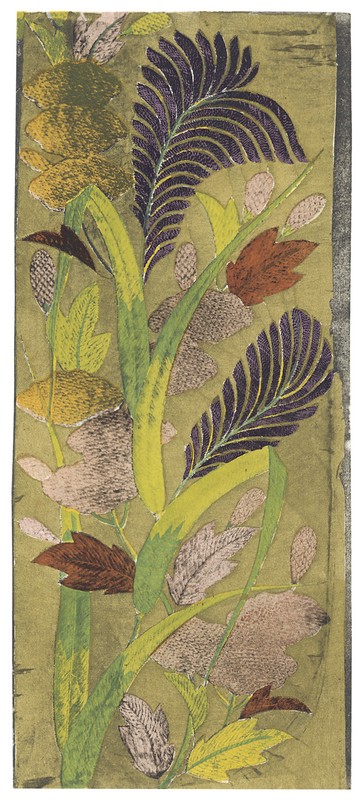
Japanese Textile Designs 130
-
Havana Brown-Coloring Page

-
light and sight
“In your light I learn how to love. In your beauty, how to make poems. You dance inside my chest where no-one sees you, but sometimes I do, and that sight becomes this art.” Rumi

-
barren field
Hold fast to dreams For when dreams go Life is a barren field Frozen with snow. Langston Hughes

-
In mindfulness
In mindfulness, you learn to see thoughts as just thoughts rather than as facts or situations you must react to. Thoughts commonly come and go in the mind, and if you treat all thoughts as true and assign them all the same level of importance, you’re more prone to feel down in the midst of negative or self-judgmental thoughts and highly elated in the midst of positive thoughts. This rollercoaster ride of emotions and energy often seems to trace the same path as bipolar disorder’s ups and downs.

By practicing mindfulness, you notice that both types of thoughts are just thoughts, and you don’t need to react to them or even give them your full attention. After all, thoughts arise merely out of your perception of reality or are borne out of your own thought process. You’re not required to give them the full status of being true. Mindfulness involves watching thoughts and stepping back from them – like watching clouds passing through the sky. This enables you to become a disinterested observer, and thoughts lose some of their control over your emotions.
Switching modes of mind
Mindfulness also emphasizes learning to switch modes of mind. Normally you operate in “doing mode,” which is all about setting goals and trying to achieve them. Many people get stuck in this mode and never realize they have the option of shifting to “being mode,” which is all about allowing and accepting things just as they are, rather than working hard to change them.
Being mode is particularly helpful in the realm of emotions. If you’re feeling sad and don’t accept it, you can end up fighting to change the experience. This can lead to a deeper feeling of sadness and trigger a negative thought cycle. By being with the experience and mindfully accepting the emotion, you allow the feeling to dissipate in its own time.
 Mindfulness looks like a potentially effective way of managing bipolar disorder, especially the depressive pole, which may be the most difficult to treat with medication alone. Mindfulness exercises and meditations are useful for people with bipolar disorder (manic depression) because mindfulness:
- Decreases the relapse rate for depression.
- Reduces stress and anxiety, which contribute significantly to the onset of both mania and depression and may worsen the course of the illness.
- Improves a person’s ability to manage thoughts and feelings and increases awareness of the way the person tends to internalize external stimuli.
Mindfulness exercises include guided body scan meditation, mindful walking, mindfulness of breath, and mindfulness of thoughts and feelings.
-
Healthy ways to manage stress
If your methods of coping with stress aren’t contributing to your greater emotional and physical health, it’s time to find healthier ones. There are many healthy ways to manage and cope with stress, but they all require change. You can either change the situation or change your reaction. When deciding which option to choose, it’s helpful to think of the four As: avoid, alter, adapt, or accept.
Since everyone has a unique response to stress, there is no “one size fits all” solution to managing it. No single method works for everyone or in every situation, so experiment with different techniques and strategies. Focus on what makes you feel calm and in control.
Dealing with Stressful Situations: The Four A’s
Change the situation:
Avoid the stressor.
Alter the stressor.
Change your reaction:
Adapt to the stressor.
Accept the stressor.
1. Avoid unnecessary stress
Not all stress can be avoided, and it’s not healthy to avoid a situation that needs to be addressed.
Learn how to say “no” – Know your limits and stick to them.
Avoid people who stress you out –Limit the amount of time you spend with people that cause you stress.
Take control of your environment – If the evening news makes you anxious, turn the TV off.

Avoid hot-button topics –If you repeatedly argue about the same subject with the same people, stop bringing it up or excuse yourself when it’s the topic of discussion.
Pare down your to-do list –If you’ve got too much on your plate, distinguish between the “shoulds” and the “musts.”
2. Alter the situation
If you can’t avoid a stressful situation, try to alter it. Figure out what you can do to change things so the problem doesn’t present itself in the future.
Express your feelings instead of bottling them up. If something or someone is bothering you, communicate your concerns in an open and respectful way.
Be willing to compromise. When you ask someone to change their behavior, be willing to do the same.
Be more assertive. Deal with problems head on, doing your best to anticipate and prevent them.
Manage your time better. Plan ahead and make sure you don’t overextend yourself.
3. Adapt to the stressor
If you can’t change the stressor, change yourself. You can adapt to stressful situations and regain your sense of control by changing your expectations and attitude.
Reframe problems. Try to view stressful situations from a more positive perspective.
Look at the big picture. Will it matter in a month, or a year?
Adjust your standards. Set reasonable standards for yourself and others, and learn to be okay with “good enough.”
Focus on the positive. When stress is getting you down, take a moment to reflect on all the things you appreciate in your life, including your own positive qualities and gifts.
4. Accept what you can’t change
Some sources of stress are unavoidable, in such cases; the best way to cope with stress is to accept things as they are. Acceptance may be difficult, but in the long run, it’s easier than railing against a situation you can’t change.
Don’t try to control the uncontrollable. Focus on the things you can control such as the way you choose to react to problems.
Look for the upside. As the saying goes, “What doesn’t kill us makes us stronger.” When facing major challenges, try to look at them as opportunities for personal growth.
Share your feelings. Talk to a trusted friend or make an appointment with a therapist.
Learn to forgive. Accept the fact that we live in an imperfect world and that people make mistakes.
5. Make time for fun & relaxation
You can reduce stress in your life by nurturing yourself. If you regularly make time for healthy fun and relaxation, you’ll be in a better place to handle life’s stressors.
Healthy ways to relax and recharge
Go for a walk.
Spend time in nature.
Call a good friend.
Exercise.
Write in your journal.
Take a long bath.
Light scented candles
Play with a pet.
Work in your garden.
Get a massage.
Curl up with a good book.
Listen to music.
Watch a comedy
Nurturing yourself is a necessity, not a luxury.
Set aside relaxation time. Include rest and relaxation in your daily schedule..
Connect with others. Spend time with positive people who enhance your life.


Do something you enjoy every day. Make time for leisure activities that bring you joy, whether it be stargazing, playing the piano, or working on your bike.
Keep your sense of humor. This includes the ability to laugh at yourself.
6. Adopt a healthy lifestyle
You can increase your resistance to stress by strengthening your physical health.
Exercise regularly. Physical activity plays a key role in reducing and preventing the effects of stress.
Eat a healthy diet. Well-nourished bodies are better prepared to cope with stress, so be mindful of what you eat.
Reduce caffeine and sugar. The temporary “highs” caffeine and sugar provide often end in with a crash in mood and energy. By reducing the amount of coffee, soft drinks, chocolate, and sugar snacks in your diet, you’ll feel more relaxed and you’ll sleep better.
Avoid alcohol, cigarettes, and drugs. Self-medicating with alcohol or drugs may provide an easy escape from stress, but the relief is only temporary.
Get enough sleep. Adequate sleep fuels your mind, as well as your body. Feeling tired will increase your stress because it may cause you to think irrationally.
-
Music Therapy
Most everyone enjoys listening to music. Some of us play music as well. Music has a therapeutic effect and can be used to enhance or even change how we feel. According to the American Music Therapy Association: Music Therapy is an established health profession in which music is used within a therapeutic relationship to address physical, emotional, cognitive, and social needs of individuals. After assessing the strengths and needs of each client, the qualified music therapist provides the indicated treatment including creating, singing, moving to, and/or listening to music. Through musical involvement in the therapeutic context, clients’ abilities are strengthened and transferred to other areas of their lives. Music therapy also provides avenues for communication that can be helpful to those who find it difficult to express themselves in words. Research in music therapy supports its effectiveness in many areas such as: overall physical rehabilitation and facilitating movement, increasing people’s motivation to become engaged in their treatment, providing emotional support for clients and their families, and providing an outlet for expression of feelings.
As a Creative Arts Therapist I use music to support individuals and groups when they are engaged in a therapeutic process. Whether it’s movement, art or guided meditation the music enhances focus for the participants. I often hear people report that the music helped them to get in touch with feelings and/or explore them on a deeper level. -
Potassium can reduce stroke risk
Increasing potassium in our diets as well as cutting down on salt will reduce blood pressure levels and the risk of stroke, research in the British Medical Journal suggests.
One study review found that eating an extra two to three servings of fruit or vegetables per day – which are high in potassium – was beneficial.
A lower salt intake would increase the benefits further, researchers said.
A stroke charity said a healthy diet was key to keeping stroke risk down.
While the increase of potassium in diets was found to have a positive effect on blood pressure, it was also discovered to have no adverse effects on kidney function or hormone levels, the research concluded.
As a result, the World Health Organization has issued its first guidelines on potassium intake, recommending that adults should consume more than 4g of potassium (or 90 to 100mmol) per day.
The BMJ study on the effects of potassium intake, produced by scientists from the UN World Food Program, Imperial College London and Warwick Medical School, among others, looked at 22 controlled trials and another 11 studies involving more than 128,000 healthy participants.
Where to find potassium

Potassium is an important mineral that controls the balance of fluids in the body and helps lower blood pressure.
It is found in most types of food, but particularly in fruit, such as bananas, vegetables, pulses, nuts and seeds, milk, fish, chicken and bread.
It is recommended that adults consume around 4g of potassium a day (or at least 90-100mmol).
That is equivalent to five portions of fruit and vegetables a day.
Our early ancestors would have had a diet very high in potassium – but food processing has markedly reduced the potassium content of food.
It is thought that the average potassium consumption in many countries is below 70-80mmol/day.
The results showed that increasing potassium in the diet to 3-4g a day reduced blood pressure in adults.
This increased level of potassium intake was also linked to a 24% lower risk of stroke in those adults.
Researchers said potassium could have benefits for children’s blood pressure too, but more data was needed.
-
Lola Marsh – Only For A Moment

 RichardbBrunner