-
Seguy Art Deco Designs 127
-
sharing
I am struck by how sharing our weakness and difficulties is more nourishing to others than sharing our qualities and successes. Jean Vanier

-
no-kill
The no-kill movement began two decades ago in the United States, and it has given millions of dogs a second chance; instead of being euthanized, they are matched with families. Wonderful story about how dogs can be loved and given a second chance. Read it or listen to it here: NPR

-
Manhattanhenge

-
Fri., July 12, 2019 8:20 p.m. Eastern time
-
Sat., July 13, 2019 8:21 p.m. Eastern time
People gather and take pictures on 42nd Street in Manhattan to see a Manhattanhenge event in New York City on July 11, 2016. The Manhattanhenge sunset comes twice a year when the setting sun aligns precisely with Manhattan’s street grid. Photo by John Angelillo/UP
-
-
Problem solving
Characteristics that typically distinguish insight from “noninsight” solutions, people feel stuck before insight strikes; they can’t explain how they solved the problem and might say they were not even thinking about it; the solution appears suddenly and is immediately seen as correct. But are the neural processes involved in arriving at a solution through insight actually distinct from those related to more mundane problem-solving?
Recent findings suggest that people think about solutions, at an unconscious level, prior to solving insight problems, and that the right cerebral hemisphere (RH) appears to be preferentially involved. Jung-Beeman et al. predicted that a particular region of the RH, called the anterior superior temporal gyrus (aSTG), is likely involved in insight because it seems critical for tasks that require recognizing broad associative semantic relationships—exactly the type of process that could facilitate reinterpretation of problems and lead to insight.
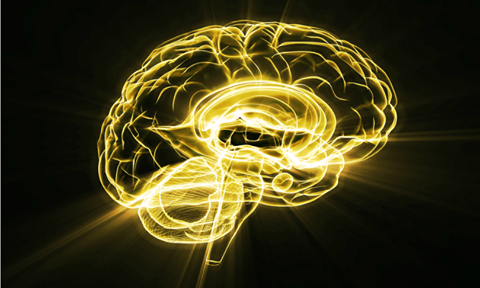
Problem-solving involves a complex cortical network to encode, retrieve, and evaluate information, but these results show that solving verbal problems with insight requires at least one additional component. Further, the fact that the effect occurred in RH aSTG suggests what that process may be: integration of distantly related information. Distinct neural processes, the authors conclude, underlie the sudden flash of insight that allows people to “see connections that previously eluded them.”
-
Vegan
As with any diet, a vegan diet requires planning. However, when properly planned, a vegan diet can be considerably healthier than the traditional American diet. In its 1996 position paper on vegetarian diets, the American Dietetic Association reported that vegan and
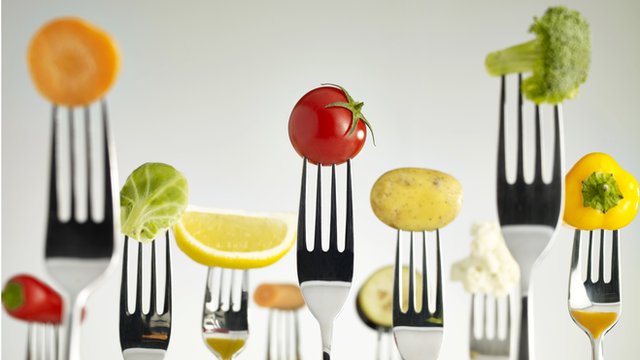 vegetarian diets can significantly reduce one’s risk of contracting heart disease, colon and lung cancer, osteoporosis, diabetes, kidney disease, hypertension, obesity, and a number of other debilitating conditions. Cows’ milk contains ideal amounts of fat and protein for young calves, but far too much for humans. And eggs are higher in cholesterol than any other food, making them a leading contributor to cardiovascular disease.
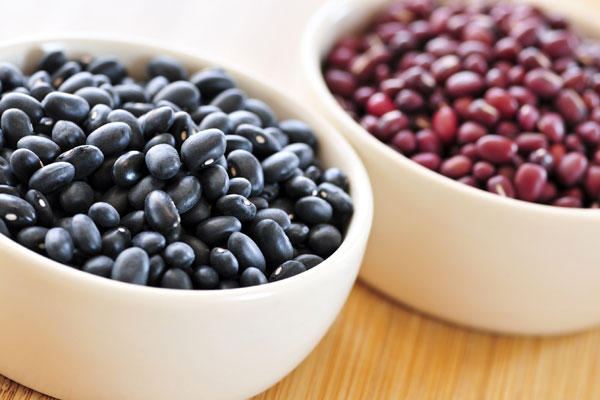
Vegan foods, such as whole grains, vegetables, fruits, and beans, are low in fat, contain no cholesterol, and are rich in fiber and nutrients. Vegans can get all the protein they need from legumes (e.g., beans, tofu, peanuts) and grains (e.g., rice, corn, whole wheat breads and pastas); calcium from broccoli, kale, collard greens, tofu, fortified juices and soymilks; iron from chickpeas, spinach, pinto beans, and soy products; and B12 from fortified foods or supplements. With planning, a vegan diet can provide all the nutrients we were taught as schoolchildren came only from animal products.
vegetarian diets can significantly reduce one’s risk of contracting heart disease, colon and lung cancer, osteoporosis, diabetes, kidney disease, hypertension, obesity, and a number of other debilitating conditions. Cows’ milk contains ideal amounts of fat and protein for young calves, but far too much for humans. And eggs are higher in cholesterol than any other food, making them a leading contributor to cardiovascular disease.
Vegan foods, such as whole grains, vegetables, fruits, and beans, are low in fat, contain no cholesterol, and are rich in fiber and nutrients. Vegans can get all the protein they need from legumes (e.g., beans, tofu, peanuts) and grains (e.g., rice, corn, whole wheat breads and pastas); calcium from broccoli, kale, collard greens, tofu, fortified juices and soymilks; iron from chickpeas, spinach, pinto beans, and soy products; and B12 from fortified foods or supplements. With planning, a vegan diet can provide all the nutrients we were taught as schoolchildren came only from animal products.Will I get enough protein?
Virginia Messina, MPH, RD, and Mark Messina, PhD, recommend that vegans receive 0.4 grams of protein per day for every pound of healthy body weight. If a vegan consumes adequate calories and eats a variety of foods, it is very difficult not to get enough protein. This is true for athletes as well. One need not combine foods at each meal to get “complete protein. “ The most important plant sources of protein are legumes, soy foods, and nuts. Grains and vegetables also contain significant amounts of protein. Eat a variety of protein sources throughout the day: e.g, a legume (such as beans, tofu, or peanuts) combined with a grain (such as rice, corn, or whole wheat breads or pastas). For more information, visit Veganhealth.org
How about B12?
There has been much debate as to what plant foods supply an adequate source of B-12. Many products that were once thought to be adequate, such as tempeh, are no longer considered so. Fortunately, there are easy solutions for vegans. Vegetarian B-12 vitamin pills
are available at most drug stores; the ‘sublingual’ form is preferable. In addition, some foods are fortified with B-12, including Red Star Nutritional Yeast
. It is essential to include a B12 supplement in your diet or eat foods that are fortified with B12 to insure that you receive the proper amount of B-12. For more information, read What Every Vegan Should Know about Vitamin B12
How about calcium?
Adequate intakes of calcium vary according to one’s age: 1200 mg for age 50 or above, 1000 mg for ages 19-49, 800 mg for ages 4-8, 500 mg for ages 1-3. A number of vegan foods contain high levels of calcium per serving: calcium-set tofu (120-200mg per 0.5 cup), fortified soymilk (200-300 mg per cup dried figs (50 mg per fig), fortified orange juice (250 mg per cup), collard greens (180 mg per 0.5 cup), sesame seeds (180 mg per 2 Tbsp), baked beans (130 mg per cup), broccoli (90 mg per 0.5 cup) , almonds (50 mg per 2 Tbsp), kale (50 mg per 0.5 cup) For more information read Bones, Vitamin D, and Calcium
-
The Rules for #Humans
In the past twenty-four years, the Rules for Being Human have circled the globe – photocopied and passed from friend to friend, transmitted via the internet, printed on brochures. However, credit for this masterpiece of wisdom goes to Cherie Carter-Scott, author of ‘If Life Is A Game, These Are The Rules’ and also a commonly recommended and referenced book in the life-coaching industry, and in many other areas concerned with self-esteem, self-development and personal fulfillment.

Aside from those short extracts, Dr Carter-Scott’s book, ‘If Life is a Game, These are the Rules’, also further explains that Cherie Carter-Scott developed the ‘Rules’ quite a long time before her book was published in 1998, specifically during the mid-1970s, while in the process of designing a three month training program for consultants learning how to deliver her ‘Inner Negotiation/Self-Esteem Workshop’ and related teachings.
Here is a brief summary and explanation of Cherie Carter-Scott’s ‘Rules for Being Human’.
Rule One – You will receive a body. Whether you love it or hate it, it’s yours for life, so accept it. What counts is what’s inside.
Rule Two – You will be presented with lessons. Life is a constant learning experience, which every day provides opportunities for you to learn more. These lessons specific to you, and learning them ‘is the key to discovering and fulfilling the meaning and relevance of your own life’.
Rule Three – There are no mistakes, only lessons. Your development towards wisdom is a process of experimentation, trial and error, so it’s inevitable things will not always go to plan or turn out how you’d want. Compassion is the remedy for harsh judgement – of ourselves and others. Forgiveness is not only divine – it’s also ‘the act of erasing an emotional debt’. Behaving ethically, with integrity, and with humour – especially the ability to laugh at yourself and your own mishaps – are central to the perspective that ‘mistakes’ are simply lessons we must learn.
Rule Four – The lesson is repeated until learned. Lessons repeat until learned. What manifest as problems and challenges, irritations and frustrations are more lessons – they will repeat until you see them as such and learn from them. Your own awareness and your ability to change are requisites of executing this rule. Also fundamental is the acceptance that you are not a victim of fate or circumstance – ‘causality’ must be acknowledged; that is to say: things happen to you because of how you are and what you do. To blame anyone or anything else for your misfortunes is an escape and a denial; you yourself are responsible for you, and what happens to you. Patience is required – change doesn’t happen overnight, so give change time to happen.
Rule Five – Learning does not end. While you are alive there are always lessons to be learned. Surrender to the ‘rhythm of life’, don’t struggle against it. Commit to the process of constant learning and change – be humble enough to always acknowledge your own weaknesses, and be flexible enough to adapt from what you may be accustomed to, because rigidity will deny you the freedom of new possibilities.
Rule Six – “There” is no better than “here”. The other side of the hill may be greener than your own, but being there is not the key to endless happiness. Be grateful for and enjoy what you have, and where you are on your journey. Appreciate the abundance of what’s good in your life, rather than measure and amass things that do not actually lead to happiness. Living in the present helps you attain peace.
Rule Seven – Others are only mirrors of you. You love or hate something about another person according to what love or hate about yourself. Be tolerant; accept others as they are, and strive for clarity of self-awareness; strive to truly understand and have an objective perception of your own self, your thoughts and feelings. Negative experiences are opportunities to heal the wounds that you carry. Support others, and by doing so you support yourself. Where you are unable to support others it is a sign that you are not adequately attending to your own needs.
Rule Eight – What you make of your life is up to you. You have all the tools and resources you need. What you do with them is up to you. Take responsibility for yourself. Learn to let go when you cannot change things. Don’t get angry about things – bitter memories clutter your mind. Courage resides in all of us – use it when you need to do what’s right for you. We all possess a strong natural power and adventurous spirit, which you should draw on to embrace what lies ahead.
Rule Nine – Your answers lie inside of you. Trust your instincts and your innermost feelings, whether you hear them as a little voice or a flash of inspiration. Listen to feelings as well as sounds. Look, listen, and trust. Draw on your natural inspiration.
Rule Ten – You will forget all this at birth. We are all born with all of these capabilities – our early experiences lead us into a physical world, away from our spiritual selves, so that we become doubtful, cynical and lacking belief and confidence. The ten Rules are not commandments, they are universal truths that apply to us all. When you lose your way, call upon them. Have faith in the strength of your spirit. Aspire to be wise – wisdom the ultimate path of your life, and it knows no limits other than those you impose on yourself
-
Rae Morris – DO IT
-
Seeing
One way of getting the creative juices flowing and being creative is changing how you see things. You can get closer or further away, look with one eye closed, tilt your head, turn the object upside down (or yourself), look during a different time of day, notice what the object reminds you of, notice any scents, texture, angles, weight, temperature of the object.
When I photograph I do all of those ways of seeing taking multiple shots from different angles, heights, spend and light adjustments. The photo below (click to enlarge) I took after walking through the woods and I sat down to rest. I was noticing the way the light was being blocked by the leaves and creating a spot light effect. Later when I got home and was comparing multiple shots of the same image I noticed that when I converted a shot to black and white it was nearly the same as the color shot. Wisps of color.


-
Japanese Textile Designs 14


 RichardbBrunner