-
Resiliency
What does it mean to be resilient? Bounce back, bounce off of, withstand, remain standing. Is it a part of our hereditary, our inborn temperament? Perhaps it’s a positive self concept. An ability to remember the past, live in the present, and look to the future. Could it also involve hitting rock bottom, being aware of limitations, seeking support? Perhaps it’s a mentor, a will to live, a focus on healing.
Could it be that resiliency is a connection with spirituality, a commitment to listen to others, a willingness to be truthful? One thing is certain that resiliency is different for everyone, with some commonality mixed in here and there.
AS a child, I found/rediscovered resiliency outside, often in my favorite tree.
A tree stands alone
Wind rustles leaves together
We sway arm in branch
As an adult, I have found resiliency many places and many ways. Often, in combining the practice of creative movement, tai chi and hatha yoga.
-
Creative Play for Kids Art and Drama Therapy for Children – Coping with Trauma
For more visit:
American Art Therapy
Drama Therapy
Dance/Movement Therapy
Play Therapy -
Cultura Profetica La Complicidad
-
Road Blocks to Communication
We all have, at one time or another, blocked, screwed up, and/or made more difficult in some way communication between yourself and ….partners, parents, children, siblings, bosses, teachers, therapists, clients …basically everyone. Knowing something about yourself, what your triggers and hot buttons are can help to not only smooth communication but to help you express what you feel and think. Listed below are some communication road blocks as well as common statements that are often said.
When have you said these? What was going on before the comments and with whom were you talking with? What might be an alternative statement(s).Evaluate:
You should You’re wrong You should know thatUnsolicited Advice:
It would be best for you to Why don’ t youDiagnosing:
You’re getting defensiveCommanding:
You had better You have toLecturing:
Don’t you realizeDevaluation Response:
It’s not so badTopping:
That’s nothing compared toCondescending:
I figured you’d do that! I should’ve expected that from you!Al l or Nothing:
You always do that! Yes you do! You’ re neverPrying: Puts other on the spot/defensive and is intrusive
-
Japanese Textile Designs 138

-
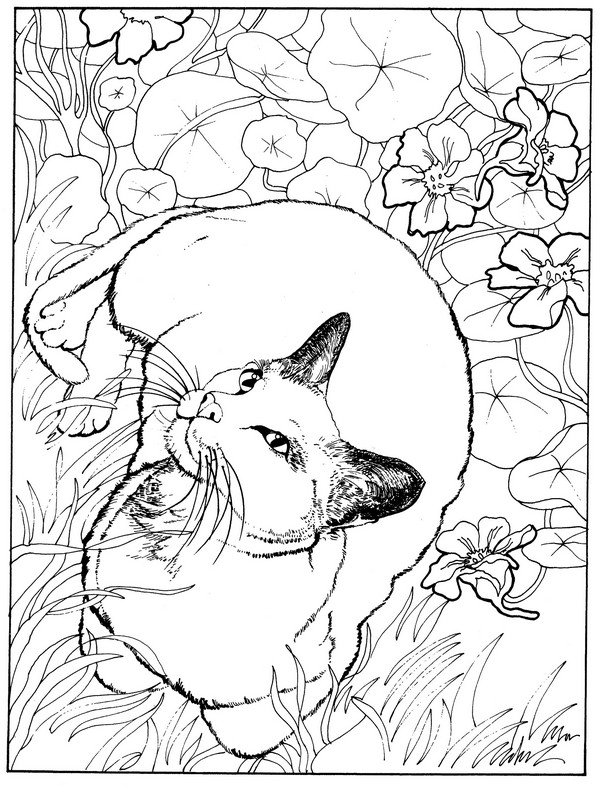
Coloring Page Blue Burmese Cat
-
広島 CAT STREET VIEW of Hiroshima
See the web site to walk a mile in a kitty’s paws.
http://hiroshima-welcome.jp/kanpai/catstreetview/index_2_on.html
-
Mood Disorders Across the Lifespan
-
Our treasure
Our treasure lies in the beehive of our knowledge. We are perpetually on the way thither, being by nature winged insects and honey gatherers of the mind. Friedrich Nietzsche

-
Self-Affirmation Improves Problem-Solving
It’s no secret that stress increases your susceptibility to health problems, and it also impacts your ability to solve problems and be creative. But methods to prevent associated risks and effects have been less clear – until now.
Published in PLOS ONE, new research from Carnegie Mellon University provides the first evidence that self-affirmation can protect against the damaging effects of stress on problem-solving performance. Understanding that self-affirmation – the process of identifying and focusing on one’s most important values – boosts stressed individuals’ problem-solving abilities will help guide future research and the development of educational interventions.
“An emerging set of published studies suggest that a brief self-affirmation activity at the beginning of a school term can boost academic grade-point averages in underperforming kids at the end of the semester. This new work suggests a mechanism for these studies, showing self-affirmation effects on actual problem-solving performance under pressure,” said J. David Creswell, assistant professor of psychology in CMU’s Dietrich College of Humanities and Social Sciences.
Because previous research indicated that self-affirmation may be an effective stress management approach, Creswell and his research team had college students rank-order a set of values (e.g., art, business, family and friends) in terms of their personal importance, and indicate their levels of chronic stress. Participants randomly assigned to a self-affirmation condition were asked to write a couple of sentences about why their number one ranked value was important (a standard self-affirmation exercise). All participants then had to complete a challenging problem-solving task under time pressure, which required creativity in order to generate correct solutions.
The results showed that participants who were under high levels of chronic stress during the past month had impaired problem-solving performance. In fact, they solved about 50 percent fewer problems in the task. But notably, this effect was qualified by whether participants had an opportunity to first complete the self-affirmation activity. Specifically, a brief self-affirmation was effective in eliminating the deleterious effects of chronic stress on problem-solving performance, such that chronically stressed self-affirmed participants performed under pressure at the same level as participants with low chronic stress levels.
“People under high stress can foster better problem-solving simply by taking a moment beforehand to think about something that is important to them,” Creswell said. “It’s an easy-to-use and portable strategy you can roll out before you enter that high pressure performance situation.


