-
Poetry Writing with Clients
Writing a poem for the first time can be intimidating, but there are many possible ways to get started. In this post I’ll talk about just one of them, which is a list poem.
Defining a Poem
The first step when introducing poetry to clients is to define poetry. Show what a poem looks like on a page. Explain that a poem is usually short, and that each line has a fixed length. It uses carefully-chosen language to express a feeling, and sometimes uses rhythm, rhyme, or repetition.
Writing a List Poem
A list poem is a poem in which each line begins the same way. List poems are wonderful for beginning writers especially, because the start of each line is provided, creating a comfortable way in (at least I have this part that I can write, and know I’m spelling it correctly). A list poem can be simple and powerful. One client, who struggles with depression, wrote a poem in which each line begins, “I love” followed by one thing that makes her feel happy.
5 Tips for Writing a Successful List Poem:
Read poems together as a group, to get clients familiar with the sounds and rhythms of it. After reading a poem, ask if there is any line that clients like or find interesting. Ask why they like it, what makes it stand out. Keep your ear open for things clients say—does something sound like a list poem? “Every morning I…” “I want to read…” “If I had a million dollars I’d…” “I love the way…” The possibilities are endless.
When clients are ready to begin writing, here are some tips to keep in mind:
1. Be specific
Help clients bring their poems to life by including specific details. In other words, show, don’t tell. “I wake up early,” becomes, “I wake up at 3:00 am every morning to go to work.” Instead of “I cook Chinese food” help the client write, “I cook catfish with spicy sauce.”
2. Five senses
Can you see this poem? Can you hear it? Smell it? Feel it? Taste it? Is this poem bringing a world to life? If not, think about describing with the five senses.
3. Order
Pay attention to the order of the list. Does it have a beginning? A middle? An end? Does it need an additional line to bring it to a close?
4. Word Choice
Think about word choice. Could another word be more effective? Sometimes beginning writers want to use the word “beautiful,” but write “nice” instead because it is easier to spell. Help the writer actualize the poem in her mind.
5. Edit
Don’t be afraid to edit. ‘Make it Messy’ is a good mantra for first drafts. They should have crossed out parts and additions. Are any items in the list extraneous? Are there unnecessary repetitions? Help students build the confidence to edit themselves. -
Scientist Seeks Neural And Biological Basis For Creativity, Beauty And Love
One of the world’s leading neuroscientists is to search for the neural and biological basis for creativity, beauty and love after receiving over £1 million from the Wellcome Trust, the UK’s largest medical research charity. The research will bring together science, the arts and philosophy to answer fundamental questions about what it means to be human.
Professor Semir Zeki from University College London (UCL) has received a Wellcome Trust Strategic Award to establish a programme of research in the new field of “neuroaesthetics”. The research will build on his previous work into the neural mechanisms behind beauty and love.
Together with Professor Ray Dolan, Director of the Wellcome Trust Centre for Neuroimaging at UCL, Professor Zeki will look at questions that have been debated for millennia by writers, artists and philosophers and yet have been little studied by neurobiologists: Can we measure beauty objectively” How are beauty and love related” What does it mean to be happy”
“All human societies place a high premium on art and the pursuit of beauty,” says Professor Zeki. “We all value and reward creativity. We all want to pursue happiness. But what do these entities mean in concrete, neurobiological terms” We hope to address these issues experimentally. The results will not only increase our knowledge about the workings of the human brain but will also give deep insights into human nature and how we view ourselves.”
Neuroesthetics aims to illuminate the brain’s workings through its cultural products in a similar way to how neuroscientists study the brain through malfunctions caused by disease. However, Professor Zeki believes its impact may be much wider.
“The new field of neuroaesthetics will teach biologists to use the products of the brain in art, music, literature and mathematics to better understand how the brain functions,” he says. “Success will encourage an interdisciplinary approach to other fields, such as the study of economics or jurisprudence in terms of brain activity. This will have a deep impact on social issues.”
Using Wellcome Trust funding, Professor Zeki hopes to attract students and researchers from the sciences, arts and humanities in truly interdisciplinary research. Their work will be overseen by an Advisory Board that will include author AS Byatt, physician, opera producer and broadcaster Sir Jonathan Miller and Dr. Deborah Swallow, Director of the Courtauld Institute of Art, London.
“Professor Zeki is a Renaissance Man for the twenty-first century,” says Professor Richard Morris, Head of Neurosciences and Mental Health at the Wellcome Trust. “His research sees no boundaries between science and the arts and humanities and will provide an exciting insight in issues that strike at the heart of what it is to be human.” -
ZEL – se sentir vivant
-
Snow trees

-
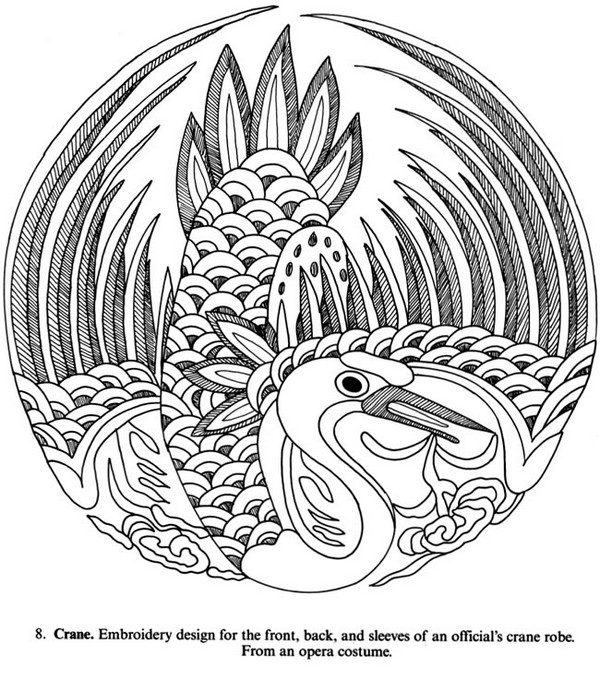
Coloring Page Mandala
-
Fear
“Fear is a natural reaction to moving closer to the truth” ~ Pema Chodron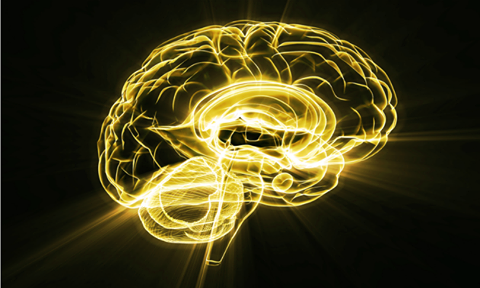
-
Art therapy: a world beyond creative expression | Carol Hammal
-
You and Me
You and Me
I hear you
I know you
I have walked in your shoes

I am walking with your feet
Your skin is my skin
I hold you
You hold yourself
I ask you
You ask yourself
We listen together
Our ancestors tell a story
of laughter from long ago
when we were all babies
alone swaddled in blankets
waiting for the breast
We watch as you move
I call out the signs
You give me your hand
We hold them together
and wave good bye
-
What is
What is life? It is the flash of a firefly in the night. It is the breath of a buffalo in the wintertime. It is the little shadow which runs across the grass and loses itself in the sunset. Isapo-Muxika (Crowfoot)