A Chinese police officer patrols a newly constructed office building in Beijing on July 12, 2016. China’s top officials have mandated that architecture designs for new buildings will not be approved if they do not reflect a more conservative style. Photo by Stephen Shaver/UPI
Speakers draw on the findings from a recent Chatham House paper to discuss the lessons that may improve future BRI projects in Sri Lanka and elsewhere in the region. China’s Belt and Road Initiative (BRI) is having profound impacts on recipient countries. Recently, Chinese outbound investment in Sri Lanka has come under scrutiny due to intensifying geopolitical rivalries in the Indian Ocean as well as Sri Lanka’s prime location and ports in the region. Much of the analysis on this topic so far has focused on how the economic relationship has informed Chinese geopolitical ambitions, via a so-called ‘debt-trap diplomacy’. Such a framing may be misleading, while also overlooking other dimensions of Chinese investment that warrant closer examination.
Is nationalism in China rising? If so, how does it influence Beijing’s external behavior? As tensions with the US increase, will nationalism become an important force shaping Chinese policymaking? Please join Freeman Chair in China Studies Jude Blanchette for a discussion on the role of Chinese nationalism in the 21st century with Jessica Chen Weiss, Associate Professor of Government at Cornell University and Senior Associate (Non-resident) at the Freeman Chair.
A deteriorating bilateral relationship and growing regulatory scrutiny have changed the trajectory of capital flows between the United States and China over the past three years. The COVID-19 pandemic threatens to further disrupt two-way investment, as weak Chinese consumption and supply chain risks make U.S. companies re-think their China footprint, and Chinese investors face continued headwinds from domestic restrictions on outbound capital flows and U.S. regulators wary of opportunistic foreign buyers. The National Committee held a virtual event with report authors Thilo Hanemann and Daniel Rosen, both of Rhodium Group; Ker Gibbs, president, AmCham Shanghai; Rebecca Fannin, founder/editor, Silicon Dragon Ventures; and National Committee President Stephen Orlins to launch our new Two-Way Street: 2020 Update report and discuss the latest two-way investment data and analysis on May 11, 2020.
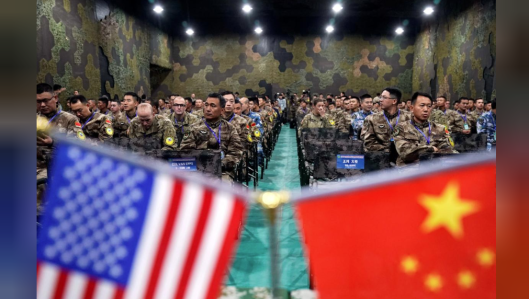
Despite consistent rhetoric from both Chinese and American governments and media, both countries have routinely held joint military exercises over the years.
” Soldiers from China and the United States wrapped up a week of joint disaster relief drills on Saturday November 17 2018, in a display of cooperation against a backdrop of worsening ties between the two countries over trade, the disputed South China Sea and self-ruled Taiwan.” (this was the 14th time the joint exchange occurred) READ MORE HERE