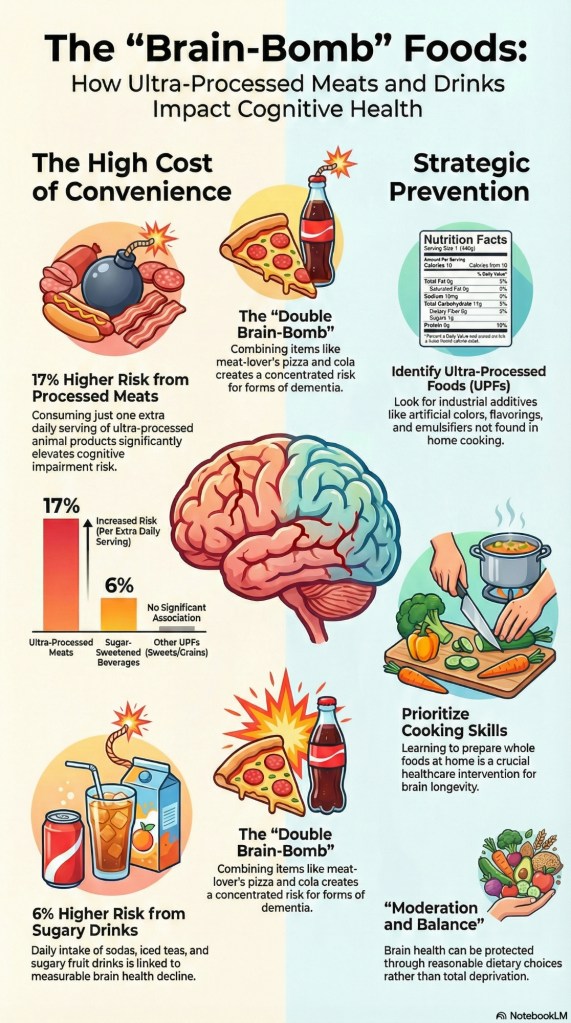
The Junk Foods That Harm Your Brain Most, Ranked by New Research : ScienceAlert
25 Wednesday Feb 2026
Posted in food
≈ Comments Off on The Junk Foods That Harm Your Brain Most, Ranked by New Research : ScienceAlert

25 Wednesday Feb 2026
Posted in food
≈ Comments Off on The Junk Foods That Harm Your Brain Most, Ranked by New Research : ScienceAlert
23 Friday Jan 2026
Posted in food
≈ Comments Off on One Healthy World | Losing Weight and Keeping It Off
26 Wednesday May 2021
Tags
Beans, breakfast, circulation, fiber, foods, heart, inflammation, meal, meat, Nuts, Oats, Omega, Plants, Some, stanols, Sterols, system
It’s easy to eat your way to an alarmingly high cholesterol level. The reverse is true too — changing what you eat can lower your cholesterol and improve the armada of fats floating through your bloodstream. Fresh fruits and vegetables, whole grains, and “good fats” are all part of a heart-healthy diet. But some foods are particularly good at helping bring down cholesterol.
How? Some cholesterol-lowering foods deliver a good dose of soluble fiber, which binds cholesterol and its precursors in the digestive system and drags them out of the body before they get into circulation. Others provide polyunsaturated fats, which directly lower LDL. And those with plant sterols and stanols keep the body from absorbing cholesterol. Here are 5 of those foods: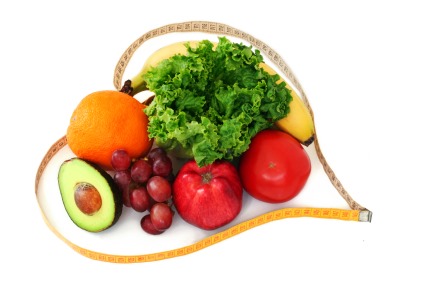
But stay away from…
As you consider eating more of the foods that can help dial down cholesterol, keep in mind that avoiding certain foods can improve your results. To keep cholesterol levels where you want them to be, limit intake of:
Saturated fats. The saturated fats found in red meat, milk and other dairy foods, and coconut and palm oils directly boost LDL. So one way to lower your LDL is to cut back on saturated fat. Try substituting extra-lean ground beef for regular; low-fat or skim milk for whole milk; olive oil or a vegetable-oil margarine for butter; baked fish or chicken for fried.
Trans fats. Trans fats are a byproduct of the chemical reaction that turns liquid vegetable oil into solid margarine or shortening and that prevents liquid vegetable oils from turning rancid. Trans fats boost LDL as much as saturated fats do. They also lower protective HDL, rev up inflammation, and increase the tendency for blood clots to form inside blood vessels. Although trans fats were once ubiquitous in prepared foods, many companies now use trans-free alternatives. Some restaurants and fast-food chains have yet to make the switch.
30 Thursday Jul 2020
Are dietary interventions effective for treating ADHD? For many parents and professionals, trying to parse through the different claims about the impact of diet on ADHD has been challenging and confusing. At this point, substantial research on how dietary interventions impact ADHD has accumulated and several meta-analyses of this work have been published. Recently, a review of several meta-analyses of dietary interventions for ADHD was published [Research review: The role of diet in the treatment of attention-deficit/hyperactivity disorder — an appraisal of the evidence on efficacy and recommendations on the design of future studies]. In this paper, the authors summarize findings across 6 different meta-analyses of the impact of diet on ADHD to provide a high level summary of the best available evidence to date.
Types of dietary interventions 
Three types of dietary interventions were reviewed — Restricted Elimination Diets (RED), Artificial food coloring exclusion (AFCE), and supplementation with free fatty acids (SFFA). Although other types of supplements beyond free fatty acids have been investigated, the authors felt there was not sufficient research on any single approach to include in their summary.
1. Restricted elimination diets (RED) — There are 2 different approaches to implementing this diet. In one approach, the child is placed on an extremely restricted diet, e.g., rice, turkey, a range of vegetables (lettuce, carrots, cauliflower, cabbage, beets), pears and water; this is sometimes referred to as the Few Food Diet. When a reduction in ADHD behaviors results — this would generally occur within 2–3 weeks if the diet is going to have a positive effect — new foods can be added back one at a time to see if they are well-tolerated or lead to an increase in problem behaviors. Alternatively, particular foods that are suspected to exacerbate a child’s symptoms may be removed one at a time to see if the child’s behavior improves.
2. Artificial food coloring exclusion (AFCE)- As the title indicates, this involves efforts to remove all artificial food colorings from a child’s diet, e.g.,Yellow #6, Yellow #5, Sodium Benzoate, Blue #2, etc., and observing whether this is associated with a reduction in ADHD behaviors. Carefully conducted trials have demonstrated that AFC’s – in amounts children could typically consume – can increase ADHD symptoms in many children.
3. Essential fatty acid supplementation — Certain fatty acids, e.g., Omega 3 and Omega 6, promote neural functioning. These fatty acids are called essential because they are not synthesized in the body and must be ingested. Children with ADHD may have lower levels of essential fatty acids relative to peers and several studies have demonstrated a link between low levels of EFAs and the severity of ADHD symptoms. Studies investigating the benefits of fatty acid supplementation for youth with ADHD raise fatty acid levels by administering capsules containing the fatty acids or sometimes by introducing diets rich in fish products. – See more at: http://www.creativitypost.com/science/3_dietary_interventions_that_can_help_children_with_adhd_especially_when_pr
06 Wednesday May 2020
23 Thursday Apr 2020
Four chemicals directly impact mood and are present in higher concentrations after meals than between meals:

The best meal to enhance your mood is one that combines complex carbohydrates with lean proteins, such as:
“Vegetarians can opt for soy or quinoa,” says Ms. Jamieson-Petonic. “These are both complete plant proteins that offer all the essential amino acids (protein building blocks) you need.”
Meanwhile, avoid foods that may taste good at first but won’t leave you feeling your best:
If you’ll be making changes in your diet, be patient. It may take two to three weeks to see an improvement in your mood.
19 Thursday Mar 2020
Tags
04 Tuesday Feb 2020
Americans eat 33 pounds of cheese and cheese products per year, per person, which is triple the consumption rate of the 1970s. Fans of Humboldt Fog and Cabot Clothbound Cheddar may hope this signals the return of the artisan producer, but Michael Moss gives all credit to mighty Kraft and the other food giants.
“In the hands of food manufacturers, cheese has become an ingredient,” Mr. Moss writes in his new book; Salt Sugar Fat: How the Food Giants Hooked Us. Thus we have cheese-injected pizza crusts and cheese-draped frozen entrees, cheesy chips and cheezy crackers. Cheese and its processed derivatives were deployed across a gazillion new products and line extensions during decades when Americans, as a fat-avoidance tactic, were actually cutting their milk consumption by 75 percent. From a fat-consumption point of view, he says, “trading cheese for milk has been a poor bargain indeed.”
26 Tuesday Nov 2019
Increasing potassium in our diets as well as cutting down on salt will reduce blood pressure levels and the risk of stroke, research in the British Medical Journal suggests.
One study review found that eating an extra two to three servings of fruit or vegetables per day – which are high in potassium – was beneficial.
A lower salt intake would increase the benefits further, researchers said.
A stroke charity said a healthy diet was key to keeping stroke risk down.
While the increase of potassium in diets was found to have a positive effect on blood pressure, it was also discovered to have no adverse effects on kidney function or hormone levels, the research concluded.
As a result, the World Health Organization has issued its first guidelines on potassium intake, recommending that adults should consume more than 4g of potassium (or 90 to 100mmol) per day.
The BMJ study on the effects of potassium intake, produced by scientists from the UN World Food Program, Imperial College London and Warwick Medical School, among others, looked at 22 controlled trials and another 11 studies involving more than 128,000 healthy participants.
Where to find potassium

Potassium is an important mineral that controls the balance of fluids in the body and helps lower blood pressure.
It is found in most types of food, but particularly in fruit, such as bananas, vegetables, pulses, nuts and seeds, milk, fish, chicken and bread.
It is recommended that adults consume around 4g of potassium a day (or at least 90-100mmol).
That is equivalent to five portions of fruit and vegetables a day.
Our early ancestors would have had a diet very high in potassium – but food processing has markedly reduced the potassium content of food.
It is thought that the average potassium consumption in many countries is below 70-80mmol/day.
The results showed that increasing potassium in the diet to 3-4g a day reduced blood pressure in adults.
This increased level of potassium intake was also linked to a 24% lower risk of stroke in those adults.
Researchers said potassium could have benefits for children’s blood pressure too, but more data was needed.
23 Wednesday Oct 2019
Posted in food, Health, Uncategorized
≈ Comments Off on Providing Food as part of a weight loss program Has Little Benefit
Tags
Providing weekly food delivery as part of a weight loss program has little impact on outcomes, based on the results of a one-year study conducted in Toronto, Canada.
Published in the Journal of the American College of Cardiology, this study tested four weight loss interventions in 919 overweight Canadian adults. Roughly half of participants were assigned to one of three dietary interventions, which included dietary advice, weekly food delivery, or food delivery plus dietary advice. The other half were part of the control group and received only a dietary brochure at the start of the study.
All of the interventions promoted current dietary guidelines and the DASH diet, which limits salt intake and helps lower blood pressure. While weight loss interventions lasted six months, participants were followed for one year to track outcomes like weight, waist circumference and blood pressure.
The goal of the study was to see whether dietary advice and/or weekly food delivery helps boost weight loss and reduce cardiovascular risk in overweight adults.
The good news is that all participants saw small reductions in weight, waist circumference and blood pressure at six months. A year after the interventions, participants also had lower ten-year risk for developing heart disease, as measured by the Framingham risk score. However, there were no significant differences in outcomes between groups, which means monthly phone calls and weekly food delivery had no impact on weight loss or changes in cardiovascular risk.
Authors did note, however, a difference in drop-out rates between groups. Participants receiving food delivery were much more likely to stay in the study, with only 9% of participants dropping out of the study by six months, compared to 33% of participants with no food delivery. Participants receiving weekly food baskets plus advice also had consistent increases in consumption of recommended foods like fruits, vegetables and whole grains.
Based on findings, authors conclude that providing food as part of a dietary intervention has little added benefit on weight loss or cardiovascular risk reduction. However, findings also confirm the overall benefits of the DASH diet and general dietary guidelines. As other studies have shown, maintaining a healthy diet promotes a healthy weight, reduces risk for heart disease and improves overall health. Authors hope that with future research, we can improve available resources to help adults achieve both a healthy weight and diet.
16 Wednesday Oct 2019
Tags
17 Wednesday Apr 2019
02 Wednesday Jan 2019
Are dietary interventions effective for treating ADHD? For many parents and professionals, trying to parse through the different claims about the impact of diet on ADHD has been challenging and confusing. At this point, substantial research on how dietary interventions impact ADHD has accumulated and several meta-analyses of this work have been published. Recently, a review of several meta-analyses of dietary interventions for ADHD was published [Research review: The role of diet in the treatment of attention-deficit/hyperactivity disorder — an appraisal of the evidence on efficacy and recommendations on the design of future studies]. In this paper, the authors summarize findings across 6 different meta-analyses of the impact of diet on ADHD to provide a high level summary of the best available evidence to date.
Types of dietary interventions

Three types of dietary interventions were reviewed — Restricted Elimination Diets (RED), Artificial food coloring exclusion (AFCE), and supplementation with free fatty acids (SFFA). Although other types of supplements beyond free fatty acids have been investigated, the authors felt there was not sufficient research on any single approach to include in their summary.
1. Restricted elimination diets (RED) — There are 2 different approaches to implementing this diet. In one approach, the child is placed on an extremely restricted diet, e.g., rice, turkey, a range of vegetables (lettuce, carrots, cauliflower, cabbage, beets), pears and water; this is sometimes referred to as the Few Food Diet. When a reduction in ADHD behaviors results — this would generally occur within 2–3 weeks if the diet is going to have a positive effect — new foods can be added back one at a time to see if they are well-tolerated or lead to an increase in problem behaviors. Alternatively, particular foods that are suspected to exacerbate a child’s symptoms may be removed one at a time to see if the child’s behavior improves.
2. Artificial food coloring exclusion (AFCE)- As the title indicates, this involves efforts to remove all artificial food colorings from a child’s diet, e.g.,Yellow #6, Yellow #5, Sodium Benzoate, Blue #2, etc., and observing whether this is associated with a reduction in ADHD behaviors. Carefully conducted trials have demonstrated that AFC’s – in amounts children could typically consume – can increase ADHD symptoms in many children.
3. Essential fatty acid supplementation — Certain fatty acids, e.g., Omega 3 and Omega 6, promote neural functioning. These fatty acids are called essential because they are not synthesized in the body and must be ingested. Children with ADHD may have lower levels of essential fatty acids relative to peers and several studies have demonstrated a link between low levels of EFAs and the severity of ADHD symptoms. Studies investigating the benefits of fatty acid supplementation for youth with ADHD raise fatty acid levels by administering capsules containing the fatty acids or sometimes by introducing diets rich in fish products.
See more at: http://www.creativitypost.com/science/3_dietary_interventions_that_can_help_children_with_adhd_especially_when_pr
21 Friday Dec 2018
Are dietary interventions effective for treating ADHD? For many parents and professionals, trying to parse through the different claims about the impact of diet on ADHD has been challenging and confusing. At this point, substantial research on how dietary interventions impact ADHD has accumulated and several meta-analyses of this work have been published. Recently, a review of several meta-analyses of dietary interventions for ADHD was published [Research review: The role of diet in the treatment of attention-deficit/hyperactivity disorder — an appraisal of the evidence on efficacy and recommendations on the design of future studies]. In this paper, the authors summarize findings across 6 different meta-analyses of the impact of diet on ADHD to provide a high level summary of the best available evidence to date.
Types of dietary interventions

Three types of dietary interventions were reviewed — Restricted Elimination Diets (RED), Artificial food coloring exclusion (AFCE), and supplementation with free fatty acids (SFFA). Although other types of supplements beyond free fatty acids have been investigated, the authors felt there was not sufficient research on any single approach to include in their summary.
1. Restricted elimination diets (RED) — There are 2 different approaches to implementing this diet. In one approach, the child is placed on an extremely restricted diet, e.g., rice, turkey, a range of vegetables (lettuce, carrots, cauliflower, cabbage, beets), pears and water; this is sometimes referred to as the Few Food Diet. When a reduction in ADHD behaviors results — this would generally occur within 2–3 weeks if the diet is going to have a positive effect — new foods can be added back one at a time to see if they are well-tolerated or lead to an increase in problem behaviors. Alternatively, particular foods that are suspected to exacerbate a child’s symptoms may be removed one at a time to see if the child’s behavior improves.
2. Artificial food coloring exclusion (AFCE)- As the title indicates, this involves efforts to remove all artificial food colorings from a child’s diet, e.g.,Yellow #6, Yellow #5, Sodium Benzoate, Blue #2, etc., and observing whether this is associated with a reduction in ADHD behaviors. Carefully conducted trials have demonstrated that AFC’s – in amounts children could typically consume – can increase ADHD symptoms in many children.
3. Essential fatty acid supplementation — Certain fatty acids, e.g., Omega 3 and Omega 6, promote neural functioning. These fatty acids are called essential because they are not synthesized in the body and must be ingested. Children with ADHD may have lower levels of essential fatty acids relative to peers and several studies have demonstrated a link between low levels of EFAs and the severity of ADHD symptoms. Studies investigating the benefits of fatty acid supplementation for youth with ADHD raise fatty acid levels by administering capsules containing the fatty acids or sometimes by introducing diets rich in fish products.
See more at: http://www.creativitypost.com/science/3_dietary_interventions_that_can_help_children_with_adhd_especially_when_pr
 RichardbBrunner