Watch: Mud flat mailman | DW Documentary
04 Friday Oct 2024
Posted in people
≈ Comments Off on Watch: Mud flat mailman | DW Documentary

04 Friday Oct 2024
Posted in people
≈ Comments Off on Watch: Mud flat mailman | DW Documentary
28 Sunday Feb 2021
20 Friday Nov 2020
Posted in people, Social Science
≈ Comments Off on Were French People Born to Speak French?
No. The belief that people are suited to speak particular languages by biology is widespread—but wrong.
Psychological essentialism is the notion that particular groups of people are different because of some real, meaningful underlying essence that is present deep in their nature, and often biological in origin. So if you think that French speakers are fundamentally different from English speakers because of something about their essential nature or the biology they were born with—rather than the situational or cultural variable of having lived and been exposed to French rather than English—you are using essentialist reasoning. This common but misleading mental habit shapes our thinking in many domains.
Read the entire article here: Scientific American

13 Friday Sep 2019
Each year, dozens of Canadian Aboriginal women are murdered or disappear never to be seen again. Some end up in a river that runs through the heart of Winnipeg. One of them was a 15-year-old school girl called Tina Fontaine, whose body was found in August 2014. Read the entire article here.

29 Tuesday Jan 2019
Posted in Health, Mental Health, people, PTSD
≈ Comments Off on Somaliland & mental health conditions
Tags
Amina usually takes her brother to the clinic by force. He doesn’t like going. “I feel very bad when I take him there. I have to do it but I cry at the same time,” says the young mother who lives in downtown Hargeisa, capital of the breakaway republic of Somaliland.
“We have no choice but to take him. What else can we do for him?” Amina* adds, visibly pained.
Her 38-year-old brother Bulhan* has on four occasions been admitted to the Macruuf Relief Organisation, a privately run mental health clinic in Hargeisa, one of many that have been established in recent years.
These under-resourced private centres operate largely without scrutiny from the authorities. Chaining patients is common, as is confinement without consent, practices that Human Rights Watch saysviolate “basic international standards prohibiting ill-treatment, and may constitute torture”.
See the full article at The Guardian.
23 Wednesday Jan 2019
Posted in dogs, Humans, people, Social Science, Therapy
≈ Comments Off on Is That a Real Service Dog?
Tags

08 Saturday Dec 2018
Posted in Americas, discovery, History, people, Social Science
≈ Comments Off on New York 1911
Tags
01 Saturday Dec 2018
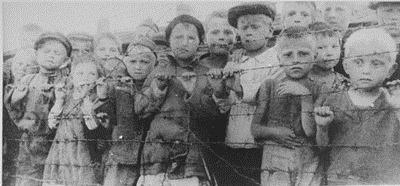
Following the end of the World War Two, the BBC began a series of special radio appeals on behalf of a group of children who had survived the Holocaust but were now stranded as orphans in post-war Europe. A recording of one of these moving broadcasts still exists in the BBC archives. Seventy years on, Alex Last set out to find out what had happened to the 12 children named in this recording. They had been in many camps, including Auschwitz, Muhldorf, Kauferng, Theresienstadt, Belsen, and Dachau, and the modern-day search took him to Germany, Israel and the United States.
Five of the Holocaust survivors are still alive today, and four of them were well enough to speak to Alex, who was able to piece together their stories of courage and humanity. http://www.bbc.co.uk/programmes/p02qh7v5
13 Friday Jul 2018
Interesting article about pets and how humans react/respond to them. From the abstract:
Neural substrates underlying the human-pet relationship are largely unknown. We examined fMRI brain activation patterns as mothers viewed images of their own child and dog and an unfamiliar child and dog. There was a common network of brain regions involved in emotion, reward, affiliation, visual processing and social cognition when mothers viewed images of both their child and dog. Viewing images of their child resulted in brain  activity in the midbrain (ventral tegmental area/substantia nigra involved in reward/affiliation), while a more posterior cortical brain activation pattern involving fusiform gyrus (visual processing of faces and social cognition) characterized a mother’s response to her dog. Mothers also rated images of their child and dog as eliciting similar levels of excitement (arousal) and pleasantness (valence), although the difference in the own vs. unfamiliar child comparison was larger than the own vs. unfamiliar dog comparison for arousal. Valence ratings of their dog were also positively correlated with ratings of the attachment to their dog. Although there are similarities in the perceived emotional experience and brain function associated with the mother-child and mother-dog bond, there are also key differences that may reflect variance in the evolutionary course and function of these relationships.
Stoeckel LE, Palley LS, Gollub RL, Niemi SM, Evins AE (2014) Patterns of Brain Activation when Mothers View Their Own Child and Dog: An fMRI Study. PLoS ONE 9(10): e107205. doi:10.1371/journal.pone.0107205
http://www.plosone.org/article/info%253Adoi%252F10.1371%252Fjournal.pone.0107205

 RichardbBrunner