Dancing is the poetry of the foot. John Dryden

24 Wednesday Mar 2021
Posted in John Dryden, Uncategorized
≈ Comments Off on foot
24 Wednesday Feb 2021
Posted in Homer, Sorrow, Uncategorized
≈ Comments Off on heaviest load
Tags
Think of the wretches who in your experience have borne the heaviest load of sorrow, and I will match my grief’s with theirs. Indeed I think that I could tell an even longer tale of woe, if I gave you a full account of what I have been fated to endure.-Homer, The Odyssey

16 Tuesday Feb 2021
Posted in self-defense, Uncategorized
≈ Comments Off on self-defense
Tags

People do not choose rebellion; it is forced upon them. Revolution is an act of self-defense. C.T. Vivian
05 Friday Feb 2021
Posted in boundaries, Handout, Uncategorized
≈ Comments Off on Setting boundaries
Setting boundaries is an essential skill in life, especially for people in recovery. Addicts often grow up in dysfunctional homes, where boundaries were either too rigid (leading to suppressed emotions or distant relationships) or too enmeshed (depriving them of a sense of personal identity). Later in life, their interpersonal relationships may continue to be defined by old roles and patterns, increasing the risk of depression, anxiety and addictive or compulsive behaviors. 
As part of recovery, addicts learn how to set boundaries and to respect other people’s boundaries in return. In the addiction field, treatment providers often refer to this process as embracing the authentic self. While it may sound like psychobabble, it is really a process of discovering who you want to be, how you want to interact with other people, and taking responsibility for the consequences of your choices.
Why are boundaries important? They keep you safe from being manipulated, abused or taken advantage of, while also protecting other people from harm you may consciously or unconsciously inflict. They prevent both parties in a relationship from blurring the lines between self and others, which can lead to enmeshment and codependency. With healthy boundaries in place, you can begin to tune in to your inner voice and trust your own thoughts and feelings, and then communicate those to other people.
Distinguishing Healthy and Unhealthy Boundaries
Without a healthy role model, it can be difficult to know what healthy boundaries look like. First, let’s cover what healthy boundaries are not. They are not threats or attempts to control or manipulate others into doing what you want. They are not rigid rules or “walls” designed to keep people out or shield you from expressing your emotions.
Healthy boundaries are simply a delineation of what type of treatment is acceptable to you, and what consequences will result from violating a boundary. People with healthy boundaries share their thoughts and feelings, take care of their own needs, and are able to say no when necessary.
 By contrast, people with weak boundaries often:
• Sacrifice their personal values, plans or goals to please others
• Allow others to define who they are and make decisions for them
• Expect others to fulfill all their needs
• Feel guilty when they say no
• Hesitate to share their opinions or assert themselves if they are being treated unfairly
• Frequently feel used, threatened, victimized or mistreated by others
• Frequently offer unsolicited advice, or feel pressured to follow someone else’s advice
• Take responsibility for other people’s feelings
• Tell others how to think, feel or act
A Boundary-Setting Roadmap
Every individual is called upon to set their own boundaries. What works for some may seem either too intrusive or too distant to others. When laying out your boundaries, work through the following steps:
Create a Personal Bill of Rights. Before you can start setting boundaries, you have to recognize your right to have your own feelings, values and beliefs and to express to others how you want to be treated. For some, this requires a colossal leap in self-worth.
Identify Your Emotions. Our parents always admonish us to “think before you act.” When you have a strong response, take a time-out to identify the underlying emotion and figure out what you want to convey. Doing so allows you to interact with other people in an honest, direct way rather than blaming or lashing out.
Set Limits. Once you have a few guidelines in place for how you expect to be treated, practice setting limits with people in a clear, direct way. Examples of healthy boundaries are: “I choose to be around sober people” or “I’ll be happy to talk with you when your voice is calm.”
Assert Your Needs. If you feel that your boundaries are being violated, speak up. This doesn’t mean lashing out or blaming others, but rather assertively communicating your needs. Ask for what you want and say no, politely yet firmly, if something isn’t right for you.
Listen to Your Instincts. If a situation feels uncomfortable or inappropriate, chances are a boundary is being pushed. By tuning into your instincts, you’re more likely to respond in ways that are true to your authentic self.
Defend Your Boundaries. Once you set boundaries, expect that they will be tested. Before this happens, set consequences that you are willing and able to enforce (e.g., “If you continue this behavior, I will…”). Know that by setting limits, you may disappoint the other person, especially if they have weak boundaries themselves. While you should always act with dignity and respect, you can’t control other people’s feelings and behaviors.
If someone continually violates your boundaries, you may need to minimize contact with them, or if they are toxic to your recovery, cut ties altogether. By choosing not to let people violate your boundaries, you stop being the victim, stop blaming others and start reclaiming responsibility for your own life.
Respect Other People’s Boundaries. Just as important as honoring your own boundaries is respecting other people’s, even if they are different from yours. If they don’t have defined boundaries, show them the respect you know they deserve anyway.
28 Thursday Jan 2021
Posted in culture, discovery, Science, Uncategorized
≈ Comments Off on Fairy tales started long ago
They have been told as bedtime stories by generations of parents, but fairy tales such as Little Red Riding Hood may be even older than was previously thought.
A study by anthropologists has explored the origins of folk tales and traced the relationship between varients of the stories recounted by cultures around the world.
The researchers adopted techniques used by biologists to create the taxonomic tree of life, which shows how every species comes from a common ancestor.
Dr Jamie Tehrani, a cultural anthropologist at Durham University, studied 35 versions of Little Red Riding Hood from around the world.
Whilst the European version tells the story of a little girl who is tricked by a wolf masquerading as her grandmother, in the Chinese version a tiger replaces the wolf.
Contrary to the view that the tale originated in France shortly before Charles Perrault produced the first written version in the 17th century, Dr Tehrani found that the varients shared a common ancestor dating back more than 2,600 years.
He said: “Over time these folk tales have been subtly changed and have evolved just like an biological organism. Because many of them were not written down until much later, they have been misremembered or reinvented through hundreds of generations.
“By looking at how these folk tales have spread and changed it tells us something about human psychology and what sort of things we find memorable.
“The oldest tale we found was an Aesopic fable that dated from about the sixth century BC, so the last common ancestor of all these tales certainly predated this. We are looking at a very ancient tale that evolved over time.”
Dr Tehrani, who will present his work on Tuesday at the British Science Festival in Guildford, Surrey, identified 70 variables in plot and characters between different versions of Little Red Riding Hood.
He found that the stories could be grouped into distinct families according to how they evolved over time.
The original ancestor is thought to be similar to another tale, The Wolf and the Kids, in which a wolf pretends to be a nanny goat to gain entry to a house full of young goats.
Stories in Africa are closely related to this original tale, whilst stories from Japan, Korea, China and Burma form a sister group. Tales told in Iran and Nigeria were the closest relations of the modern European version.
Perrault’s French version was retold by the Brothers Grimm in the 19th century. Dr Tehrani said: “We don’t know very much about the processes of transmission of these stories from culture to culture, but it is possible that they may being passed along trade routes or with the movement of people.”
Professor Jack Zipes, a retired professor of German at the University of Minnesota who is an expert on fairy tales and their origins, described the work as “exciting”. He believes folk tales may have helped people to pass on tips for survival to new generations.
He said: “Little Red Riding Hood is about violation or rape, and I suspect that humans were just as violent in 600BC as they are today, so they will have exchanged tales about all types of violent acts.
“I have tried to show that tales relevant to our adaptation to the environment and survival are stored in our brains and we consistently use them for all kinds of reference points.”
21 Thursday Jan 2021
Posted in George Eliot, Uncategorized
≈ Comments Off on agreeable friends
30 Wednesday Dec 2020
Posted in African Proverb, Uncategorized
≈ Comments Off on If you want
18 Friday Dec 2020
Posted in Pets, Uncategorized
≈ Comments Off on Testing the Feline Mew-mory-NHK
17 Thursday Dec 2020
Posted in Anger, Handout, Uncategorized
≈ Comments Off on Thinking influences
Thinking influences our feelings through the things that we say to ourselves. Unhelpful thoughts can add fuel to the fire and play a large role in keeping anger going after the event has passed. However, using helpful self-statements (or ‘cooling thoughts’) can be a good way to manage our anger and guide our behavior. 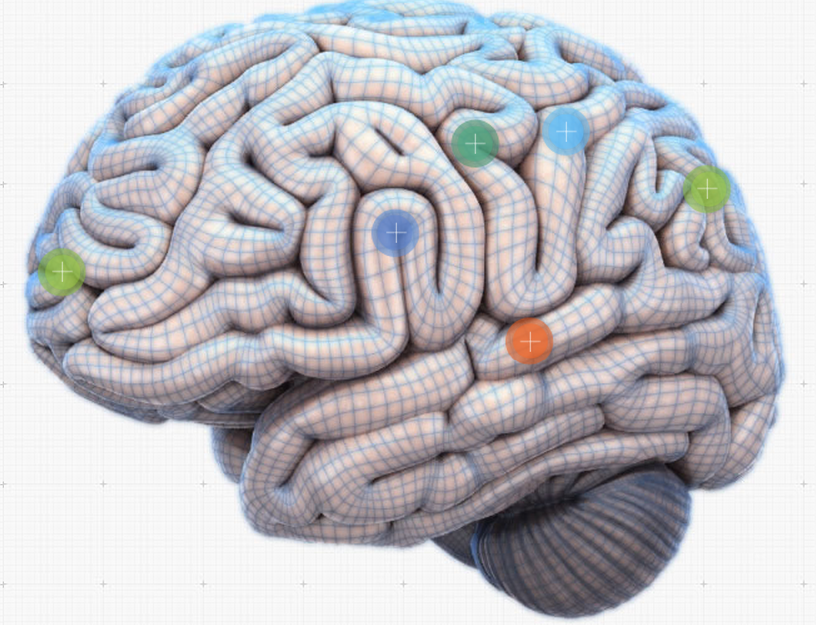 Examples of these include:
To use this strategy we need to break anger into several stages:

Preparing for a provoking situations
During the event
Coping with stress
10 Thursday Dec 2020
Posted in photos, quote, Uncategorized
≈ Comments Off on The body
03 Thursday Dec 2020
Posted in brain, drugs, research, Uncategorized
≈ Comments Off on Drugs and the Brain
The human brain is the most complex organ in the body. This three-pound mass of gray and white matter sits at the center of all human activity—you need it to drive a car, to enjoy a meal, to breathe, to create an artistic masterpiece, and to enjoy everyday activities. In brief, the brain regulates your body’s basic functions; enables you to interpret and respond to everything you experience; and shapes your thoughts, emotions, and behavior.
The brain is made up of many parts that all work together as a team. Different parts of the brain are responsible for coordinating and performing specific functions. Drugs can alter important brain areas that are necessary for life-sustaining functions and can drive the compulsive drug abuse that marks addiction. Brain areas affected by drug abuse include:
How do the parts of the brain communicate?
The brain is a communications center consisting of billions of neurons, or nerve cells. Networks of neurons pass messages back and forth among different structures within the brain, the spinal cord, and nerves in the rest of the body (the peripheral nervous system). These nerve networks coordinate and regulate everything we feel, think, and do.
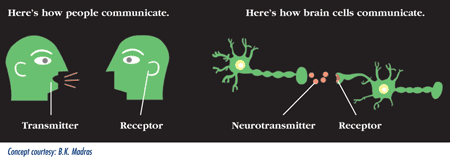
To send a message, a brain cell (neuron) releases a chemical (neurotransmitter) into the space (synapse) between it and the next cell. The neurotransmitter crosses the synapse and attaches to proteins (receptors) on the receiving brain cell. This causes changes in the receiving cell—the message is delivered.
How do drugs work in the brain?
Drugs are chemicals that affect the brain by tapping into its communication system and interfering with the way neurons normally send, receive, and process information. Some drugs, such as marijuana and heroin, can activate neurons because their chemical structure mimics that of a natural neurotransmitter. This similarity in structure “fools” receptors and allows the drugs to attach onto and activate the neurons. Although these drugs mimic the brain’s own chemicals, they don’t activate neurons in the same way as a natural neurotransmitter, and they lead to abnormal messages being transmitted through the network.
Other drugs, such as amphetamine or cocaine, can cause the neurons to release abnormally large amounts of natural neurotransmitters or prevent the normal recycling of these brain chemicals. This disruption produces a greatly amplified message, ultimately disrupting communication channels.
How do drugs work in the brain to produce pleasure?
Most drugs of abuse directly or indirectly target the brain’s reward system by flooding the circuit with dopamine. Dopamine is a neurotransmitter present in regions of the brain that regulate movement, emotion, motivation, and feelings of pleasure. When activated at normal levels, this system rewards our natural behaviors. Overstimulating the system with drugs, however, produces euphoric effects, which strongly reinforce the behavior of drug use—teaching the user to repeat it.
Most drugs of abuse target the brain’s reward system by flooding it with dopamine.

How does stimulation of the brain’s pleasure circuit teach us to keep taking drugs?
Our brains are wired to ensure that we will repeat life-sustaining activities by associating those activities with pleasure or reward. Whenever this reward circuit is activated, the brain notes that something important is happening that needs to be remembered, and teaches us to do it again and again without thinking about it. Because drugs of abuse stimulate the same circuit, we learn to abuse drugs in the same way.
Why are drugs more addictive than natural rewards?
When some drugs of abuse are taken, they can release 2 to 10 times the amount of dopamine that natural rewards such as eating and sex do.15 In some cases, this occurs almost immediately (as when drugs are smoked or injected), and the effects can last much longer than those produced by natural rewards. The resulting effects on the brain’s pleasure circuit dwarf those produced by naturally rewarding behaviors.16,17The effect of such a powerful reward strongly motivates people to take drugs again and again. This is why scientists sometimes say that drug abuse is something we learn to do very, very well.
Long-term drug abuse impairs brain functioning.
What happens to your brain if you keep taking drugs?
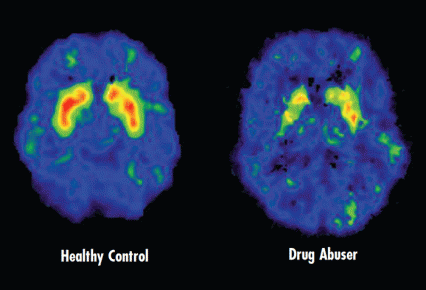
For the brain, the difference between normal rewards and drug rewards can be described as the difference between someone whispering into your ear and someone shouting into a microphone. Just as we turn down the volume on a radio that is too loud, the brain adjusts to the overwhelming surges in dopamine (and other neurotransmitters) by producing less dopamine or by reducing the number of receptors that can receive signals. As a result, dopamine’s impact on the reward circuit of the brain of someone who abuses drugs can become abnormally low, and that person’s ability to experience anypleasure is reduced.
This is why a person who abuses drugs eventually feels flat, lifeless, and depressed, and is unable to enjoy things that were previously pleasurable. Now, the person needs to keep taking drugs again and again just to try and bring his or her dopamine function back up to normal—which only makes the problem worse, like a vicious cycle. Also, the person will often need to take larger amounts of the drug to produce the familiar dopamine high—an effect known as tolerance.
Decreased Dopamine Transporters in a Methamphetamine Abuser18
How does long-term drug taking affect brain circuits?
We know that the same sort of mechanisms involved in the development of tolerance can eventually lead to profound changes in neurons and brain circuits, with the potential to severely compromise the long-term health of the brain. For example, glutamate is another neurotransmitter that influences the reward circuit and the ability to learn. When the optimal concentration of glutamate is altered by drug abuse, the brain attempts to compensate for this change, which can cause impairment in cognitive function. Similarly, long-term drug abuse can trigger adaptations in habit or non-conscious memory systems. Conditioning is one example of this type of learning, in which cues in a person’s daily routine or environment become associated with the drug experience and can trigger uncontrollable cravings whenever the person is exposed to these cues, even if the drug itself is not available. This learned “reflex” is extremely durable and can affect a person who once used drugs even after many years of abstinence.
What other brain changes occur with abuse?
Chronic exposure to drugs of abuse disrupts the way critical brain structures interact to control and inhibit behaviors related to drug use. Just as continued abuse may lead to tolerance or the need for higher drug dosages to produce an effect, it may also lead to addiction, which can drive a user to seek out and take drugs compulsively. Drug addiction erodes a person’s self-control and ability to make sound decisions, while producing intense impulses to take drugs.
02 Wednesday Dec 2020
Posted in Uncategorized
≈ Comments Off on Reading the World
Interesting post from the BBC.
Writer Ann Morgan set herself a challenge – to read a book from every country in the world in one year. She describes the experience and what she learned.
http://www.bbc.com/culture/story/20130715-reading-the-world-in-365-days
Ann Morgan’s reading list can be found here: http://ayearofreadingtheworld.com/thelist/

08 Thursday Oct 2020
Posted in Eleanor Roosevelt, Uncategorized
≈ Comments Off on The future
Tags

“The future belongs to those who believe in the beauty of their dreams.” Eleanor Roosevelt
24 Thursday Sep 2020
Posted in photos, quote, Uncategorized
≈ Comments Off on The body
17 Thursday Sep 2020
Posted in Uncategorized
≈ Comments Off on devotion
10 Thursday Sep 2020
Posted in Uncategorized
≈ Comments Off on our food
30 Sunday Aug 2020
28 Friday Aug 2020
Posted in Uncategorized
≈ Comments Off on 広島 CAT STREET VIEW 第1弾 –尾道篇– コンセプトムービー / Hiroshima Cat Street View “Onomichi”
23 Sunday Aug 2020
18 Tuesday Aug 2020
Posted in news, Uncategorized
≈ Comments Off on The Impact of China’s Belt and Road Initiative: Lessons from Sri Lanka
Speakers draw on the findings from a recent Chatham House paper to discuss the lessons that may improve future BRI projects in Sri Lanka and elsewhere in the region. China’s Belt and Road Initiative (BRI) is having profound impacts on recipient countries. Recently, Chinese outbound investment in Sri Lanka has come under scrutiny due to intensifying geopolitical rivalries in the Indian Ocean as well as Sri Lanka’s prime location and ports in the region. Much of the analysis on this topic so far has focused on how the economic relationship has informed Chinese geopolitical ambitions, via a so-called ‘debt-trap diplomacy’. Such a framing may be misleading, while also overlooking other dimensions of Chinese investment that warrant closer examination.






 RichardbBrunner