-
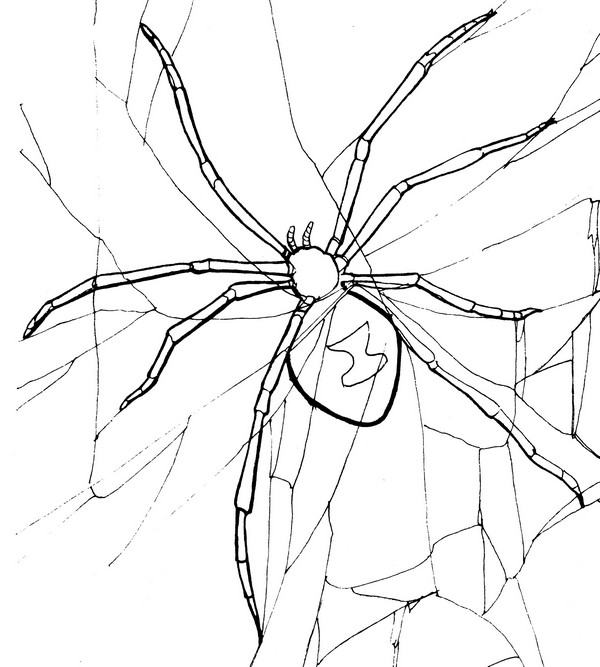
Black Widow Spider-Coloring Page
-
light
For it is not light that is needed, but fire; it is not the gentle shower, but thunder. We need the storm, the whirlwind, and the earthquake. The feeling of the nation must be quickened; the conscience of the nation must be roused; the propriety of the nation must be startled; the hypocrisy of the nation must be exposed; and its crimes against God and man must be proclaimed and denounced. Frederick Douglass

-
The impact of weight based bullying on LGBTQ Youth
Weight-based victimization (WBV) is a common form of bullying associated with maladaptive eating, and poor weight-related health. Although sexual and gender minority (SGM) youth experience a number of eating and weight-related health disparities, the link between WBV and these outcomes has not been investigated in this
vulnerable population.Data came from the LGBTQ Teen Study, a national survey of SGM adolescents.
Participants provided data to assess body mass index (BMI), WBV, sexual identity, gender identity, dieting, binge eating, eating to cope with stress, weight control behaviors, exercise, and stress (N = 9679). The sample was 66% White, with a mean age of 15.6 years; 58.5% had healthy weight, and 37.2% had overweight or obesity.Over half of participants reported WBV from family members and peers. WBV from family members was associated with maladaptive eating (i.e., binge-eating, unhealthy weight-control behaviors), dieting, and poor weight-related health (i.e., stress, exercise avoidance, less physical activity and poorer sleep); relationships remained significant after accounting for participants’ age, BMI percentile for age and sex, race, gender identity, and sexual identity. Higher frequency of WBV at school, but not history of peer weight-based victimization, was associated with more maladaptive eating, dieting, and poorer weight-related health on all outcomes except physical activity. This is the first large-scale study that examined links between WBV, maladaptive eating behaviors, and weight-related health in SGM adolescents. These results suggest the need for increased awareness that WBV may play a role in maladaptive eating, and weight-related health of SGM youth, and may contribute to both elevated levels of eating disorders and obesity in this population. Read More at The Rudd Center For Food Policy & Obesity. (opens a PDF)

-
people in our world
“Every day there are people in our world that do absolutely amazing things. People of all ages are very capable of doing tremendous, courageous things in spite of their fear.” Mairead Corrigan

-
Stressed?
I’ve been teaching a stress less/relaxation class for years and below is one the handouts that participants report is most helpful.:
Change the situation: Avoid – Alter. Change your reaction: Adapt – Accept
1. Avoid unnecessary stress
Not all stress can be avoided, and it’s not healthy to avoid a situation that needs to be addressed.
Learn how to say “no” – Know your limits and stick to them.
Avoid people who stress you out –Limit the amount of time you spend with people that cause you stress.
Take control of your environment – If the evening news makes you anxious, turn the TV off.
Avoid hot-button topics –If you repeatedly argue about the same subject with the same people, stop bringing it up or excuse yourself when it’s the topic of discussion.
Pare down your to-do list –If you’ve got too much on your plate, distinguish between the “shoulds” and the “musts.”
2. Alter the situation
If you can’t avoid a stressful situation, try to alter it. Figure out what you can do to change things so the problem doesn’t present itself in the future.
Express your feelings instead of bottling them up. If something or someone is bothering you, communicate your concerns in an open and respectful way.
Be willing to compromise. When you ask someone to change their behavior, be willing to do the same.Be more assertive. Deal with problems head on, doing your best to anticipate and prevent them.
Manage your time better. Plan ahead and make sure you don’t overextend yourself.
3. Adapt to the stressor
If you can’t change the stressor, change yourself. You can adapt to stressful situations and regain your sense of control by changing your expectations and attitude.
Reframe problems. Try to view stressful situations from a more positive perspective.
Look at the big picture. Will it matter in a month, or a year?
Adjust your standards. Set reasonable standards for yourself and others, and learn to be okay with “good enough.”
Focus on the positive. When stress is getting you down, take a moment to reflect on all the things you appreciate in your life, including your own positive qualities and gifts.
4. Accept what you can’t change
Some sources of stress are unavoidable, in such cases; the best way to cope with stress is to accept things as they are. Acceptance may be difficult, but in the long run, it’s easier than railing against a situation you can’t change.
Don’t try to control the uncontrollable. Focus on the things you can control such as the way you choose to react to problems.
Look for the upside. As the saying goes, “What doesn’t kill us makes us stronger.” When facing major challenges, try to look at them as opportunities for personal growth.
Share your feelings. Talk to a trusted friend or make an appointment with a therapist.
Learn to forgive. Accept the fact that we live in an imperfect world and that people make mistakes.
-
Ahimsa
Ahimsa (Sanskrit: अहिंसा; IAST: ahiṃsā, Pāli: avihiṃsā) is a term meaning to do no harm (literally: the avoidance of violence – himsa). The word is derived from the Sanskrit root hims – to strike; himsa is injury or harm, a-himsa is the opposite of this, i.e. non harming or nonviolence.[1][2]
 AHIMSA BERKELEY is also a San Francisco Bay Area non-profit, nonsectarian foundation. Drawing on both Eastern and Western faith traditions, AHIMSA was founded in 1993 to mark the Centennial of the Chicago Parliament of Religions.
Our founding dedication is to expanding the role of spiritual awareness in everyday life. To this end, a central goal has been to encourage dialogues on issues which bridge spirituality and various science and social issues –areas of rapidly changing world knowledge and impact. Our offerings include forums, which are free to the public. In them, we seek to focus on the universal aspects of topic areas and to bring to them critical perspectives including those of religious and spiritual philosophies. We believe that the unifying nature and true depth of philosophical experience are to be realized in the cross reflections of multiple perspectives. Go to AHIMSA website.
-
Plants
Plants are able to “remember” and “react” to information contained in light, according to researchers.

Plants, scientists say, transmit information about light intensity and quality from leaf to leaf in a very similar way to our own nervous systems.
These “electro-chemical signals” are carried by cells that act as “nerves” of the plants.
In their experiment, the scientists showed that light shone on to one leaf caused the whole plant to respond.
And the response, which took the form of light-induced chemical reactions in the leaves, continued in the dark.
This showed, they said, that the plant “remembered” the information encoded in light.
“We shone the light only on the bottom of the plant and we observed changes in the upper part,” explained Professor Stanislaw Karpinski from the Warsaw University of Life Sciences in Poland, who led this research.
He presented the findings at the Society for Experimental Biology’s annual meeting in Prague, Czech Republic.
“And the changes proceeded when the light was off… This was a complete surprise.”
In previous work, Professor Karpinski found that chemical signals could be passed throughout whole plants – allowing them to respond to and survive changes and stresses in their environment.
But in this new study, he and his colleagues discovered that when light stimulated a chemical reaction in one leaf cell, this caused a “cascade” of events and that this was immediately signalled to the rest of the plant via a specific type of cell called a “bundle sheath cell”.
The scientists measured the electrical signals from these cells, which are present in every leaf. They likened the discovery to finding the plants’ “nervous system”.
Thinking plants
What was even more peculiar, Professor Karpinski said, was that the plants’ responses changed depending on the colour of the light that was being shone on them.
“There were characteristic [changes] for red, blue and white light,” he explained.
He suspected that the plants might use the information encoded in the light to stimulate protective chemical reactions. He and his colleagues examined this more closely by looking at the effect of different colours of light on the plants’ immunity to disease.
“When we shone the light for on the plant for one hour and then infected it [with a virus or with bacteria] 24 hours after that light exposure, it resisted the infection,” he explained.
“But when we infected the plant before shining the light, it could not build up resistance.
“[So the plant] has a specific memory for the light which builds its immunity against pathogens, and it can adjust to varying light conditions.”
He said that plants used information encrypted in the light to immunise themselves against seasonal pathogens.
“Every day or week of the season has… a characteristic light quality,” Professor Karpinski explained.

“So the plants perform a sort of biological light computation, using information contained in the light to immunise themselves against diseases that are prevalent during that season.”
Professor Christine Foyer, a plant scientist from the University of Leeds, said the study “took our thinking one step forward”.
“Plants have to survive stresses, such as drought or cold, and live through it and keep growing,” she told BBC News.
“This requires an appraisal of the situation and an appropriate response – that’s a form of intelligence.
“What this study has done is link two signalling pathways together… and the electrical signalling pathway is incredibly rapid, so the whole plant could respond immediately to high [levels of] light.
-
Jain – Makeba
-
the creative individual
People are more creative than others and are literally bubbling with ideas, while others rarely or never show signs of creativity. What should we look for when searching for creative people?
Creativity can quite simply be defined as the capacity to come up with new ideas to serve a purpose. Creativity is thus one of the most important sources of renewal. Creativity contributes to innovation and improvements in working life, commerce and industry.
No wonder employers want creative employees in areas where it is essential to come up with proposals for new products and services, and new ways of doing things.
The creative personality
Professor Øyvind L. Martinsen at BI Norwegian Business School has conducted a study to develop a personality profile for creative people: Which personality traits characterize creative people?
The study was conducted with 481 people with different backgrounds. The segment consists of various groups of more or less creative people.- The first group of creative people consists of 69 artists working as actors or musicians in a well-known symphony orchestra or are members of an artist’s organization with admission requirements.
- The second group of creative people consists of 48 students of marketing.
- The remaining participants in the study are managers, lecturers and students in programs that are less associated with creativity than marketing.
The creativity researcher mapped the participants’ personality traits and tested their creative abilities and skills through various types of tasks.
Seven creativity characteristics
In his study Martinsen identifies seven paramount personality traits that characterize creative people:
• 1. Associative orientation: Imaginative, playful, have a wealth of ideas, ability to be committed, sliding transitions between fact and fiction.
• 2. Need for originality: Resists rules and conventions. Have a rebellious attitude due to a need to do things no one else does.
• 3. Motivation: Have a need to perform, goal-oriented, innovative attitude, stamina to tackle difficult issues.
• 4. Ambition: Have a need to be influential, attract attention and recognition.
• 5. Flexibility: Have the ability to see different aspects of issues and come up with optional solutions.
• 6. Low emotional stability: Have a tendency to experience negative emotions, greater fluctuations in moods and emotional state, failing self-confidence.
• 7. Low sociability: Have a tendency not to be very considerate, are obstinate and find faults and flaws in ideas and people.
Among the seven personality traits, associative orientation and flexibility are the factors that to the greatest extent lead to creative thinking.
“Associative orientation is linked to ingenuity. Flexibility is linked to insight,” says the professor. The other five characteristics describe emotional inclinations and motivational factors that influence creativity or spark an interest in creativity.
“The seven personality traits influence creative performance through inter-action,” Martinsen points out.
Øyvind L. Martinsen. The Creative Personality: A Synthesis and Development of the Creative Person Profile. Creativity Research Journal, 2011; 23 (3): 185 DOI: 10.1080/10400419.2011.595656 -
Japanese Textile Designs 133




 RichardbBrunner