-
day dream answers
Intention (the problem), Resources, Daydream, Create.
Intention/Idea Paper pattern on canvas
Paper: Types of hand made paper, thickness, size, consistency of paper (smooth/coarse).
Canvas: Size, color, back ground, detail
Paper: design of shape, placement, pattern

There are distinctive stages in creative problem-solving. The first stage is preparation, gathering resources. Searching out any information that might be relevant. The key to this stage is open mindedness, letting your imagination roam free. Being receptive, being able to listen openly and well, to move beyond self censorship and judgment.
Once you have mulled over all the parts and pieces you have gathered let the problem simmer. This is the incubation stage, when you digest all you have gathered. It’s a stage when much of what goes on occurs outside your focused awareness, in the unconscious. As the saying goes, “You sleep on it.”
The unconscious mind is far more suited to creative insight than the conscious mind. Ideas are free to recombine with other ideas in novel patterns and unpredictable associations. It is also the storehouse of everything you know, including things you can’t readily call into awareness. Further, the unconscious speaks to us in ways that go beyond words, including the rich feelings and deep imagery of the senses.
We are more open to insights from the unconscious mind when we are not thinking of anything in particular. That is why daydreams are so useful in the quest for creativity. Anytime you can just daydream and relax is useful in the creative process: a shower, long drives, a quiet walk.
With time, immersion and daydreaming can lead to illumination, when all of a sudden the answer comes to you as if from nowhere
-
TEDx:The Practice of Mindfulness
Former Buddhist nun Diana Winston is the director of Mindfulness Education at UCLA Mindful Awareness Center, and the author of several books on mindfulness and meditation. With more than 20 years in the study and practice of mindfulness, Diana explains how routinely taking the time to be in the moment can have a profound impact on our everyday lives and relationships.
-
Syrian kids adapt to new life in Canada through art therapy
An unconventional Saskatoon program is helping six-year-old Syrian refugee Mahmud Alcheikh heal from the trauma of the Syrian civil war.
Once a week, he sits around a large table in a small room at Queen Elizabeth School with his siblings Zeina, 9, Janna, 10, Abdulwhab, 12, and Mohamed Alcheikh, 13. The children draw the new contours of their lives away from war, coloured pens in hand.
 “They are full of energy and their creativity is increasing at every session. They’re becoming much more open,” said art therapist David Baudemont, who has been working with the Alcheikh kids since April.The family left the Syrian city of Deir ez-Zor in 2012 to Ar-Raqqah where they hid for a couple years. The family made it to Turkey in 2015 before coming to Saskatoon this September.
Signs of trauma
Baudemont said art therapy can help survivors of war to heal.“If you are picturing your uncle who is still in Turkey, you’re going to be able to forget the pain of not having that uncle.”He believes the Alcheikh children are particularly vulnerable.“There were some signs in the drawings there was probably some trauma involved. So we’ve decided to work with the whole family,” he added. MORE HERE -
Kimbra – Sweet Relief
-
Meditation and Psychotherapy
-
Blossoms on the ground

-
American Poverty
During the Great Depression, photographers created riveting images chronicling the desperation of those times. Pictures helped mold the nation’s collective memory and conscience. Seventy years later, the plight and potential of the least fortunate members of our communities is mostly unseen and ignored, and photographers are once again poised to jump-start a national conversation about the issue of poverty.
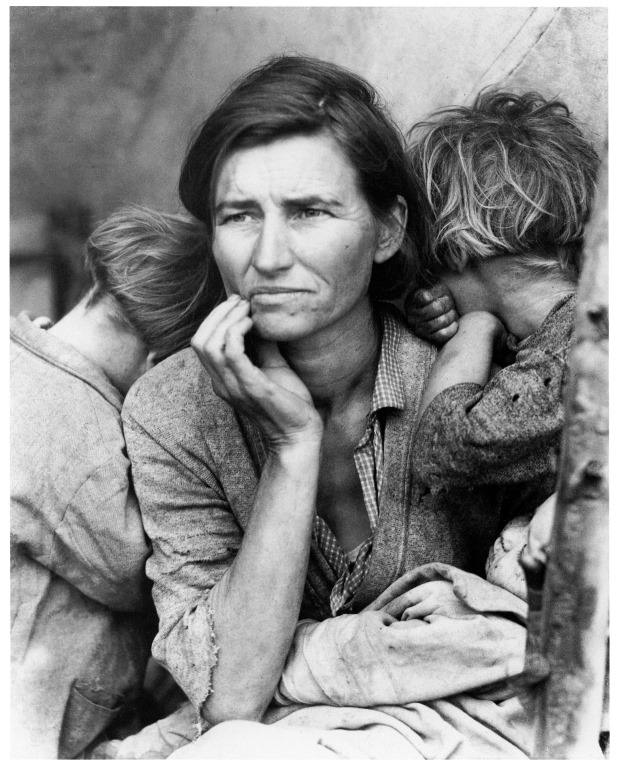
AmericanPoverty.org is a non-profit alliance of photojournalists using visual storytelling to raise awareness about “how the other half lives.” Joining us are renowned American writers, filmmakers and educators, all of whom seek to alleviate poverty and make it a national priority. Together we are working to dispel stereotypes and encourage actions that can create lasting impact in the lives of disadvantaged people.
The photo “Migrant Mother” was one of thousands of pictures Dorothea Lange took on assignment for the federal government, documenting the poverty of the Dust Bowl. Before it had that iconic title, the 1936 photo was captioned “Destitute peapickers in California.” For more about Dorothea Lange and this image check out Studio 360.
-
courage
Life shrinks or expands in proportion to one’s courage. Anaïs Nin

-
Pets
Wonderful article written by Joseph Burgo, Ph.D. who has practiced psychotherapy for more than 30 years, holding licenses as a marriage and family therapist and clinical psychologist.

“…Although Sigmund Freud’s psychoanalytic method encourages the analyst to present a blank screen, concealing all details of his personal life, thoughts and feelings, Freud himself practiced from his home and included Jo-Fi, his favorite chow chow, in many of his sessions. Freud supposedly relied on his pet’s reaction to a client for help in assessing the person’s character. He also felt that a dog’s presence helped to calm his clients.”
Read more here: The Pets in My Practice
-
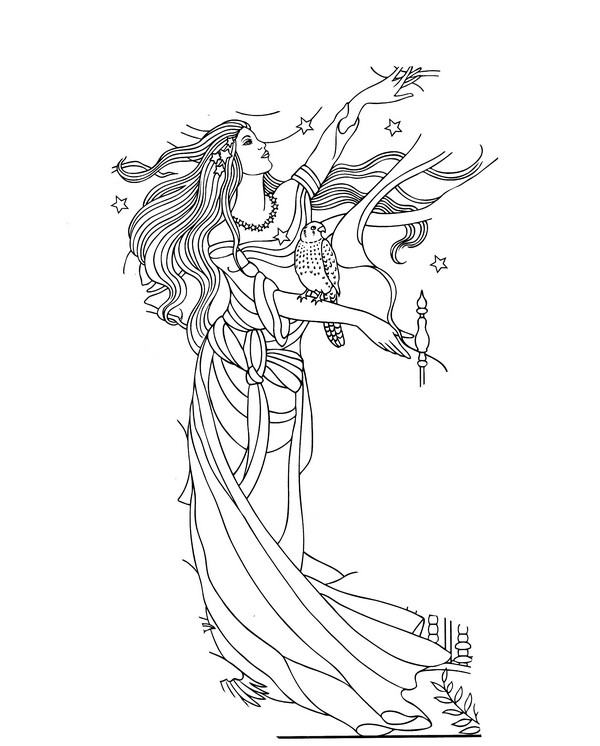
Coloring Page Goddess Frigg



 RichardbBrunner