Brain System For Emotional Self-Control

Tags

,

Different brain areas are activated when we choose to suppress an emotion, compared to when we are instructed to inhibit an emotion, according a new study from the UCL Institute of Cognitive Neuroscience and Ghent University.
In this study, published in Brain Structure and Function, the researchers scanned the brains of healthy participants and found that key brain systems were activated when choosing for oneself to suppress an emotion. They had previously linked this brain area to deciding to inhibit movement.
“This result shows that emotional self-control involves a quite different brain system from simply being told how to respond emotionally,” said lead author Dr Simone Kuhn (Ghent University).
In most previous studies, participants were instructed to feel or inhibit an emotional response. However, in everyday life we are rarely told to suppress our emotions, and usually have to decide ourselves whether to feel or control our emotions.
In this new study the researchers showed fifteen healthy women unpleasant or frightening pictures. The participants were given a choice to feel the emotion elicited by the image, or alternatively to inhibit the emotion, by distancing themselves through an act of self-control.
The researchers used functional magnetic resonance imaging (fMRI) to scan the brains of the participants. They compared this brain activity to another experiment where the participants were instructed to feel or inhibit their emotions, rather than choose for themselves.
Different parts of the brain were activated in the two situations. When participants decided for themselves to inhibit negative emotions, the scientists found activation in the dorso-medial prefrontal area of the brain. They had previously linked this brain area to deciding to inhibit movement.
In contrast, when participants were instructed by the experimenter to inhibit the emotion, a second, more lateral area was activated.
“We think controlling one’s emotions and controlling one’s behavior involve overlapping mechanisms,” said Dr Kuhn.
“We should distinguish between voluntary and instructed control of emotions, in the same way as we can distinguish between making up our own mind about what do, versus following instructions.”
Regulating emotions is part of our daily life, and is important for our mental health. For example, many people have to conquer fear of speaking in public, while some professionals such as health-care workers and firemen have to maintain an emotional distance from unpleasant or distressing scenes that occur in their jobs.
tivityProfessor Patrick Haggard (UCL Institute of Cognitive Neuroscience) co-author of the paper said the brain mechanism identified in this study could be a potential target for therapies.
“The ability to manage one’s own emotions is affected in many mental health conditions, so identifying this mechanism opens interesting possibilities for future research.
“Most studies of emotion processing in the brain simply assume that people passively receive emotional stimuli, and automatically feel the corresponding emotion. In contrast, the area we have identified may contribute to some individuals’ ability to rise above particular emotional situations.
“This kind of self-control mechanism may have positive aspects, for example making people less vulnerable to excessive emotion. But altered function of this brain area could also potentially lead to difficulties in responding appropriately to emotional situations.”

5 foods that fight high cholesterol

Tags

, , , , , , , , , , , , , , , ,

It’s easy to eat your way to an alarmingly high cholesterol level. The reverse is true too — changing what you eat can lower your cholesterol and improve the armada of fats floating through your bloodstream. Fresh fruits and vegetables, whole grains, and “good fats” are all part of a heart-healthy diet. But some foods are particularly good at helping bring down cholesterol.

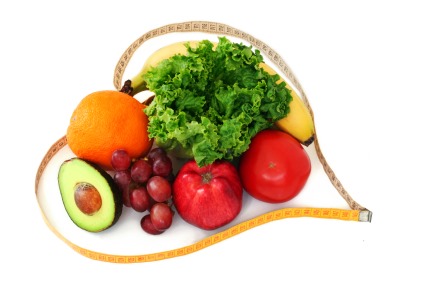
How? Some cholesterol-lowering foods deliver a good dose of soluble fiber, which binds cholesterol and its precursors in the digestive system and drags them out of the body before they get into circulation. Others provide polyunsaturated fats, which directly lower LDL. And those with plant sterols and stanols keep the body from absorbing cholesterol. Here are 5 of those foods:Fruits and veggies in heart tape

  1. Oats. An easy way to start lowering cholesterol is to choose oatmeal or a cold oat-based cereal like Cheerios for breakfast. It gives you 1 to 2 grams of soluble fiber. Add a banana or some strawberries for another half-gram.
  2. Beans. Beans are especially rich in soluble fiber. They also take a while for the body to digest, meaning you feel full for longer after a meal. That’s one reason beans are a useful food for folks trying to lose weight. With so many choices — from navy and kidney beans to lentils, garbanzos, black-eyed peas, and beyond — and so many ways to prepare them, beans are a very versatile food.
  3. Nuts. A bushel of studies shows that eating almonds, walnuts, peanuts, and other nuts is good for the heart. Eating 2 ounces of nuts a day can slightly lower LDL, on the order of 5%. Nuts have additional nutrients that protect the heart in other ways.
  4. Foods fortified with sterols and stanols. Sterols and stanols extracted from plants gum up the body’s ability to absorb cholesterol from food. Companies are adding them to foods ranging from margarine and granola bars to orange juice and chocolate. They’re also available as supplements. Getting 2 grams of plant sterols or stanols a day can lower LDL cholesterol by about 10%.
  5. Fatty fish. Eating fish two or three times a week can lower LDL in two ways: by replacing meat, which has LDL-boosting saturated fats, and by delivering LDL-lowering omega-3 fats. Omega-3s reduce triglycerides in the bloodstream and also protect the heart by helping prevent the onset of abnormal heart rhythms.

But stay away from…

As you consider eating more of the foods that can help dial down cholesterol, keep in mind that avoiding certain foods can improve your results. To keep cholesterol levels where you want them to be, limit intake of:

Saturated fats. The saturated fats found in red meat, milk and other dairy foods, and coconut and palm oils directly boost LDL. So one way to lower your LDL is to cut back on saturated fat. Try substituting extra-lean ground beef for regular; low-fat or skim milk for whole milk; olive oil or a vegetable-oil margarine for butter; baked fish or chicken for fried.

Trans fats. Trans fats are a byproduct of the chemical reaction that turns liquid vegetable oil into solid margarine or shortening and that prevents liquid vegetable oils from turning rancid. Trans fats boost LDL as much as saturated fats do. They also lower protective HDL, rev up inflammation, and increase the tendency for blood clots to form inside blood vessels. Although trans fats were once ubiquitous in prepared foods, many companies now use trans-free alternatives. Some restaurants and fast-food chains have yet to make the switch.

Greensill, Gupta and Cameron: what went wrong | The Financial Times

Tags

,

The story of Greensill Capital’s rise and fall has everything: investment banks, opaque finance, private jets, trophy mansions and the biggest British lobbying scandal in a generation, involving former prime minister David Cameron. The Financial Times charts the rise of Lex Greensill and Sanjeev Gupta and examines where it all went wrong.

End of the road for Jeepneys

Tags

, ,

London has the red double-decker bus, New York the yellow taxi, and the Philippines has the Jeepney.

The country’s most popular means of public transport zipping by adds a flash of vibrancy in the often frustrating, gridlocked streets of metropolitan Manila.l-jeepney

With names like Delilah and Rosa emblazoned across the front, each one is individually adorned with religious and nationalistic artwork – no two are identical.

For Ed Sarao, head of Sarao Motors – one of the first makers of Jeepneys – the vehicle represents the multi-cultural history of the Philippines.

“There is bit of Spanish, Mexican traits there; how they incorporate vivid colours, fiesta-like feelings. There is a little of the Americans because it evolved from the Jeep. There is a little Japan because of the Japanese engine. But it was built by Filipino hands,” he says.

But while it was once part of the Philippines’ image and identity, the Jeepney has now become something of a dinosaur – and newer, more economical vehicles are starting to take its place. Read the full story HERE.

Yoga can help girls who suffered childhood trauma

Tags

, ,

As a Creative Arts Therapist who specializes in the body and is a former Yoga teacher this article is not at all surprising. Most therapists who have worked with trauma survivors know that people have a tendency to have some level of dissociation with their bodies. Yoga can gently bring a new level of conscious feeling, movement and functionally of the body which can’t be processed with other modalities.

As a teenager, Rocsana Enriquez ran away from home frequently to escape fights with her mother and sexual abuse from her stepfather. She got involved with street gangs and cycled in and out of juvenile detention.

While she was incarcerated in Central California, she started to learn yoga. It became an outlet for her anger and an antidote to the deep insecurity she felt. Before she got into a fight, she reminded herself to take a deep breath. And she loved the way she felt when she stretched into “Warrior II” pose. “It made me feel very strong,” she said.

A new report by the Center on Poverty and Inequality at Georgetown Law School shows that yoga programs can be particularly effective at helping girls who are incarcerated cope with the effects of trauma that many have experienced. Research shows yoga and mindfulness can promote healthier relationships, increase concentration, and improve self esteem and physical health.

Such programs, if offered more broadly, would be a cost-effective way to help one of the country’s most vulnerable groups heal and improve their lives, the report says.

READ MORE HERE

bamboo forest

Nonverbal communication with Pets

Tags

, ,

Nonverbal communication is a gift that all living beings share, one you’ll need to reawaken to better interact with and care for your animal companions. Most dog and cat lovers already understand canine and feline body language, which is one non-verbal technique. But you can use your other, natural, nonverbal communication skills, and actually begin to see things through your dog or cat’s eyes, and become his/her voice. DogsCats.jpg

You can learn animal communication by taking a class or reading some of the great books available today on the subject. But many of the basics are so simple that we can easily begin nonverbally communicating right away. Remember, long before humans had spoken language, we were able to communicate among ourselves and with the animals; it is a kind of heart to heart communication skill that we all possess.

Did you ever know a set of twins who said they each knew what the other was thinking, or you heard your mother say she had “woman’s intuition” or “just knew something was wrong.” Have you ever had an image of a friend come to mind and then received a phone call from that very person saying, “I was just thinking about you and wanted to say hello”? These are all examples of nonverbal communication.

Gestures can help learning

Tags

, ,

From Scientific American: When we talk, we naturally gesture—we open our palms, we point, we chop the air for emphasis. Such movement may be more than superfluous hand flapping. It helps communicate ideas to listeners and even appears to help speakers think and learn.

A growing field of psychological research is exploring the potential of having students or teachers gesture as pupils learn. Studies have shown that people remember material better when they make spontaneous gestures, watch a teacher’s movements or use their hands and arms to imitate the instructor. More recent work suggests that telling learners to move in specific ways can help them learn—even when they are unaware of why they are making the motions.

Read the entire article: Students Who Gesture during Learning ‘Grasp’ Concepts Better – Scientific American

Plants

Tags

,

Plants are able to “remember” and “react” to information contained in light, according to researchers.

Plants, scientists say, transmit information about light intensity and quality from leaf to leaf in a very similar way to our own nervous systems.2017-Flowers-0061-sm

These “electro-chemical signals” are carried by cells that act as “nerves” of the plants.

In their experiment, the scientists showed that light shone on to one leaf caused the whole plant to respond.

And the response, which took the form of light-induced chemical reactions in the leaves, continued in the dark.

This showed, they said, that the plant “remembered” the information encoded in light.

“We shone the light only on the bottom of the plant and we observed changes in the upper part,” explained Professor Stanislaw Karpinski from the Warsaw University of Life Sciences in Poland, who led this research.

He presented the findings at the Society for Experimental Biology’s annual meeting in Prague, Czech Republic.

“And the changes proceeded when the light was off… This was a complete surprise.”

In previous work, Professor Karpinski found that chemical signals could be passed throughout whole plants – allowing them to respond to and survive changes and stresses in their environment.

But in this new study, he and his colleagues discovered that when light stimulated a chemical reaction in one leaf cell, this caused a “cascade” of events and that this was immediately signaled to the rest of the plant via a specific type of cell called a “bundle sheath cell”.

The scientists measured the electrical signals from these cells, which are present in every leaf. They likened the discovery to finding the plants’ “nervous system”.

Thinking plants

What was even more peculiar, Professor Karpinski said, was that the plants’ responses changed depending on the colour of the light that was being shone on them. N

.
“There were characteristic [changes] for red, blue and white light,” he explained.

He suspected that the plants might use the information encoded in the light to stimulate protective chemical reactions. He and his colleagues examined this more closely by looking at the effect of different colors of light on the plants’ immunity to disease.

“When we shone the light for on the plant for one hour and then infected it [with a virus or with bacteria] 24 hours after that light exposure, it resisted the infection,” he explained.

“But when we infected the plant before shining the light, it could not build up resistance.

“[So the plant] has a specific memory for the light which builds its immunity against pathogens, and it can adjust to varying light conditions.”

He said that plants used information encrypted in the light to immunize themselves against seasonal pathogens.

“Every day or week of the season has… a characteristic light quality,” Professor Karpinski explained.

“So the plants perform a sort of biological light computation, using information contained in the light to immunize themselves against diseases that are prevalent during that season.”

Professor Christine Foyer, a plant scientist from the University of Leeds, said the study “took our thinking one step forward”.

“Plants have to survive stresses, such as drought or cold, and live through it and keep growing,” she told BBC News.

“This requires an appraisal of the situation and an appropriate response – that’s a form of intelligence.

“What this study has done is link two signaling pathways together… and the electrical signaling pathway is incredibly rapid, so the whole plant could respond immediately to high [levels of] light.