$100 million went missing from an online bank. “Neobanks” promise higher rates and lower fees, but they exist in a regulatory black box created by Andreessen, Thiel, Musk and more. We investigated an online bank where thousands of Americans’ FDIC-insured savings vanished. —– More Perfect Union is an Emmy-winning, nonprofit newsroom whose mission is to build power for working people. Here’s what that means: We report on the real struggles and challenges of the working class from a working-class perspective. We attempt to connect those problems to potential solutions. We report on the abuses and wrongdoing of corporate power. And we seek to hold accountable the ultra-rich who have too much power over America’s political and economic systems.
On the 250th anniversary of Adam Smith’s The Wealth of Nations, this episode revisits a book that laid the foundations of modern economics and then considers the tensions between free markets and industrial policy today. It highlights the ways in which specialization and global trade remain powerful drivers of prosperity, reflecting Smith’s insight that self-interest can benefit society when shaped by competition and institutions, while noting the ongoing relevance of his warnings about moral judgment, the rule of law, and resistance to cronyism.
Adam Smith argued that free markets only work when they rely on a foundation of moral sentiment, trust, and ethical behavior—often rooted in justice—to function effectively. While he acknowledged religious frameworks, his focus was on self-interest, justice, and the “invisible hand” within a well-regulated society. [1, 2, 3] Key insights regarding Smith’s views on morality and markets include:
• Moral Foundations: Smith argued that for markets to function, participants must have integrity, as low trust increases transaction costs. • Role of Ethics: His work emphasizes that true capitalism requires justice, not just self-interest, and thrives when there is a level playing field and fair rules. • Justice over Religion: Smith believed that a system of “natural liberty” required a framework of justice to prevent the “master” class from oppressing workers. • Invisible Hand: Smith believed the “invisible hand” works best when individuals, pursuing their own interests, are guided by a societal, and often divine, order. [1, 2, 3, 4, 5]
In 2018, the U.S. imposed tariffs on over $250 billion worth of Chinese products, leading to Chinese retaliation with tariffs on over $110 billion worth of U.S. products, including agricultural products like soybeans, pork, and ethanol.
By December 2019, the average U.S. tariff rates on Chinese products had increased to 24.3%, while Chinese tariffs on U.S. exports were set to reach 25.9%.
These retaliatory tariffs significantly impacted U.S. agricultural exports, leading to a decline of $27 billion between mid-2018 and the end of 2019. Soybeans were most affected, accounting for 71% of the decline.
China purchased only 58% of the US exports it had committed to purchase under the agreement, not even enough to reach its import levels from before the trade war.
The trade war led to a significant drop in U.S. soybean exports to China, declining by 75% in 2018.
To mitigate the impact on farmers, the Trump administration provided $28 billion in aid, a sum exceeding the annual budget of various government agencies, including the Navy’s shipbuilding program and the cost of maintaining the U.S. nuclear arsenal.
Despite the trade war, a survey of Midwestern farmers conducted in early 2019 revealed that over 56% remained supportive of President Trump’s tariffs. This sentiment persisted even though over 80% reported experiencing income losses due to the trade disruptions.
A key takeaway from this that the trade war primarily hurt U.S. farmers and consumers, and the tariffs did not achieve the intended outcome of benefiting U.S. industries. The “Phase One” agreement signed in January 2020, while halting further tariff escalation, did not fully resolve the issues, and China fell short of its purchase commitments. Experts argue that a more effective approach would involve lowering or eliminating tariffs and focusing on constructive trade policies that promote economic growth and competition.
With everyone trying to diversity their supply chain with domestic and ‘friendly’ suppliers the result will be …. a varied multi market, country, slow steady growth rate. Or .. at the very least it’s s a theory.
of course there is the little problem of the reserve currency. I thought back in 2007 that the euro💶 would evolve into the big R. (I’ll look for the blog post) They certainly have the potential. EU is considered more stable then China….and now apparently USA
The sources discuss the U.S.-China trade war initiated by the Trump administration and its significant impact on the U.S. agricultural sector.
In 2018, the U.S. imposed tariffs on over $250 billion worth of Chinese products, leading to Chinese retaliation with tariffs on over $110 billion worth of U.S. products, including agricultural products like soybeans, pork, and ethanol. By December 2019, the average U.S. tariff rates on Chinese products had increased to 24.3%, while Chinese tariffs on U.S. exports were set to reach 25.9%. These retaliatory tariffs significantly impacted U.S. agricultural exports, leading to a decline of $27 billion between mid-2018 and the end of 2019. Soybeans were most affected, accounting for 71% of the decline. China purchased only 58% of the US exports it had committed to purchase under the agreement, not even enough to reach its import levels from before the trade war**. The trade war led to a significant drop in U.S. soybean exports to China, declining by 75% in 2018. To mitigate the impact on farmers, the Trump administration provided $28 billion in aid, a sum exceeding the annual budget of various government agencies, including the Navy’s shipbuilding program and the cost of maintaining the U.S. nuclear arsenal.
Despite the trade war, a survey of Midwestern farmers conducted in early 2019 revealed that over 56% remained supportive of President Trump’s tariffs. This sentiment persisted even though over 80% reported experiencing income losses due to the trade disruptions.
A key takeaway from the sources is that the trade war primarily hurt U.S. farmers and consumers, and the tariffs did not achieve the intended outcome of benefiting U.S. industries. The “Phase One” agreement signed in January 2020, while halting further tariff escalation, did not fully resolve the issues, and China fell short of its purchase commitments.
Experts argue that a more effective approach would involve lowering or eliminating tariffs and focusing on constructive trade policies that promote economic growth and competition.
As of January 8, 2024, Dollar General (DG) has 19,643 stores in the continental United States and Mexico. (Wikipedia) In 2022, the company’s revenue was $34.8 billion and its net income/profit was $3.1 billion. (Wikipedia)
I was reminded of this the other day as I was waiting in line at DG and saw a manager fiddle with the safe (didn’t have my glasses on and couldn’t really see what she was doing).
Much like other large retailers (Walmart and Albertsons), DG has the ability to negotiate lower prices for some goods because of their enormous size. At my local DG, most prices are on par with the local grocery store. Of course I can’t really say local … not in my definition of what local is. DG is a 23 mile round trip, the grocery store (Safeway), is an 80 mile round trip. Such is the way of rural life.
Dollar General’s strategy is to target low-income and low-population areas that other major retailers avoid. 75% of their stores are in towns with fewer than 20,000 people. (LinkedIn) DG can and does serve as a food and other goods lifeline to the areas it serves. Well, at least my ‘local’ DG.
However, DG never has any fresh produce. I understand why, produce in a store is labor intensive compared to everything else. Plus produce goes bad if no one buys it, a potential money losing proposition.
DG does seem to have a poor reputation (lots of employee and consumer complaints) including more than $21 million in fines from the federal Occupational Safety and Health Administration for having blocked fire exits, dangerous levels of clutter and more. Even shareholders are upset as they voted for a resolution that called for an independent, third-party audit into worker safety, a move that the company opposed. (CNBC)
DG does have its role in providing goods to folks who would otherwise not have any other resources. For that I am grateful. But, they need to clean up their act.
The Russia-led Eurasia Economic Union and China just agreed to design the mechanism for an independent financial and monetary system that would bypass dollar transactions.
“The Eurasian Economic Union (EAEU) and China agreed to design the mechanism for an independent international monetary and financial system.”
The Eurasian Economic Union: Deals, Rules and the Exercise of Power Regardless of its multiple shortcomings, the Eurasian Economic Union (EAEU) should not be dismissed out of hand. For Russia, it is the primary vehicle for realizing a global geopolitical agenda. Chatham House Research Paper. https://www.chathamhouse.org/2017/05/eurasian-economic-union
Russia and China, Together at Last: At the core of recent conflicts is an entente between China and Russia that the world hasn’t seen since the start of the Cold War.
“At their February 4 meeting, Putin and Xi drew on 37 prior encounters to proclaim nothing less than an ad-hoc alliance meant to shake the world. As the foundation for their new “global governance system,” they promised to “enhance transport infrastructure connectivity to keep logistics on the Eurasian continent smooth and…make steady progress on major oil and gas cooperation projects.” These words gained weight with the announcement that Russia would spend another $118 billion on new oil and gas pipelines to China. (Four-hundred billion dollars had already been invested in 2014 when Russia faced European sanctions over its seizure of Crimea from Ukraine.) The result: an integrated Sino-Russian oil-and-gas infrastructure is being built from the North Sea to the South China Sea.”
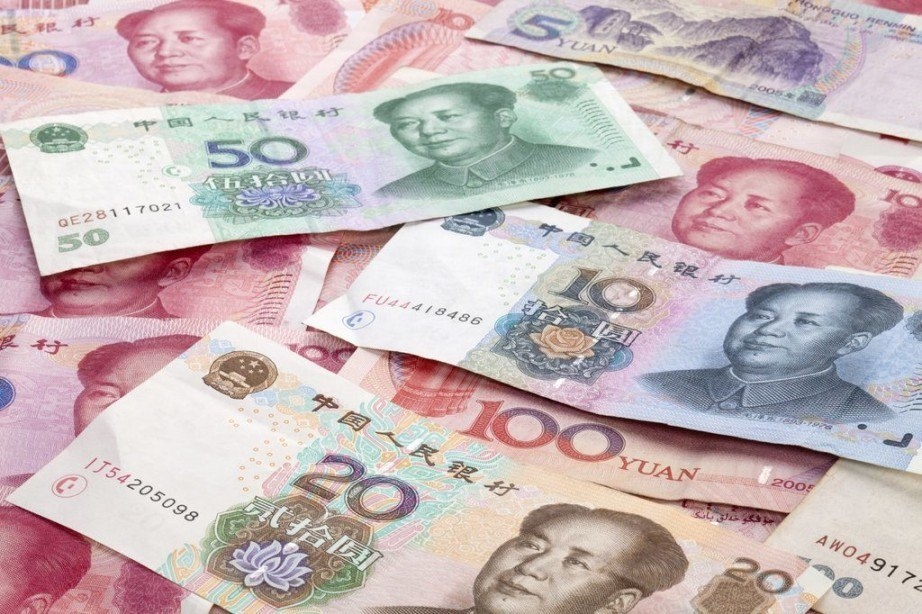
Before the yuan can become a global currency, it must first be successful as a reserve currency. That would give China the following benefits:
The yuan would be used to price more international contracts. China exports a lot of commodities that are traditionally priced in U.S. dollars. If they were priced in yuan, China would not have to worry so much about the dollar’s value. All central banks would have to hold yuan as part of their foreign exchange reserves. The yuan would be in higher demand. That would lower interest rates for bonds denominated in yuan. Chinese exporters would have lower borrowing costs. China would have more economic clout in relation to the United States. It would support President Jinping’s economic reforms.
China is working hard to make the yuan the next global currency. Although presently a reserve currency, the yuan can’t upstage the U.S. dollar unless the following scenarios happen:
Central banks around the world choose to keep a total of at least $700 billion worth of yuan in foreign exchange reserves. The People’s Bank of China (PBOC) allows free trade of the yuan and relaxes its peg to the U.S. dollar. The PBOC becomes straightforward about its future intentions with the yuan. China’s financial markets turn transparent. Chinese monetary policies are perceived as stable. The yuan acquires the U.S. dollar’s reputation of stability, which is backed by the enormity and liquidity of U.S. Treasurys.
A reserve currency (or anchor currency) is a foreign currency that is held in significant quantities by central banks or other monetary authorities as part of their foreign exchange reserves. The reserve currency can be used in international transactions, international investments and all aspects of the global economy. It is often considered a hard currency or safe-haven currency.
The United Kingdom’s pound sterling was the primary reserve currency of much of the world in the 19th century and first half of the 20th century.[1] However, by the middle of the 20th century, the United States dollar had become the world’s dominant reserve currency.[2] The world’s need for dollars has allowed the United States government to borrow at lower costs, giving the United States an advantage in excess of $100 billion per year.
John Maynard Keynes proposed the bancor, a supranational currency to be used as unit of account in international trade, as reserve currency under the Bretton Woods Conference of 1945. The bancor was rejected in favor of the U.S. dollar.
A report released by the United Nations Conference on Trade and Development in 2010, called for abandoning the U.S. dollar as the single major reserve currency. The report states that the new reserve system should not be based on a single currency or even multiple national currencies but instead permit the emission of international liquidity to create a more stable global financial system.
Countries such as Russia and the China, central banks, and economic analysts and groups, such as the Gulf Cooperation Council, have expressed a desire to see an independent new currency replace the dollar as the reserve currency. However, it is recognized that the US dollar remains the strongest reserve currency.