Tags


26 Sunday Apr 2020
25 Saturday Apr 2020

Posted by RichardB | Filed under Coloring Pages
≈ Comments Off on California Dogface Coloring Page
25 Saturday Apr 2020

Posted by RichardB | Filed under Seguy Art Deco Designs
≈ Comments Off on Seguy Art Deco Designs 112
23 Thursday Apr 2020
A family of eight outside Boston is struggling with their second-oldest son’s heroin addiction. Recently, he overdosed, and paramedics revived him with Narcan. Click for NBC clip (requires flash player).
23 Thursday Apr 2020
Four chemicals directly impact mood and are present in higher concentrations after meals than between meals:

The best meal to enhance your mood is one that combines complex carbohydrates with lean proteins, such as:
“Vegetarians can opt for soy or quinoa,” says Ms. Jamieson-Petonic. “These are both complete plant proteins that offer all the essential amino acids (protein building blocks) you need.”
Meanwhile, avoid foods that may taste good at first but won’t leave you feeling your best:
If you’ll be making changes in your diet, be patient. It may take two to three weeks to see an improvement in your mood.
22 Wednesday Apr 2020
Posted in Uncategorized, William Lloyd Garrison
≈ Comments Off on Fire icebergs
21 Tuesday Apr 2020
Posted in Uncategorized
≈ Comments Off on Art and brain science
…… The portraiture that flourished in Vienna at the turn of the 20th century is a good place to start. Not only does this modernist school hold a prominent place in the history of art, it consists of just three major artists — Gustav Klimt, Oskar Kokoschka and Egon Schiele — which makes it easier to study in depth.
As a group, these artists sought to depict the unconscious, instinctual strivings of the people in their portraits, but each painter developed a distinctive way of using facial expressions and hand and body gestures to communicate those mental processes.
Their efforts to get at the truth beneath the appearance of an individual both paralleled and were influenced by similar efforts at the time in the fields of biology and psychoanalysis. Thus the portraits of the modernists in the period known as “Vienna 1900” offer a great example of how artistic, psychological and scientific insights can enrich one another.
The idea that truth lies beneath the surface derives from Carl von Rokitansky, a gifted pathologist who was dean of the Vienna School of Medicine in the middle of the 19th century. Baron von Rokitansky compared what his clinician colleague Josef Skoda heard and saw at the bedsides of his patients with autopsy findings after their deaths. This systematic correlation of clinical and pathological findings taught them that only by going deep below the skin could they understand the nature of illness.
I’ve read many a book and chatted with art therapists about the psychological process involved in art and art making and this article comes from a different perspective; brain science.
21 Tuesday Apr 2020
Posted in emotions, mental health, research
≈ Comments Off on Women and Men react differently
Tags
Women react more intensely to negative images than men, a difference that can be seen even when looking at their brains, a new study finds.
Researchers from University of Basel, whose study will be published in an issue of the Journal of Neuroscience, found that women rated positive and negative images as more emotionally stimulating than men did, and that their brains were more active than men’s when viewing negative pictures.
Such findings seem to support a common perception that women are more emotionally sensitive than men “and provides evidence for gender differences on the neural level,” said lead author Annette Milnik of the University of Basel. Read More Here.
20 Monday Apr 2020
Tags
Diana Burco is a Colombian singer-songwriter, accordion player and actress, with more than ten years of artistic career in the country’s folk music scene. She has become one of the biggest female references in the vallenato, the most important indigenous musical genre in Colombia.
I have a 16,000 plus digital audio collection and I use Media Monkey to manage my files. One feature of Media Monkey is you can sort your collection based on the number of times played. This playlist is based on the top music and/or music video files I played/listened/streamed from my server in 2019. Complete Playlist HERE
19 Sunday Apr 2020
19 Sunday Apr 2020
Posted in waking up
≈ Comments Off on waking up
Tags
Beyond living and dreaming
there is something more important:
waking up. Antonio Machado

19 Sunday Apr 2020
Posted in Happiness, Uncategorized
≈ Comments Off on Commonwealth Club: The Science of Happiness During COVID-19
“The COVID-19 pandemic has affected almost every facet of human life. Negative emotions like fear, stress, anxiety and depression are inevitable and can overwhelm even the most optimistic of people. What can we do to nurture our happiness during these unprecedented times?”
18 Saturday Apr 2020
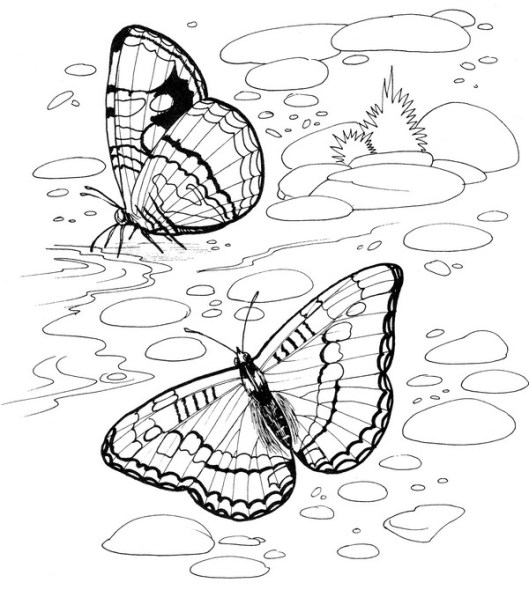
Posted by RichardB | Filed under Coloring Pages
≈ Comments Off on California Sister Coloring Page
18 Saturday Apr 2020
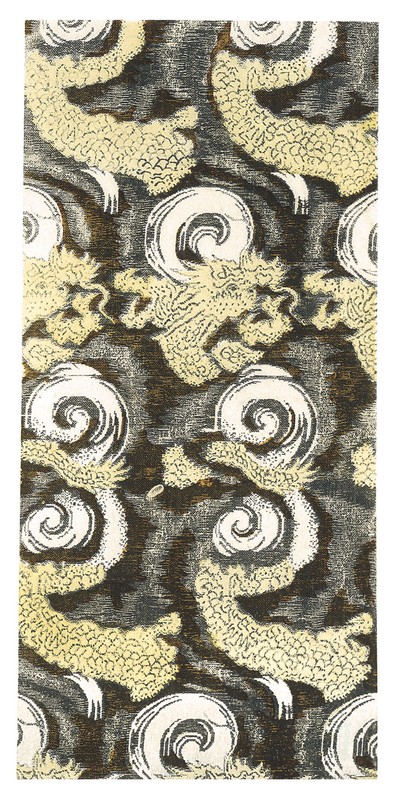
Posted by RichardB | Filed under Japanese Textile Designs
≈ Comments Off on Japanese Textile Designs 115
17 Friday Apr 2020
“It’s not just the elusive vaccine that will defeat Covid-19, scientists are looking at all sorts of methods to contain the pandemic. One of the more unusual could be in recruiting man’s best friend. Scientists at the London School of Hygiene and Tropical Medicine believe that they can train dogs with a particularly keen sense of smell to diagnose people with the illness, even if they are displaying no symptoms.”
16 Thursday Apr 2020
Posted in Anxiety, Psychoeducation, Therapy, Wellness, youtube
≈ Comments Off on How Your Brain Can Turn Anxiety into Calmness
16 Thursday Apr 2020
Posted in Handout, Health, Psychoeducation
≈ Comments Off on The Ten Rules For Being Human
1. You will receive a body.
2. You will be presented with lessons.
3. There are no mistakes, only lessons.
4. Lessons are repeated until learned.
5. Learning does not end.
6. “There” is no better than “here.”
7. Others are only mirrors of you.
8. What you make of your life is up to you.
9. All the answers lie inside of you.
10. You will forget all of this at birth.
15 Wednesday Apr 2020
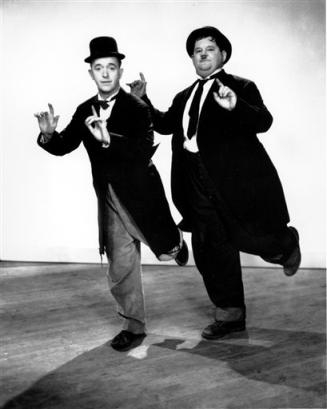
Posted in Creativity, photo, quote
≈ Comments Off on continual
14 Tuesday Apr 2020
Posted in Self Esteem, Self-Care, Wellness
≈ Comments Off on Five Strengths
I used to think that mentally strong people had superhuman qualities. I thought that they were bestowed with some sort of cybernetic strength that they – and only they – had.
I thought I would never be like that. In fact, I thought most people would never be like that.
But then I tried something. I took on a challenge that to me seemed impossible. And while we all have things that seem impossible – completing a book, starting a business, passing state exams – mine happened to be running a hundred mile race.
It was the hardest thing I have ever done. But when I finished, I also realized something. The ONLY thing that had held me back was my perception. See, I thought the race would be harder than it really was. I thought it would be so hard that I couldn’t do it. And that is EXACTLY what had held me back.
What I realized was that mental toughness isn’t about being superhuman. It’s about cultivating a few strengths consistently.
Here they are:
Gratitude: You may not associate gratitude with mental toughness, but you probably do associate mental toughness with overcoming adversity. That’s where gratitude come in. Gratitude gives us the reserve we need when times get tough. I think of it like an extra energy source that I can reach into when I have nothing left. Because there are ALWAYS things to be grateful for. And sometimes when facing adversity, it is those things we need to find to get through. And mentally strong people know just how to direct this quality to counteract the chain of negative thoughts that we all face when things don’t go our way. It’s then that we need to remember when things did go well, the successes we have had, and the people along the way who have helped us.
Openness: Mentally tough people do not see the world as a set of predictable steps that lead to the promised-land. Life is just not like that, and mentally strong people know that the only thing we know for sure is that things will change. And sometimes, in ways that we don’t like. But the other thing that happens when life puts a roadblock in our path is that we find a new path. And sometimes a better one. What mentally strong people know is every adversity also bring opportunity. But in order to see it, we have to first be willing to change.
A Sense of Personal Strength: The belief that you are strong doesn’t happen because things went your way. Perception of strength is carved out through the setbacks, roadblocks, and difficulties you’ve faced. It happens because you earned it. And while mentally strong people won’t tell you that they enjoy battling adversity, they will say that life without adversity is like life not actualized. Because it’s in adversity that our strengths our realized. And it’s in then that we come to know how strong we really are.
Meaningful Relationships: The truth is no one can go it alone – not even mentally strong people. But mentally strong people also don’t need an entire army cheering for them. What they do need – and what all need – are a few close relationships where we can let ourselves be seen. We can let our guard down, say what we need to say, and be heard. Every person – even the strongest – has a need to be accepted. And not just for their strengths. Because what mentally strong people also know is thatstrength is nothing without the vulnerability to be seen as we are – faults and all. It is only then that we can make peace with our faults. And it is only then that we can also make peace with our losses and find the strength to move forward.
Faith: You don’t have to be a spiritual person. You don’t even have to believe in God. But what mentally strong people know is that in order to get through adversity you do have to have faith. You have to believe that somehow it is possible. It is possible for you to face adversity and make it through. It is possible for you to grow stronger from it. And it is possible for you to be mentally tough. It all starts with faith – in yourself, and in something larger than you. Because the minute you connect your experience to something larger, it isn’t about you anymore. And the adversity you face isn’t personal. Adversity becomes something that we all face – for the purpose of getting stronge
14 Tuesday Apr 2020
Posted in art, creative arts therapy, Therapy
≈ Comments Off on Art and happiness
Type the words “Spring (Fruit Trees in Bloom)” into an online search engine and in less than a second you will be looking at a sparkling vista of trees erupting in a starburst of pale blossom like an exploding firework. The phrase is the title of an Impressionist oil painting by the French master Claude Monet that belongs to the Metropolitan Museum of Art in New York. 
According to the museum’s website, the painting was executed in 1873 in Argenteuil, a village on the River Seine northwest of Paris where the Impressionist artists used to gather. Signed and dated “73 Claude Monet” in the lower left corner, it is almost 40in (1m) wide and 24.5in (62cm) high. In 1903, when it was known as Apple Blossoms, it was bought for $2,100 by the New York art dealership Knoedler & Co. The Met acquired it in 1926.
Concise, sober information like this is typical of the insights that museums commonly provide about artworks in their collections. Dates, dimensions, provenance: these are the bread and butter of scholarship and art history.
But by offering details about pictures in this manner, are museums fundamentally missing the point of what art is all about? One man who believes that they are is the British philosopher Alain de Botton, whose new book, Art as Therapy, co-written with the art theorist John Armstrong, is a polite but provocative demolition of the way that museums and galleries routinely present art to the public.


 RichardbBrunner