Creativity is piercing the mundane to find the marvelous. Bill Moyers


12 Saturday Jan 2019
Posted in Creativity, photo, quote
≈ Comments Off on Creativity
Creativity is piercing the mundane to find the marvelous. Bill Moyers
11 Friday Jan 2019
Posted in Poetry
≈ Comments Off on Pablo’s Poesía
Tags
Por Pablo Neruda
Looking inside
deep down-tongue-less
I stumbled on Pablo
sitting-writing-scratching like a chicken in the dirt
every once in a while a tear would fall
making mud on the floor
sticking to our shoes-making tracks everywhere we went
I asked Pablo for some paper…”and perhaps a pen….?”
He looked up …” No habla ingles “…. he sighed. “Habla en español”
I looked up
way up
and saw my tongue-trying to speak the language of his childhood
July 2006
11 Friday Jan 2019
Posted in Creativity, self control
≈ Comments Off on Self-control and Success
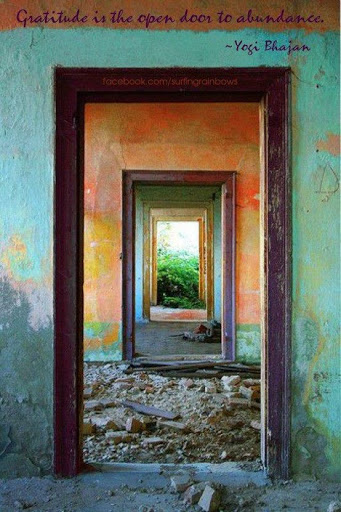 Most of us believe that a certain amount of self-control is crucial for success. In order to succeed in the modern world, you need expertise in some area. Gaining that expertise requires work and practice. The discipline to work or practice at something means that you have to give up things that might be fun right now in order to engage in actions that will be rewarding in the future.
10 Thursday Jan 2019
Posted in quote
≈ Comments Off on courage
09 Wednesday Jan 2019
Posted in Meditation, mindfulness, pain management, research, Wellness
≈ Comments Off on Meditation and Pain management
 Dr. Fadel Zeidan, assistant professor of neurobiology and anatomy at Wake Forest Baptist Medical Center, has studied mindfulness for 15 years and has observed improved health outcomes as a result. “But what if this is all just a placebo?” he wondered. “What if people are reporting improvements in health and reductions in pain just because of meditation’s reputation as a health-promoting practice?” He wanted to find out, so he designed a trials that included a placebo group.

09 Wednesday Jan 2019
Posted in creative, Creativity, Rut
≈ Comments Off on Advice on how to get out of a rut

08 Tuesday Jan 2019
Posted in art, drawings, Mental Health
≈ Comments Off on Philippine rehab uses Art therapy
Tags
MANILA, Sept 14 — A group in Manila are using art therapy to help addicts overcome drug addictions and show Philippine President Rodrigo Duterte that bloody retribution is not the only solution to drugs.
The Centre for Christian Recovery, a religious organisation which manages a small private rehabilitation facility west of Manila, has incorporated drawing into its daily sessions as a way for addicts to express their feelings.
“These drug dependents are not used to saying what they feel,” said Davis Dakis, the programme director.
“They do not know how to express their emotions. So now, through art, they can express whatever they feel.”
The art sessions at the centre, which caters for 40 addicts, comes amid a bloody campaign against drugs since Duterte took office in June.
More than 2,500 people have been killed in the war on drugs, with about 900 deaths a result of police operations, police say.
Owie, a drug user undergoing rehabilitation, said he was afraid of going back on the streets despite his attempts at reformation.
“I hope our president will take a different action. I don’t want it to be like this. It’s as if he wants to just kill all of us addicts,” he said.
“There is still hope for us, it’s not too late to change.” — Reuters
07 Monday Jan 2019
Tags
L’avantage avec les animaux c’est qu’ils t’aiment sans poser de questions = The advantage with animals is that they love you no questions asked
07 Monday Jan 2019
We all know the uncomfortable feeling of anxiety. Our hearts race, our fingers sweat, and our breathing gets shallow and labored. We experience racing thoughts about a perceived threat we fear will be too much to handle. That’s because our “fight or flight” response has kicked in, resulting in sympathetic arousal and a narrowing of attention and focus on avoiding the threat. We seem to be locked in that state, unable to focus on our daily chores or longer-term goals. Below are six strategies that you can use to help relieve your everyday anxiety:
Anxiety makes us feel that a threat is imminent, yet most of the time what we worry most about never happens. By recording our worries—and how few actually came true—we can notice how much we overestimate the prospect of negative events.
Even if a bad event happened, we may still be able to handle it by using coping skills and problem-solving abilities or by enlisting others to help. Although not pleasant, we could still survive encountering a spider, having a panic attack, or losing money. It’s important to realize that very few things are the end of the world.
By deliberately relaxing our muscles we begin to calm down so we can think clearly. If you practice this at first without a threat present, it can start to become automatic and will be easier to use in the moment when you face a threat. Deep breathing engages the parasympathetic nervous system to put the brakes on sympathetic arousal.
The skill of mindfulness involves calmly observing our own reactions, including fear, without panic or feeling compelled to act. It can be taught in therapy and improves with practice.
Acceptance and Commitment Therapy (ACT) is an approach that encourages people to accept the inevitability of negative thoughts and feelings and not try to repress or control them. By directing attention away from the fear and back onto life tasks and valued goals, we can live a full life despite the fear.
Exposure is the most powerful technique for anxiety and it involves facing what we fear and staying in the situation long enough for the fear to habituate or go down, as it naturally does. Fear makes us avoid or run away, so our minds and bodies never learn that much of what we fear is not truly dangerous.
07 Monday Jan 2019
Posted in news
≈ Comments Off on China and US held joint military drills
Despite consistent rhetoric from both Chinese and American governments and media, both countries have routinely held joint military exercises over the years.
” Soldiers from China and the United States wrapped up a week of joint disaster relief drills on Saturday November 17 2018, in a display of cooperation against a backdrop of worsening ties between the two countries over trade, the disputed South China Sea and self-ruled Taiwan.” (this was the 14th time the joint exchange occurred)
READ MORE HERE

REUTERS/Aly Song
06 Sunday Jan 2019
06 Sunday Jan 2019
05 Saturday Jan 2019
Posted in news
≈ Comments Off on China’s consumption of raw materials
Tags
05 Saturday Jan 2019
Posted in emotions, Self expression, Wellness
≈ Comments Off on emotion
Art is the overflow of emotion into action. ― Brian Raif
04 Friday Jan 2019
Posted in art, creative arts therapy, groups, photo set, Therapy
≈ Comments Off on Rough Road/Path photos
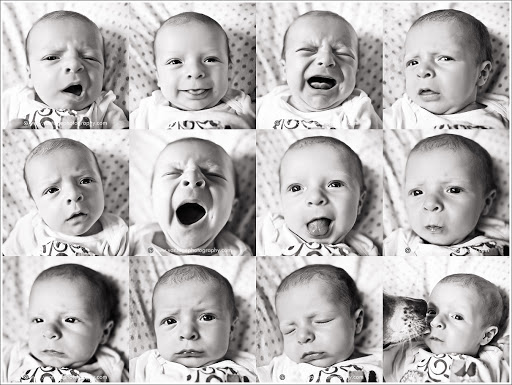
I have been involved in facilitating groups for decades. One of the tools I use for groups of adults, teens, or children are photos. I use photos as a way for folks to become familiar and used to talking and sharing in a group. As a way to indirectly share something of themselves by talking about an image/photo. As a way to begin a conversation about larger issues or deeper issues.
One set of photos I use are Rough Road/Path photos with alcohol addicts and heroin addicts in the beginning of recovery. I spread the photos out on a table and ask the group (usually 10 to 15 men) to pick out one photo that represents their journey in the week or weeks before they came into rehab. Once everyone has chosen a photo I ask them to (one at a time) hold up the photo, describe the photo and why they chose it. The descriptions and stories they tell come from them, their experiences and begin the process of revealing a bit about their
04 Friday Jan 2019
Posted in Pets
≈ Comments Off on Pets
Tags
Wonderful article written by Joseph Burgo, Ph.D. who has practiced psychotherapy for more than 30 years, holding licenses as a marriage and family therapist and clinical psychologist.

“…Although Sigmund Freud’s psychoanalytic method encourages the analyst to present a blank screen, concealing all details of his personal life, thoughts and feelings, Freud himself practiced from his home and included Jo-Fi, his favorite chow chow, in many of his sessions. Freud supposedly relied on his pet’s reaction to a client for help in assessing the person’s character. He also felt that a dog’s presence helped to calm his clients.”
Read more here: The Pets in My Practice

03 Thursday Jan 2019
Posted in Karen Bass, photos, quote, rock
≈ Comments Off on to govern
02 Wednesday Jan 2019
Are dietary interventions effective for treating ADHD? For many parents and professionals, trying to parse through the different claims about the impact of diet on ADHD has been challenging and confusing. At this point, substantial research on how dietary interventions impact ADHD has accumulated and several meta-analyses of this work have been published. Recently, a review of several meta-analyses of dietary interventions for ADHD was published [Research review: The role of diet in the treatment of attention-deficit/hyperactivity disorder — an appraisal of the evidence on efficacy and recommendations on the design of future studies]. In this paper, the authors summarize findings across 6 different meta-analyses of the impact of diet on ADHD to provide a high level summary of the best available evidence to date.
Types of dietary interventions

Three types of dietary interventions were reviewed — Restricted Elimination Diets (RED), Artificial food coloring exclusion (AFCE), and supplementation with free fatty acids (SFFA). Although other types of supplements beyond free fatty acids have been investigated, the authors felt there was not sufficient research on any single approach to include in their summary.
1. Restricted elimination diets (RED) — There are 2 different approaches to implementing this diet. In one approach, the child is placed on an extremely restricted diet, e.g., rice, turkey, a range of vegetables (lettuce, carrots, cauliflower, cabbage, beets), pears and water; this is sometimes referred to as the Few Food Diet. When a reduction in ADHD behaviors results — this would generally occur within 2–3 weeks if the diet is going to have a positive effect — new foods can be added back one at a time to see if they are well-tolerated or lead to an increase in problem behaviors. Alternatively, particular foods that are suspected to exacerbate a child’s symptoms may be removed one at a time to see if the child’s behavior improves.
2. Artificial food coloring exclusion (AFCE)- As the title indicates, this involves efforts to remove all artificial food colorings from a child’s diet, e.g.,Yellow #6, Yellow #5, Sodium Benzoate, Blue #2, etc., and observing whether this is associated with a reduction in ADHD behaviors. Carefully conducted trials have demonstrated that AFC’s – in amounts children could typically consume – can increase ADHD symptoms in many children.
3. Essential fatty acid supplementation — Certain fatty acids, e.g., Omega 3 and Omega 6, promote neural functioning. These fatty acids are called essential because they are not synthesized in the body and must be ingested. Children with ADHD may have lower levels of essential fatty acids relative to peers and several studies have demonstrated a link between low levels of EFAs and the severity of ADHD symptoms. Studies investigating the benefits of fatty acid supplementation for youth with ADHD raise fatty acid levels by administering capsules containing the fatty acids or sometimes by introducing diets rich in fish products.
See more at: http://www.creativitypost.com/science/3_dietary_interventions_that_can_help_children_with_adhd_especially_when_pr
02 Wednesday Jan 2019
Posted in Creativity, YouTube
≈ Comments Off on Cédric Villani on the 7 Ingredients of Creativity
Tags
01 Tuesday Jan 2019
Posted in creative arts therapy, Dance, Dance Movement Therapy, Social Science, YouTube
≈ Comments Off on What is Dance Movement Therapy?
According to the American Dance Therapy Association (ADTA): Based on the understanding that the body and mind are interrelated, dance/movement therapy (D/MT) is defined as the psychotherapeutic use of movement to further the emotional, cognitive, physical, and social integration of the individual. Dance/movement therapy is practiced in mental health, rehabilitation, medical, educational, and forensic settings, and in nursing homes, day care centers, disease prevention, and health promotion programs. The dance/movement therapist focuses on movement behavior as it emerges in the therapeutic relationship. Expressive, communicative, and adaptive behaviors are all considered for both group and individual treatment. Body movement as the core component of dance simultaneously provides the means of assessment and the mode of intervention for dance/movement therapy.

I often define D/MT to clients as psychotherapy that is not limited to talking but encompasses the full range of human expression, including movement such as gestures and or postures, drawing, writing, drama, music and other expressions that can have a therapeutic benefit for the client(s).
See also:
Wikipedia Dance Therapy
ADTA Fact Sheet



 RichardbBrunner