Tags
How Does Art Therapy Heal.
30 Friday Jan 2026
Posted in Art Therapy, YouTube
≈ Comments Off on How Does Art Therapy Heal.

30 Friday Jan 2026
Posted in Art Therapy, YouTube
≈ Comments Off on How Does Art Therapy Heal.
Tags
08 Thursday Jan 2026
Posted in art, Art Therapy, Mental Health
≈ Comments Off on Syrian kids adapt to new life in Canada through art therapy
Tags
From the Archives: An unconventional Saskatoon program is helping six-year-old Syrian refugee Mahmud Alcheikh heal from the trauma of the Syrian civil war.
Once a week, he sits around a large table in a small room at Queen Elizabeth School with his siblings Zeina, 9, Janna, 10, Abdulwhab, 12, and Mohamed Alcheikh, 13. The children draw the new contours of their lives away from war, coloured pens in hand.

“They are full of energy and their creativity is increasing at every session. They’re becoming much more open,” said art therapist David Baudemont, who has been working with the Alcheikh kids since April.
The family left the Syrian city of Deir ez-Zor in 2012 to Ar-Raqqah where they hid for a couple years. The family made it to Turkey in 2015 before coming to Saskatoon this September.
Baudemont said art therapy can help survivors of war to heal.
“If you are picturing your uncle who is still in Turkey, you’re going to be able to forget the pain of not having that uncle.”
He believes the Alcheikh children are particularly vulnerable.
“There were some signs in the drawings there was probably some trauma involved. So we’ve decided to work with the whole family,” he added. MORE HERE
26 Thursday Aug 2021
Posted in Art Therapy, creative arts therapy, Wellness, youtube
≈ Comments Off on The Science of Happiness – Art Therapy
06 Tuesday Oct 2020
Posted in Art Therapy, emotions, mindfulness, Self expression, Therapy Cards, Wellness
≈ Comments Off on Water colors
One Creative Therapy Tool that I use is to paint. Some times pictures of actual ‘things’ like trees or boats; but I usually paint shapes.
Lately I have been using water colors to paint shades and gradients of color. Colors shifting from one type of purple(for instance) to a deeper purple. 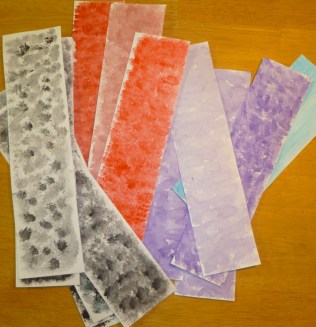
There is a lot going on in the simple act of painting color that involves
cognitive processes, emotional expression, mindfulness practice, amongst others. There is the hand eye coordination, and the movement of the body (hand,arm shoulder), to apply the paint to the brush, water and paper. There is the picking and choosing of colors that I want to use; sometimes I pick a color that has a pleasing effect on how I feel, and sometimes that choice changes how I feel. The act of painting requires focus and at least a little concentration being in the here and now.
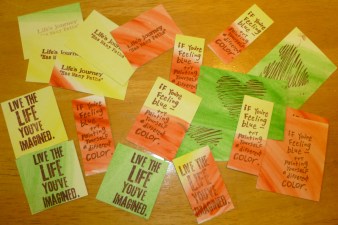
I have been turning my gradient paintings in to therapy cards. I work a lot with groups providing therapy and often participants have difficulty expressing their feelings and/or thoughts. The cards provide an avenue for people to share/start a conversation. I have created affirmation cards, feelings cards, drama therapy cards, movement cards, yoga asana cards, and many others.
10 Thursday Sep 2020
Posted in Art Therapy, creative arts therapy, kids
≈ Comments Off on Art therapy brings comfort to Jordan’s orphans
Tags
After a busy art session, the classroom at Amman’s al-Hussain Social Institution buzzed with energy, as children dashed around to clean up supplies, admire their paintings and pose in the decorated masks they designed.
These young artists have come a long way over the past few months. Aged between six and 12, the children recently completed an art therapy programme – the first of its kind – designed to aid Jordan’s orphans. The weekly sessions of painting, gluing and building provided an atmosphere of organised chaos, during which they filled canvases with the anxieties and hopes that might otherwise be difficult to express.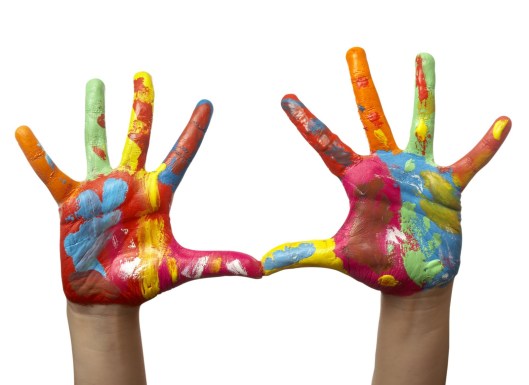
“It’s like regular therapy, except you use art as a medium,” art therapist and programme founder Shireen Yaish told Al Jazeera. “It’s great for those who find it difficult to verbalise things – it’s about making the unconscious conscious, in a way. My job is to make people understand what they’re making.”
As the weeks progressed, the children participating in this programme run by the Kaynouna Art Therapy Centre came out of their shells and developed great enthusiasm for their artwork, Yaish said. Supported by the al-Aman Fund for the Future of Orphans and the Abdul Hameed Shoman Foundation, the programme also exposed the profound needs of some of Jordan’s most vulnerable children. MORE HERE
13 Thursday Aug 2020
Posted in art, Art Therapy, Creativity, Health, kids
≈ Comments Off on Hospital art therapy program helps children express themselves
Tags
Nathan Allen loves the colour blue.
His T-shirt is blue, the blanket wrapped around his knees is blue, and his eyes, bright under his baseball cap, are blue.
But blue is also a feeling, and after spending months undergoing near-daily dialysis at the Hospital for Sick Children, who could blame an 11-year-old for feeling a bit down?
Nathan was referred to the hospital’s new on-staff art therapist to help him cope with his emotions. And when Jennifer Bassin came to visit recently week with her case of supplies, he chose the colour blue to start on a sculpture of a car.
“Shocking,” jokes his mom, Judy Chapman.
Nathan was diagnosed with a bilateral Wilms’ tumour, a rare cancer of the kidneys mostly affecting children, at age 5. He started chemo and radiation and had a partial nephrectomy in both kidneys. His left kidney never worked properly again, and after almost five years of remission, cancer returned to his right kidney.
Now he undergoes chemo once every three weeks and dialysis five days a week. That’s a lot of poking and prodding for an 11-year-old who would prefer to be playing defence on the Georgina Blaze novice hockey team and cuddling his 3-year-old beagle, Daisy, at home in Keswick, Ont.
After three more chemo treatments, Nathan can go home. His parents are training to do at-home dialysis and counting down the days until Nathan can receive a new kidney. His mom is praying she can eventually donate one of her own.
Until then, he looks forward to his weekly sessions with Bassin. She visits during the two-and-a-half-hour dialysis process, and they paint or sculpt while the machine whirs in the background.
“It absorbs some of the time,” Nathan says. “I like to build stuff.”
Bassin has brought something called a 3Doodler — a cross between a hot glue gun and a tiny 3D printer, which can make plastic sculptures. This day, after he makes the car, she asks Nathan to make something that resembles his idea of cancer.
“A big, black, blob,” he says.
Nathan is an outpatient but most of Bassin’s patients are long-term in-patients at Sick Kids who have chronic illnesses, complex medical histories or have faced traumatic injuries.
Since the program started in May, she does art therapy just two days a week and sees between four and eight children aged 4 to 18. Psychiatric patients have benefited from art therapy at Sick Kids in the past, but this is the first year the new program, which is entirely funded by donations, has been extended to medical patients.
“Art therapy is taking the language children already speak and meeting them at that level,” Bassin said. “You don’t have to be good at art to participate in art therapy. It doesn’t have to be about the painting or about the drawing. It’s more about finding something they enjoy that we can use as a tool to explore how they’re feeling.”
One patient, who had recently been in a traumatic boat accident, sculpted a vessel out of clay — and then smashed it against the wall in a moment of catharsis. Some enjoy the physicality of painting big murals, and some like to rip up what they’ve drawn. Another drew a landscape so she could imagine herself outside the hospital, at a picnic.
“When you create something outside of you, you can really treat it like it’s at a distance, and it makes it safer for us to explore a little bit.”
Making art helps young patients take back some control in their lives, if only for an hour. Some patients are content with their creation, and others want to delve deeper into their feelings, Bassin says.
Nathan’s family hopes he can go home in late September, when he can rejoin his classmates in Grade 6 and go back to being an annoying older brother to his sister Emma, 7. He’s still quiet, but less withdrawn after a session, his mom says.
As he paints a mask green, with blue lips and black eyes, Bassin asks Nathan if he has a plan.
“Nope,” he says. “Just going step by step.”
07 Tuesday Jul 2020
Posted in art, Art Therapy, Therapy, Wellness
≈ Comments Off on Art and brain science
Here is an interesting article from the NYT about the brain and art from a professor of brain science at Columbia University.:
…… The portraiture that flourished in Vienna at the turn of the 20th century is a good place to start. Not only does this modernist school hold a prominent place in the history of art, it consists of just three major artists — Gustav Klimt, Oskar Kokoschka and Egon Schiele — which makes it easier to study in depth.
As a group, these artists sought to depict the unconscious, instinctual strivings of the people in their portraits, but each painter developed a distinctive way of using facial expressions and hand and body gestures to
communicate those mental processes.
Their efforts to get at the truth beneath the appearance of an individual both paralleled and were influenced by similar efforts at the time in the fields of biology and psychoanalysis. Thus the portraits of the modernists in the period known as “Vienna 1900” offer a great example of how artistic, psychological and scientific insights can enrich one another.
The idea that truth lies beneath the surface derives from Carl von Rokitansky, a gifted pathologist who was dean of the Vienna School of Medicine in the middle of the 19th century. Baron von Rokitansky compared what his clinician colleague Josef Skoda heard and saw at the bedsides of his patients with autopsy findings after their deaths. This systematic correlation of clinical and pathological findings taught them that only by going deep below the skin could they understand the nature of illness.
I’ve read many a book and chatted with art therapists about the psychological process involved in art and art making and this article comes from a different perspective; brain science.
19 Tuesday May 2020
Posted in Art Therapy, emotions, mindfulness, positive, Therapy, Wellness
≈ Comments Off on Water colors
Tags
cognitive processes, drama therapy cards, emotional expression, feelings cards, mindfulness practice, movement cards, paint, yoga asana cards
One Creative Therapy Tool that I use is to paint. Some times 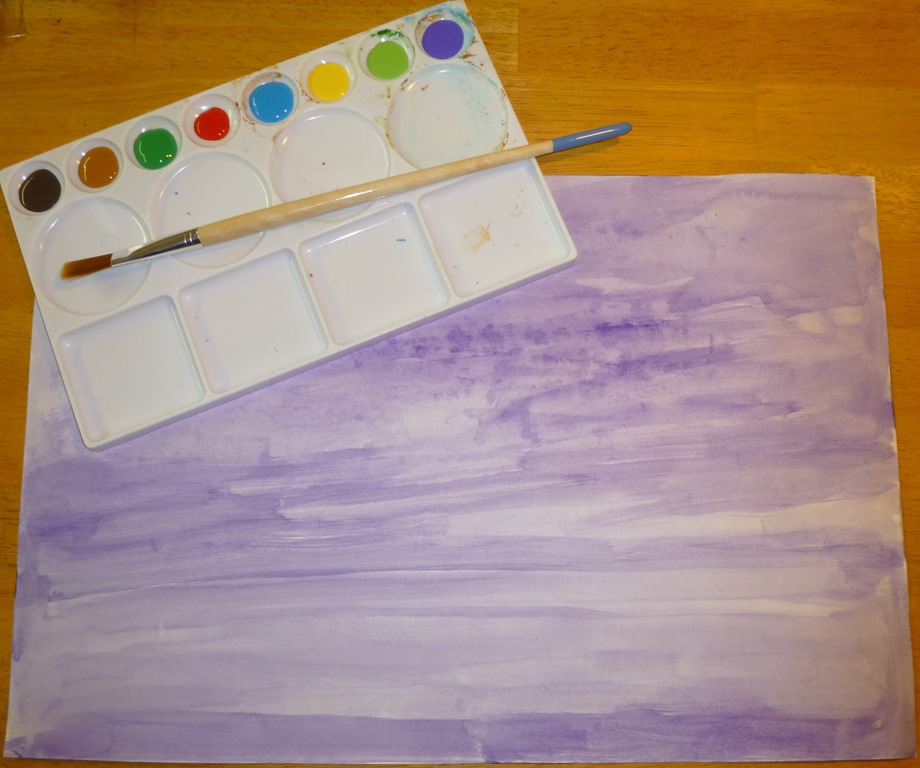 pictures of actual ‘things’ like trees or boats; but I usually paint shapes. Lately I have been using water colors to paint shades and gradients of color. Colors shifting from one type of purple(for instance) to a deeper purple.
There is a lot going on in the simple act of painting color that involves cognitive processes, emotional expression, mindfulness practice, amongst others. There is the hand eye coordination, and the movement of the body 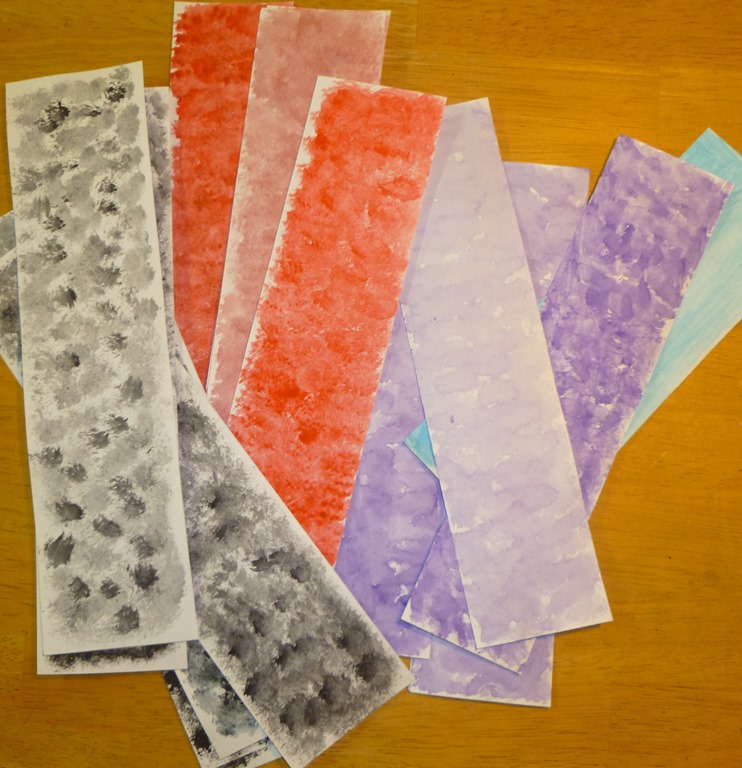 (hand,arm shoulder), to apply the paint to the brush, water and paper. There is the picking and choosing of colors that I want to use; sometimes I pick a color that has a pleasing effect on how I feel, and sometimes that choice changes how I feel. The act of painting requires focus and at least a little concentration being in the here and now.
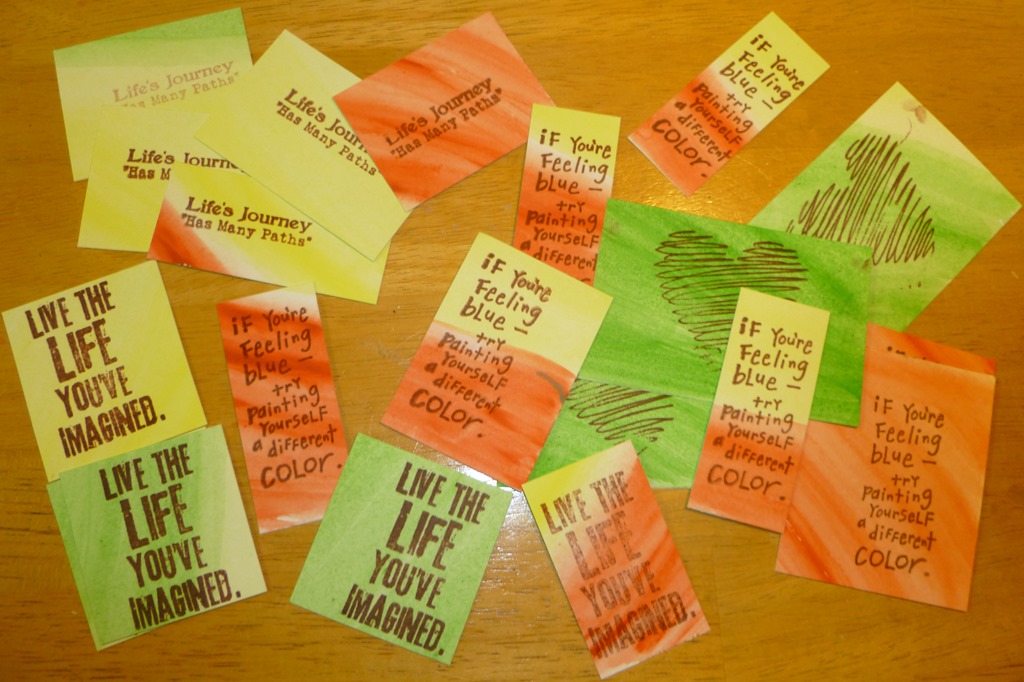
I have been turning my gradient paintings in to therapy cards. I work a lot with groups providing therapy and often participants have difficulty expressing their feelings and/or thoughts. The cards provide an avenue for people to share/start a conversation. I have created affirmation cards, feelings cards, drama therapy cards, movement cards, yoga asana cards, and many others.
(click image for larger size)
12 Tuesday May 2020
Posted in Art Therapy, Wellness
≈ Comments Off on Art and Asthma
The fear and anxiety associated with an asthma attack can last long after the attack has subsided. Now research, published online in the Journal of Allergy & Clinical Immunology, reports that the art therapy showed benefits both during the therapy and for months afterward. “Asthma impacts not only a child’s physical well-being but also has a considerable effect on a child’s quality of life and psychological development,” said Anya Beebe, MA, an art therapist at National Jewish Health. “Our study shows that art therapy for children with severe, chronic asthma is clearly beneficial. Our results were striking and persisted for months after treatment stopped.”
In art therapy, patients create artwork that helps express their feelings about an illness, a trauma or medical concerns. The artwork can then serve as a starting point for discussions about these issues. Researchers believe that creating art helps participants establish distance between themselves and their medical concerns. They learn to understand that they have a personal identity outside of their illness. It is believed to be particularly effective with children because they often do not have the adult capabilities to verbally articulate their emotions, perceptions, or beliefs, and often can more comfortably convey ideas in ways other than talking.
You can read more at the National Jewish Health website.
05 Tuesday May 2020
Posted in art, Art Therapy, Therapy, Wellness
≈ Comments Off on Art and Asthma
Tags
The fear and anxiety associated with an asthma attack can last long after the attack has subsided. Now research, published online in the Journal of Allergy & Clinical Immunology, reports that the art therapy showed benefits both during the therapy and for months afterward. “Asthma impacts not only a child’s physical well-being but also has a considerable effect on a child’s quality of life and psychological development,” said Anya Beebe, MA, an art therapist at National Jewish Health. “Our study shows that art therapy for children with severe, chronic asthma is clearly beneficial. Our results were striking and persisted for months after treatment stopped.”
In art therapy, patients create artwork that helps express their feelings about an illness, a trauma or medical concerns. The artwork can then serve as a starting point for discussions about these issues. Researchers believe that creating art helps participants establish distance between themselves and their medical concerns. They learn to understand that they have a personal identity outside of their illness. It is believed to be particularly effective with children because they often do not have the adult capabilities to verbally articulate their emotions, perceptions, or beliefs, and often can more comfortably convey ideas in ways other than talking.
You can read more at the National Jewish Health website.
10 Tuesday Mar 2020
Posted in Art Therapy, emotions, Health, Journaling, Self expression, Wellness
≈ Comments Off on How art aided Andrew Marr’s recovery
22 Wednesday Jan 2020
Posted in Art Therapy, youtube
≈ Comments Off on How Does Art Therapy Heal
28 Wednesday Aug 2019
Posted in Art Therapy, Wellness
≈ Comments Off on Art and Asthma
The fear and anxiety associated with an asthma attack can last long after the attack has subsided. Now research, published online in the Journal of Allergy & Clinical Immunology, reports that the art therapy showed benefits both during the therapy and for months afterward. “Asthma impacts not only a child’s physical well-being but also has a considerable effect on a child’s quality of life and psychological development,” said Anya Beebe, MA, an art therapist at National Jewish Health. “Our study shows that art therapy for children with severe, chronic asthma is clearly beneficial. Our results were striking and persisted for months after treatment stopped.”
In art therapy, patients create artwork that helps express their feelings about an illness, a trauma or medical concerns. The artwork can then serve as a starting point for discussions about these issues. Researchers believe that creating art helps participants establish distance between themselves and their medical concerns. They learn to understand that they have a personal identity outside of their illness. It is believed to be particularly effective with children because they often do not have the adult capabilities to verbally articulate their emotions, perceptions, or beliefs, and often can more comfortably convey ideas in ways other than talking.
You can read more at the National Jewish Health website.
25 Tuesday Jun 2019
Posted in Art Therapy, kids
≈ Comments Off on Art therapy brings comfort to Jordan’s orphans
24 Monday Jun 2019
Posted in Art Therapy, YouTube
≈ Comments Off on Art therapy: a world beyond #creativeexpression | Carol Hammal | TEDx
Tags
17 Friday May 2019
Posted in art, Art Therapy, YouTube
≈ Comments Off on How Does Art Therapy Heal
Tags
14 Tuesday May 2019
Posted in Art Therapy, kids
≈ Comments Off on Syrian kids adapt to new life in Canada through art therapy
An unconventional Saskatoon program is helping six-year-old Syrian refugee Mahmud Alcheikh heal from the trauma of the Syrian civil war.
Once a week, he sits around a large table in a small room at Queen Elizabeth School with his siblings Zeina, 9, Janna, 10, Abdulwhab, 12, and Mohamed Alcheikh, 13. The children draw the new contours of their lives away from war, coloured pens in hand.
06 Monday May 2019
Posted in art, Art Therapy, Wellness
≈ Comments Off on Art used to connect with dementia patients
Something happened when Brant Kingman handed his mother a colored pencil.
In the three years since Polly Penney, 87, was diagnosed with dementia, she had lost much of her short-term memory and some of her language. So she would ask Kingman the same question again, then again. Out of “absolute out-of-my-mind frustration,” Kingman, an artist, decided to try drawing together.
Almost unintentionally, he tapped into a national trend: using art as therapy for people with Alzheimer’s disease and other forms of dementia. There are now art workshops for Alzheimer’s patients. Painting, poetry and pottery classes are tailored to dementia’s tics. Giving Voice Chorus, a pair of Twin Cities choirs for people with dementia, has created a tool kit so other cities might start their own.
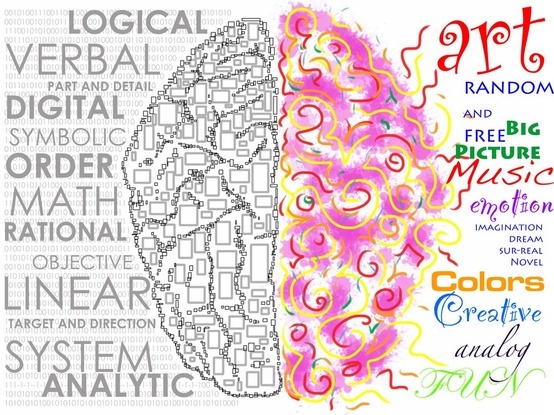
Neurological disorders that attack memory and verbal communication can spare creativity, some research shows. In special cases, Alzheimer’s and frontotemporal dementia can even kick artistic ability into overdrive, said Dr. Bruce Miller, a neurologist at the University of California, San Francisco. If the disease attacks circuits on one side of the brain, he said, it might spark an interest or ability in the other side.
“It’s all about the geography,” said Miller, director of the university’s Memory and Aging Center. “It’s where the disease hits that is a determinant of what is lost — but sometimes what is gained.”
Partly because it offers another way to communicate, art therapy is “going to become, more and more, a regular part of how we look after people,” he said. MORE HERE
09 Tuesday Apr 2019
Posted in Art Therapy, creative arts therapy, Health, kids, Wellness
≈ Comments Off on Hospital art therapy program helps children express themselves
Nathan Allen loves the colour blue.
His T-shirt is blue, the blanket wrapped around his knees is blue, and his eyes, bright under his baseball cap, are blue.
But blue is also a feeling, and after spending months undergoing near-daily dialysis at the Hospital for Sick Children, who could blame an 11-year-old for feeling a bit down?
Nathan was referred to the hospital’s new on-staff art therapist to help him cope with his emotions. And when Jennifer Bassin came to visit recently week with her case of supplies, he chose the colour blue to start on a sculpture of a car.
“Shocking,” jokes his mom, Judy Chapman.
Nathan was diagnosed with a bilateral Wilms’ tumour, a rare cancer of the kidneys mostly affecting children, at age 5. He started chemo and radiation and had a partial nephrectomy in both kidneys. His left kidney never worked properly again, and after almost five years of remission, cancer returned to his right kidney.
Now he undergoes chemo once every three weeks and dialysis five days a week. That’s a lot of poking and prodding for an 11-year-old who would prefer to be playing defence on the Georgina Blaze novice hockey team and cuddling his 3-year-old beagle, Daisy, at home in Keswick, Ont.
After three more chemo treatments, Nathan can go home. His parents are training to do at-home dialysis and counting down the days until Nathan can receive a new kidney. His mom is praying she can eventually donate one of her own.
Until then, he looks forward to his weekly sessions with Bassin. She visits during the two-and-a-half-hour dialysis process, and they paint or sculpt while the machine whirs in the background.
“It absorbs some of the time,” Nathan says. “I like to build stuff.”
Bassin has brought something called a 3Doodler — a cross between a hot glue gun and a tiny 3D printer, which can make plastic sculptures. This day, after he makes the car, she asks Nathan to make something that resembles his idea of cancer.
“A big, black, blob,” he says.
Nathan is an outpatient but most of Bassin’s patients are long-term in-patients at Sick Kids who have chronic illnesses, complex medical histories or have faced traumatic injuries.
Since the program started in May, she does art therapy just two days a week and sees between four and eight children aged 4 to 18. Psychiatric patients have benefited from art therapy at Sick Kids in the past, but this is the first year the new program, which is entirely funded by donations, has been extended to medical patients.
“Art therapy is taking the language children already speak and meeting them at that level,” Bassin said. “You don’t have to be good at art to participate in art therapy. It doesn’t have to be about the painting or about the drawing. It’s more about finding something they enjoy that we can use as a tool to explore how they’re feeling.”
One patient, who had recently been in a traumatic boat accident, sculpted a vessel out of clay — and then smashed it against the wall in a moment of catharsis. Some enjoy the physicality of painting big murals, and some like to rip up what they’ve drawn. Another drew a landscape so she could imagine herself outside the hospital, at a picnic.
“When you create something outside of you, you can really treat it like it’s at a distance, and it makes it safer for us to explore a little bit.”
Making art helps young patients take back some control in their lives, if only for an hour. Some patients are content with their creation, and others want to delve deeper into their feelings, Bassin says.
Nathan’s family hopes he can go home in late September, when he can rejoin his classmates in Grade 6 and go back to being an annoying older brother to his sister Emma, 7. He’s still quiet, but less withdrawn after a session, his mom says.
As he paints a mask green, with blue lips and black eyes, Bassin asks Nathan if he has a plan.
“Nope,” he says. “Just going step by step.”
28 Monday Jan 2019
Posted in art, Art Therapy, groups
≈ Comments Off on VA arts program exhibit
Tags
Recently visitors to Microsoft’s flagship Manhattan store got a glimpse into the world of the American Veteran. Through the Eyes of a Veteran—a digital showcase and panel discussion held in December—represented the exhibit of the same name still currently on display at Snug Harbor Cultural Center, in Staten Island. 
The Snug Harbor exhibit, features the works of about 75 Veteran artists originating from the Creative Arts Program at the VA New York Harbor Health Care System’s Brooklyn Campus.
Beryl Brenner, VA’s creative arts therapist for the creative arts program, and Snug Harbor’s director of performing arts, Larry Anderson, curated the exhibit.
Brenner, who has been introducing Veterans to the arts for 38 years—with 26 of those spent at VA—said the show at Snug Harbor “is a composite of years and years of work from the other shows they’ve done.”
Through the Eyes of a Veteran expresses a range of themes—from battling PTSD, to the different aspects of military environments both stateside and deployed—and also looks at Veterans through the lens of their individual portraits. MORE HERE
 RichardbBrunner