• Home
  • Music
  • About
  • Contact
  • CreativeTherapyTools.com

RichardbBrunner

~ creative arts therapist

RichardbBrunner

Category Archives: art

Coloring textured paintings-Bozzo

26 Friday Feb 2021

Posted by RichardB in art, Painting, YouTube

≈ Comments Off on Coloring textured paintings-Bozzo

Tags

artists, painting, youtube

Chuck Jones – The Evolution of an Artist

19 Friday Feb 2021

Posted by RichardB in art, artists, YouTube

≈ Comments Off on Chuck Jones – The Evolution of an Artist

Tags

youtube

Carla van den Berg, mixed media technique

20 Wednesday Jan 2021

Posted by RichardB in art, How to, YouTube

≈ Comments Off on Carla van den Berg, mixed media technique

Tags

mixed media, youtube

Chinese Poems with English Translation

04 Friday Sep 2020

Posted by RichardB in art, Poems, Spirit

≈ Comments Off on Chinese Poems with English Translation

Tags

Chinese, English, Poems, Translation

Bamboo Adobe

bamboo-forestI sit along in the dark bamboo grove,
Playing the zither and whistling long.
In this deep wood no one would know
Only the bright moon comes to shine.
Wang Wei tr. Liu Wu-chi


art can

30 Sunday Aug 2020

Posted by RichardB in art, photo, quote

≈ Comments Off on art can

Tags

quote

bdy

“Progressive art can assist people to learn not only about the objective forces at work in the society in which they live, but also about the intensity social character of their interior lives. Ultimately, it can propel people toward social emancipation.”  Angela Y. Davis

Image

Afgan Hound Coloring Page

29 Saturday Aug 2020

Tags

Afgan Hound, Coloring Page

CPDG-Afgan Hound-TR.jpg

Posted by RichardB | Filed under art, Coloring Pages

≈ Comments Off on Afgan Hound Coloring Page

Hospital art therapy program helps children express themselves

13 Thursday Aug 2020

Posted by RichardB in art, Art Therapy, Creativity, Health, kids

≈ Comments Off on Hospital art therapy program helps children express themselves

Tags

Art Therapy, creative

Nathan Allen loves the colour blue.

His T-shirt is blue, the blanket wrapped around his knees is blue, and his eyes, bright under his baseball cap, are blue.

But blue is also a feeling, and after spending months undergoing near-daily dialysis at the Hospital for Sick Children, who could blame an 11-year-old for feeling a bit down?msclip-176

Nathan was referred to the hospital’s new on-staff art therapist to help him cope with his emotions. And when Jennifer Bassin came to visit recently week with her case of supplies, he chose the colour blue to start on a sculpture of a car.

“Shocking,” jokes his mom, Judy Chapman.

Nathan was diagnosed with a bilateral Wilms’ tumour, a rare cancer of the kidneys mostly affecting children, at age 5. He started chemo and radiation and had a partial nephrectomy in both kidneys. His left kidney never worked properly again, and after almost five years of remission, cancer returned to his right kidney.

Now he undergoes chemo once every three weeks and dialysis five days a week. That’s a lot of poking and prodding for an 11-year-old who would prefer to be playing defence on the Georgina Blaze novice hockey team and cuddling his 3-year-old beagle, Daisy, at home in Keswick, Ont.

After three more chemo treatments, Nathan can go home. His parents are training to do at-home dialysis and counting down the days until Nathan can receive a new kidney. His mom is praying she can eventually donate one of her own.

Until then, he looks forward to his weekly sessions with Bassin. She visits during the two-and-a-half-hour dialysis process, and they paint or sculpt while the machine whirs in the background.

“It absorbs some of the time,” Nathan says. “I like to build stuff.”

Bassin has brought something called a 3Doodler — a cross between a hot glue gun and a tiny 3D printer, which can make plastic sculptures. This day, after he makes the car, she asks Nathan to make something that resembles his idea of cancer.

“A big, black, blob,” he says.

Nathan is an outpatient but most of Bassin’s patients are long-term in-patients at Sick Kids who have chronic illnesses, complex medical histories or have faced traumatic injuries.

Since the program started in May, she does art therapy just two days a week and sees between four and eight children aged 4 to 18. Psychiatric patients have benefited from art therapy at Sick Kids in the past, but this is the first year the new program, which is entirely funded by donations, has been extended to medical patients.

“Art therapy is taking the language children already speak and meeting them at that level,” Bassin said. “You don’t have to be good at art to participate in art therapy. It doesn’t have to be about the painting or about the drawing. It’s more about finding something they enjoy that we can use as a tool to explore how they’re feeling.”

One patient, who had recently been in a traumatic boat accident, sculpted a vessel out of clay — and then smashed it against the wall in a moment of catharsis. Some enjoy the physicality of painting big murals, and some like to rip up what they’ve drawn. Another drew a landscape so she could imagine herself outside the hospital, at a picnic.133741-133461

“When you create something outside of you, you can really treat it like it’s at a distance, and it makes it safer for us to explore a little bit.”

Making art helps young patients take back some control in their lives, if only for an hour. Some patients are content with their creation, and others want to delve deeper into their feelings, Bassin says.

Nathan’s family hopes he can go home in late September, when he can rejoin his classmates in Grade 6 and go back to being an annoying older brother to his sister Emma, 7. He’s still quiet, but less withdrawn after a session, his mom says.

As he paints a mask green, with blue lips and black eyes, Bassin asks Nathan if he has a plan.

“Nope,” he says. “Just going step by step.”

The Hospital for Sick Children

Images from NYPL

30 Thursday Jul 2020

Posted by RichardB in art, discovery, library, photos, Social Science

≈ Comments Off on Images from NYPL

Tags

library, ny, public

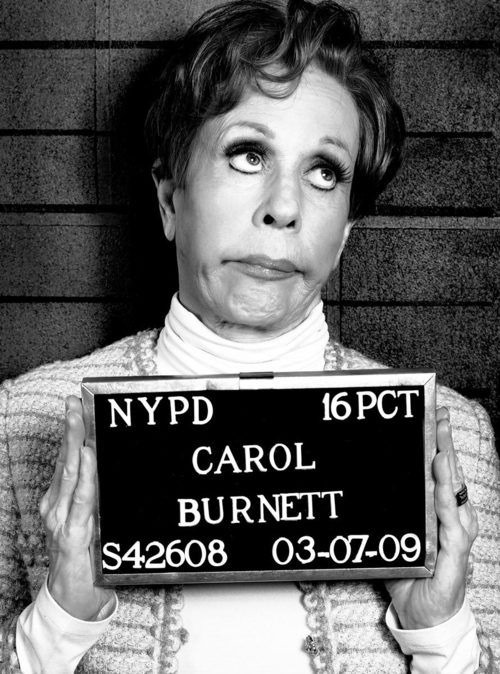
Carol Burnett 0Want to do some research or just stumble across something interesting? Come and browse the digital stacks of one the worlds premier libraries. Here you will find a large image database which you can search and/or browse by subject or name.

The New York Public Library Digital Library Gallery-see it for yourself – online.

Art and brain science

07 Tuesday Jul 2020

Posted by RichardB in art, Art Therapy, Therapy, Wellness

≈ Comments Off on Art and brain science

Tags

brain, NYT, research, Science

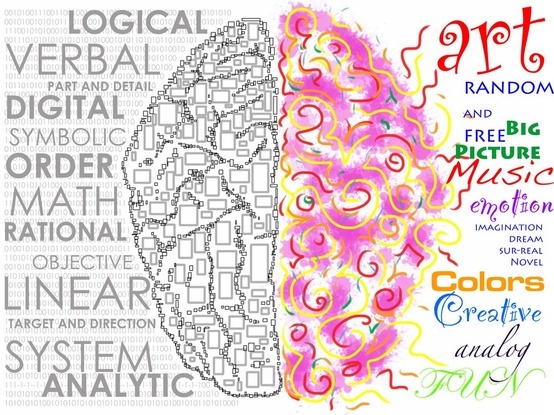
Here is an interesting article from the NYT about the brain and art from a professor of brain science at Columbia University.:

…… The portraiture that flourished in Vienna at the turn of the 20th century is a good place to start. Not only does this modernist school hold a prominent place in the history of art, it consists of just three major artists — Gustav Klimt, Oskar Kokoschka and Egon Schiele — which makes it easier to study in depth.

As a group, these artists sought to depict the unconscious, instinctual strivings of the people in their portraits, but each painter developed a distinctive way of using facial expressions and hand and body gestures to lrcommunicate those mental processes.

Their efforts to get at the truth beneath the appearance of an individual both paralleled and were influenced by similar efforts at the time in the fields of biology and psychoanalysis. Thus the portraits of the modernists in the period known as “Vienna 1900” offer a great example of how artistic, psychological and scientific insights can enrich one another.

The idea that truth lies beneath the surface derives from Carl von Rokitansky, a gifted pathologist who was dean of the Vienna School of Medicine in the middle of the 19th century. Baron von Rokitansky compared what his clinician colleague Josef Skoda heard and saw at the bedsides of his patients with autopsy findings after their deaths. This systematic correlation of clinical and pathological findings taught them that only by going deep below the skin could they understand the nature of illness.

I’ve read many a book and chatted with art therapists about the psychological process involved in art and art making and this article comes from a different perspective; brain science.

Art and Asthma

05 Tuesday May 2020

Posted by RichardB in art, Art Therapy, Therapy, Wellness

≈ Comments Off on Art and Asthma

Tags

asthma, creative arts, therapy

The fear and anxiety associated with an asthma attack can last long after the attack has subsided. Now research, published online in the Journal of Allergy & Clinical Immunology, reports that the art therapy showed benefits both during the therapy and for months afterward. “Asthma impacts not only a child’s physical well-being but also has a considerable effect on a child’s quality of life and psychological development,” said Anya Beebe, MA, an art therapist at National Jewish Health. “Our study shows that art therapy for children with severe, chronic asthma is clearly beneficial. Our results were striking and persisted for months after treatment stopped.”

In art therapy, patients create artwork that helps express their feelings about an illness, a trauma or medical concerns. The artwork can then serve as a starting point for discussions about these issues. Researchers believe that creating art helps participants establish distance between themselves and their medical concerns. They learn to understand that they have a personal identity outside of their illness. It is believed to be particularly effective with children because they often do not have the adult capabilities to verbally articulate their emotions, perceptions, or beliefs, and often can more comfortably convey ideas in ways other than talking.

You can read more at the National Jewish Health website.

Art and happiness

14 Tuesday Apr 2020

Posted by RichardB in art, creative arts therapy, Therapy

≈ Comments Off on Art and happiness

Tags

creative arts therapy, therapy

Type the words “Spring (Fruit Trees in Bloom)” into an online search engine and in less than a second you will be looking at a sparkling vista of trees erupting in a starburst of pale blossom like an exploding firework. The phrase is the title of an Impressionist oil painting by the French master Claude Monet that belongs to the Metropolitan Museum of Art in New York. 10660260_1058052397562426_5178675176490530164_n.jpg

According to the museum’s website, the painting was executed in 1873 in Argenteuil, a village on the River Seine northwest of Paris where the Impressionist artists used to gather. Signed and dated “73 Claude Monet” in the lower left corner, it is almost 40in (1m) wide and 24.5in (62cm) high. In 1903, when it was known as Apple Blossoms, it was bought for $2,100 by the New York art dealership Knoedler & Co. The Met acquired it in 1926.

Concise, sober information like this is typical of the insights that museums commonly provide about artworks in their collections. Dates, dimensions, provenance: these are the bread and butter of scholarship and art history.

But by offering details about pictures in this manner, are museums fundamentally missing the point of what art is all about? One man who believes that they are is the British philosopher Alain de Botton, whose new book, Art as Therapy, co-written with the art theorist John Armstrong, is a polite but provocative demolition of the way that museums and galleries routinely present art to the public.

Read more HERE.

Recovery and addiction art project

05 Thursday Mar 2020

Posted by RichardB in Addiction, art, recovery

≈ Comments Off on Recovery and addiction art project

In the next few days, the doors will appear in Reno NV.

COVER2

A shadow figure is painted on a door from the Lear Theater as part of the art project, Doors to Recovery. The local artist created door represents the addiction and recovery process and will be on display at Junkee Clothing Exchange in Midtown throughout July as part of Artown.(Photo: Andy Barron/RGJ)

You will see them if you stop into city hall or when you’re grabbing a cup of coffee at Dreamer’s Coffee House in Midtown.

They will beckon for you to examine them. Take in their various colors, sculptures and depictions.

They might have you asking yourself, “What are these all about?”

The message can be found in the varying images, including shadows, walking shoes on a path, butterflies and blossoming trees: When one door closes on addiction, another opens to a new life and a second chance.

These are the Doors of Recovery.

The public art project, sponsored by Transforming Youth Recovery, will be on display in multiple locations in downtown and Midtown throughout July as part of Artown.

It will feature 38 local artist-created doors from the Lear Theater representing the transformation process from addiction to recovery. The goal of the project is to raise addiction and recovery awareness and celebrate the youth who are rebuilding their lives today, Transforming Youth Recovery’s Kate High said.

“The doors are brilliant and fantastic. A lot of the artists have experience — some personal, others with their families or loved ones — with addiction, or have lost people they’ve cared about,” High said. “There are a lot of feelings that went into them: ransformation, journey and metamorphosis from dark to light. The artists have all been excited to support a good cause — it is a problem and a disease and not someone’s choice when they started.”

Transforming Youth

A year ago, Stacie Mathewson’s son lost his battle to addiction.

Two years before that, while he was in recovery, she developed a growing interest in helping youth in recovery. She founded the Stacie Mathewson Foundation to raise addiction and recovery awareness and promote education in communities nationwide.

In 2013, she started Transforming Youth Recovery with the mission to “transform youth recovery — one community, one school, one student at a time.”

The organization currently is working to fund 100 collegiate recovery programs and funded the first collegiate pilot program at the University of Nevada, Reno — Nevada Recovery and Prevention (NRAP), High said.

She said in less than two years, Transforming Youth Recovery has tripled the number of collegiate recovery programs across the country, offering hundreds of students support they wouldn’t have otherwise had.

“The goal is to raise awareness of the nature of the disease and to celebrate young people in recovery,” High said. “We want to break stigma of the disease — it’s not a black mark against them — and encourage people to get into recovery. It’s hard and requires support, but it’s possible. Lives can be turned around. It’s the use that cause the behavior and not the person.”

NRAP student worker and member in recovery Jordan Fugate said she understands what it means to turn your life around. She said she was incarcerated at 21, and today, she’s in school, has her own car and is working with the recovery program to assist others in their recovery.

She said she wants to give hope to others.

“In college, alcohol is everywhere and it’s harder to be in recovery,” Fugate said. “But, you don’t have to wait until you hit rock bottom — or even need to be dealing with addiction — you can come connect and make friends, find support and be part of sober activities.”

NRAP currently has about 50 students and 12 core members, ranging from 18 years old to 33. While the main campus is located at UNR, there is also a part-time campus at Truckee Meadows Community College.

“NRAC is two years old, but a lot of people don’t know we’re around,” Fugate said. “This will help make

everyone aware that there are college support groups on the campuses. It’s benefiting those locally, and we wanted to be part of Doors to Recovery to make people aware.”

The program is open to students who are choosing to live a sober lifestyle. It offers peer and professional support, Alcoholic, Eating Disorders and Narcotics Anonymous programs, as well as wellness groups, a grief group and a sexual trauma support group.

“It’s a place to come hang out and meet people,” Fugate said. “This has helped me to live a college lifestyle sober. It’s difficult (for students) when there are bars around campus or casinos for events and restaurants. It might be more difficult to be sober in college in Reno. There is the 24-hour lifestyle here that other colleges don’t have.”

Fugate said for the Doors project, NRAP created an image of a moral compass and various dark and light colors.

“On a panel is a compass because people who get sober talk about their moral compass, and how your values and morals change when you’re an addict,” Fugate said. “There are bright colors at the top and darker colors on the bottom; the light is overtaking the dark.”

Powerful art

The late Moya Olsen Lear gave Mathewson pews from the inside of the Lear Theater many years ago, High said.

She said Mathewson had kept the pews in storage with ideas of transforming and auctioning them off to support Transforming Youth Recovery, but the pews were 15 feet long and weren’t the right fit for the project.

There were, however, dozens of unmarked door panels in the basement of the Lear that wouldn’t be used in the restoration of the building. Mathewson swapped the pews for the door panels.

That was the beginning of Doors to Recovery.

“Art is something that everyone can relate to,” High said. “The doors are celebrating recovery. Art has universal appeal; it’s a way of telling story in so many different ways. It’s society’s way of expressing itself.”

Artist Carol Foldvary-Anderson said getting involved in the project has been a transformational process for her, too.

She said while she hasn’t personally been affected by addiction, she believes everyone can relate to recovering and transitioning into something.

“I think it gives the community an awareness of the transforming aspect of recovery,” Foldvary-Anderson said. “It creates an incentive to seek recovery. Some don’t know it exists or are ashamed they have a problem and they don’t want to share it with anyone. How do you bring yourself to the place for help? I wanted to make my door a beautiful and rewarding place. The awareness for recovery is powerful.”

Initially, she had wanted to create a door that represented three things: peace, happiness and joy. But, as she began working on it, a butterfly image came to her. She said it was iconic for change — they transition into something extremely beautiful and she wanted that to be a big part of her door’s message.

Her door, “Metamorphosis of Change,” features paint, molding and a large, black butterfly with a smaller butterfly on top of it. There are also several mirrors placed along the door.

She said the shadow butterfly represents the hidden nuances we have inside ourselves and the smaller butterfly is who we are and who we are becoming. The mirrors are the reflective side of ourselves — look at what you are doing and keep tabs on yourself.

“For me, it was a personal growth, as the artist creating this. I went through transitions and changes just working on this as far as what I first submitted (for the project) and what it turned out being,” Foldvary-Anderson said. “A lot of artists showed frustration, agony and pain in their art. I wanted to show the other side: a place of beauty.”

Meditation and creative thinking

19 Wednesday Feb 2020

Posted by RichardB in art, creative, Meditation

≈ Comments Off on Meditation and creative thinking

Tags

creative

Certain meditation techniques can promote creative thinking, even if you have never meditated before. This is the outcome of a study by cognitive psychologist Lorenza Colzato and Dominique Lippelt at Leiden University, published in Mindfulness.

Long-lasting influence

The study is a clear indication that you don’t need to be an experienced meditator to profit more from meditation. The findings support the belief that meditation can have a long-lasting influence on human cognition, including how we conceive new ideas. Besides experienced meditators, also novices may profit from meditation.12289474_1654036878210384_4987360646603869101_n.jpg

Different techniques, different effects

But the results demonstrate that not all forms of meditation have the same effect on creativity. Test persons performed better in divergent thinking (= thinking up as many possible solutions for a given problem) after Open Monitoring meditation (= being receptive to every thought and sensation). The researchers did not see this effect on divergent thinking after Focused Attention meditation (=focusing on a particular thought or object.)

Setup of the study

40 individuals participated in this study, who had to meditate for 25 minutes before doing their thinking tasks. There were both experienced mediators and people who never meditated before. The study investigated the influences of different types of meditative techniques on the two main ingredients of creativity:

  • Divergent thinking Allows for many new ideas to be generated. It is measured using the so-called Alternate Uses Task method where participants are required to think up as many uses as possible for a particular object, such as a pen.
  • Convergent thinking Convergent thinking, on the other hand, is a process whereby one possible solution for a particular problem is generated. This is measured using the Remote Associates Task method, where three unrelated words are presented to the participants, words such as ‘time’, ‘hair’ and ‘stretch’. The participants are then asked to identify the common link: in this case, ‘long’.

Lorenza S. Colzato, Ayca Szapora, Dominique Lippelt, Bernhard Hommel. Prior Meditation Practice Modulates Performance and Strategy Use in Convergent- and Divergent-Thinking Problems. Mindfulness, 2014

Los Desaparecidos The Disappeared

16 Thursday Jan 2020

Posted by RichardB in art, discovery, Latin

≈ Comments Off on Los Desaparecidos The Disappeared

Tags

Los Desaparecidos, the disappeared

Los Desaparecidos   The Disappeared

“To disappear” was newly defined during the twentieth century military dictatorships in Latin America. “Disappear” evolved into a transitive verb describing those considered threats to the State who were kidnapped, tortured, and killed by their own military,especially in the 1970s in Argentina, thedisappearedBrazil, Chile, and Uruguay.

The Disappeared brings together the work of twenty-seven living artists from South America who, over the course of the last thirty years, have made art about los desaparecidos or the disappeared.

Clients find healing, self-expression through restorative art program

30 Monday Dec 2019

Posted by RichardB in art, emotions, Wellness

≈ 1 Comment

Tags

creative, sober

Hung on the walls of the Sister Mary Alice Murphy Center for Hope, you can see — and even purchase — Jim Lucas’ saving grace.

The formerly homeless Fort Collins man is a recovering addict who has been clean for four years after a 15-year struggle with meth, his “drug of choice.” He hasn’t had a drink in 11 years. He found his way off the streets around the same time he became clean.artfest-hands2

“Funny how that works out,” he said.

The struggle to go back to methamphetamine and substance abuse is always there, but Lucas, 53, has the best sober companion he could ask for: art. He’s one of around 15 artists participating in ArtSpe@k, a restorative art program at the Murphy Center in partnership with Front Range Community College’s community studio that encourages Murphy Center guests to tap into their creative side. For more click.

in the blue

20 Friday Sep 2019

Posted by RichardB in art, My Poems

≈ Comments Off on in the blue

Tags

writing

some where in the blue …
aqua waves caress the beach
sunshine glistens on sand as far as the eyes can see f-489.jpg
stars dance every night in the sky

they tell us when to
pray and sleep
and love and pray
and sleep and love

in the morning
we drink mango juice from our palms
licking every drop
lips wanting more

when the sun is at its highest
the wind stops and waits for the clouds ….
sitting in the evening distance

Carla van den Berg, mixed media technique

27 Tuesday Aug 2019

Posted by RichardB in art, painter, Painting, YouTube

≈ Comments Off on Carla van den Berg, mixed media technique

Tags

painting, youtube

Healing with art

22 Monday Jul 2019

Posted by RichardB in art, Creativity, Health, Wellness

≈ Comments Off on Healing with art

Tags

health

Gripping a cane to stabilize his stride, Bradley Books walked past the Firehouse Arts Center in Longmont, promising himself that one day his paintings and drawings would hang on the white walls.

Now four years later, the 37-year-old is inside on a weekly basis, without his cane, and facilitating a monthly program, Art of Possibility, which helps developmentally-disabled participants heal through artistic expression.

“My favorite is they always ask, ‘When are we coming back?’ And to know that’s how they feel, that then encourages me to keep working with it,” he said.

The program is two-fold because working with others also helps Books restore mentally and physically from pain that sometimes still paralyzes his mind and body. MORE HERE

Photos

03 Wednesday Jul 2019

Posted by RichardB in art, My Photos, photo

≈ Comments Off on Photos

I am a Creative Arts Therapist who has been using a digital a camera for the last 5 years or so. As a relatively new photographer I use my life experience coupled with the advantages of a DSLR to snap shots that are, at times, appealing to me and on occasion others as well. Luckily, since I don’t use film, I have been able to afford to shot ten of thousands of images in the last 10 years, some of which are here. Click image to enlarge.

DSC02487-TR.jpgDSC02463-TR.jpgDSC03064-TR.jpg

Meditation Reduces Anxiety

26 Wednesday Jun 2019

Posted by RichardB in art, Meditation, mindfulness

≈ Comments Off on Meditation Reduces Anxiety

Tags

Anxiety, mindfulness

Scientists at Wake Forest Baptist Medical Center have identified the brain functions involved in how meditation reduces anxiety. feelings-16.jpg

The team wrote in the journal Social Cognitive and Affective Neuroscience about how they studied 15 healthy volunteers with normal levels of everyday anxiety. They said these individuals had no previous meditation experience or anxiety disorders.

The participants took four 20-minute classes to learn a technique known as mindfulness meditation. In this form of meditation, people are taught to focus on breath and body sensations and to non-judgmentally evaluate distracting thoughts and emotions.

“Although we´ve known that meditation can reduce anxiety, we hadn´t identified the specific brain mechanisms involved in relieving anxiety in healthy individuals,” said Dr. Fadel Zeidan, Ph.D., postdoctoral research fellow in neurobiology and anatomy at Wake Forest Baptist and lead author of the study. “In this study, we were able to see which areas of the brain were activated and which were deactivated during meditation-related anxiety relief.”

The researchers found that meditation reduced anxiety ratings by as much as 39 percent in the participants.

“This showed that just a few minutes of mindfulness meditation can help reduce normal everyday anxiety,” Zeidan said.

Fadel and colleagues were also able to reveal that meditation-related anxiety relief is associated with activation of the anterior cingulate cortex and ventromedial prefrontal cortex, which are areas of the brain involved with executive-level function.

“Mindfulness is premised on sustaining attention in the present moment and controlling the way we react to daily thoughts and feelings,” Zeidan said. “Interestingly, the present findings reveal that the brain regions associated with meditation-related anxiety relief are remarkably consistent with the principles of being mindful.”

He said the results of this neuroimaging experiment complement that body of knowledge by showing the brain mechanisms associated with meditation-related anxiety relief in healthy people.

feelings-40.jpgScientists wrote in the journal Frontiers in Human Neuroscience in November 2012 about how meditation has lasting emotional benefits. They found that participating in an eight-week meditation training program could have measurable effects on how the brain functions, even when someone is not actively meditating. The team used two forms of meditation training and saw some differences in the response of the amygdala, which is the part of the brain known to be important for emotion.

← Older posts
Newer posts →

instagram

Follow RichardbBrunner on WordPress.com
  • Tumblr
  • YouTube

Blog at WordPress.com.

Privacy & Cookies: This site uses cookies. By continuing to use this website, you agree to their use.
To find out more, including how to control cookies, see here: Cookie Policy
  • Subscribe Subscribed
    • RichardbBrunner
    • Join 491 other subscribers
    • Already have a WordPress.com account? Log in now.
    • RichardbBrunner
    • Subscribe Subscribed
    • Sign up
    • Log in
    • Report this content
    • View site in Reader
    • Manage subscriptions
    • Collapse this bar
 

Loading Comments...