• Home
  • Music
  • About
  • Contact
  • CreativeTherapyTools.com

RichardbBrunner

~ creative arts therapist

RichardbBrunner

Tag Archives: currency

Renminbi 101

28 Friday Aug 2026

Posted by RichardB in Economy

≈ Comments Off on Renminbi 101

Tags

China, currency, Renminbi

The official currency of the People’s Republic of China is the Renminbi (RMB).
The base unit of the Renminbi is the Yuan (元).
The currency code for the Chinese Yuan Renminbi is CNY.
The symbol for the Yuan is ¥. Sometimes, to avoid confusion with the Japanese Yen (JPY), the symbol CN¥ is used.


One Yuan is divided into 10 Jiao (角), and one Jiao is further divided into 10 Fen (分). However, Fen are rarely used in daily transactions today.
Commonly used banknotes include denominations of ¥1, ¥5, ¥10, ¥20, ¥50, and ¥100. Less frequently used banknotes are ¥0.1, ¥0.5, and ¥2.
Commonly used coins include denominations of ¥0.1 (1 Jiao), ¥0.5 (5 Jiao), and ¥1. Less frequently used coins are ¥0.01 (1 Fen), ¥0.02 (2 Fen), and ¥0.05 (5 Fen).
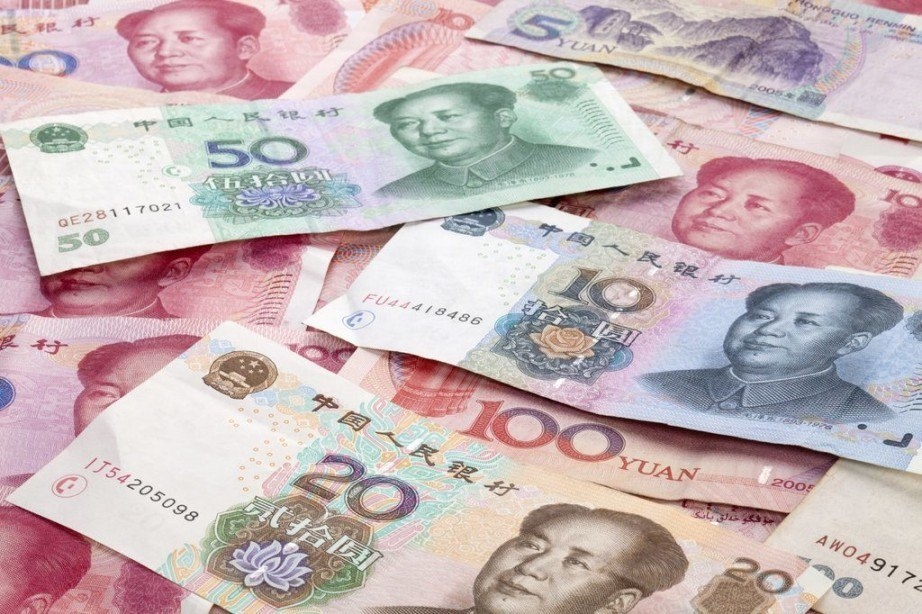

The central bank responsible for issuing and managing the Renminbi is the People’s Bank of China (PBOC).
The Renminbi is also sometimes referred to by the nickname “Redback”.
It’s worth noting that there are two markets for the Renminbi:
     Onshore RMB (CNY): This refers to the Renminbi that circulates within mainland China.
     Offshore RMB (CNH): This refers to the Renminbi that circulates outside mainland China, primarily in Hong Kong.

The CNH market has a different exchange rate compared to CNY due to different regulations and market participants. However, they are not different currencies, and CNY is still the official ISO currency code.
As of today, September 25, 2026, the approximate exchange rate is around 1 CNY ≈ $0.1488 USD

Reserve Currency

15 Tuesday Mar 2022

Posted by RichardB in Economics, Economy, Politics, Uncategorized

≈ Comments Off on Reserve Currency

Tags

currency, economics, Foreign Policy, reserve

A reserve currency (or anchor currency) is a foreign currency that is held in significant quantities by central banks or other monetary authorities as part of their foreign exchange reserves. The reserve currency can be used in international transactions, international investments and all aspects of the global economy. It is often considered a hard currency or safe-haven currency.

The United Kingdom’s pound sterling was the primary reserve currency of much of the world in the 19th century and first half of the 20th century.[1] However, by the middle of the 20th century, the United States dollar had become the world’s dominant reserve currency.[2] The world’s need for dollars has allowed the United States government to borrow at lower costs, giving the United States an advantage in excess of $100 billion per year.

John Maynard Keynes proposed the bancor, a supranational currency to be used as unit of account in international trade, as reserve currency under the Bretton Woods Conference of 1945. The bancor was rejected in favor of the U.S. dollar.

A report released by the United Nations Conference on Trade and Development in 2010, called for abandoning the U.S. dollar as the single major reserve currency. The report states that the new reserve system should not be based on a single currency or even multiple national currencies but instead permit the emission of international liquidity to create a more stable global financial system.

Countries such as Russia and the China, central banks, and economic analysts and groups, such as the Gulf Cooperation Council, have expressed a desire to see an independent new currency replace the dollar as the reserve currency. However, it is recognized that the US dollar remains the strongest reserve currency.

instagram

Follow RichardbBrunner on WordPress.com
  • Tumblr
  • YouTube

Blog at WordPress.com.

Privacy & Cookies: This site uses cookies. By continuing to use this website, you agree to their use.
To find out more, including how to control cookies, see here: Cookie Policy
  • Subscribe Subscribed
    • RichardbBrunner
    • Join 492 other subscribers
    • Already have a WordPress.com account? Log in now.
    • RichardbBrunner
    • Subscribe Subscribed
    • Sign up
    • Log in
    • Report this content
    • View site in Reader
    • Manage subscriptions
    • Collapse this bar
Loading Comments...