• Home
  • Music
  • About
  • Contact
  • CreativeTherapyTools.com

RichardbBrunner

~ creative arts therapist

RichardbBrunner

Category Archives: emotions

The Brain and Emotional Self-Control

24 Wednesday Sep 2025

Posted by RichardB in brain, emotions, Self Esteem, Self-Care

≈ Comments Off on The Brain and Emotional Self-Control

Tags

self control

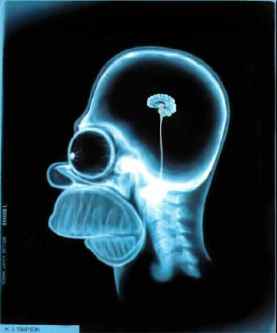
Different brain areas are activated when we choose to suppress an emotion, compared to when we are instructed to inhibit an emotion, according a new study from the UCL Institute of Cognitive Neuroscience and Ghent University.

In this study, published in Brain Structure and Function, the researchers scanned the brains of healthy participants and found that key brain systems were activated when choosing for oneself to suppress an emotion. They had previously linked this brain area to deciding to inhibit movement.feelings-51
feelings-51

“This result shows that emotional self-control involves a quite different brain system from simply being told how to respond emotionally,” said lead author Dr Simone Kuhn (Ghent University).

In most previous studies, participants were instructed to feel or inhibit an emotional response. However, in everyday life we are rarely told to suppress our emotions, and usually have to decide ourselves whether to feel or control our emotions.

In this new study the researchers showed fifteen healthy women unpleasant or frightening pictures. The participants were given a choice to feel the emotion elicited by the image, or alternatively to inhibit the emotion, by distancing themselves through an act of self-control.

The researchers used functional magnetic resonance imaging (fMRI) to scan the brains of the participants. They compared this brain activity to another experiment where the participants were instructed to feel or inhibit their emotions, rather than choose for themselves.

Different parts of the brain were activated in the two situations. When participants decided for themselves to inhibit negative emotions, the scientists found activation in the dorso-medial prefrontal area of the brain. They had previously linked this brain area to deciding to inhibit movement.

In contrast, when participants were instructed by the experimenter to inhibit the emotion, a second, more lateral area was activated.

“We think controlling one’s emotions and controlling one’s behaviour involve overlapping mechanisms,” said Dr Kuhn.

“We should distinguish between voluntary and instructed control of emotions, in the same way as we can distinguish between making up our own mind about what do, versus following instructions.”

Regulating emotions is part of our daily life, and is important for our mental health. For example, many people have to conquer fear of speaking in public, while some professionals such as health-care workers and firemen have to maintain an emotional distance from unpleasant or distressing scenes that occur in their jobs.

Professor Patrick Haggard (UCL Institute of Cognitive Neuroscience) co-author of the paper said the brain mechanism identified in this study could be a potential target for therapies.

“The ability to manage one’s own emotions is affected in many mental health conditions, so identifying this mechanism opens interesting possibilities for future research.

“Most studies of emotion processing in the brain simply assume that people passively receive emotional stimuli, and automatically feel the corresponding emotion. In contrast, the area we have identified may contribute to some individuals’ ability to rise above particular emotional situations.

“This kind of self-control mechanism may have positive aspects, for example making people less vulnerable to excessive emotion. But altered function of this brain area could also potentially lead to difficulties in responding appropriately to emotional situations.”

Anger Group

11 Wednesday Jan 2023

Posted by RichardB in Anger, Anxiety, emotions, Handout, Mental Health

≈ Comments Off on Anger Group

Tags

anger, handout, therapy

feelings-07Once a week I facilitate a anger management group. I use a variety of handouts and activities to have a process oriented group interaction. One of the hand outs I use is below. I use it in 1 of 2 ways. I have folks fill it out first and then we discuss or we go through it together and discuss. We explore as a group, learning from each other.

ANGER WORDS

anger disgust grumpiness rage  aggravation dislike hate resentment  agitation envy hostility revulsion  annoyance exasperation irritation scorn  bitterness ferocity jealousy spite  contempt frustration loathing torment  cruelty fury mean-spiritedness vengefulness  destructiveness grouchiness outrage wrath

Other:_________________________

Prompting Events for Feeling Anger

Losing power.

Losing status.

Losing respect.

Being insulted.

Not having things turn out the way you expected.

Experiencing physical pain.

Experiencing emotional pain.

Being threatened with physical or emotional pain by someone or something.

Having an important or pleasurable activity interrupted, postponed, or stopped.

Not obtaining something you want (which another person has).

Other:_______________________________

Interpretations That Prompt Feelings of Anger

Expecting pain.

Feeling that you have been treated unfairly.

Believing that things should be different.

Rigidly thinking “I’m right.”

Judging that the situation is illegitimate, wrong, or unfair.

Ruminating about the event that set off the anger in the first place, or in the past.

Other:____________________________

Experiencing the Emotion of Anger

Feeling incoherent.

Feeling out of control.

Feeling extremely emotional.

Feeling tightness or rigidity in your body.

Feeling your face flush or get hot.

Feeling nervous tension, anxiety or discomfort.

Feeling like you are going to explode.

Muscles tightening. .

Teeth clamping together, mouth tightening.

Crying; being unable to stop tears.

Wanting to hit, bang the wall, throw something, blow up.

Other:__________________________

Expressing and Acting on Anger

Frowning or not smiling; mean or unpleasant facial expression.

Gritting or showing your teeth in an unfriendly manner.

Grinning.

A red or flushed face.

Verbally attacking the cause of your anger; criticizing.

Physically attacking the cause of your anger.

Using obscenities or cursing.

U sing a loud voice, yelling, screaming, or shouting.

Complaining or bitching; talking about how lousy things are.

Clenching your hands or fists.

Making aggressive or threatening gestures.

Pounding on something, throwing things, breaking things.

Walking heavily or stomping; slamming doors, walking out.

Brooding or withdrawing from contract with others.

Other:_____________________

Aftereffects of Anger

Narrowing of attention.

Attending only to the situation making you angry.

Ruminating about the situation making you angry and not being able to think of anything else.

Remembering and ruminating about other situations that have made you angry in the past.

Imagining future situations that will make you angry.

Depersonalization, dissociative experience, numbness.

Intense shame, fear, or other negative emotions.

Other:______________________

Water colors

06 Tuesday Oct 2020

Posted by RichardB in Art Therapy, emotions, mindfulness, Self expression, Therapy Cards, Wellness

≈ Comments Off on Water colors

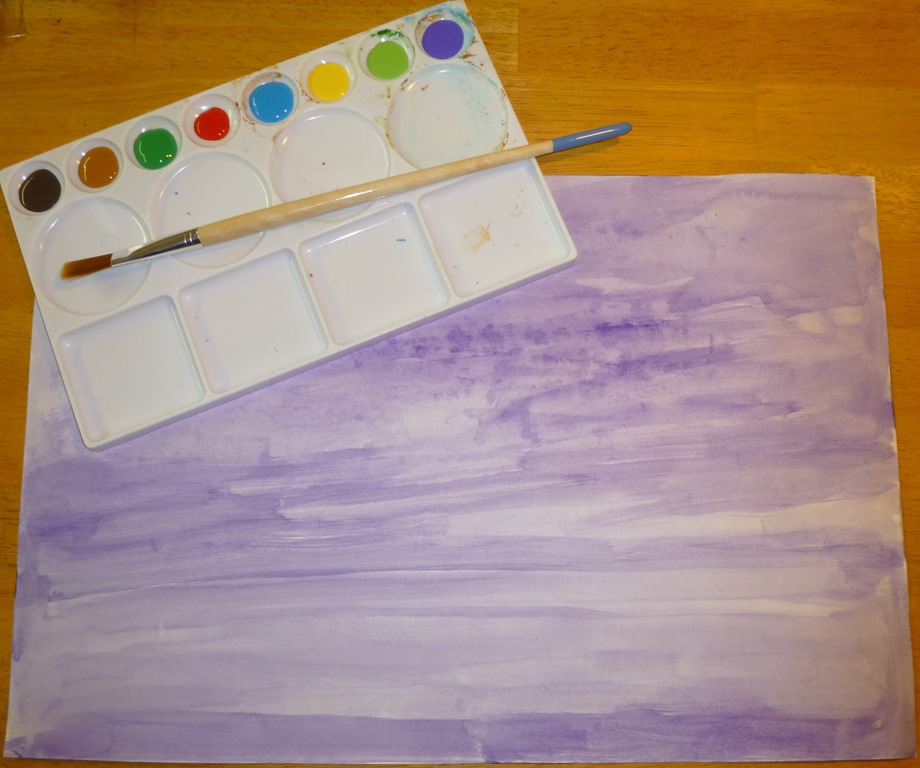
One Creative Therapy Tool that I use is to paint. Some times pictures of actual ‘things’ like trees or boats; but I usually paint shapes.
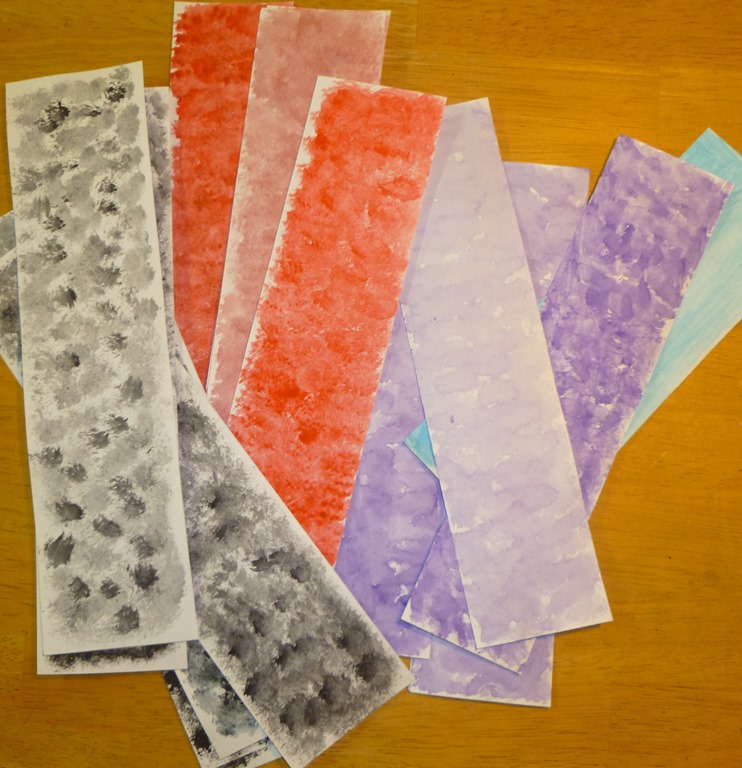
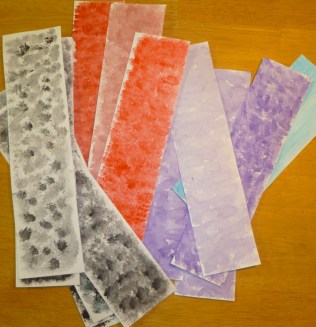
Lately I have been using water colors to paint shades and gradients of color. Colors shifting from one type of purple(for instance) to a deeper purple. 2bcds.JPG
There is a lot going on in the simple act of painting color that involves
cognitive processes, emotional expression, mindfulness practice, amongst others. There is the hand eye coordination, and the movement of the body (hand,arm shoulder), to apply the paint to the brush, water and paper. There is the picking and choosing of colors that I want to use; sometimes I pick a color that has a pleasing effect on how I feel, and sometimes that choice changes how I feel. The act of painting requires focus and at least a little concentration being in the here and now.
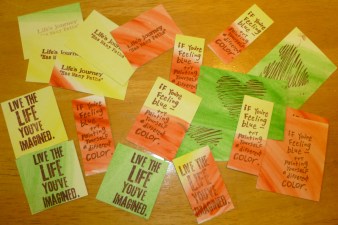
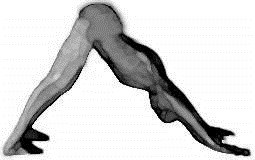
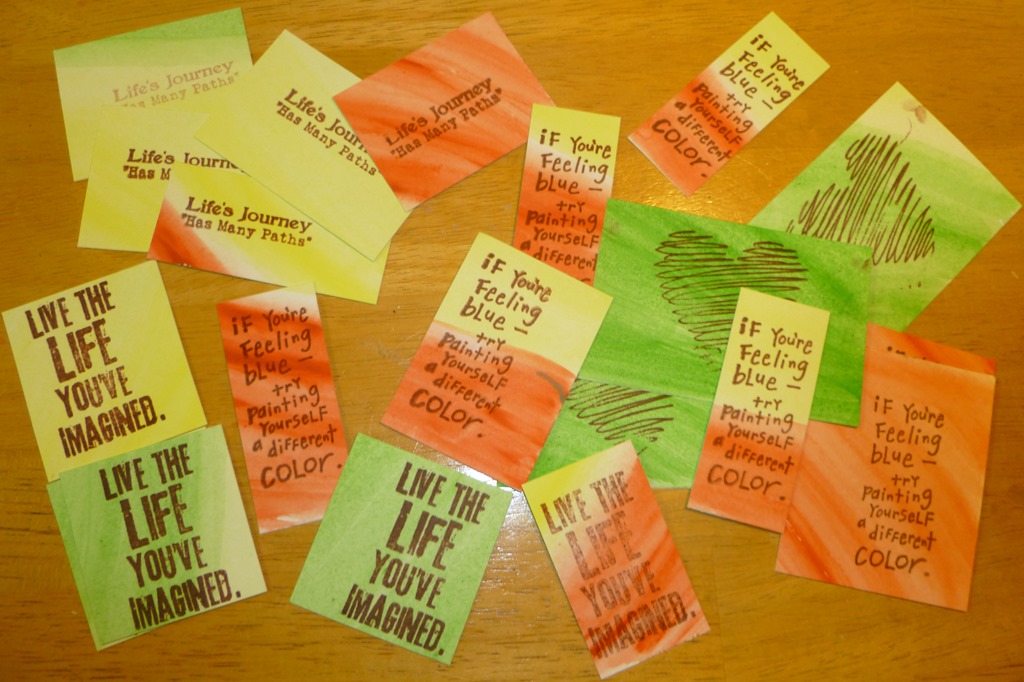
I have been turning my gradient paintings in to therapy cards. I work a lot with groups providing therapy and often participants have difficulty expressing their feelings and/or thoughts. The cards provide an avenue for people to share/start a conversation. I have created affirmation cards, feelings cards, drama therapy cards, movement cards, yoga asana cards, and many others.

4bcds

Emotional Intelligence

15 Tuesday Sep 2020

Posted by RichardB in emotions, positive, Therapy

≈ Comments Off on Emotional Intelligence

Tags

feelings, groups, lists, process, therapy

I often work with groups using lists. In movement therapy as well as psychotherapy, educational and process oriented groups lists are a great structure for groups to explore thoughts, and/or feelings. Here is a list that often comes up in groups ten suggestions about feelings.
1. Become emotionally literate. Label your feelings, rather than labeling people or situations.
Use three word sentences beginning with “I feel”.
Start labeling feelings; stop labeling people & situations msclip-210
“I feel impatient.” vs “This is ridiculous.” I feel hurt and bitter”. vs. “You are an insensitive jerk.”
“I feel afraid.” vs. “You are driving like an idiot.”
2. Distinguish between thoughts and feelings.
Thoughts: I feel like…& I feel as if…. & I feel that
Feelings: I feel: (feeling word)
3. Take more responsibility for your feelings.
“I feel jealous.” vs. “You are making me jealous.”
Analyze your own feelings rather than the action or motives of other people. Let your feelings help you identify your unmet emotional needs.
4. Use your feelings to help make decisions
“How will I feel if I do this?” “How will I feel if I don’t?”
“How do I feel?” “What would help me feel better?”
Ask others “How do you feel?” and “What would help you feel better?”
5. Use feelings to set and achieve goals
– Set feeling goals. Think about how you want to feel or how you want others to feel. (your employees, your clients, your students, your children, your partner)
– Get feedback and track progress towards the feeling goals by periodically measuring feelings from 0-10. For example, ask clients, students, teenagers how much they feel respected from 0 to 10.
6. Feel energized, not angry.
Use what others call “anger” to help feel energized to take productive action.
7. Validate other people’s feelings.
Show empathy, understanding, and acceptance of other people’s feelings.
8. Use feelings to help show respect for others.
How will you feel if I do this? How will you feel if I don’t? Then listen and take their feelings into consideration.
9. Don’t advise, command, control, criticize, judge or lecture to others.
Instead, try to just listen with empathy and non-judgment.
10. Avoid people who invalidate you.
While this is not always possible, at least try to spend less time with them, or try not to let them have psychological power over you.

Asanas that chase away the blues

28 Thursday May 2020

Posted by RichardB in breath, emotions, grounding, positive, Wellness

≈ Comments Off on Asanas that chase away the blues

Tags

asanas, health, wellness, yoga

Nice article from the Times of India, citing research using Yoga Asanas: Among the many clinical researches being conducted at Nimhans , one involved patients of an old-age home who were exposed to six months of yoga therapy. MRI scans taken before and after showed an increase in the size of the hippocampus, the brain’s memory index. “It wasdog1 larger than before because the grey matter had increased. The results will be published in a scientific journal shortly ,” adds Gangadhar. The hippocampus is vulnerable to stress and atrophy is seen in patients of schizophrenia, post-traumatic stress disorder (PTSD) and severe depression. “Yoga acts as an antidepressant ,” he says. Read the entire article here.

Water colors

19 Tuesday May 2020

Posted by RichardB in Art Therapy, emotions, mindfulness, positive, Therapy, Wellness

≈ Comments Off on Water colors

Tags

cognitive processes, drama therapy cards, emotional expression, feelings cards, mindfulness practice, movement cards, paint, yoga asana cards

One Creative Therapy Tool that I use is to paint. Some times 1bcdspictures of actual ‘things’ like trees or boats; but I usually paint shapes. Lately I have been using water colors to paint shades and gradients of color. Colors shifting from one type of purple(for instance) to a deeper purple.

There is a lot going on in the simple act of painting color that involves cognitive processes, emotional expression, mindfulness practice, amongst others. There is the hand eye coordination, and the movement of the body 2bcds(hand,arm shoulder), to apply the paint to the brush, water and paper. There is the picking and choosing of colors that I want to use; sometimes I pick a color that has a pleasing effect on how I feel, and sometimes that choice changes how I feel. The act of painting requires focus and at least a little concentration being in the here and now.

I have been turning my gradient paintings in to therapy cards. I work a lot with groups providing therapy and often participants have difficulty expressing their feelings and/or thoughts.3bcds The cards provide an avenue for people to share/start a conversation. I have created affirmation cards, feelings cards, drama therapy cards, movement cards, yoga asana cards, and many others.
(click image for larger size)

4bcds

Anger Group

30 Thursday Apr 2020

Posted by RichardB in Anger, Anxiety, emotions, Handout, mental health, Therapy

≈ Comments Off on Anger Group

Tags

anger, handout, therapy

Once a week I facilitate a anger management group. I use a variety of handouts and activities to have a process oriented group interaction. One of the hand outs I use is below. I use it in 1 of 2 ways. I have folks fill it out first and then we discuss or we go angry-young-girl-cute-face-kids2through it together and discuss. We explore as a group, learning from each other.

ANGER WORDS

anger disgust grumpiness rage  aggravation dislike hate resentment  agitation envy hostility revulsion  annoyance exasperation irritation scorn  bitterness ferocity jealousy spite  contempt frustration loathing torment  cruelty fury mean-spiritedness vengefulness  destructiveness grouchiness outrage wrath

Other:_________________________

Prompting Events for Feeling Anger

Losing power.

Losing status.

Losing respect.

Being insulted.

Not having things turn out the way you expected.

Experiencing physical pain.

Experiencing emotional pain.

Being threatened with physical or emotional pain by someone or something.

Having an important or pleasurable activity interrupted, postponed, or stopped.

Not obtaining something you want (which another person has).

Other:_______________________________

Interpretations That Prompt Feelings of Anger

Expecting pain.

Feeling that you have been treated unfairly.

Believing that things should be different.

Rigidly thinking “I’m right.”

Judging that the situation is illegitimate, wrong, or unfair.

Ruminating about the event that set off the anger in the first place, or in the past.

Other:____________________________

Experiencing the Emotion of Anger

Feeling incoherent.

Feeling out of control.

Feeling extremely emotional.

Feeling tightness or rigidity in your body.

Feeling your face flush or get hot.

Feeling nervous tension, anxiety or discomfort.

Feeling like you are going to explode.

Muscles tightening. .

Teeth clamping together, mouth tightening.

Crying; being unable to stop tears.

Wanting to hit, bang the wall, throw something, blow up.

Other:__________________________

Expressing and Acting on Anger

Frowning or not smiling; mean or unpleasant facial expression.

Gritting or showing your teeth in an unfriendly manner.

Grinning.

A red or flushed face.

Verbally attacking the cause of your anger; criticizing.

Physically attacking the cause of your anger.

Using obscenities or cursing.

U sing a loud voice, yelling, screaming, or shouting.

Complaining or bitching; talking about how lousy things are.

Clenching your hands or fists.

Making aggressive or threatening gestures.

Pounding on something, throwing things, breaking things.

Walking heavily or stomping; slamming doors, walking out.

Brooding or withdrawing from contract with others.

Other:_____________________

Aftereffects of Anger

Narrowing of attention.

Attending only to the situation making you angry.

Ruminating about the situation making you angry and not being able to think of anything else.

Remembering and ruminating about other situations that have made you angry in the past.

Imagining future situations that will make you angry.

Depersonalization, dissociative experience, numbness.

Intense shame, fear, or other negative emotions.

Other:______________________

Women and Men react differently

21 Tuesday Apr 2020

Posted by RichardB in emotions, mental health, research

≈ Comments Off on Women and Men react differently

Tags

men, Neuroscience, research, women

Women react more intensely to negative images than men, a difference that can be seen even when looking at their brains, a new study finds.

Researchers from University of Basel, whose study will be published in an issue of the Journal of Neuroscience, found that women rated positive and negative images as more emotionally stimulating than men did, and that their brains were more active than men’s when viewing negative pictures.5241352878_f53a343088

Such findings seem to support a common perception that women are more emotionally sensitive than men “and provides evidence for gender differences on the neural level,” said lead author Annette Milnik of the University of Basel. Read More Here.

Emotional Intelligence

26 Thursday Mar 2020

Posted by RichardB in emotions, Positive Self Talk, Wellness

≈ Comments Off on Emotional Intelligence

I often work with groups using lists. In movement therapy as well as psychotherapy, educational and process oriented groups lists are a great structure for groups to explore thoughts, and/or feelings. Here is a list that often comes up in groups ten suggestions about feelings.
1. Become emotionally literate. Label your feelings, rather than labeling people or situations.
Use three word sentences beginning with “I feel”.
Start labeling feelings; stop labeling people & situations
“I feel impatient.” vs “This is ridiculous.” I feel hurt and bitter”. vs. “You are an insensitive jerk.”
“I feel afraid.” vs. “You are driving like an idiot.”
2. Distinguish between thoughts and feelings.
Thoughts: I feel like…& I feel as if…. & I feel that
Feelings: I feel: (feeling word)
3. Take more responsibility for your feelings.
“I feel jealous.” vs. “You are making me jealous.”
Analyze your own feelings rather than the action or motives of other people. Let your feelings help you identify your unmet emotional needs.
4. Use your feelings to help make decisions
“How will I feel if I do this?” “How will I feel if I don’t?”
“How do I feel?” “What would help me feel better?”
Ask others “How do you feel?” and “What would help you feel better?”
5. Use feelings to set and achieve goals
– Set feeling goals. Think about how you want to feel or how you want others to feel. (your employees, your clients, your students, your children, your partner)
– Get feedback and track progress towards the feeling goals by periodically measuring feelings from 0-10. For example, ask clients, students, teenagers how much they feel respected from 0 to 10.
6. Feel energized, not angry.
Use what others call “anger” to help feel energized to take productive action.
7. Validate other people’s feelings.
Show empathy, understanding, and acceptance of other people’s feelings.
8. Use feelings to help show respect for others.
How will you feel if I do this? How will you feel if I don’t? Then listen and take their feelings into consideration.
9. Don’t advise, command, control, criticize, judge or lecture to others.
Instead, try to just listen with empathy and non-judgment.
10. Avoid people who invalidate you.
While this is not always possible, at least try to spend less time with them, or try not to let them have psychological power over you.

How art aided Andrew Marr’s recovery

10 Tuesday Mar 2020

Posted by RichardB in Art Therapy, emotions, Health, Journaling, Self expression, Wellness

≈ Comments Off on How art aided Andrew Marr’s recovery

“When I started to recover in hospital, one of my early frustrations was that I found I wanted to draw.
Drawing does for me what others find in meditation, prayer or gardening. It is my way of connecting to the world; it is not just making images but drinking in and praising what’s around me.
Returning to the world as I did after my stroke, you look at it with fresh eyes. You want to absorb all you see. That meant being able to draw again and art aided my recovery and charted it.” Read more: http://www.dailymail.co.uk/home/event/article-2442555/BBCs-Andrew-Marr-Knowing-I-able-draw-realise-I-going-OK.html#ixzz2gwenGqUy

Clients find healing, self-expression through restorative art program

15 Wednesday Jan 2020

Posted by RichardB in emotions, Self expression, Wellness

≈ Comments Off on Clients find healing, self-expression through restorative art program

Hung on the walls of the Sister Mary Alice Murphy Center for Hope, you can see — and even purchase — Jim Lucas’ saving grace.
The formerly homeless Fort Collins man is a recovering addict who has been clean for four years after a 15-year struggle with meth, his “drug of choice.” He hasn’t had a drink in 11 years. He found his way off the streets around the same time he became clean. 99863-12294804_1654036424877096_324062485663564059_n
“Funny how that works out,” he said.
The struggle to go back to methamphetamine and substance abuse is always there, but Lucas, 53, has the best sober companion he could ask for: art. He’s one of around 15 artists participating in ArtSpe@k, a restorative art program at the Murphy Center in partnership with Front Range Community College’s community studio that encourages Murphy Center guests to tap into their creative side. For more click.


Clients find healing, self-expression through restorative art program

30 Monday Dec 2019

Posted by RichardB in art, emotions, Wellness

≈ 1 Comment

Tags

creative, sober

Hung on the walls of the Sister Mary Alice Murphy Center for Hope, you can see — and even purchase — Jim Lucas’ saving grace.

The formerly homeless Fort Collins man is a recovering addict who has been clean for four years after a 15-year struggle with meth, his “drug of choice.” He hasn’t had a drink in 11 years. He found his way off the streets around the same time he became clean.artfest-hands2

“Funny how that works out,” he said.

The struggle to go back to methamphetamine and substance abuse is always there, but Lucas, 53, has the best sober companion he could ask for: art. He’s one of around 15 artists participating in ArtSpe@k, a restorative art program at the Murphy Center in partnership with Front Range Community College’s community studio that encourages Murphy Center guests to tap into their creative side. For more click.

Happiness

11 Wednesday Dec 2019

Posted by RichardB in emotions, grounding, Health, lifestyle, Wellness

≈ Comments Off on Happiness

Tags

Happiness, happy

Finding happiness in the everyday and mundane is a challenge and really easy, at the same time. It has to do with how you see yourself and world around you. Below is a panel discussion by ‘experts’, which is funny in itself.

2013 Stanford University Roundtable: Are You Happy Now?
Streamed live on Oct 18, 2013

The talking starts at 13:00 minutes in. The science of happiness is a growing and intriguing field. Research about what truly makes people happy is not only surprising, but applicable no matter how much money we make or where we live. Join moderator Katie Couric and a panel of experts in psychology, business, neuroscience and design for a Roundtable discussion about the happiness and sense of wellbeing that elude so many, but are sought by all.

Self-Affirmation Improves Problem-Solving

02 Monday Dec 2019

Posted by RichardB in emotions, Health, mindfulness, Self expression, Wellness

≈ Comments Off on Self-Affirmation Improves Problem-Solving

It’s no secret that stress increases your susceptibility to health problems, and it also impacts your ability to solve problems and be creative. But methods to prevent associated risks and effects have been less clear – until now.Dance Movement Therapy and Children
Published in PLOS ONE, new research from Carnegie Mellon University provides the first evidence that self-affirmation can protect against the damaging effects of stress on problem-solving performance. Understanding that self-affirmation – the process of identifying and focusing on one’s most important values – boosts stressed individuals’ problem-solving abilities will help guide future research and the development of educational interventions.
“An emerging set of published studies suggest that a brief self-affirmation activity at the beginning of a school term can boost academic grade-point averages in underperforming kids at the end of the semester. This new work suggests a mechanism for these studies, showing self-affirmation effects on actual problem-solving performance under pressure,” said J. David Creswell, assistant professor of psychology in CMU’s Dietrich College of Humanities and Social Sciences.
Because previous research indicated that self-affirmation may be an effective stress management approach, Creswell and his research team had college students rank-order a set of values (e.g., art, business, family and friends) in terms of their personal importance, and indicate their levels of chronic stress. Participants randomly assigned to a self-affirmation condition were asked to write a couple of sentences about why their number one ranked value was important (a standard self-affirmation exercise). All participants then had to complete a challenging problem-solving task under time pressure, which required creativity in order to generate correct solutions.tumblr_m7dhgp7vPe1qa9c27o1_1280
The results showed that participants who were under high levels of chronic stress during the past month had impaired problem-solving performance. In fact, they solved about 50 percent fewer problems in the task. But notably, this effect was qualified by whether participants had an opportunity to first complete the self-affirmation activity. Specifically, a brief self-affirmation was effective in eliminating the deleterious effects of chronic stress on problem-solving performance, such that chronically stressed self-affirmed participants performed under pressure at the same level as participants with low chronic stress levels.
“People under high stress can foster better problem-solving simply by taking a moment beforehand to think about something that is important to them,” Creswell said. “It’s an easy-to-use and portable strategy you can roll out before you enter that high pressure performance situation.

Weight stigma associated with harmful #health consequences

01 Friday Nov 2019

Posted by RichardB in behavior, diet, eat, emotions, Health and wellness, men, research

≈ 1 Comment

Tags

diet, health, men, research, stigma

Men’s health may be compromised by weight stigma, finds the latest research from the University of Connecticut.

As many as 40% of men report experiencing weight stigma, but little is known about how this stigma affects their health. This study found that men experiencing weight stigma have more depressive symptoms, are more likely to binge eat, and have lower self-rated health.  Read More at Science Daily

mid section view of a man sitting on a bench in a park


Wellness

30 Wednesday Oct 2019

Posted by RichardB in emotions, positive, Therapy, Wellness

≈ Comments Off on Wellness

Tags

wellness

Wellness is not the mere absence of disease. It is a proactive, preventive approach designed to achieve optimum levels of health, social and emotional functioning. Wellness can also be defined as an active process through which you become aware of and make choices toward a more successful existence.

The definition of Wellness is: NOUN
1. mental and physical soundness: physical well-being, especially when maintained or achieved through good diet and regular exercise.

A wellness-oriented lifestyle encourages you to adopt habits and behaviors that promote better health and an improved quality of life. It also involves the recognition that you have physical, psychological, social, and spiritual needs, with each dimension being necessary for optimal levels of functioning.f-060

Wellness is a positive approach to living – an approach that emphasizes the whole person. It is the integration of the body, mind, and spirit; and the appreciation that everything you do, think, feel, and believe has an impact on your state of health.

Since lifestyle has been found to be the single most important factor determining your pattern of general health, it is important that you be educated to “take charge” of your daily life and to set healthy lifestyle goals. The choices you make have a dominant influence on your health ad wellness. The secret is not in medical care, but consistent self- care. While traditional medicine concentrates on alleviating or curing disease, the wellness approach encourages you to take personal responsibility for your well-being.

Remember, Wellness is an active process of becoming aware of and making choices toward a healthy and fulfilling life.

“…a state of complete physical, mental, and social well-being, and not merely the absence of disease or infirmity.” – The World Health Organization

Different Cultures Enhances Creativity

21 Monday Oct 2019

Posted by RichardB in create, Creativity, emotions, grounding, Health, Therapy, Wellness

≈ Comments Off on Different Cultures Enhances Creativity

Tags

create, culture, open, wellness

Creativity can be enhanced by experiencing cultures different from one’s own, according to a study in Personality and Social Psychology Bulletin (published by SAGE).hands-106
Three studies looked at students who had lived abroad and those who hadn’t, testing them on different aspects of creativity. Relative to a control group, which hadn’t experienced a different culture, participants in the different culture group provided more evidence of creativity in various standard tests of the trait. Those results suggest that multicultural learning is a critical component of the adaptation process, acting as a creativity catalyst.

The researchers believe that the key to the enhanced creativity was related to the students’ open-minded approach in adapting to the new culture. In a global world, where more people are able to acquire multicultural experiences than ever before, this research indicates that living abroad can be even more beneficial than previously thought.

“Given the literature on structural changes in the brain that occur during intensive learning experiences, it would be worthwhile to explore whether neurological changes occur within the creative process during intensive foreign culture experiences,” write the authors, William W. Maddux, Hajo Adam, and Adam D. Galinsky. “That can help paint a more nuanced picture of how foreign culture experiences may not only enhance creativity but also, perhaps literally, as well as figuratively, broaden the mind.
The article “When in Rome… Learn Why the Romans Do What They Do: How Multicultural Learning Experiences Facilitate Creativity” in the June 2010 issue of Personality and Social Psychology Bulletin is available free for a limited time here.
Source: SAGE Publications

Self-Affirmation Improves Problem-Solving

11 Friday Oct 2019

Posted by RichardB in emotions, grounding, Health, lifestyle, positive, self talk, Wellness

≈ Comments Off on Self-Affirmation Improves Problem-Solving

Tags

creative, health, solve problems, studies

It’s no secret that stress increases your susceptibility to health problems, and it also impacts your ability to solve problems and be creative. But methods to prevent associated risks and effects have been less clear – until now.feelings-34
Published in PLOS ONE, new research from Carnegie Mellon University provides the first evidence that self-affirmation can protect against the damaging effects of stress on problem-solving performance. Understanding that self-affirmation – the process of identifying and focusing on one’s most important values – boosts stressed individuals’ problem-solving abilities will help guide future research and the development of educational interventions.
“An emerging set of published studies suggest that a brief self-affirmation activity at the beginning of a school term can boost academic grade-point averages in underperforming kids at the end of the semester. This new work suggests a mechanism for these studies, showing self-affirmation effects on actual problem-solving performance under pressure,” said J. David Creswell, assistant professor of psychology in CMU’s Dietrich College of Humanities and Social Sciences.
Because previous research indicated that self-affirmation may be an effective stress management approach, Creswell and his research team had college students rank-order a set of values (e.g., art, business, family and friends) in terms of their personal importance, and indicate their levels of chronic stress. Participants randomly assigned to a self-affirmation condition were asked to write a couple of sentences about why their number one ranked value was important (a standard self-affirmation exercise). All participants then had to complete a challenging problem-solving task under time pressure, which required creativity in order to generate correct solutions.tumblr_m7dhgp7vPe1qa9c27o1_1280
The results showed that participants who were under high levels of chronic stress during the past month had impaired problem-solving performance. In fact, they solved about 50 percent fewer problems in the task. But notably, this effect was qualified by whether participants had an opportunity to first complete the self-affirmation activity. Specifically, a brief self-affirmation was effective in eliminating the deleterious effects of chronic stress on problem-solving performance, such that chronically stressed self-affirmed participants performed under pressure at the same level as participants with low chronic stress levels.
“People under high stress can foster better problem-solving simply by taking a moment beforehand to think about something that is important to them,” Creswell said. “It’s an easy-to-use and portable strategy you can roll out before you enter that high pressure performance situation.

Mood Disorders Across the Lifespan

30 Friday Aug 2019

Posted by RichardB in emotions, Health, Therapy, Wellness, YouTube

≈ Comments Off on Mood Disorders Across the Lifespan

Tags

Lifespan, mental heath, Mood Disorders, Stanford

Self-Affirmation Improves Problem-Solving

28 Wednesday Aug 2019

Posted by RichardB in emotions, Health, mindfulness, Self expression, Wellness

≈ Comments Off on Self-Affirmation Improves Problem-Solving

It’s no secret that stress increases your susceptibility to health problems, and it also impacts your ability to solve problems and be creative. But methods to prevent associated risks and effects have been less clear – until now.
Published in PLOS ONE, new research from Carnegie Mellon University provides the first evidence that self-affirmation can protect against the damaging effects of stress on problem-solving performance. Understanding that self-affirmation – the process of identifying and focusing on one’s most important values – boosts stressed individuals’ problem-solving abilities will help guide future research and the development of educational interventions.
“An emerging set of published studies suggest that a brief self-affirmation activity at the beginning of a school term can boost academic grade-point averages in underperforming kids at the end of the semester. This new work suggests a mechanism for these studies, showing self-affirmation effects on actual problem-solving performance under pressure,” said J. David Creswell, assistant professor of psychology in CMU’s Dietrich College of Humanities and Social Sciences.
Because previous research indicated that self-affirmation may be an effective stress management approach, Creswell and his research team had college students rank-order a set of values (e.g., art, business, family and friends) in terms of their personal importance, and indicate their levels of chronic stress. Participants randomly assigned to a self-affirmation condition were asked to write a couple of sentences about why their number one ranked value was important (a standard self-affirmation exercise). All participants then had to complete a challenging problem-solving task under time pressure, which required creativity in order to generate correct solutions.
The results showed that participants who were under high levels of chronic stress during the past month had impaired problem-solving performance. In fact, they solved about 50 percent fewer problems in the task. But notably, this effect was qualified by whether participants had an opportunity to first complete the self-affirmation activity. Specifically, a brief self-affirmation was effective in eliminating the deleterious effects of chronic stress on problem-solving performance, such that chronically stressed self-affirmed participants performed under pressure at the same level as participants with low chronic stress levels.
“People under high stress can foster better problem-solving simply by taking a moment beforehand to think about something that is important to them,” Creswell said. “It’s an easy-to-use and portable strategy you can roll out before you enter that high pressure performance situation.
← Older posts

instagram

Follow RichardbBrunner on WordPress.com
  • Tumblr
  • YouTube

Blog at WordPress.com.

Privacy & Cookies: This site uses cookies. By continuing to use this website, you agree to their use.
To find out more, including how to control cookies, see here: Cookie Policy
  • Subscribe Subscribed
    • RichardbBrunner
    • Join 491 other subscribers
    • Already have a WordPress.com account? Log in now.
    • RichardbBrunner
    • Subscribe Subscribed
    • Sign up
    • Log in
    • Report this content
    • View site in Reader
    • Manage subscriptions
    • Collapse this bar
 

Loading Comments...