• Home
  • Music
  • About
  • Contact
  • CreativeTherapyTools.com

RichardbBrunner

~ creative arts therapist

RichardbBrunner

Category Archives: Economics

Greensill, Gupta and Cameron: what went wrong | The Financial Times

21 Friday May 2021

Posted by RichardB in Economics, Economy, news

≈ Comments Off on Greensill, Gupta and Cameron: what went wrong | The Financial Times

Tags

Scandal, The Financial Times

The story of Greensill Capital’s rise and fall has everything: investment banks, opaque finance, private jets, trophy mansions and the biggest British lobbying scandal in a generation, involving former prime minister David Cameron. The Financial Times charts the rise of Lex Greensill and Sanjeev Gupta and examines where it all went wrong.

The China Economic Risk Matrix: Pinpointing the Dangers in China’s Financial System

25 Friday Sep 2020

Posted by RichardB in Economics, Economy, news

≈ Comments Off on The China Economic Risk Matrix: Pinpointing the Dangers in China’s Financial System

Tags

China, CSIS, Economy

CSIS: The China Economic Risk Matrix, written by the Trustee Chair in Chinese Business and Economics’ non-resident senior associate Daniel Rosen, non-resident adjunct fellow Logan Wright, and Associate Director of the China Projects team at Rhodium Group, Lauren Gloudeman. Despite rising inefficiency, China’s financial system has served as the shock absorber that has helped China’s economy recover from the virus outbreak and maintain growth. But the same elements that have driven China’s recovery have also pushed China’s financial system deep into a gauntlet of systemic financial risks. The China Economic Risk Matrix is the combination of indicators of financial vulnerability that threaten to overwhelm Beijing’s policy tools to manage them, along with a novel, China-specific financial stress indicator. Building on the earlier CSIS volume, Credit and Credibility, this report explores the specific conditions and markets in which changes in government credibility can have a significant impact on systemic stability in China.

America’s Jobs Recovery |Public Debt

13 Sunday Sep 2020

Posted by RichardB in Economics, Economy, news

≈ Comments Off on America’s Jobs Recovery |Public Debt

Tags

Economy, news

The U.S. unemployment rate shot up faster than in any other developed country during the pandemic. WSJ explains how differences in government aid and labor-market structures can help predict how and where jobs might recover.

The covid-19 pandemic is set to increase public debt to levels last seen after the second world war. But is rising public debt a cause for concern? New economic thinking suggests perhaps not, at least for now.

U.S.-China Investment: 2020 Report Launch

04 Tuesday Aug 2020

Posted by RichardB in Economics, news

≈ Comments Off on U.S.-China Investment: 2020 Report Launch

Tags

China, economics

A deteriorating bilateral relationship and growing regulatory scrutiny have changed the trajectory of capital flows between the United States and China over the past three years. The COVID-19 pandemic threatens to further disrupt two-way investment, as weak Chinese consumption and supply chain risks make U.S. companies re-think their China footprint, and Chinese investors face continued headwinds from domestic restrictions on outbound capital flows and U.S. regulators wary of opportunistic foreign buyers. The National Committee held a virtual event with report authors Thilo Hanemann and Daniel Rosen, both of Rhodium Group; Ker Gibbs, president, AmCham Shanghai; Rebecca Fannin, founder/editor, Silicon Dragon Ventures; and National Committee President Stephen Orlins to launch our new Two-Way Street: 2020 Update report and discuss the latest two-way investment data and analysis on May 11, 2020.

The U.S. Economy: Paul Krugman

31 Friday Jul 2020

Posted by RichardB in Economics, Economy

≈ Comments Off on The U.S. Economy: Paul Krugman

Tags

Economy, news

Economy Disrupted: Challenges and Change at Home and Abroad

28 Tuesday Jul 2020

Posted by RichardB in Economics, Economy

≈ Comments Off on Economy Disrupted: Challenges and Change at Home and Abroad

Tags

challenge, Economy

Stockmarket v economy: the impact of covid-19 | The Economist

19 Sunday Jul 2020

Posted by RichardB in Economics, Economy, news

≈ Comments Off on Stockmarket v economy: the impact of covid-19 | The Economist

Tags

covid-19, Economy, Stockmarket

Oil production curb

12 Tuesday Nov 2019

Posted by RichardB in Economics, news, Politics

≈ Comments Off on Oil production curb

Tags

Oil, oil well

A deal among oil-producing countries to curb production and balance an oversupplied market will achieve its objective in the first quarter of next year, Russian Energy Minister Alexander Novak said, after prices tumbled on news of a build-up in U.S. inventories.

His Saudi counterpart, Khalid Al-Falih, said at a joint news briefing in Astana, Kazakhstan, that inventories were declining worldwide and reductions would accelerate in the next three to four months. Inventories will settle to their five-year historical average — OPEC’s target — before the end of the year, though Saudi Arabia, the group’s biggest producer, may modify its policy if output cuts don’t have the desired effect, he said. June 11, 2017 Read More HERE

Oil-Well Bolts Are #Failing

25 Thursday Jul 2019

Posted by RichardB in america, Economics, Environment

≈ Comments Off on Oil-Well Bolts Are #Failing

Tags

deep sea, oil well, safety

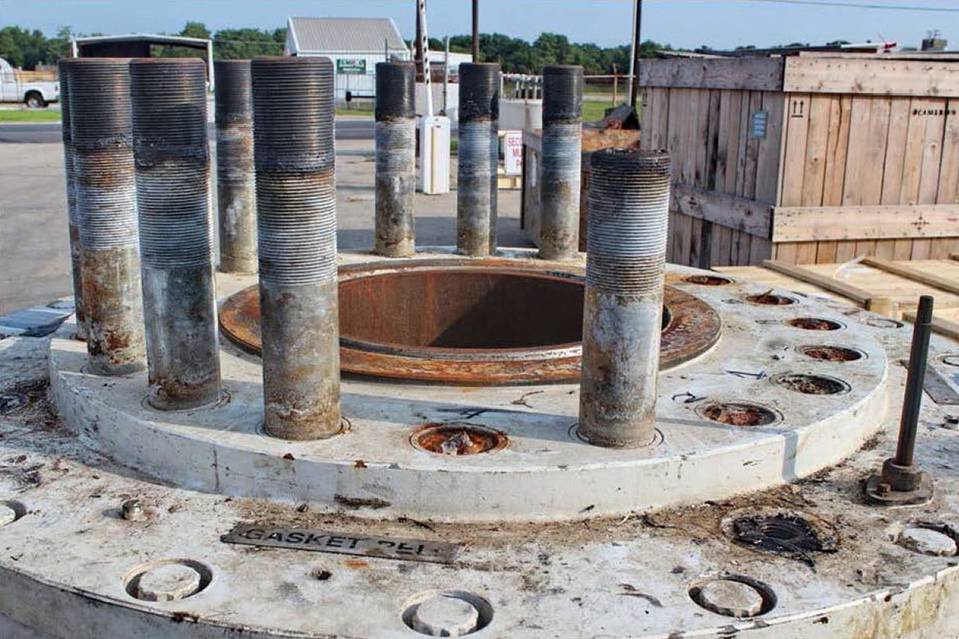
boltse

Failed bolts on a connector unit from a subsea oil well. U.S. regulators and oil-field service companies have said the bolts are breaking, prompting equipment shutdowns and raising safety concerns about gear used on Gulf of Mexico rigs. PHOTO: BUREAU OF SAFETY AND ENVIRONMENTAL ENFORCEMENT

Afghanistan:the Saudi Arabia of lithium

18 Saturday May 2019

Posted by RichardB in Economics, Environment, History, news, Research

≈ Comments Off on Afghanistan:the Saudi Arabia of lithium

Tags

Afghanistan, lithium, mining, resource, Saudi Arabia


The New York Times has reported that U.S. officials and American geologists have found an estimated $1 trillion worth of mineral deposits that have yet to be exploited in the country. The paper said a Pentagon report called Afghanistan potentially “the Saudi Arabia of lithium,” a key component in batteries for cellphones, laptop computers and eventually, a plug-in fleet of electric cars.

In December, 2007, China’s state-owned China Metallurgical Group Corp. (MCC) signed a $2.9 billion agreement with the Kabul government to extract copper from the Aynak deposit, one of the world’s largest unexploited copper deposits with an estimated 240 million tons of ore. When MCC entered into negotiations with the government of Afghan President Hamid Karzai, it offered substantial aid for resource development as part of the package.

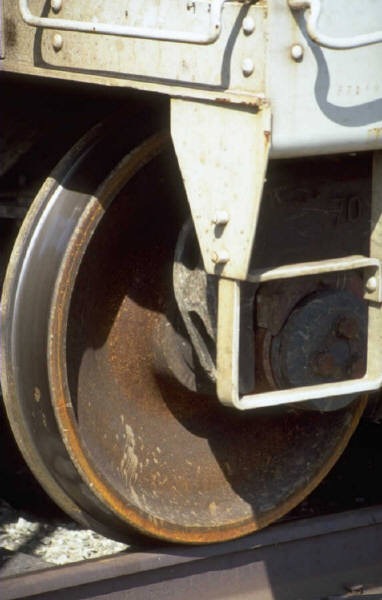
Of course in order to move the ore Afghanistan needs a rail system. Afghanistan ‘s mining J0145565minister appointed China Metallurgical Group Corp. to carry out technical studies for two proposed rail lines in the country from Kabul to Turkam in the east, and Kabul to Mazar-e-Sharif in the north. The rail lines are seen as essential to help Afghanistan develop a mining industry that could bring in billions of sorely needed dollars to the impoverished nation.

Naturally China really wants gas and oil and once again  Afghanistan’s government signed a deal with China’s state-owned National Petroleum Corporation, allowing it to become the first foreign company to exploit the country’s oil and natural gas reserves.The ministry listed the initial value of the project with CNPC as $700 million. But the total could be ten times greater if more reserves are found and developed.

The government of Afghanistan also granted key gold and cooper licenses to a consortium backed by City of London banker Ian Hannam, former BHP Billiton CEO Chip Goodyear and Poland’s multibillionaire Jan Kulczyk. In addiation Afghan Gold and Minerals, Afghan Minerals Group, and Turkish-Afghan Mining Co. had been picked from a shortlist of 25 bidders to explore and start developing the Balkhab, Shaida and Badakhshan projects respectively. Afghan Gold and Minerals (owned by Sadat Mansoor Naderi) will have copper explorations rights over the Balkhab, northwest of the capital Kabul. Not sure who owns the Turkish-Afghan Mining Co. Also, Afghan Minerals Group was granted Thursday a license to explore the Shaida copper deposit, in the province of Herat, in western Afghanistan.BU0618

Meanwhile, Turkish-Afghan Mining obtained the license for the Badakhshan gold and copper deposit, in the Badakhshan province, in north-eastern Afghanistan.

Afghanistan’s government granted an Indian steel company the right to exploit the Hajigak iron ore deposit which is considered one of the largest iron deposits in the world at 1.8 billion tonnes. The Indian company wants to ship the ore through Pakistan to India, which might seem a bit of a problem but the amount of money to be make by trucking firm and Government fee’s means that the green light will be given.

They are a lot of other businesses (and NGO’s) looking to profit from the Afganie war as well.

China, Not U.S., Likely to Benefit from Afghanistan’s Mineral Riches

China mining giant tapped for Afghan rail project

Afghanistan, China sign first oil contract

Afghanistan grants key copper and gold permits

Global military spending

16 Saturday Feb 2019

Posted by RichardB in Economics, Military, Research

≈ Comments Off on Global military spending

Tags

military spnding

A presentation  at the United Nations North Lawn building presented statistics gathered by the Stockholm International Peace Research Institute (SIPRI) about spending on armaments and militarism. The report declared that in 2013 over 1,747 billion dollars were spent on armaments. SIPRI Director Sam Perlo Freeman pointed out that the overwhelming majority of military spending was being done by the US and its allies.

While military spending by the United States has slightly decreased, spending by strategic US aligned regimes around the world is dramatically rising. Kingdom of Saudi Arabia, which is a key US ally in the Middle East and a backer of insurgent groups in Syria, has increased its military spending by 14.8%, the largest increase of any country on earth. John Feffer of Institute for Policy Studies, one of the presenters, told Press TV, that the build-up of military spending by US aligned regimes around the world has dangerous implications and could lead to war. Presenters pointed out that military spending is rising most rapidly in the Middle East and the Pacific, and that despite recent cuts, the United States remains the main exporter of weapons and supplier of military aid. See video here.

The 15 countries with the highest military expenditure in 2013, click the Map to be taken to an interactive web page of the Stockholm International Peace Research Institute.

wldmap

Information from the Stockholm International Peace Research Institute.


Newer posts →

instagram

Follow RichardbBrunner on WordPress.com
  • Tumblr
  • YouTube

Blog at WordPress.com.

Privacy & Cookies: This site uses cookies. By continuing to use this website, you agree to their use.
To find out more, including how to control cookies, see here: Cookie Policy
  • Subscribe Subscribed
    • RichardbBrunner
    • Join 491 other subscribers
    • Already have a WordPress.com account? Log in now.
    • RichardbBrunner
    • Subscribe Subscribed
    • Sign up
    • Log in
    • Report this content
    • View site in Reader
    • Manage subscriptions
    • Collapse this bar
 

Loading Comments...