-
Mandala-Coloring Page
-
The science of improving your brain’s creativity | Nick Skillicorn
-
Meditation can relieve pain
Meditation can relieve pain, and it does so by activating multiple brain areas, according to an April 2011 study in the Journal of Neuroscience. Fadel Zeidan of Wake Forest University and his colleagues scanned people’s brains as they received uncomfortably hot touches to the leg. When subjects practiced a mindful meditation technique that encourages detachment from experience while focusing on breathing, they reported less pain than when they simply paid attention to their breathing. Likewise, different patterns of brain activity emerged under the two conditions, with mindful meditating resulting in more activity not only in executive centers that evaluate experiences and regulate emotions but also in lower regions that control the signals coming from the body.
The volunteers learned the meditation technique in only four 20-minute sessions, which means this pill-free analgesia could be a feasible way to help real patients suffering from pain. “People can reap some of the benefits of meditation without extensive training,” Zeidan says.
When I work with patients using mindfulness I start by asking who has experience with any type of meditation, breathing techniques and/or relaxation exercises. We than have a brief explanation and question and answer period and I focus on removing any doubt, fear, or skepticism. I usually than do a 10 to 12 minute body scan moving right into a mindful meditation that focuses on the breath.
With the co-occurring patients I work with this process seems to work the best. The chat in the beginning warms people up, the body scan relaxes which helps the meditators enter into a more meditative state. -
Wherever we go
Wherever we go, we take everything we’ve ever known with us whether we know it or not. Maya Angelou

-
Standford Med: Why We Get Fat: Diet Trends and Food Policy
-
Meditation can change your brain in 8 weeks
Participants in the study spent close to a half-hour every day meditating or practicing some other mindfulness exercise (notable because most people associate meditation with sitting and thinking quietly, and that’s not the only type of exercise done in the study) for about eight weeks. They got MRIs of their brains before and after the eight week exercise, and when the study was over, many of the study’s 16 participants showed significant changes in the areas of the brain associated with behavior, memory, and stress. For more click the link below.
http://lifehacker.com/5989078/how-meditating-for-eight-weeks-can-boost-your-brain
-
Dancers
Dancers are the messengers of the gods. ~Martha Graham

-
Sweet Honey in The Rock – Wade in the Water
-
What’s in a song
From the NPR series, What’s in a song:
Group Sing-alongs help a friend
For the past several years, a group of friends has gathered every week in the living room of a suburban home in Logan, Utah, to sing long-forgotten songs. It’s a fun way to spend the evening, but it’s also therapy for a dear friend.
Until several years ago, Barre Toelken was a folklorist at Utah State University. He’d spent much of his life preserving sea shanties and other antique songs, but then he had a stroke and was forced to retire.
“I used to know 800 songs,” Toelken says. “I had this stroke, and I had none of these songs left in my head. None of them were left.”
But, Toelken says, he soon discovered that, with a little positive reinforcement, he could remember some of the forgotten music after all.
“A little bit at a time, I realized I still had the songs in my head,” he says. “So now I meet with this group of friends once a week a week, and we sing.
“This group doesn’t use any musical instruments, because I can’t play the guitar since the stroke hit me,” Toelken says. “And they did that as a sign of respect, I think. But they’ve all said how much they’ve learned about the songs since they quit using the guitar because instead of concentrating on their hand moving, they have to concentrate on the words.”
Hear the story. -
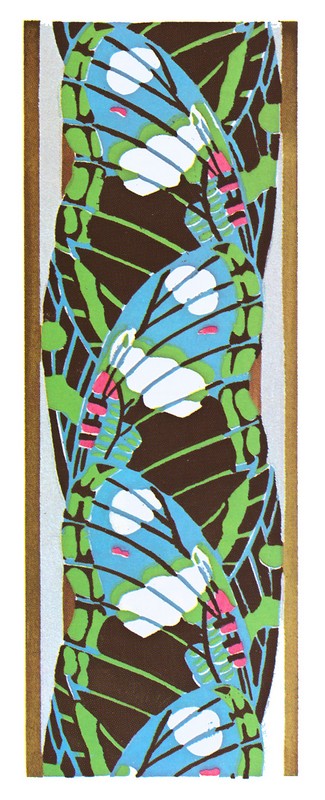
Seguy Art Deco Designs 123



 RichardbBrunner