-
Siamese-Coloring Page

-
Addiction and trust:
-
waking
Beyond living and dreaming
there is something more important:
waking up. Antonio Machado

-
Before you ask
Before you ask God for what you want, first thank God for what you have. Talmud

-
Dr. Gabor Maté ~ Who We Are When We Are Not Addicted: The Possible Human
-
Providing Food as part of a weight loss program Has Little Benefit
Providing weekly food delivery as part of a weight loss program has little impact on outcomes, based on the results of a one-year study conducted in Toronto, Canada.
Published in the Journal of the American College of Cardiology, this study tested four weight loss interventions in 919 overweight Canadian adults. Roughly half of participants were assigned to one of three dietary interventions, which included dietary advice, weekly food delivery, or food delivery plus dietary advice. The other half were part of the control group and received only a dietary brochure at the start of the study.
All of the interventions promoted current dietary guidelines and the DASH diet, which limits salt intake and helps lower blood pressure. While weight loss interventions lasted six months, participants were followed for one year to track outcomes like weight, waist circumference and blood pressure.
The goal of the study was to see whether dietary advice and/or weekly food delivery helps boost weight loss and reduce cardiovascular risk in overweight adults.
The good news is that all participants saw small reductions in weight, waist circumference and blood pressure at six months. A year after the interventions, participants also had lower ten-year risk for developing heart disease, as measured by the Framingham risk score. However, there were no significant differences in outcomes between groups, which means monthly phone calls and weekly food delivery had no impact on weight loss or changes in cardiovascular risk.
Authors did note, however, a difference in drop-out rates between groups. Participants receiving food delivery were much more likely to stay in the study, with only 9% of participants dropping out of the study by six months, compared to 33% of participants with no food delivery. Participants receiving weekly food baskets plus advice also had consistent increases in consumption of recommended foods like fruits, vegetables and whole grains.
Based on findings, authors conclude that providing food as part of a dietary intervention has little added benefit on weight loss or cardiovascular risk reduction. However, findings also confirm the overall benefits of the DASH diet and general dietary guidelines. As other studies have shown, maintaining a healthy diet promotes a healthy weight, reduces risk for heart disease and improves overall health. Authors hope that with future research, we can improve available resources to help adults achieve both a healthy weight and diet.
-
it’s the courage
Success is not final, failure is not fatal, it’s the courage to continue that counts. Winston Churchill

-
Cristina Dona Triathlon
-
Different Cultures Enhances Creativity
Creativity can be enhanced by experiencing cultures different from one’s own, according to a study in Personality and Social Psychology Bulletin (published by SAGE).

Three studies looked at students who had lived abroad and those who hadn’t, testing them on different aspects of creativity. Relative to a control group, which hadn’t experienced a different culture, participants in the different culture group provided more evidence of creativity in various standard tests of the trait. Those results suggest that multicultural learning is a critical component of the adaptation process, acting as a creativity catalyst.The researchers believe that the key to the enhanced creativity was related to the students’ open-minded approach in adapting to the new culture. In a global world, where more people are able to acquire multicultural experiences than ever before, this research indicates that living abroad can be even more beneficial than previously thought.
“Given the literature on structural changes in the brain that occur during intensive learning experiences, it would be worthwhile to explore whether neurological changes occur within the creative process during intensive foreign culture experiences,” write the authors, William W. Maddux, Hajo Adam, and Adam D. Galinsky. “That can help paint a more nuanced picture of how foreign culture experiences may not only enhance creativity but also, perhaps literally, as well as figuratively, broaden the mind.
The article “When in Rome… Learn Why the Romans Do What They Do: How Multicultural Learning Experiences Facilitate Creativity” in the June 2010 issue of Personality and Social Psychology Bulletin is available free for a limited time here.
Source: SAGE Publications -
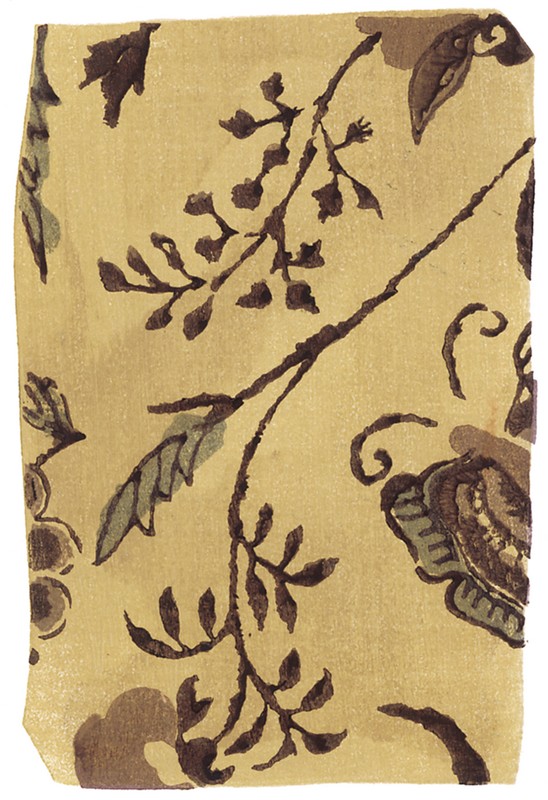
Japanese Textile Designs 134



 RichardbBrunner