-
Positive Me
Most people know me as a generally positive glass haft full kinda person. And it’s true, I see most everything in a positive light. This has pissed and angered more than a few over the years. Not really sure why, I suppose they expect me to react and respond to things, people, and places the way they do…. but I don’t, never have, never will.
We have the power to define the meaning of events in our lives.
I learned this as a very young child from my aunties who would visit every summer to help my mom “deal” with me. As an autistic with a heart condition who preferred tree contact more than human contact my mom struggled to know what to do with me. Of course she didn’t have to deal or do, but to just let me be …. which she eventually did (mostly).
My positivity seems to have increased over the years, (if that’s even possible). After heart surgery, multiple brain surgeries, occasional homelessness, and numerous threats of violence I remain optimistic, upbeat, and hopeful.
We do have the power to define the meaning of events in our lives. People, places, and things.
Looking out my window at the sunset -
Watch “Can our assumptions help shape a better world? | Dr. Zoé von Finck | TEDxESMTBerlin”
-
Ways to increase happiness
The most important question to ask when you feel down
Sometimes it doesn’t feel like your brain wants you to be happy. You may feel guilty or shameful. Why?
Believe it or not, guilt and shame activate the brain’s reward center.
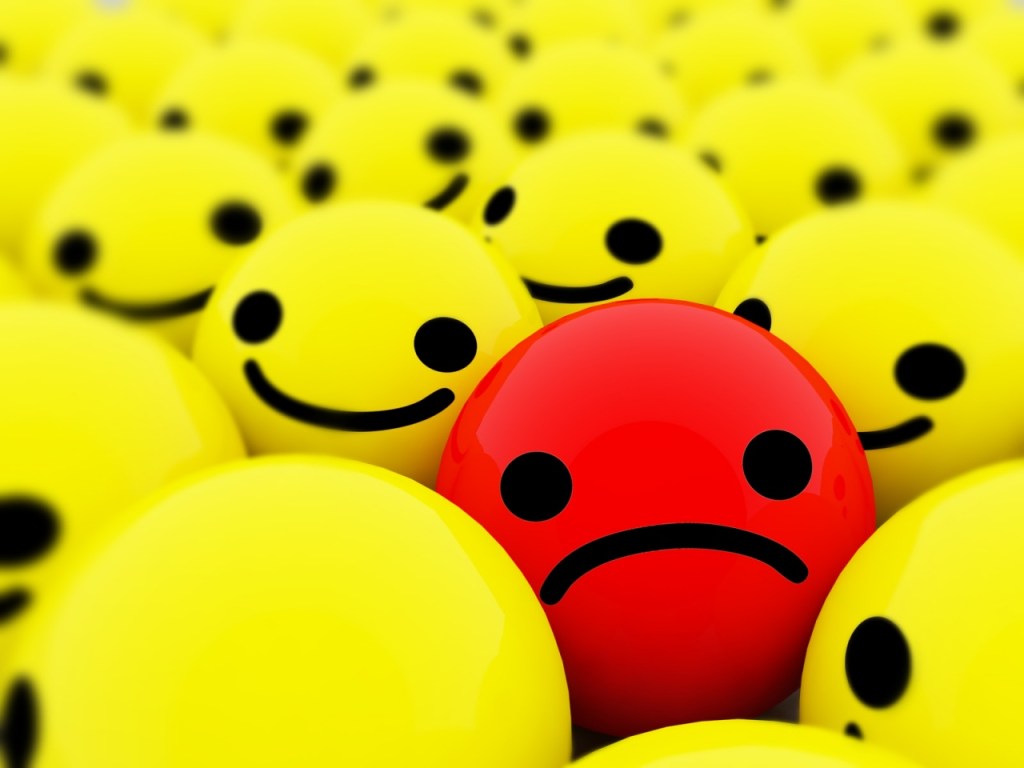
Despite their differences, pride, shame, and guilt all activate similar neural circuits, including the dorsomedial prefrontal cortex, amygdala, insula, and the nucleus accumbens. Interestingly, pride is the most powerful of these emotions at triggering activity in these regions — except in the nucleus accumbens, where guilt and shame win out. This explains why it can be so appealing to heap guilt and shame on ourselves — they’re activating the brain’s reward center.
And you worry a lot, too. Why? In the short term, worrying makes your brain feel a little better — at least you’re doing something about your problems.
In fact, worrying can help calm the limbic system by increasing activity in the medial prefrontal cortex and decreasing activity in the amygdala. That might seem counterintuitive, but it just goes to show that if you’re feeling anxiety, doing something about it — even worrying — is better than doing nothing.
But guilt, shame, and worry are horrible, long-term solutions. So what do neuroscientists say you should do? Ask yourself this question:
What am I grateful for?
Yeah, gratitude is awesome … but does it really affect your brain at the biological level? Yup.
You know what the antidepressant Wellbutrin does? Boosts the neurotransmitter dopamine. So does gratitude.
The benefits of gratitude start with the dopamine system, because feeling grateful activates the brain stem region that produces dopamine. Additionally, gratitude toward others increases activity in social dopamine circuits, which makes social interactions more enjoyable …
Know what Prozac does? Boosts the neurotransmitter serotonin. So does gratitude.

One powerful effect of gratitude is that it can boost serotonin. Trying to think of things you are grateful for forces you to focus on the positive aspects of your life. This simple act increases serotonin production in the anterior cingulate cortex.
I know, sometimes life lands a really mean punch in the gut and it feels like there’s nothing to be grateful for. Guess what?
Doesn’t matter. You don’t have to find anything. It’s the searching that counts.
It’s not finding gratitude that matters most; it’s remembering to look in the first place. Remembering to be grateful is a form of emotional intelligence. One study found that it actually affected neuron density in both the ventromedial and lateral prefrontal cortex. These density changes suggest that as emotional intelligence increases, the neurons in these areas become more efficient. With higher emotional intelligence, it simply takes less effort to be grateful.
And gratitude doesn’t just make your brain happy — it can also create a positive feedback loop in your relationships. So express that gratitude to the people you care about.
For more on how gratitude can make you happier and more successful.
But what happens when bad feelings completely overtake you? When you’re really in the dumps and don’t even know how to deal with it? There’s an easy answer …
Label negative feelings
You feel awful. OK, give that awfulness a name. Sad? Anxious? Angry?
Boom. It’s that simple. Sound stupid? Your noggin disagrees.
In one fMRI study, appropriately titled “Putting Feelings into Words” participants viewed pictures of people with emotional facial expressions. Predictably, each participant’s amygdala activated to the emotions in the picture. But when they were asked to name the emotion, the ventrolateral prefrontal cortex activated and reduced the emotional amygdala reactivity. In other words, consciously recognizing the emotions reduced their impact.
Suppressing emotions doesn’t work and can backfire on you.
Gross found that people who tried to suppress a negative emotional experience failed to do so. While they thought they looked fine outwardly, inwardly their limbic system was just as aroused as without suppression, and in some cases, even more aroused. Kevin Ochsner, at Columbia, repeated these findings using an fMRI. Trying not to feel something doesn’t work, and in some cases even backfires.
But labeling, on the other hand, makes a big difference.
To reduce arousal, you need to use just a few words to describe an emotion, and ideally use symbolic language, which means using indirect metaphors, metrics, and simplifications of your experience. This requires you to activate your prefrontal cortex, which reduces the arousal in the limbic system. Here’s the bottom line: describe an emotion in just a word or two, and it helps reduce the emotion.
Ancient methods were way ahead of us on this one. Meditation has employed this for centuries. Labeling is a fundamental tool of mindfulness.
Make that decision
Ever make a decision and then your brain finally feels at rest? That’s no random occurrence.
Brain science shows that making decisions reduces worry and anxiety — as well as helping you solve problems.
Making decisions includes creating intentions and setting goals — all three are part of the same neural circuitry and engage the prefrontal cortex in a positive way, reducing worry and anxiety. Making decisions also helps overcome striatum activity, which usually pulls you toward negative impulses and routines. Finally, making decisions changes your perception of the world — finding solutions to your problems and calming the limbic system.
But deciding can be hard. I agree. So what kind of decisions should you make? Neuroscience has an answer.
Make a “good enough” decision. Don’t sweat making the absolute 100% best decision. We all know being a perfectionist can be stressful. And brain studies back this up.
Trying to be perfect overwhelms your brain with emotions and makes you feel out of control.
Trying for the best, instead of good enough, brings too much emotional ventromedial prefrontal activity into the decision-making process. In contrast, recognizing that good enough is good enough activates more dorsolateral prefrontal areas, which helps you feel more in control …
So when you make a decision, your brain feels you have control. And, as I’ve talked about before, a feeling of control reduces stress. But here’s what’s really fascinating: Deciding also boosts pleasure.
Actively choosing caused changes in attention circuits and in how the participants felt about the action, and it increased rewarding dopamine activity.
We don’t just choose the things we like; we also like the things we choose.
Touch people
No, not indiscriminately; that can get you in a lot of trouble.
But we need to feel love and acceptance from others. When we don’t it’s painful. And I don’t mean “awkward” or “disappointing.” I mean actually painful.
Neuroscientists did a study where people played a ball-tossing video game. The other players tossed the ball to you and you tossed it back to them. Actually, there were no other players; that was all done by the computer program.
But the subjects were told the characters were controlled by real people. So what happened when the “other players” stopped playing nice and didn’t share the ball?
Subjects’ brains responded the same way as if they experienced physical pain. Rejection doesn’t just hurt like a broken heart; your brain feels it like a broken leg.
In fact, as demonstrated in an fMRI experiment, social exclusion activates the same circuitry as physical pain … at one point they stopped sharing, only throwing back and forth to each other, ignoring the participant. This small change was enough to elicit feelings of social exclusion, and it activated the anterior cingulate and insula, just like physical pain would.
Relationships are important to your brain’s feeling of happiness. Want to take that to the next level? Touch people.
One of the primary ways to release oxytocin is through touching. Obviously, it’s not always appropriate to touch most people, but small touches like handshakes and pats on the back are usually okay. For people you’re close with, make more of an effort to touch more often.
Touching is incredibly powerful. We just don’t give it enough credit. It makes you more persuasive, increases team performance, improves your flirting … heck, it even boosts math skills.
Touching someone you love actually reduces pain. In fact, when studies were done on married couples, the stronger the marriage, the more powerful the effect.
In addition, holding hands with someone can help comfort you and your brain through painful situations. One fMRI study scanned married women as they were warned that they were about to get a small electric shock. While anticipating the painful shocks, the brain showed a predictable pattern of response in pain and worrying circuits, with activation in the insula, anterior cingulate, and dorsolateral prefrontal cortex. During a separate scan, the women either held their husbands’ hands or the hand of the experimenter. When a subject held her husband’s hand, the threat of shock had a smaller effect. The brain showed reduced activation in both the anterior cingulate cortex and dorsolateral prefrontal cortex — that is, less activity in the pain and worrying circuits. In addition, the stronger the marriage, the lower the discomfort-related insula activity.
Sum up
Here’s what brain research says will make you happy:
- Ask “What am I grateful for?” No answers? Doesn’t matter. Just searching helps.
- Label those negative emotions. Give it a name and your brain isn’t so bothered by it.
- Decide. Go for “good enough” instead of ‘best decision ever made on Earth.”
- Hugs, hugs, hugs. Don’t text — touch.
-
My Most Listened to Songs of 2022: Jenny High ジェニーハイ「エクレール
-
Why The U.S. Can’t End Poverty. CNBC
-
Watch “Health Matters 2023: How 21st Century Science Is Improving How We Age”
-
Addictive habits and the brain
The notion that “one size fits all” when applying drug treatments to addiction is challenged by a published in the journal Biological Psychiatry that investigates pharmacotherapies for cocaine addiction.
Currently, medication for drug addicts is prescribed in the same way for all patients, regardless of the extent of their addiction. The new study uses cocaine addiction – for which there are currently no Food and Drug Administration (FDA)-approved drug therapies – to study whether treatment is more or less responsive at different stages of addiction.
Increasingly, evidence suggests that addiction is caused by a convergence of different “neurobiological adaptations” that result in an eventual loss of control over drug-seeking behaviors. Cocaine, for instance, impairs the processes that govern impulse control but also promotes drug-seeking habits.

The adaptations within the brain triggered by addictive drugs include reduced metabolic activity and reduced production of dopamine – the hormone that controls the brain’s reward and pleasure centers.
At some point, over the course of addiction, a brain region called the nucleus accumbens takes over from the dorsolateral striatum (DLS) in managing control behaviors – systems that are both involved in the production of dopamine. As the nucleus accumbens is responsible for processing reward and the DLS is involved in habits, this shift results in a behavior change that favors high impulsivity and compulsive drug seeking.
To study how the DLS, impulsivity and phase of addiction of a subject influence their responsiveness to drug interventions, the researchers behind the new study – from the University of Cambridge in the UK – conducted an experiment in an animal model.
The rats that were in an early phase of addiction were not affected by the treatment. Instead, it was the animals who had a longer history of self-administering cocaine that exhibited the greatest change in behavior.
First, the “impulsivity” of 40 male rats was measured using a task in which rats were trained to self-administer food pellets by pushing open a panel during allocated periods signaled to the rats using a light.
Next, these rats were trained to press a lever to self-administer cocaine dissolved in water. The extent to which the rats exhibited cocaine-seeking behavior – for instance, repeatedly pressing the lever, even when cocaine was not delivered – was monitored by the researchers.
The team then administered a dopamine receptor-blocking drug called α-flupenthixol directly into the DLS of rats at various phases of addiction.
Also, the rats that were in an early phase of addiction were not affected by the treatment. Instead, it was the animals that had a longer history of self-administering cocaine that exhibited the greatest change in behavior.
Dr. John Krystal, editor of Biological Psychiatry, says the results show that dopamine receptor blockers play a role in treatment of addiction, but only at particular phases of the addiction process.
“The notion that particular brain mechanisms are engaged only at particular phases of the addiction process strikes me as an important insight that has yet to be harnessed in developing new medications for addiction treatment,” he says.
“The results of this study are important because they show that although both impulsive and non-impulsive rats developed cocaine-seeking habits, this was delayed in high impulsive rats,” adds first author Dr. Jennifer Murray. She continues:
“It is suggested that vulnerability to addiction conferred by impulsivity is less influenced by the propensity to develop drug-seeking habits and more by the inability of an individual to regain control over these habits that are rigidly and maladaptively established in the brain.”
-
My Playlists
Every year for the past 15 years I have curated a playlist of my most listened to songs of the year. In the beginning, in 2008, it was music from my own rather massive collect but somewhere along the line I switched to newly discovered music I find on YouTube.
YouTube has about 2 billion monthly users who listen to music. If you aren’t putting some sort of posting of your music on YouTube you are massively limiting your reach.My Playlists
I currently have about 800 subscriptions to music labels (big and small), as well as individual artists and bands. Each year I listen to about 1200 songs and reduce that to a maximum of 54 songs. I wrap the playlist up by December 31, although I did not finish the 2022 list until the second week of January 2023.Currently working on the 2023 playlist and here is a song from the 2023 curated favorites song playlist: Margaret Glaspy – Get Back
-
My Most Listened to Songs of 2022: Hikaru Utada『BAD MODE』 Live
-
Watch “How Modern Slavery Touches Everyone”

 RichardbBrunner