Honesty handout

Tags

This is a handout I use for groups that tend to be dishonest. 
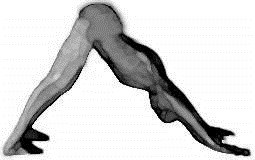
  1. Figure out why you lie and who you lie to. We’ve all lied at one time or another, to different people, to ourselves, and for different reasons. But coming up with a systematic plan for becoming more honest will be difficult unless you try to define those reasons and those people for yourself.Transformation.jpg
    • Lies to make ourselves look better might include exaggerations, embellishments, and flat-out tall-tales we tell to others, and ourselves, to make ourselves feel better about our inadequacies. When you’re unhappy about something, it’s much easier to fill it in with lies than tell the truth.
    • We lie to peers we think are better than us, because we want them to respect us as we respect them. Unfortunately, being dishonest is disrespectful in the long run. Give people more credit for their ability to empathize and understand you on a deeper level.
    • Lies that avoid embarrassment might include lies told to cover up bad behaviors, transgressions, or any activity we’re not proud of. If your mom found a pack of cigarettes in your jacket, you might lie and say that they’re your friend’s to avoid punishment.
    • We lie to authoritative figures to avoid embarrassment and punishment, including ourselves. When we’ve done something we feel guilty about, lies are told to eliminate the guilt, avoid the punishments, and get back to the objectionable behavior we’re forced to lie about. It’s a vicious cycle.
  1. Anticipate behaviors that will make you feel guilty. To break the chain of embarrassment and lying, it’s important to learn to anticipate things that you’ll likely    feel guilty about in the future, and avoid those behaviors. When you lie, you’re covering up some uncomfortable truth that’s more easily couched in a lie. You can either get comfortable with the truth, or abandon the behavior that makes you embarrassed.
    • If you smoke cigarettes, you won’t have to lie if everyone knows it’s true. Own up to it. If a behavior is un-own-upable, it’s probably best to avoid it. It would be humiliating for your wife to find out that you had an inappropriate relationship with a coworker, but you won’t have to lie if you don’t do it.
  1. Avoid situations in which you’ll have to lie for others. Be wary when someone tells you something in confidence that you know that you should share with someone else (e.g., knowledge of a crime, a lie, or a harmful act against another). Hearing such information puts you in a difficult position, especially when the truth eventually emerges and reveals to the affected person that you knew all along.
    • If someone begins a sentence with “Don’t tell so-and-so about this, okay?” be prepared to offer your own disclaimer: “If it’s something that I’d want to know about were I them, then please don’t tell me. I don’t want to be responsible for anyone’s secrets but my own.”

Heroin was a brand name

Heroin, or diacetylmorphine to give it its scientific name, was first synthesized in 1874 by an English gentleman called C. R. Alder Wright. It wasn’t until 1898 that a man called Heinrich Dreser, head of drug development at German pharmaceutical company Bayer, saw the commercial potential in the drug. poppyplant

Dreser started developing the drug as treatment for respiratory diseases such as bronchitis, asthma and tuberculosis, testing the drug on animals, human test subjects and even himself. Unsurprisingly Dreser and his test subjects liked the drug, saying it made them feel “heroisch” German for heroic. From this the brand name heroin was born.

Heroin was given a big thumbs up from Dreser and the Bayer big bosses. Samples of the drug were given out to doctors who in turn prescribed Heroin to their patients. Bayer was producing Heroin pastels, cough lozengers, tablets, water-soluble Heroin salts and a Heroin elixir.

Suspicion of the drug arose however when doctors started to report patients requesting Heroin cough syrup even though they weren’t showing any respiratory problems.

It turned out that Heroin was extremely addictive and detrimental to a person’s health. Bayer stopped producing and selling Heroin in 1913, deleting any mention of the drug in it’s company history. In 1924 Heroin was made illegal in the USA, even for medical purposes. In Britain, heroin is still used for medical purposes to this day, accounting for 95% of the worlds legal heroin use.

https://en.wikipedia.org/wiki/Heroin

https://en.wikipedia.org/wiki/Charles_Romley_Alder_Wright


Writing is pleasantly fragrant

Tags

As a former student I used to spend hours writing, reflecting, discerning and then, more writing. I often come up with foolish, odd, and often bizarrely phrased statements, one of which I share here for you.

Feelings-0040

“When listening I use a combination of skills that loosely falls under the rubric of empathy. I use empathy the way most people use deodorant, everyday and all the time. This maybe a bit of an analogy stretch, but it is oddly accurate and pleasantly fragrant.”


Asanas that chase away the blues

Tags

,

Nice article from the Times of India, citing research using Yoga Asanas: Among the many clinical researches being conducted at Nimhans , one involved patients of an old-age home who were exposed to six months of yoga therapy. MRI scans taken before and after showed an increase in the size of the hippocampus, the brain’s memory index. “It wasdog1larger than before because the grey matter had increased. The results will be published in a scientific journal shortly ,” adds Gangadhar. The hippocampus is vulnerable to stress and atrophy is seen in patients of schizophrenia, post-traumatic stress disorder (PTSD) and severe depression. “Yoga acts as an antidepressant ,” he says. Read the entire article here.

Hospital art therapy program helps children express themselves

Nathan Allen loves the colour blue.

His T-shirt is blue, the blanket wrapped around his knees is blue, and his eyes, bright under his baseball cap, are blue.

But blue is also a feeling, and after spending months undergoing near-daily dialysis at the Hospital for Sick Children, who could blame an 11-year-old for feeling a bit down?

Nathan was referred to the hospital’s new on-staff art therapist to help him cope with his emotions. And when Jennifer Bassin came to visit recently week with her case of supplies, he chose the colour blue to start on a sculpture of a car.

“Shocking,” jokes his mom, Judy Chapman.e826d-creatiggggvity

Nathan was diagnosed with a bilateral Wilms’ tumour, a rare cancer of the kidneys mostly affecting children, at age 5. He started chemo and radiation and had a partial nephrectomy in both kidneys. His left kidney never worked properly again, and after almost five years of remission, cancer returned to his right kidney.

Now he undergoes chemo once every three weeks and dialysis five days a week. That’s a lot of poking and prodding for an 11-year-old who would prefer to be playing defence on the Georgina Blaze novice hockey team and cuddling his 3-year-old beagle, Daisy, at home in Keswick, Ont.

After three more chemo treatments, Nathan can go home. His parents are training to do at-home dialysis and counting down the days until Nathan can receive a new kidney. His mom is praying she can eventually donate one of her own.

Until then, he looks forward to his weekly sessions with Bassin. She visits during the two-and-a-half-hour dialysis process, and they paint or sculpt while the machine whirs in the background.

“It absorbs some of the time,” Nathan says. “I like to build stuff.”

Bassin has brought something called a 3Doodler — a cross between a hot glue gun and a tiny 3D printer, which can make plastic sculptures. This day, after he makes the car, she asks Nathan to make something that resembles his idea of cancer.

“A big, black, blob,” he says.

Nathan is an outpatient but most of Bassin’s patients are long-term in-patients at Sick Kids who have chronic illnesses, complex medical histories or have faced traumatic injuries.

Since the program started in May, she does art therapy just two days a week and sees between four and eight children aged 4 to 18. Psychiatric patients have benefited from art therapy at Sick Kids in the past, but this is the first year the new program, which is entirely funded by donations, has been extended to medical patients.

“Art therapy is taking the language children already speak and meeting them at that level,” Bassin said. “You don’t have to be good at art to participate in art therapy. It doesn’t have to be about the painting or about the drawing. It’s more about finding something they enjoy that we can use as a tool to explore how they’re feeling.”

One patient, who had recently been in a traumatic boat accident, sculpted a vessel out of clay — and then smashed it against the wall in a moment of catharsis. Some enjoy the physicality of painting big murals, and some like to rip up what they’ve drawn. Another drew a landscape so she could imagine herself outside the hospital, at a picnic.

“When you create something outside of you, you can really treat it like it’s at a distance, and it makes it safer for us to explore a little bit.”

Making art helps young patients take back some control in their lives, if only for an hour. Some patients are content with their creation, and others want to delve deeper into their feelings, Bassin says.

Nathan’s family hopes he can go home in late September, when he can rejoin his classmates in Grade 6 and go back to being an annoying older brother to his sister Emma, 7. He’s still quiet, but less withdrawn after a session, his mom says.

As he paints a mask green, with blue lips and black eyes, Bassin asks Nathan if he has a plan.

“Nope,” he says. “Just going step by step.”

The Hospital for Sick Children

Waldeen and the Americas

Tags

, ,

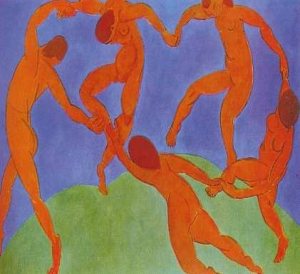
Waldeen (von) Falkenstein American-born dancer and choreographer. Together with Anna Sokolow, Alicia Markova, Anton Dolin and Michel Descombey she belongs to the great precursors of modern Mexican dance.
WALDEEN (1913–1993) dreamed of the dance for most of her life, from early childhood to her death. The dance, like poetry, was always in her blood — the daring blood of the “Texas girl,” as she was called when she made her New York debut, who at fifteen left classical ballet in order to find her own voice, to speak freely with her body, hands and face. The blood of the young dancer who, at twenty-five, having already distinguished herself here and abroad, made Mexico City her home, inspired by the vitality of the arts in Mexico where she believed art and life were fused into one reality — and where the people loved her. She created dance for more than half a century. For more see:   http://www.uhmc.sunysb.edu/surgery/waldeen.html
 

Nonverbal communication with Pets

Tags

, ,

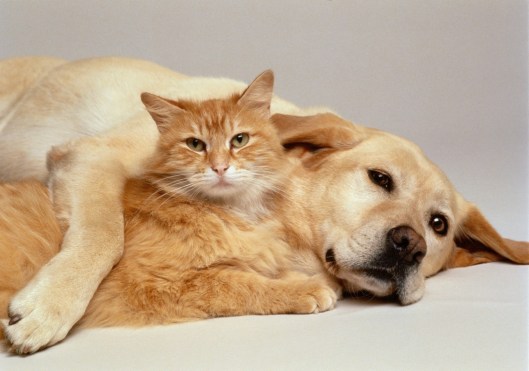
Nonverbal communication is a gift that all living beings share, one you’ll need to reawaken to better interact with and care for your animal companions. Most dog and cat lovers already understand canine and feline body language, which is one non-verbal technique. But you can use your other, natural, nonverbal communication skills, and actually begin to see things through your dog or cat’s eyes, and become his/her voice. DogsCats.jpg

You can learn animal communication by taking a class or reading some of the great books available today on the subject. But many of the basics are so simple that we can easily begin nonverbally communicating right away. Remember, long before humans had spoken language, we were able to communicate among ourselves and with the animals; it is a kind of heart to heart communication skill that we all possess.

Did you ever know a set of twins who said they each knew what the other was thinking, or you heard your mother say she had “woman’s intuition” or “just knew something was wrong.” Have you ever had an image of a friend come to mind and then received a phone call from that very person saying, “I was just thinking about you and wanted to say hello”? These are all examples of nonverbal communication.

More here.