Tags
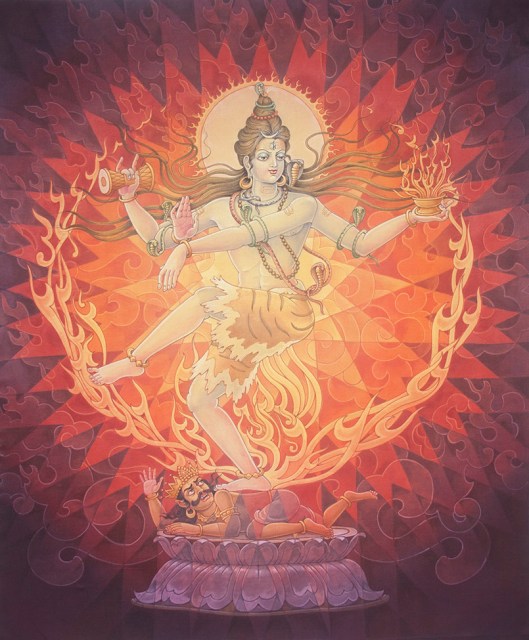
Dancers are the messengers of the gods. ~Martha Graham

15 Tuesday Oct 2019
Posted in Dance, Uncategorized
≈ Comments Off on Dancers
Tags
Dancers are the messengers of the gods. ~Martha Graham
14 Monday Oct 2019
14 Monday Oct 2019
From the NPR series, What’s in a song:
For the past several years, a group of friends has gathered every week in the living room of a suburban home in Logan, Utah, to sing long-forgotten songs. It’s a fun way to spend the evening, but it’s also therapy for a dear friend.
Until several years ago, Barre Toelken was a folklorist at Utah State University. He’d spent much of his life preserving sea shanties and other antique songs, but then he had a stroke and was forced to retire.
“I used to know 800 songs,” Toelken says. “I had this stroke, and I had none of these songs left in my head. None of them were left.”
But, Toelken says, he soon discovered that, with a little positive reinforcement, he could remember some of the forgotten music after all.
“A little bit at a time, I realized I still had the songs in my head,” he says. “So now I meet with this group of friends once a week a week, and we sing.
“This group doesn’t use any musical instruments, because I can’t play the guitar since the stroke hit me,” Toelken says. “And they did that as a sign of respect, I think. But they’ve all said how much they’ve learned about the songs since they quit using the guitar because instead of concentrating on their hand moving, they have to concentrate on the words.”
Hear the story.
12 Saturday Oct 2019
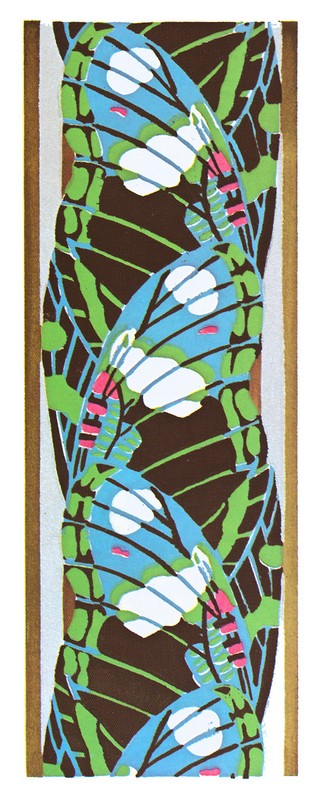
Posted by RichardB | Filed under Seguy Art Deco Designs
≈ Comments Off on Seguy Art Deco Designs 123
12 Saturday Oct 2019

Posted by RichardB | Filed under Coloring Pages
≈ Comments Off on English Setter-Coloring Page
11 Friday Oct 2019
Tags
It’s no secret that stress increases your susceptibility to health problems, and it also impacts your ability to solve problems and be creative. But methods to prevent associated risks and effects have been less clear – until now.
Published in PLOS ONE, new research from Carnegie Mellon University provides the first evidence that self-affirmation can protect against the damaging effects of stress on problem-solving performance. Understanding that self-affirmation – the process of identifying and focusing on one’s most important values – boosts stressed individuals’ problem-solving abilities will help guide future research and the development of educational interventions.
“An emerging set of published studies suggest that a brief self-affirmation activity at the beginning of a school term can boost academic grade-point averages in underperforming kids at the end of the semester. This new work suggests a mechanism for these studies, showing self-affirmation effects on actual problem-solving performance under pressure,” said J. David Creswell, assistant professor of psychology in CMU’s Dietrich College of Humanities and Social Sciences.
Because previous research indicated that self-affirmation may be an effective stress management approach, Creswell and his research team had college students rank-order a set of values (e.g., art, business, family and friends) in terms of their personal importance, and indicate their levels of chronic stress. Participants randomly assigned to a self-affirmation condition were asked to write a couple of sentences about why their number one ranked value was important (a standard self-affirmation exercise). All participants then had to complete a challenging problem-solving task under time pressure, which required creativity in order to generate correct solutions.
The results showed that participants who were under high levels of chronic stress during the past month had impaired problem-solving performance. In fact, they solved about 50 percent fewer problems in the task. But notably, this effect was qualified by whether participants had an opportunity to first complete the self-affirmation activity. Specifically, a brief self-affirmation was effective in eliminating the deleterious effects of chronic stress on problem-solving performance, such that chronically stressed self-affirmed participants performed under pressure at the same level as participants with low chronic stress levels.
“People under high stress can foster better problem-solving simply by taking a moment beforehand to think about something that is important to them,” Creswell said. “It’s an easy-to-use and portable strategy you can roll out before you enter that high pressure performance situation.
11 Friday Oct 2019
10 Thursday Oct 2019
Posted in Mother Teresa, Uncategorized
≈ Comments Off on small things
09 Wednesday Oct 2019
Posted in creative arts therapy, Dance Movement Therapy, Health, Mental Health, Relaxation, Stress
≈ Comments Off on Stress and movement
Tags
Stress can be indicated when a person becomes stuck/frozen or stopped in a bodily movement that can be described as either gestural, ( movements isolated to parts or part of the body) or postural ( movements carried constantly through the whole body). When there is a continuous flow of movement from gesture to posture and vice versa than the person is considered moving in balance and not not indicated to be in stress. one example of this is something that has come up in the last 20 years of leading stress reduction exercises with groups. I ask the participants how they know they are stressed out and the top answers are:
I notice I am gripping the steering wheel- I notice I am making a fist- I am clenching my teeth-I am clenching my butt.
Each one of these actions is a frozen gesture and they generally use the most “force”, muscle, blood flow of any other component of the body while they are active. Think about it, if you clench your fist the blood flow increases due to the sudden contraction of the muscles, a part of your attention is brought to the area because its being engaged, the rest of the body begins to respond to the clenched fist starting with the arm, shoulders, spine, abdominal muscles and so on ad so on. Suddenly your attention increases to the area dramatically and you realize; “oh I’m clenching my fist….”
The first step to releasing this body stress is the breath. When stressed we tend to hold our breath and/or it becomes shallow breathing. Taking a big breath in and a big breath out begins to increase the oxygen to the brain (and the rest if the body). That big breath also automatically signals to the body on a primal level that the stressor is less and the body begins to relax its muscular contractions. Also when we consciously are taking in a big breath we are exerting voluntary control over our bodies which is the opposite of the stress response which is a involuntary response. This voluntary and controlled breath also signals to the brain on a primal level that the stressor is lessen, resulting in the muscles lessening their contradiction.
Of course simply breathing does not seem like much of an answer for someone who experiences chronic stress/anxiety. But it is one more tool that one can use. Like mindfulness, visualizations, and other techniques, breathing is something that needs to be practiced and the more you practice the more effective it becomes.
09 Wednesday Oct 2019
Posted in Handout, Meditation, mindfulness, Relaxation, Wellness
≈ Comments Off on Relaxation

Currently, there is some scientific evidence that relaxation techniques may be an effective part of an overall treatment plan for some disorders, including:
Relaxation involves practice and willingness to fully engage in the process of relaxing. Stay tuned for some great relaxing tools.
08 Tuesday Oct 2019
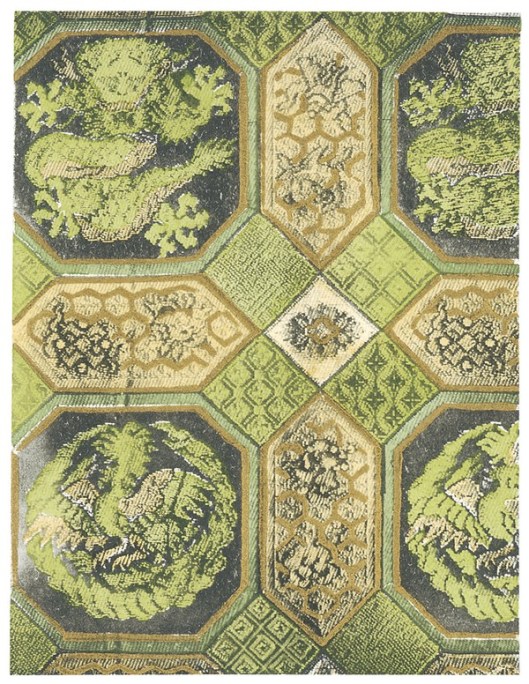
Posted by RichardB | Filed under Japanese Textile Designs
≈ Comments Off on Japanese Textile Designs 118
07 Monday Oct 2019
Posted in Music
≈ Comments Off on Anoushka Shankar recorded Live @ Festival Les Nuits de Fourviere, France
Tags
07 Monday Oct 2019
Posted in Creativity, learn, positive, YouTube
≈ Comments Off on Julie Burstein: 4 lessons in creativity
Tags
05 Saturday Oct 2019
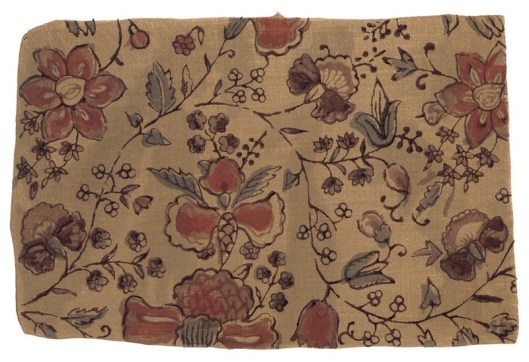
Posted by RichardB | Filed under Japanese Textile Designs
≈ Comments Off on Japanese Textile Designs 135
05 Saturday Oct 2019
04 Friday Oct 2019
Tags
Creativity involves breaking out of established patterns in order to look at things in a different way. Edward de Bono

04 Friday Oct 2019
Posted in Dance Movement Therapy, Therapy
≈ Comments Off on Dance Movement Therapy
Dance Movement Therapy is a creative arts therapy rooted in the expressive nature of dance. Since dance/movement comes from the body it is considered the most fundamental of the arts and is a direct expression (and experience) of the self. Dance/movement is a basic form of authentic communication, and as such it is an especially effective medium for therapy.
 Dance/movement therapists (R-DMT or BC-DMT) work with individuals of all ages, groups and families in a wide variety of settings. They focus on helping their clients improve self-esteem and body image, develop effective communication skills and relationships, expand their movement vocabulary, gain insight into patterns of behavior, as well as create new options for coping with problems. Movement is the primary medium DMT’s use for observation, assessment, research, therapeutic interaction, and interventions.
DMT’s work in settings that include psychiatric and rehabilitation facilities, schools, nursing homes, drug treatment centers, counseling centers, medical facilities, crisis centers, and wellness and alternative health care centers.
03 Thursday Oct 2019
02 Wednesday Oct 2019
Posted in Addiction, Prescriptions, Wellness
≈ Comments Off on N.H. Ranks High In Prescriptions For Addictive Painkillers
New Hampshire doctors are among the nation’s most prolific prescribers of Oxycontin and other opioids, according to a government report released Tuesday that analyzed the state-by-state use of highly addictive painkillers.
The study by the Centers for Disease Control ranked the Granite State third, behind Maine and Delaware, for per-capita prescriptions of Oxycontin, fentanyl and other long-acting opioids in 2012, even as the state ranked relatively low – 39th – for overall opioid prescribing. Read more HERE
02 Wednesday Oct 2019
Posted in Meditation, mindfulness, Wellness
≈ Comments Off on What is Mindfulness?
Tags
What is Mindfulness?
Mindfulness is a concentrated state of awareness that can help us see and respond to situations with clarity and without getting carried away by emotions or the constant chatter in our heads. Mindfulness enables us to:
· Better manage tension and stress
· Enhance objectivity, mental focus
· Communicate and make decisions more effectively
· Improve productivity
· Quiet’s noise in the mind
Meditation
Meditation is the tool we use to cultivate mindfulness. With meditation, you intentionally pay attention to a particular object as a way to strengthen concentration. There are thousands of meditative techniques: Tai Chi, yoga, focusing on the breath and using a mantra are all examples. People often think that meditating “correctly” means clearing all thought from the mind. This is a myth. The mind never stops thinking – it’s when we get caught up in our thoughts that we lose mindfulness. By witnessing thoughts, allowing them to pass, and returning to your chosen object of focus, you can actually build the muscle of concentration. Think of meditation as a fitness routine for the mind.
Are there other benefits to mindfulness?
In addition to boosting brain power, numerous research studies have shown significant physical benefits including:
· Reduced blood pressure
· Lowered cholesterol levels
· Enhanced immune function
· Reduced headache, migraine, back pain
· Improved respiratory function
Mindfulness does not require a particular set of beliefs in order to learn and practice – it is a quality of mind, accessible and available to all.
Mindfulness allows us to live every moment fully without the filters of bias, judgment or emotional reaction.
Mindfulness helps the body cope with physical challenges such as headaches, back pain and even heart disease.
Mindfulness keeps us from reacting too quickly – it helps increase the gap between impulse and action.



 RichardbBrunner