Brain Map
28 Thursday May 2020
Posted in brain, mental health, research

28 Thursday May 2020
Posted in brain, mental health, research
09 Thursday Apr 2020
Do you know what the attributes of your right and left sides of your brain? Listed below are the common elements of left and right brain hemisphere’s. Plus go here to take the left/right side brain test to see which side may be dominant.
Left Hemisphere – Rational
Responds to verbal instructions
Problem solves by logically and sequentially looking at the parts of things
Looks at differences
Is planned and structured
Prefers established, certain information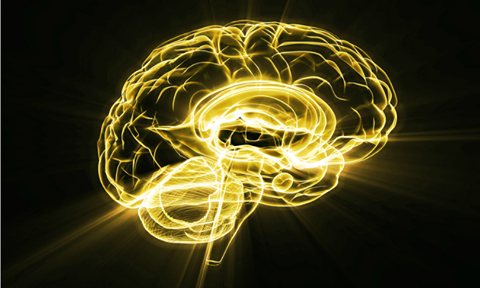
Prefers talking and writing
Prefers multiple choice tests
Controls feelings
Prefers ranked authority structures
Right Hemisphere – Intuitive
Responds to demonstrated instructions
Problem solves with hunches, looking for patterns and configurations
Looks at similarities
Is fluid and spontaneous
Prefers elusive, uncertain information
Prefers drawing and manipulating objects
Prefers open ended questions
Free with feelings
Prefers collegial authority structures
It seems that lots of folks have emailed me about all sorts of other left/right side brain tests/quizzes online. Here are the top 2 tests.
Hemispheric Dominance Inventory Test: This test has 18 questions and you choice between 2 answers. I like the questions they seem interesting and thought provoking.
Right Brain vs Left Brain Creativity Test: This test of 54 questions is multiple choice with 4 choices and all of the questions are on one page like the test above. Some repeating of questions, which is fairly standard in personality type tests.
03 Tuesday Mar 2020
Posted in Meditation, mindfulness
≈ Comments Off on Meditation for as short as 8 weeks can change your brain
Tags
 Participants in the study spent close to a half-hour every day meditating or practicing some other mindfulness exercise (notable because most people associate meditation with sitting and thinking quietly, and that’s not the only type of exercise done in the study) for about eight weeks. They got MRIs of their brains before and after the eight week exercise, and when the study was over, many of the study’s 16 participants showed significant changes in the areas of the brain associated with behavior, memory, and stress. For more click the link below.
http://lifehacker.com/5989078/how-meditating-for-eight-weeks-can-boost-your-brain
14 Tuesday Jan 2020
Posted in Health, Meditation, mindfulness, Wellness, youtube
≈ Comments Off on Mindfulness with Jon Kabat-Zinn
Tags
14 Wednesday Aug 2019
Posted in brain, breath, Creativity, emotions, Health, pain management, Relaxation, Therapy
≈ Comments Off on Yoga may boost your brain power
Yogis may be enjoying a surprising benefit when they unroll their mats and strike a pose. A new study finds that just 20 minutes of hatha yoga stimulates brain function.
Researchers from the University of Illinois at Urbana-Champaign enlisted 30 subjects to take tests of working memory and inhibitory control, two measures of brain function associated with the ability to focus, retain, and use new information, the researchers said.
Subjects who took a single, 20-minute yoga session were significantly faster and more accurate on their tests than subjects who walked or jogged on a treadmill for 20 minutes.
Participants on the treadmill exercised with the goal of maintaining 60 to 70 percent of their maximum heart rate throughout the exercise session. “This range was chosen to replicate previous findings that have shown improved cognitive performance in response to this intensity,” the researchers said.
“Yoga is an ancient Indian science and way of life that includes not only physical movements and postures but also regulated breathing and meditation,” said study lead Neha Gothe. “The practice involves an active attentional or mindfulness component but its potential benefits have not been thoroughly explored.”
Subjects who practiced yoga performed a 20-minute sequence of seated, standing, and supine yoga postures, with the class ending in a meditative posture and deep breathing.
“It appears that following yoga practice, the participants were better able to focus their mental resources, process information quickly, more accurately and also learn, hold and update pieces of information more effectively than after performing an aerobic exercise bout,” Gothe said.
“The breathing and meditative exercises aim at calming the mind and body and keeping distracting thoughts away while you focus on your body, posture or breath,” she said. “Maybe these processes translate beyond yoga practice when you try to perform mental tasks or day-to-day activities.”
Findings, announced June 5, appear in the Journal of Physical Activity and Health.
A separate study published last month finds that twice-weekly yoga sessions can reduce high blood pressure. In the study, researchers led by Dr. Debbie Cohen of the University of Pennsylvania tracked 58 women and men, aged 38 to 62, for 24 weeks.
Another study published earlier this year in the journal Frontiers in Psychiatry found that the practice may soothe depression and help sleep problems.
Read more:A 20-minute yoga session may boost your brain power – The Denver Post
31 Wednesday Jul 2019
Posted in Health, Meditation, mindfulness, Wellness, YouTube
≈ Comments Off on Mindfulness with Jon Kabat-Zinn
Tags
19 Friday Jul 2019
Posted in brain, Depression, mental health, Neuroscience, Uncategorized
Tags
Depression strikes some 35 million people worldwide, according to the World Health Organization, contributing to lowered quality of life as well as an increased risk of heart disease and suicide. Treatments typically include psychotherapy, support groups and education as well as psychiatric medications. SSRIs, or selective serotonin reuptake inhibitors, currently are the most commonly prescribed category of antidepressant drugs in the U.S., and have become a household name in treating depression.
The action of these compounds is fairly familiar. SSRIs increase available levels of serotonin, sometimes referred to as the feel-good neurotransmitter, in our brains. Neurons communicate via neurotransmitters, chemicals which pass from one nerve cell to another. A transporter molecule recycles unused transmitter and carries it back to the pre-synaptic cell. For serotonin, that shuttle is called SERT (short for “serotonin transporter”). An SSRI binds to SERT and blocks its activity, allowing more serotonin to remain in the spaces between neurons. Yet, exactly how this biochemistry then works against depression remains a scientific mystery.
In fact, SSRIs fail to work for mild cases of depression, suggesting that regulating serotonin might be an indirect treatment only. “There’s really no evidence that depression is a serotonin-deficiency syndrome,” says Alan Gelenberg, a depression and psychiatric researcher at The Pennsylvania State University. “It’s like saying that a headache is an aspirin-deficiency syndrome.” SSRIs work insofar as they reduce the symptoms of depression, but “they’re pretty nonspecific,” he adds.
Now, research headed up by neuroscientists David Gurwitz and Noam Shomron of Tel Aviv University in Israel supports recent thinking that rather than a shortage of serotonin, a lack of synaptogenesis (the growth of new synapses, or nerve contacts) and neurogenesis (the generation and migration of new neurons) could cause depression. In this model lower serotonin levels would merely result when cells stopped making new connections among neurons or the brain stopped making new neurons. So, directly treating the cause of this diminished neuronal activity could prove to be a more effective therapy for depression than simply relying on drugs to increase serotonin levels.
Evidence for this line of thought came when their team found that cells in culture exposed to a 21-day course of the common SSRI paroxetine (Paxil is one of the brand names) expressed significantly more of the gene for an integrin protein called ITGB3 (integrin beta-3). Integrins are known to play a role in cell adhesion and connectivity and therefore are essential for synaptogenesis. The scientists think SSRIs might promote synaptogenesis and neurogenesis by turning on genes that make ITGB3 as well as other proteins that are involved in these processes. A microarray, which can house an entire genome on one laboratory slide, was used to pinpoint the involved genes. Of the 14 genes that showed increased activity in the paroxetine-treated cells, the gene that expresses ITGB3 showed the greatest increase in activity. That gene,ITGB3, is also crucial for the activity of SERT. Intriguingly, none of the 14 genes are related to serotonin signaling or metabolism, and, ITGB3 has never before been implicated in depression or an SSRI mode of action.
These results, published October 15 2013 in Translational Psychiatry, suggest that SSRIs do indeed work by blocking SERT. But, the bigger picture lies in the fact that in order to make up for the lull in SERT, more ITGB3 is produced, which then goes to work in bolstering synaptogenesis and neurogenesis, the true culprits behind depression. “There are many studies proposing that antidepressants act by promoting synaptogenesis and neurogenesis,” Gurwitz says. “Our work takes one big step on the road for validating such suggestions.”

The research is weakened by its reliance on observations of cells in culture rather than in actual patients. The SSRI dose typically delivered to a patient’s brain is actually a fraction of what is swallowed in a pill. “Obvious next steps are showing that what we found here is indeed viewed in patients as well,” Shomron says.
The study turned up additional drug targets for treating depression—two microRNA molecules, miR-221 and miR-222. Essentially, microRNAs are small molecules that can turn a gene off by binding to it. The microarray results showed a significant decrease in the expression of miR-221 and miR-222, both of which are predicted to target ITGB3, when cells were exposed to paroxetine. So, a drug that could prevent those molecules from inhibiting the production of the ITGB3 protein would arguably enable the growth of more new neurons and synapses. And, if the neurogenesis and synaptogenesis hypothesis holds, a drug that specifically targeted miR-221 or miR-222 could bring sunnier days to those suffering from depression.
10 Wednesday Jul 2019
Posted in brain, create, Creativity
≈ Comments Off on Problem solving
Tags
Characteristics that typically distinguish insight from “noninsight” solutions, people feel stuck before insight strikes; they can’t explain how they solved the problem and might say they were not even thinking about it; the solution appears suddenly and is immediately seen as correct. But are the neural processes involved in arriving at a solution through insight actually distinct from those related to more mundane problem-solving?
Recent findings suggest that people think about solutions, at an unconscious level, prior to solving insight problems, and that the right cerebral hemisphere (RH) appears to be preferentially involved. Jung-Beeman et al. predicted that a particular region of the RH, called the anterior superior temporal gyrus (aSTG), is likely involved in insight because it seems critical for tasks that require recognizing broad associative semantic relationships—exactly the type of process that could facilitate reinterpretation of problems and lead to insight.
Problem-solving involves a complex cortical network to encode, retrieve, and evaluate information, but these results show that solving verbal problems with insight requires at least one additional component. Further, the fact that the effect occurred in RH aSTG suggests what that process may be: integration of distantly related information. Distinct neural processes, the authors conclude, underlie the sudden flash of insight that allows people to “see connections that previously eluded them.”
19 Wednesday Jun 2019
Posted in brain, Exercise, mental health, research
≈ Comments Off on Exercise reorganizes the brain to be more resilient to stress
Physical activity reorganizes the brain so that its response to stress is reduced and anxiety is less likely to interfere with normal brain function, according to a research team based at Princeton University.
The researchers report in the Journal of Neuroscience that when mice allowed to exercise regularly experienced a stressor — exposure to cold water — their brains exhibited a spike in the activity of neurons that shut off excitement in the ventral hippocampus, a brain region shown to regulate anxiety.
These findings potentially resolve a discrepancy in research related to the effect of exercise on the brain — namely that exercise reduces anxiety while also promoting the growth of new neurons in the ventral hippocampus. Because these young neurons are typically more excitable than their more mature counterparts, exercise should result in more anxiety, not less. The Princeton-led researchers, however, found that exercise also strengthens the mechanisms that prevent these brain cells from firing.
08 Wednesday May 2019
Posted in Creativity, emotions, grounding, Health, Meditation, mindfulness, Wellness, YouTube
≈ Comments Off on Meditation has Long-term Effects on the Brain
Tags
According to scientists from Harvard and Boston University, meditation produces enduring changes in emotional processing in the brain according to an article published in November of 2012 in the journal Frontiers in Human Neuroscience.
Researchers trained people with one of two different types of meditation, mindful meditation and compassionate meditation over an 8 week period. They measured activity in the brain using functional MRIs 3 weeks before the study and at 3 weeks after and noted what happened to areas of the brain related to compassion. They found the those people who learned compassionate meditation had a different and more loving response 3 weeks after the course even when not meditating.
10 Wednesday Apr 2019
Posted in brain, creative arts therapy, kids, Sensory
≈ Comments Off on A Child’s View of Sensory Processing
19 Tuesday Feb 2019
Posted in brain, emotions, Self Esteem, Self-Care
≈ Comments Off on The Brain and Emotional Self-Control
Tags
Different brain areas are activated when we choose to suppress an emotion, compared to when we are instructed to inhibit an emotion, according a new study from the UCL Institute of Cognitive Neuroscience and Ghent University.
In this study, published in Brain Structure and Function, the researchers scanned the brains of healthy participants and found that key brain systems were activated when choosing for oneself to suppress an emotion. They had previously linked this brain area to deciding to inhibit movement.
“This result shows that emotional self-control involves a quite different brain system from simply being told how to respond emotionally,” said lead author Dr Simone Kuhn (Ghent University).
In most previous studies, participants were instructed to feel or inhibit an emotional response. However, in everyday life we are rarely told to suppress our emotions, and usually have to decide ourselves whether to feel or control our emotions.
In this new study the researchers showed fifteen healthy women unpleasant or frightening pictures. The participants were given a choice to feel the emotion elicited by the image, or alternatively to inhibit the emotion, by distancing themselves through an act of self-control.

The researchers used functional magnetic resonance imaging (fMRI) to scan the brains of the participants. They compared this brain activity to another experiment where the participants were instructed to feel or inhibit their emotions, rather than choose for themselves.
Different parts of the brain were activated in the two situations. When participants decided for themselves to inhibit negative emotions, the scientists found activation in the dorso-medial prefrontal area of the brain. They had previously linked this brain area to deciding to inhibit movement.
In contrast, when participants were instructed by the experimenter to inhibit the emotion, a second, more lateral area was activated.
“We think controlling one’s emotions and controlling one’s behaviour involve overlapping mechanisms,” said Dr Kuhn.
“We should distinguish between voluntary and instructed control of emotions, in the same way as we can distinguish between making up our own mind about what do, versus following instructions.”
Regulating emotions is part of our daily life, and is important for our mental health. For example, many people have to conquer fear of speaking in public, while some professionals such as health-care workers and firemen have to maintain an emotional distance from unpleasant or distressing scenes that occur in their jobs.
Professor Patrick Haggard (UCL Institute of Cognitive Neuroscience) co-author of the paper said the brain mechanism identified in this study could be a potential target for therapies.
“The ability to manage one’s own emotions is affected in many mental health conditions, so identifying this mechanism opens interesting possibilities for future research.
“Most studies of emotion processing in the brain simply assume that people passively receive emotional stimuli, and automatically feel the corresponding emotion. In contrast, the area we have identified may contribute to some individuals’ ability to rise above particular emotional situations.
“This kind of self-control mechanism may have positive aspects, for example making people less vulnerable to excessive emotion. But altered function of this brain area could also potentially lead to difficulties in responding appropriately to emotional situations.”
15 Friday Feb 2019
Posted in brain, create, Creativity, YouTube
≈ Comments Off on Your brain’s creativity
Tags
31 Friday Aug 2018
Posted in Uncategorized
≈ Comments Off on Scientist Seeks Neural And Biological Basis For Creativity, Beauty And Love
One of the world’s leading neuroscientists is to search for the neural and biological basis for creativity, beauty and love after receiving over £1 million from the Wellcome Trust, the UK’s largest medical research charity. The research will bring together science, the arts and philosophy to answer fundamental questions about what it means to be human.
Professor Semir Zeki from University College London (UCL) has received a Wellcome Trust Strategic Award to establish a programme of research in the new field of “neuroaesthetics”. The research will build on his previous work into the neural mechanisms behind beauty and love. 
Together with Professor Ray Dolan, Director of the Wellcome Trust Centre for Neuroimaging at UCL, Professor Zeki will look at questions that have been debated for millennia by writers, artists and philosophers and yet have been little studied by neurobiologists: Can we measure beauty objectively” How are beauty and love related” What does it mean to be happy”
“All human societies place a high premium on art and the pursuit of beauty,” says Professor Zeki. “We all value and reward creativity. We all want to pursue happiness. But what do these entities mean in concrete, neurobiological terms” We hope to address these issues experimentally. The results will not only increase our knowledge about the workings of the human brain but will also give deep insights into human nature and how we view ourselves.”
Neuroesthetics aims to illuminate the brain’s workings through its cultural products in a similar way to how neuroscientists study the brain through malfunctions caused by disease. However, Professor Zeki believes its impact may be much wider.
“The new field of neuroaesthetics will teach biologists to use the products of the brain in art, music, literature and mathematics to better understand how the brain functions,” he says. “Success will encourage an interdisciplinary approach to other fields, such as the study of economics or jurisprudence in terms of brain activity. This will have a deep impact on social issues.”
Using Wellcome Trust funding, Professor Zeki hopes to attract students and researchers from the sciences, arts and humanities in truly interdisciplinary research. Their work will be overseen by an Advisory Board that will include author AS Byatt, physician, opera producer and broadcaster Sir Jonathan Miller and Dr. Deborah Swallow, Director of the Courtauld Institute of Art, London.
“Professor Zeki is a Renaissance Man for the twenty-first century,” says Professor Richard Morris, Head of Neurosciences and Mental Health at the Wellcome Trust. “His research sees no boundaries between science and the arts and humanities and will provide an exciting insight in issues that strike at the heart of what it is to be human.”
 RichardbBrunner