• Home
  • Music
  • About
  • Contact
  • CreativeTherapyTools.com

RichardbBrunner

~ creative arts therapist

RichardbBrunner

Tag Archives: breathe

breath

11 Wednesday Mar 2020

Posted by RichardB in Gayle Brandeis

≈ Comments Off on breath

Tags

breath, breathe

“Come back to the heartbeat, the pulse, the rhythm we all walk to, regardless of nation or color. Come back to the breath – inhale, take the world deep into your lungs; exhale, give yourself back fully. This is what the body says: release the peace that lives within your skin.” Gayle Brandeis from, The Body Politic of Peace


cobra-s.jpg

Stress and movement

30 Thursday Jan 2020

Posted by RichardB in creative arts therapy, Dance Movement Therapy, Health, mental health, Relaxation, Stress

≈ Comments Off on Stress and movement

Tags

breathe, relax, relaxation, Stress, wellness

Stress can be indicated when a person becomes stuck/frozen or stopped in a bodily movement that can be described as either gestural, ( movements isolated to parts or part of the body) or postural ( movements carried constantly through the whole body). When  there is a continuous flow of movement from gesture to posture and vice versa than the person is considered moving in balance and not not indicated to be in stress. one example of this is something that has come up in the last 20 years of leading stress reduction exercises with groups. I ask the participants how they know they are stressed out and the top answers are:

I notice I am gripping the steering wheel- I notice I am making a fist- I am clenching my teeth-I am clenching my butt.

Signature:baed3687aecc9fc02b05e033f52ab04b5ac34144c6f0702c4e0cfe36f9d34041

Each one of these actions is a frozen gesture and they generally use the most “force”, muscle, blood flow of any other component of the body while they are active.  Think about it, if you clench your fist the blood flow increases due to the sudden contraction of the muscles, a part of your attention is brought to the area because its being engaged, the rest of the body begins to respond to the clenched fist starting with the arm, shoulders, spine, abdominal muscles and so on ad so on. Suddenly your attention increases to the area dramatically and you realize; “oh I’m clenching my fist….”

The first step to releasing this body stress is the breath. When stressed we tend to hold our breath and/or it becomes shallow breathing. Taking a big breath in and a big breath out begins to increase the oxygen to the brain (and the rest if the body). That big breath also automatically signals to the body on a primal level that the stressor is less and the body begins to relax its muscular contractions. Also when we consciously are taking in a big breath we are exerting voluntary control over our bodies which is the opposite of the stress response which is a involuntary response. This voluntary and controlled breath also signals to the brain on a primal level that the stressor is lessen, resulting in the muscles lessening their contradiction.

Of course simply breathing does not seem like much of an answer for someone who experiences chronic stress/anxiety. But it is one more tool that one can use. Like mindfulness, visualizations, and other techniques, breathing is something that needs to be practiced and the more you practice the more effective it becomes.

Stress and movement

09 Wednesday Oct 2019

Posted by RichardB in creative arts therapy, Dance Movement Therapy, Health, Mental Health, Relaxation, Stress

≈ Comments Off on Stress and movement

Tags

breathe, relax, relaxation, Stress, wellness

Stress can be indicated when a person becomes stuck/frozen or stopped in a bodily movement that can be described as either gestural, ( movements isolated to parts or part of the body) or postural ( movements carried constantly through the whole body). When  there is a continuous flow of movement from gesture to posture and vice versa than the person is considered moving in balance and not not indicated to be in stress. one example of this is something that has come up in the last 20 years of leading stress reduction exercises with groups. I ask the participants how they know they are stressed out and the top answers are:

I notice I am gripping the steering wheel- I notice I am making a fist- I am clenching my teeth-I am clenching my butt.

Each one of these actions is a frozen gesture and they generally use the most “force”, muscle, blood flow of any other component of the body while they are active.  Think about it, if you clench your fist the blood flow increases due to the sudden contraction of the muscles, a part of your attention is brought to the area because its being engaged, the rest of the body begins to respond to the clenched fist starting with the arm, shoulders, spine, abdominal muscles and so on ad so on. Suddenly your attention increases to the area dramatically and you realize; “oh I’m clenching my fist….”

The first step to releasing this body stress is the breath. When stressed we tend to hold our breath and/or it becomes shallow breathing. Taking a big breath in and a big breath out begins to increase the oxygen to the brain (and the rest if the body). That big breath also automatically signals to the body on a primal level that the stressor is less and the body begins to relax its muscular contractions. Also when we consciously are taking in a big breath we are exerting voluntary control over our bodies which is the opposite of the stress response which is a involuntary response. This voluntary and controlled breath also signals to the brain on a primal level that the stressor is lessen, resulting in the muscles lessening their contradiction.

Of course simply breathing does not seem like much of an answer for someone who experiences chronic stress/anxiety. But it is one more tool that one can use. Like mindfulness, visualizations, and other techniques, breathing is something that needs to be practiced and the more you practice the more effective it becomes.

Yoga may boost your brain power

14 Wednesday Aug 2019

Posted by RichardB in brain, breath, Creativity, emotions, Health, pain management, Relaxation, Therapy

≈ Comments Off on Yoga may boost your brain power

Tags

brain, breathe, health, research, yoga

Yogis may be enjoying a surprising benefit when they unroll their mats and strike a pose. A new study finds that just 20 minutes of hatha yoga stimulates brain function.

Researchers from the University of Illinois at Urbana-Champaign enlisted 30 subjects to take tests of working memory and inhibitory control, two measures of brain function associated with the ability to focus, retain, and use new information, the researchers said.

Subjects who took a single, 20-minute yoga session were significantly faster and more accurate on their tests than subjects who walked or jogged on a treadmill for 20 minutes.
Participants on the treadmill exercised with the goal of maintaining 60 to 70 percent of their maximum heart rate throughout the exercise session. “This range was chosen to replicate previous findings that have shown improved cognitive performance in response to this intensity,” the researchers said.1472891_10151996608469691_438298404_n

“Yoga is an ancient Indian science and way of life that includes not only physical movements and postures but also regulated breathing and meditation,” said study lead Neha Gothe. “The practice involves an active attentional or mindfulness component but its potential benefits have not been thoroughly explored.”

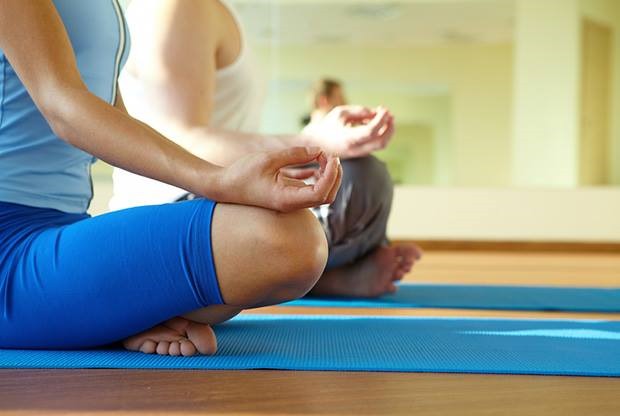
Subjects who practiced yoga performed a 20-minute sequence of seated, standing, and supine yoga postures, with the class ending in a meditative posture and deep breathing.

“It appears that following yoga practice, the participants were better able to focus their mental resources, process information quickly, more accurately and also learn, hold and update pieces of information more effectively than after performing an aerobic exercise bout,” Gothe said.

“The breathing and meditative exercises aim at calming the mind and body and keeping distracting thoughts away while you focus on your body, posture or breath,” she said. “Maybe these processes translate beyond yoga practice when you try to perform mental tasks or day-to-day activities.”

Findings, announced June 5, appear in the Journal of Physical Activity and Health.
A separate study published last month finds that twice-weekly yoga sessions can reduce high blood pressure. In the study, researchers led by Dr. Debbie Cohen of the University of Pennsylvania tracked 58 women and men, aged 38 to 62, for 24 weeks.

Another study published earlier this year in the journal Frontiers in Psychiatry found that the practice may soothe depression and help sleep problems.

Read more:A 20-minute yoga session may boost your brain power – The Denver Post

instagram

Follow RichardbBrunner on WordPress.com
  • Tumblr
  • YouTube

Create a free website or blog at WordPress.com.

Privacy & Cookies: This site uses cookies. By continuing to use this website, you agree to their use.
To find out more, including how to control cookies, see here: Cookie Policy
  • Subscribe Subscribed
    • RichardbBrunner
    • Join 491 other subscribers
    • Already have a WordPress.com account? Log in now.
    • RichardbBrunner
    • Subscribe Subscribed
    • Sign up
    • Log in
    • Report this content
    • View site in Reader
    • Manage subscriptions
    • Collapse this bar
 

Loading Comments...