“Join us for a dynamic panel discussion where experts explore the contributions of Indigenous practices to modern agriculture. The conversation highlights traditional ecological knowledge, addresses gaps in food access, and proposes strategies to promote food sovereignty. Panelists examine how Indigenous wisdom and contemporary innovation create equitable, sustainable food systems, amplify Indigenous voices, and inspire collaboration for a resilient future.”
“Hilton Koppe was a beloved country GP for 30 years before an unexpected health crisis of his own forced him to reassess everything (R)
Hilton Koppe grew up knowing his parents wanted him to become a doctor and so when he got the marks to make it into medicine, they were overjoyed.
By the time he was 30, he’d started working as a country GP. Hilton then became a beloved local doctor in Northern NSW, and he worked there for more than three decades.
But a few years ago, Hilton’s own health suddenly went awry. He started experiencing constant neck pain, and then the side of his face went numb.
He was sent him for an MRI, which revealed nothing.
But then Hilton’s own GP gave him an unexpected diagnosis of Post Traumatic Stress Disorder, related in part to his work as a doctor.
This news up-ended almost everything about Hilton’s life.
This episode of Conversations explores medicine, Australia’s medical system, Judaism, migration, post WW2 migration, Jewish families, Australian multi culturalism, family dynamics, health, wellbeing, PTSD, trauma, mental health diagnosis, South Africa, fascism.
“Stanford Medicine researchers tackle one of the most common health problems for women as they age. In a joint study with University of California, San Francisco, researchers reveal how low-impact yoga and exercise can help women take control over their urinary continence.”
The Creative Life is full of new possibilities, discoveries, exploration, experimentation, self-expression, and invention. It’s a habit, a way of being, a style of existing. But is the Creative Life full of well-being?
Depends on how you define well-being.
In recent years, psychologists have taken a deeper look at well-being. The traditional approach to well-being focuses on hedonic pleasures and positive emotions. However, while positive emotions often accompany happiness, the mere experience of positive emotions is not necessarily an indicator of happiness, and the presence of negative emotions doesn’t necessarily decrease one’s well-being. This deeper approach to well-being, often described as “eudaimonic well-being”, focuses on living life in a full and deeply satisfying way.
What are the six dimensions of eudaimonic well-being?:
Autonomy (“I have confidence in my opinions, even if they are contrary to the general consensus“)
Environmental mastery (“I am quite good at managing the many responsibilities of my daily life”)
Personal growth (“I think it is important to have new experiences that challenge how you think about yourself and the world”)
Positive relations with others (“People would describe me as a giving person, willing to share my time with others”)
Purpose in life (“Some people wander aimlessly through life, but I am not one of them”)
Self-acceptance (“I like most aspects of my life”)
“How can a healthy microbiome prevent disease? In this program, Dr. Sean Spencer talks about the vast microbial world that lives within our guts — known as the gut microbiome — and how it supports our health. He discusses the current evidence about how to nourish your microbiome to prevent and treat disease.” Recorded on 09/25/2024.
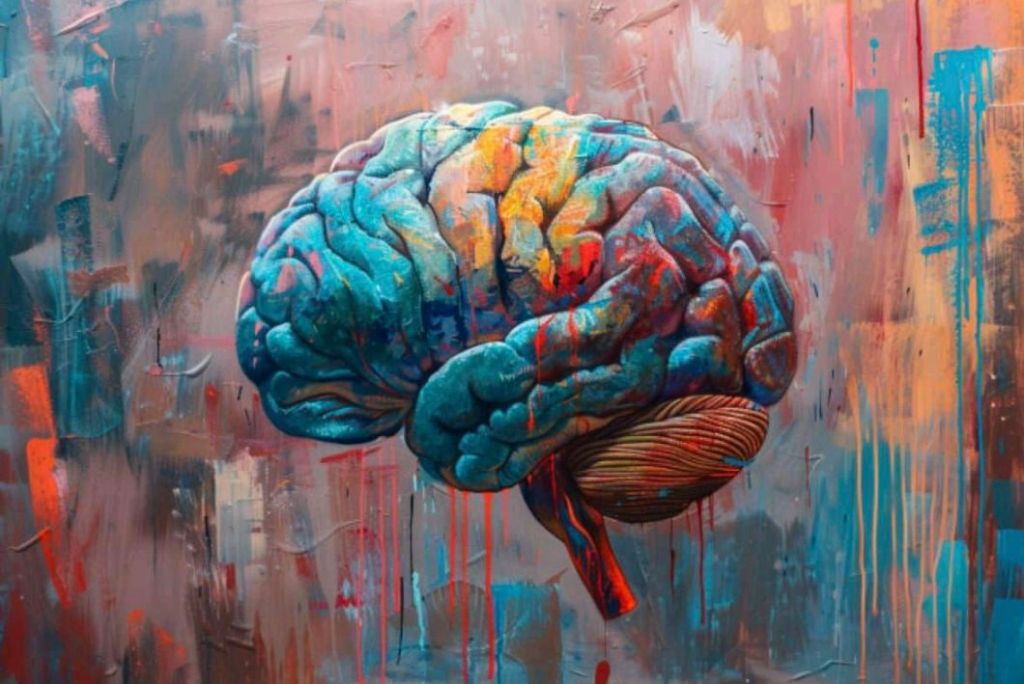
Meditation may physically alter regions of the brain
Harvard researchers at the Massachusetts General Hospital reported that the practice of mindfulness meditation can physically alter regions of the brain associated with memory, sense of self, empathy, and stress.
The study, published in January 2015, in “Psychiatry Research: Neuro-imaging” indicates that the brain’s gray matter may change as a result of meditation. “Although the practice of meditation is associated with a sense of peacefulness and physical relaxation, practitioners have long claimed that meditation also provides cognitive and psychological benefits that persist throughout the day,” said Sara Lazar, the study’s senior author. “This study demonstrates that changes in brain structure may underlie some of these reported improvements and that people are not just feeling better because they are spending time relaxing.” Researchers measured MR images of participants brains during the eight-week “Mindfulness-Based Stress Reduction” program, conducted by the University of Massachusetts Center for Mindfulness. Participants spent an average of 27 minutes in meditation during the program. The program was delivered through recorded audios and guided meditations.
Compared to measurements on MR scans of a control group who did not participate in the program, the participants’ brains showed an increase in gray-matter density in the hippocampus. The hippocampus is the region of the brain associated with learning, introspection, memory and awareness. There also was a decrease in gray-matter density in the amygdala, the region associated with anxiety and stress. However, the Insula, a region of the brain thought to be associated with self-awareness according to earlier research, remained unchanged, and the researchers hypothesize that participants may have to meditate for longer periods of time before any change is noticed in this region.
It has been noted that meditation can reduce stress but according to Britta Hölzel, one of the authors, “Other studies in different patient populations have shown that meditation can make significant improvements in a variety of symptoms, and we are now investigating the underlying mechanisms in the brain that facilitate this change.” The researchers believe that these findings of physiological change can pave the wave for a better understanding and treatment of stress-related disorders. The study was supported by the BBC, National Institutes of Health and the Mind and Life Institute.