Tags
Nature is infinitely creative. It is always producing the possibility of new beginnings. – Marianne Williamson


09 Friday Aug 2019
Posted in quote, Uncategorized
≈ Comments Off on Nature
Tags
Nature is infinitely creative. It is always producing the possibility of new beginnings. – Marianne Williamson
09 Friday Aug 2019
People who are exposed to secondhand marijuana smoke may feel a bit of the “high” that comes with using the drug, a new study finds. They may also feel unable to think clearly, and they may even have detectable levels of the drug in their urine or blood. But all of this happens only if they are exposed to marijuana smoke under severely unventilated conditions, the study found.
“If you’re going to breathe in enough passive cannabis smoke to feel high and potentially be slightly impaired, you could fail a drug test,” said Evan S. Herrmann, the study’s lead author and postdoctoral fellow in psychiatry and behavioral sciences at Johns Hopkins School of Medicine. “But this only happens under a very extreme situation.”
Cannabis is the world’s most commonly used illicit drug. It is often smoked in small, enclosed spaces with poor ventilation, according to the study.
Studies in the 1980s showed that such “social exposure” to pot smoke could trigger positive drug tests for cannabis’ main psychoactive ingredient, tetrahydrocannabinol (THC). But such studies had several limitations. They used marijuana that had much lower potency than the pot available today and they failed to account for normal levels of ventilation in rooms. They also did not examine how people may feel or behave after such exposures.
“This new study probes a question people have been wondering forever,” said Ziva Cooper, an assistant professor of clinical neurobiology at Columbia University, who was not involved in this research. “Do people actually get high from these ‘hot box’ effects? And if so, does it change your capabilities or cause you to fail a drug test?”
In the first study of its kind, Herrmann’s team recruited about 20 healthy people between the ages of 18 and 45, including some who smoked marijuana and some who didn’t use the drug. The researchers tested the participants’ blood, saliva, urine and hair samples for cannabis biomarkers, and then asked six smokers and six nonsmokers to relax in a Plexiglas and aluminum smoke chamber about the size of a dorm room. Participants underwent two separate sessions, each an hour long.
The researchers gave each of the six smokers 10 marijuana cigarettes, each containing 1 gram of high-potency weed, and instructed them to smoke at their leisure for the hour while the six non-smokers sat by their side in the chamber.
During one test session, the room’s ventilation system was switched on, allowing air to flow in and out at a standard office-building rate. In the other session, the researchers restricted the airflow in the chamber. After the 60 minutes, each participant completed a series of biological, cognitive and subjective surveys and tasks at regular intervals for up to 34 hours after exposure. [11 Odd Facts About Marijuana]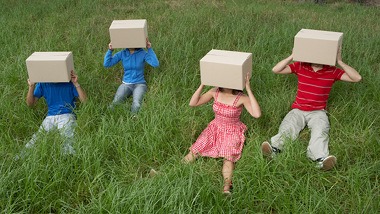
“Our results are pretty consistent with what we expected,” Herrmann said. The new findings confirm “it’s really hard to get a positive [drug test result] from passive smoke unless you’re in an extreme scenario,” he said.
Under the unventilated, “hot box” condition, the nonsmokers showed slight impairments on cognitive tests, reported feeling high, and had detectable levels of THC in their blood and urine for up to 22 hours post-exposure. Those in the ventilated condition had much lower levels of THC in their blood, did not feel impaired or high, and did not test positive for THC in their urine.
But the unventilated room is not representative of most real-life situations, the researchers said. “We modeled the worst-case scenario,” Herrmann said. “You are in an enclosed room for an hour with 15 grams of cannabis being smoked.”
Ideally, the study would have had a placebo group, in which nonsmokers were exposed to smoke without THC. This would have helped the researchers determine whether the feeling of being high was due to the marijuana or simply a placebo effect, from being exposed to smoke.
Still, “this study is really important because it adds to our limited knowledge of the direct effects of cannabis smoking and the potential dangers of second-hand smoke,” Cooper said.
Follow Live Science @livescience, Facebook & Google+. Originally published on Live Science.
08 Thursday Aug 2019
Posted in quote
≈ Comments Off on Worry
07 Wednesday Aug 2019
ADHD Drug Side Effects http://goo.gl/rjAKh ADHD is a mental “disorder” based only on a checklist of behaviors. It is not a disease.There is no medical ADHD test to prove any kid has ADHD, yet more than 4.5 million kids have been diagnosed and put on drugs such as Ritalin, Adderall and Concerta, which the U.S. DEA places in the same highly addictive category of drugs as cocaine, morphine and opium. According to the Center for Disease Control, boys are much more likely to be diagnosed “ADHD” than girls. The “checklist” for ADHD could fit all normal kid as there is no ADHD test – it is diagnosed solely by behaviors and literally includes such ridiculous criteria as the following: ” runs about or climbs excessively in situations when it is not appropriate” ” is often ‘on the go “acts as if driven by a motor” “blurts out answers” “is easily distracted” ” loses pencils or toys” “often doesn’t seem to listen”
To be perfectly clear — this is all that it takes to diagnoses a child with a ‘mental disorder’ of ADHD; a checklist of behaviors (the above is taken directly from the American Psychiatric Association’s Diagnostic and Statistical Manual of Mental Disorders (DSM), psychiatry’s billing bible. There are no blood tests, brain scans, chemical imbalance tests, X-rays or “genetic” factors to prove any child has a mental “illness” called ADHD. This is simply a list of child-like behaviors that psychiatrists clustered together, repackaged as a mental disorder and the result is a multi- billion dollar empire — the child labeling and drugging industry.
07 Wednesday Aug 2019
History, despite its wrenching pain, cannot be unlived, however, if faced with courage, need not be lived again. Maya Angelou

06 Tuesday Aug 2019
Posted in Psychology, Research, Wellness
≈ Comments Off on What we know about habits is #wrong
Tags
DESPITE the our intentions the reality is that often our gym memberships will lapse, chocolate will replace carrots and Candy Crush will edge out Moby Dick.
It’s not (only) that we’re undisciplined slugs. It’s that much of what we know — or think we know — about habits is wrong. Here’s a primer that might help keep you off the couch and on the treadmill.
MYTH 1 We fail to change our habits — or start good new ones — because we lack willpower.
Not really, said Wendy Wood, a professor of psychology and business at the University of Southern California. Willpower, she said, is more about looking at those yummy chocolate chip cookies and refusing them. A good habit ensures you’re rarely around those chocolate chip cookies in the first place.
To create or change a habit, you have to think much more about altering your environment and patterns of living than work on steeling your mind, Professor Wood said, because “behavior is very much a product of environment.”
Habits — at least good ones — exist so we don’t have to resist temptation all the time. Imagine if every morning you had a debate with yourself about eating cake or cereal for breakfast. Instead, most of us form the habit of eating something relatively healthy for breakfast, which bypasses the lure of the cake altogether.
That’s why it’s sometimes easiest to start or break a habit during a major transition. This may sound counterintuitive, but a new house, job or relationship breaks old patterns, said Gretchen Rubin, author of the forthcoming book, “Better Than Before: Mastering the Habits of Our Everyday Lives.”
“People say wait a few days to get settled, but don’t,” she said. “Start right away.”
MYTH 2 We fall back on bad habits when stressed. In fact, good habits persist even in times of high anxiety, Professor Wood said. A study of which Professor Wood was one of the co-authors found that students who already had unhealthy diets would eat junk food when stressed, but those who already had the habit of eating well — or of reading a newspaper or of going  to the gym — were just as likely to do that.
MYTH 3 It takes about 21 days to break or make a habit.
That number seems to have cropped up in the 1960s and somehow became “fact” with no real proof. But in 2009, researchers in Britain decided to take a deeper look by studying how long it took participants to learn new habits, such as eating fruit daily or going jogging. The average was 66 days.
But individuals’ times varied greatly, from 18 days to 245 days, depending on temperament and, of course, the task involved. It will most likely take far less time to get into the habit of eating an apple every afternoon than of practicing the piano for an hour a day.
MYTH 4 You need positive thinking to break or make a habit.
“We find positive fantasy is not helpful and may even be hurtful when trying to reach a desired future or fulfill a wish,” said Gabriele Oettingen, a professor of psychology at New York University and the University of Hamburg.
Over years of research, she discovered that people need to pair optimistic daydreams about the future with identifying and imagining the obstacles that prevent them from reaching that goal — something she calls mental contrasting.
Say you want to stop being a procrastinator. The first step is easy. Imagine how it will feel if your work is completed with plenty of time to spare, if you can sleep instead of pulling an all-nighter, said Professor Oettingen, author of “Rethinking Positive Thinking.”
But don’t just resolve to stop procrastinating. The second step is to identify what holds you back from changing yourself. Is it fear that you won’t succeed? Is it the adrenaline rush of frantically working at the last minute? Is it because of negative feelings toward a boss or teacher?
The mental contrasting needs to be in the right order. It’s important to “experience our dreams, then switch gears and mentally face reality,” Professor Oettingen said.
Doing it the opposite way — imagining the obstacles and then fantasizing about changing habits — doesn’t seem to work as well, research shows.
MYTH 5 Doing things by rote, or habit, isn’t good in most cases. It’s better to be mindful of everything we do.
Research shows that most people repeat about 40 percent of their activities almost every day.
“We only have so much room in our brain,” said Ian Newby-Clark, an associate professor of psychology at the University of Guelph in Canada. “It would be incredibly taxing if we had to mindfully plan every step of our day.” Habits free us up so we can think about other things.
And while some habits are objectively bad — smoking, say, or being consistently late — most are subjective. “Habits are only good or bad to the extent they’re consistent or inconsistent with your goals,” Professor Wood of U.S.C. said. It’s a bad habit when “it starts interfering with other goals you have.”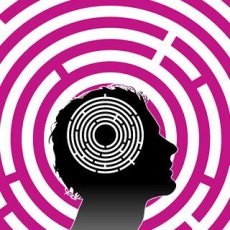
For example, many people said their resolution this year was to cut down the time they spend online.
But why? Because it’s an inherently bad thing to do? Or is it an obstacle to spending more time reading books or riding a bike or learning to knit?
After thinking about it, you may choose to spend less time on your computer or phone. Or you might decide it’s not so terrible in limited doses and shed the habit of feeling guilty about it.
MYTH 6 Everything in moderation.
“There’s a real difference among people about how easily they adapt to habits,” Ms. Rubin said. Some see habits as liberating; some see them as a trap. Some prefer to make a huge change all at once; others proceed step by step.
“I’m in the small minority that loves habits,” Ms. Rubin said, adding that she tends to find it easier to abstain from certain things altogether. For example, she eats no carbohydrates.
“People said I was doomed to failure, but it’s not true,” she said. But, she noted, “it’s a mistake to think the abstainer is more disciplined. For me it’s easier to be an abstainer than have to deliberate each time whether I can eat something or not. Others would go nuts if they abstain.”
That’s why you shouldn’t listen to people who tell you you’re doing it wrong if it works for you, she said.
Also, people shouldn’t fear that their habit will dissolve if they don’t practice it daily.
“If you lapse once or twice, you’re not ruined,” Professor Wood said. “That’s a misconception.”
And that leads to …
MYTH 7 Shame and guilt keep you on track.
No. People need to be kinder to themselves, showing self-compassion if they lapse, Ms. Rubin said. But it’s a fine balance between treating yourself kindly and making endless rationalizations and excuses.
“I might mindfully make an exception,” she said, such as choosing to eat a traditional Christmas cake every year. “But I’m not making excuses in the moment: I’ll hurt the hostesses’ feelings. You only live once. It’s the holidays.”
One last piece of advice: If you want to be in better shape, get a dog. Professor Wood said studies show dog owners have lower body mass indexes. But here’s the catch: That’s only true if you walk the animal.
05 Monday Aug 2019
Tags
05 Monday Aug 2019
03 Saturday Aug 2019
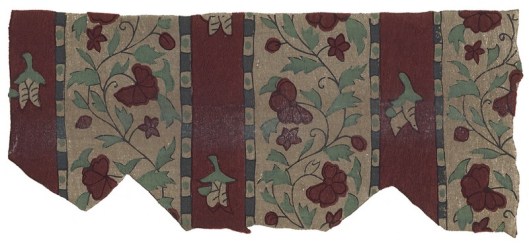
Posted by RichardB | Filed under Japanese Textile Designs
≈ Comments Off on Japanese Textile Designs 141
03 Saturday Aug 2019
02 Friday Aug 2019
Posted in creative arts therapy, photo, quote
≈ Comments Off on patterns
Tags
Creativity involves breaking out of established patterns in order to look at things in a different way. – Edward de Bono

02 Friday Aug 2019
Posted in diet
≈ Comments Off on You can smell and dress like a #burger
You can smell like a burger without having to work at a burger place for very low wages. For hamburger aficionados who want the smell even when they can’t get a bite, Burger King is putting the scent into a limited-edition fragrance. 
Burger King said Friday that the Whopper grilled beef burger-scented cologne will be sold only on April 1, and only in Japan.
Sounds too good to be true? It’s not an April Fools’ Day joke, though the company chose the date deliberately.
The limited “Flame Grilled” fragrance can be purchased at 5,000 yen (about $40), including the burger. There will be only 1,000 of them.
 Burger King said it hopes the scent would also seduce new grill-beef burger fans.
AND
Big Mac-themed line of clothes (store is now closed) and household accoutrements.
The product lineup includes matching thermal tops and bottoms, bed linens, wallpaper, a dog coat, a human raincoat and Wellington boots. Each one sports the same repeating Big Mac pattern on a white background. It’s not as subtle as poo emoji fabric, but at least it’s not as jarring at the outfit the Hamburglar wears.
01 Thursday Aug 2019
Creativity is piercing the mundane to find the marvelous. Bill Moyers

31 Wednesday Jul 2019
Posted in Health, Meditation, mindfulness, Wellness, YouTube
≈ Comments Off on Mindfulness with Jon Kabat-Zinn
Tags
31 Wednesday Jul 2019
Posted in Handout, Health, Meditation, mindfulness, Relaxation, Stress, Wellness
≈ Comments Off on Relaxation to Reduce Stress, Anxiety, & Depression
Tags
Here is another handout that I often give to clients/patients. I should add that I do all of the ideas in my handouts. No point talking about something if you can walk it too.
The body’s natural relaxation response is a powerful antidote to stress. Relaxation techniques such as deep breathing, visualization, progressive muscle relaxation, meditation, and yoga can help you activate this relaxation response. When practiced regularly, these activities lead to a reduction in your everyday stress levels and a boost in your feelings of joy and serenity. What’s more, they also serve a protective quality by teaching you how to stay calm and collected in the face of life’s curveballs.
| The relaxation response is not: | The relaxation response is: | |
| laying on the couch
sleeping being lazy |
a mentally active process that leaves the body relaxed
best done in an awake state trainable and becomes more profound with practice |
|
Starting a relaxation practice
A variety of relaxation techniques help you achieve the relaxation response. Those whose stress-busting benefits have been widely studied include deep breathing, progressive muscle relaxation, meditation, visualization, yoga, and tai chi. 
Learning the basics of these relaxation techniques isn’t difficult. But it takes practice to truly harness their stress-relieving power: daily practice, in fact. Most stress experts recommend setting aside at least 10 to 20 minutes a day for your relaxation practice. If you’d like to get even more stress relief, aim for 30 minutes to an hour.
Getting the most out of your relaxation practice
Set aside time in your daily schedule. The best way to start and maintain a relaxation practice is by incorporating it into your daily routine. Schedule a set time either once or twice a day for your practice. You may find that it’s easier to stick with your practice if you do it first thing in the morning, before other tasks and responsibilities get in the way.
Don’t practice when you’re sleepy. These techniques can relax you so much that they can make you very sleepy, especially if it’s close to bedtime. You will get the most out of these techniques if you practice when you’re fully awake and alert.
Choose a technique that appeals to you. There is no single relaxation technique that is best. When choosing a relaxation technique, consider your specific needs, preferences, and fitness level. The right relaxation technique is the one that resonates with you and fits your lifestyle.
Do you need alone time or social stimulation?
If you crave solitude, solo relaxation techniques such as meditation or progressive muscle relaxation will give you the power to quiet your mind and recharge your batteries. If you crave social interaction, a class setting will give you the stimulation and support you’re looking for. Practicing with others may also help you stay motivated.
30 Tuesday Jul 2019
Posted in Creativity, youtube
≈ Comments Off on How to Build Your Creative Confidence | David Kelley | TED Talks
29 Monday Jul 2019
29 Monday Jul 2019
Posted in Creativity
≈ Comments Off on Walking and creativity

While at Stanford University’s Graduate School of Education, Oppezzo and colleague Daniel L. Schwartz, PhD, conducted studies involving 176 people, mostly college students. They found that those who walked instead of sitting or being pushed in a wheelchair consistently gave more creative responses on tests commonly used to measure creative thinking, such as thinking of alternate uses for common objects and coming up with original analogies to capture complex ideas. When asked to solve problems with a single answer, however, the walkers fell slightly behind those who responded while sitting, according to the study published in APA’s Journal of Experimental Psychology: Learning, Memory and Cognition.
While previous research has shown that regular aerobic exercise may protect cognitive abilities, these researchers examined whether simply walking could temporarily improve some types of thinking, such as free-flowing thought compared to focused concentration. “Asking someone to take a 30-minute run to improve creativity at work would be an unpopular prescription for many people,” Schwartz said. “We wanted to see if a simple walk might lead to more free-flowing thoughts and more creativity.”
Of the students tested for creativity while walking, 100 percent came up with more creative ideas in one experiment, while 95 percent, 88 percent and 81 percent of the walker groups in the other experiments had more creative responses compared with when they were sitting. If a response was unique among all responses from the group, it was considered novel. Researchers also gauged a participant’s total number of responses and whether a response was feasible and appropriate to the constraints of the task. For example, “Putting lighter fluid in soup is novel, but it is not very appropriate,” Oppezzo said.
Marily Oppezzo, Daniel L. Schwartz. Give your ideas some legs: The positive effect of walking on creative thinking.. Journal of Experimental Psychology: Learning, Memory, and Cognition, 2014; DOI: 10.1037/a0036577
28 Sunday Jul 2019
27 Saturday Jul 2019

Posted by RichardB | Filed under Seguy Art Deco Designs
≈ Comments Off on Seguy Art Deco Designs 125



 RichardbBrunner