
Posted by RichardB | Filed under Coloring Pages
≈ Comments Off on Coloring Page Boston Terrier

27 Saturday Jul 2019
26 Friday Jul 2019
Posted in Social Science
≈ Comments Off on The Science of Making Things Go #Viral

26 Friday Jul 2019
Recent research from Brown University could pave the way for new methods of treatment for those recovering from addiction. Researchers identified an exact brain region in rats where the neural steps leading to drug relapse take place, allowing them to block a crucial step in the process that leads to stress-induced relapse.

Prior research has established that acute stress can lead to drug abuse in vulnerable individuals and increase the risk of relapse in recovering addicts. But the exact way that stress triggers the neural processes leading to relapse is still not clearly understood. The Brown study provides new insights on how stress triggers drug abuse, and could lead to more effective treatments for addiction.
According to the study, stress has significant effects on plasticity of the synapses on dopamine neurons in the ventral tegmental area (VTA), the brain region where the neural activities leading to a stress-induced drug relapse take place.
Stress activates kappa opioid receptors (KORs) in the VTA, and the researchers found that by blocking the KORs, they could prevent the rats from relapsing to cocaine use while under stress.
Published this week in the journal Neuron, the study shows blocking these receptors may be a critical step in preventing stress-related drug relapses in humans, as well. The chemical used to block the receptor, “nor-BMI,” may eventually be tested on humans, according to the study’s authors.
“If we understand how kappa opioid receptor antagonists are interfering with the reinstatement of drug seeking we can target that process,” senior study author Julie Kauer said in a statement. “We’re at the point of coming to understand the processes and possible therapeutic targets. Remarkably, this has worked.”
Kauer noted that the study builds upon over a decade of research on how changes in brain synapses relate to behaviors like addiction. The advance is significant, and could accelerate progress towards a medication for those struggling to recover from addiction.
“If we can figure out how not only stress, but the whole system works, then we’ll potentially have a way to tune it down in a person who needs that,” Kauer said.
25 Thursday Jul 2019
Posted in america, Economics, Environment
≈ Comments Off on Oil-Well Bolts Are #Failing

Failed bolts on a connector unit from a subsea oil well. U.S. regulators and oil-field service companies have said the bolts are breaking, prompting equipment shutdowns and raising safety concerns about gear used on Gulf of Mexico rigs. PHOTO: BUREAU OF SAFETY AND ENVIRONMENTAL ENFORCEMENT
24 Wednesday Jul 2019
Michael Bierer, MD, addiction specialist and assistant professor of medicine at Harvard Medical School, discusses the misconceptions around all types of addiction.
24 Wednesday Jul 2019
Posted in brain, creative, Creativity, youtube
≈ Comments Off on Your brain’s creativity
23 Tuesday Jul 2019
Posted in Depression, mindfulness, youtube
≈ Comments Off on The mindful way through depression
Tags
22 Monday Jul 2019
Posted in art, Creativity, Health, Wellness
≈ Comments Off on Healing with art
Tags
Gripping a cane to stabilize his stride, Bradley Books walked past the Firehouse Arts Center in Longmont, promising himself that one day his paintings and drawings would hang on the white walls.
Now four years later, the 37-year-old is inside on a weekly basis, without his cane, and facilitating a monthly program, Art of Possibility, which helps developmentally-disabled participants heal through artistic expression.
“My favorite is they always ask, ‘When are we coming back?’ And to know that’s how they feel, that then encourages me to keep working with it,” he said.
The program is two-fold because working with others also helps Books restore mentally and physically from pain that sometimes still paralyzes his mind and body. MORE HERE
22 Monday Jul 2019
21 Sunday Jul 2019
20 Saturday Jul 2019
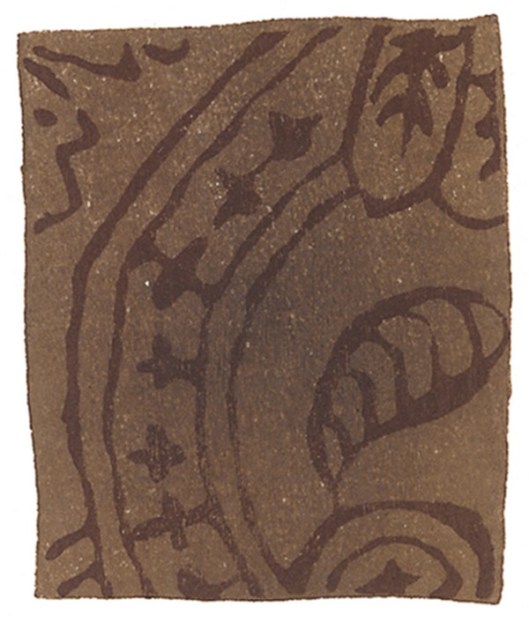
Posted by RichardB | Filed under Japanese Textile Designs
≈ Comments Off on Japanese Textile Designs 142
20 Saturday Jul 2019
19 Friday Jul 2019
Posted in brain, Depression, mental health, Neuroscience, Uncategorized
Tags
Depression strikes some 35 million people worldwide, according to the World Health Organization, contributing to lowered quality of life as well as an increased risk of heart disease and suicide. Treatments typically include psychotherapy, support groups and education as well as psychiatric medications. SSRIs, or selective serotonin reuptake inhibitors, currently are the most commonly prescribed category of antidepressant drugs in the U.S., and have become a household name in treating depression.
The action of these compounds is fairly familiar. SSRIs increase available levels of serotonin, sometimes referred to as the feel-good neurotransmitter, in our brains. Neurons communicate via neurotransmitters, chemicals which pass from one nerve cell to another. A transporter molecule recycles unused transmitter and carries it back to the pre-synaptic cell. For serotonin, that shuttle is called SERT (short for “serotonin transporter”). An SSRI binds to SERT and blocks its activity, allowing more serotonin to remain in the spaces between neurons. Yet, exactly how this biochemistry then works against depression remains a scientific mystery.
In fact, SSRIs fail to work for mild cases of depression, suggesting that regulating serotonin might be an indirect treatment only. “There’s really no evidence that depression is a serotonin-deficiency syndrome,” says Alan Gelenberg, a depression and psychiatric researcher at The Pennsylvania State University. “It’s like saying that a headache is an aspirin-deficiency syndrome.” SSRIs work insofar as they reduce the symptoms of depression, but “they’re pretty nonspecific,” he adds.
Now, research headed up by neuroscientists David Gurwitz and Noam Shomron of Tel Aviv University in Israel supports recent thinking that rather than a shortage of serotonin, a lack of synaptogenesis (the growth of new synapses, or nerve contacts) and neurogenesis (the generation and migration of new neurons) could cause depression. In this model lower serotonin levels would merely result when cells stopped making new connections among neurons or the brain stopped making new neurons. So, directly treating the cause of this diminished neuronal activity could prove to be a more effective therapy for depression than simply relying on drugs to increase serotonin levels.
Evidence for this line of thought came when their team found that cells in culture exposed to a 21-day course of the common SSRI paroxetine (Paxil is one of the brand names) expressed significantly more of the gene for an integrin protein called ITGB3 (integrin beta-3). Integrins are known to play a role in cell adhesion and connectivity and therefore are essential for synaptogenesis. The scientists think SSRIs might promote synaptogenesis and neurogenesis by turning on genes that make ITGB3 as well as other proteins that are involved in these processes. A microarray, which can house an entire genome on one laboratory slide, was used to pinpoint the involved genes. Of the 14 genes that showed increased activity in the paroxetine-treated cells, the gene that expresses ITGB3 showed the greatest increase in activity. That gene,ITGB3, is also crucial for the activity of SERT. Intriguingly, none of the 14 genes are related to serotonin signaling or metabolism, and, ITGB3 has never before been implicated in depression or an SSRI mode of action.
These results, published October 15 2013 in Translational Psychiatry, suggest that SSRIs do indeed work by blocking SERT. But, the bigger picture lies in the fact that in order to make up for the lull in SERT, more ITGB3 is produced, which then goes to work in bolstering synaptogenesis and neurogenesis, the true culprits behind depression. “There are many studies proposing that antidepressants act by promoting synaptogenesis and neurogenesis,” Gurwitz says. “Our work takes one big step on the road for validating such suggestions.”

The research is weakened by its reliance on observations of cells in culture rather than in actual patients. The SSRI dose typically delivered to a patient’s brain is actually a fraction of what is swallowed in a pill. “Obvious next steps are showing that what we found here is indeed viewed in patients as well,” Shomron says.
The study turned up additional drug targets for treating depression—two microRNA molecules, miR-221 and miR-222. Essentially, microRNAs are small molecules that can turn a gene off by binding to it. The microarray results showed a significant decrease in the expression of miR-221 and miR-222, both of which are predicted to target ITGB3, when cells were exposed to paroxetine. So, a drug that could prevent those molecules from inhibiting the production of the ITGB3 protein would arguably enable the growth of more new neurons and synapses. And, if the neurogenesis and synaptogenesis hypothesis holds, a drug that specifically targeted miR-221 or miR-222 could bring sunnier days to those suffering from depression.
18 Thursday Jul 2019
Posted in emotions, Self expression, Wellness
≈ Comments Off on Art and #emotion
Art is the overflow of emotion into action. ― Brian Raif
17 Wednesday Jul 2019
Posted in creative arts therapy, Therapy Photos
≈ Comments Off on Rough Road/Path photos
I have been involved in facilitating groups for decades. One of the tools I use for groups of adults, teens, or children are photos. I use photos as a way for folks to become familiar and used to talking and sharing in a group. As a way to indirectly share something of themselves by talking about an image/photo. As a way to begin a conversation about larger issues or deeper issues.
One set of photos I use are Rough Road/Path photos with alcohol addicts and heroin addicts in the beginning of recovery. I spread the photos out on a table and ask the group (usually 10 to 15 men) to pick out one photo that represents their journey in the week or weeks before they came into rehab. Once everyone has chosen a photo I ask them to (one at a time) hold up the photo, describe the photo and why they chose it. The descriptions and stories they tell come from them, their experiences and begin the process of revealing a bit about their lives.
16 Tuesday Jul 2019
Posted in Health and wellness, Meditation, mindfulness
≈ Comments Off on What is Mindfulness ?
Mindfulness is a concentrated state of awareness that can help us see and respond to situations with clarity and without getting carried away by emotions or the constant chatter in our heads. Mindfulness enables us to:
· Better manage tension and stress
· Enhance objectivity, mental focus
· Communicate and make decisions more effectively
· Improve productivity
· Quiet’s noise in the mind

Meditation
Meditation is the tool we use to cultivate mindfulness. With meditation, you intentionally pay attention to a particular object as a way to strengthen concentration. There are thousands of meditative techniques: Tai Chi, yoga, focusing on the breath and using a mantra are all examples. People often think that meditating “correctly” means clearing all thought from the mind. This is a myth. The mind never stops thinking – it’s when we get caught up in our thoughts that we lose mindfulness. By witnessing thoughts, allowing them to pass, and returning to your chosen object of focus, you can actually build the muscle of concentration. Think of meditation as a fitness routine for the mind.
Are there other benefits to mindfulness?
In addition to boosting brain power, numerous research studies have shown significant physical benefits including:
· Reduced blood pressure
· Lowered cholesterol levels
· Enhanced immune function
· Reduced headache, migraine, back pain
· Improved respiratory function
Mindfulness does not require a particular set of beliefs in order to learn and practice – it is a quality of mind, accessible and available to all.
Mindfulness allows us to live every moment fully without the filters of bias, judgment or emotional reaction.
Mindfulness helps the body cope with physical challenges such as headaches, back pain and even heart disease.
Mindfulness keeps us from reacting too quickly – it helps increase the gap between impulse and action.
15 Monday Jul 2019
15 Monday Jul 2019
Tags
14 Sunday Jul 2019
I am a Creative Arts Therapist who has been using a digital a camera for the last decade or so. As a relatively new photographer I use my life experience coupled with the advantages of a DSLR to snap shots that are, at times, appealing to me and on occasion others as well. Luckily, since I don’t use film, I have been able to afford to shot ten of thousands of images in the last 10 years, some of which are here. Click image to enlarge.



13 Saturday Jul 2019

Posted by RichardB | Filed under Seguy Art Deco Designs
≈ Comments Off on Seguy Art Deco Designs 127

 RichardbBrunner