Tags
Heinavanker sings Thomas Tallis – Lamentation
14 Monday Jan 2019
Posted in Early Music, Music, vocal, YouTube
≈ Comments Off on Heinavanker sings Thomas Tallis – Lamentation

14 Monday Jan 2019
Posted in Early Music, Music, vocal, YouTube
≈ Comments Off on Heinavanker sings Thomas Tallis – Lamentation
Tags
14 Monday Jan 2019
Posted in create, Creativity, Research
≈ Comments Off on creative thinking
When the task at hand requires some imagination, taking a walk may lead to more creative thinking than sitting, according to research published by the American Psychological Association.
“Many people anecdotally claim they do their best thinking when walking,” said Marily Oppezzo, PhD, of Santa Clara University. “With this study, we finally may be taking a step or two toward discovering why.”
While at Stanford University’s Graduate School of Education, Oppezzo and colleague Daniel L. Schwartz, PhD, conducted studies involving 176 people, mostly college students. They found that those who walked instead of sitting or being pushed in a wheelchair consistently gave more creative responses on tests commonly used to measure creative thinking, such as thinking of alternate uses for common objects and coming up with original analogies to capture complex ideas. When asked to solve problems with a single answer, however, the walkers fell slightly behind those who responded while sitting, according to the study published in APA’s Journal of Experimental Psychology: Learning, Memory and Cognition.


While previous research has shown that regular aerobic exercise may protect cognitive abilities, these researchers examined whether simply walking could temporarily improve some types of thinking, such as free-flowing thought compared to focused concentration. “Asking someone to take a 30-minute run to improve creativity at work would be an unpopular prescription for many people,” Schwartz said. “We wanted to see if a simple walk might lead to more free-flowing thoughts and more creativity.”
Of the students tested for creativity while walking, 100 percent came up with more creative ideas in one experiment, while 95 percent, 88 percent and 81 percent of the walker groups in the other experiments had more creative responses compared with when they were sitting. If a response was unique among all responses from the group, it was considered novel. Researchers also gauged a participant’s total number of responses and whether a response was feasible and appropriate to the constraints of the task. For example, “Putting lighter fluid in soup is novel, but it is not very appropriate,” Oppezzo said.
In one experiment with 48 participants, each student sat alone in a small room at a desk facing a blank wall. When a researcher named an object, the student came up with alternative ways to use the object. For example, for the word “button,” a person might say “as a doorknob on a dollhouse.” The students heard two sets of three words and had four minutes per set to come up with as many responses as possible. To see how walking might affect more restricted thinking, the researchers also had the students complete a word association task with 15 three-word groups, such as “cottage-Swiss-cake,” for which the correct answer is “cheese.” Participants repeated both tasks with different sets of words first while sitting and then while walking at a comfortable pace on a treadmill facing a blank wall in the same room.

With a different group of 48 students, some sat for two different sets of the tests, some walked during two sets of the test and some walked and then sat for the tests. “This confirmed that the effect of walking during the second test set was not due to practice,” Oppezzo said. “Participants came up with fewer novel ideas when they sat for the second test set after walking during the first. However, they did perform better than the participants who sat for both sets of tests, so there was a residual effect of walking on creativity when people sat down afterward. Walking before a meeting that requires innovation may still be nearly as useful as walking during the meeting.”
Students who walked in another experiment doubled their number of novel responses compared with when they were sitting. The 40 students in this experiment were divided into three groups: One sat for two sets of tests but moved to separate rooms for each set; another sat and then walked on a treadmill; and one group walked outdoors along a predetermined path.
To see if walking was the source of creative inspiration rather than being outdoors, another experiment with 40 participants compared responses of students walking outside or inside on a treadmill with the responses of students being pushed in a wheelchair outside and sitting inside. Again, the students who walked, whether indoors or outside, came up with more creative responses than those either sitting inside or being pushed in a wheelchair outdoors. “While being outdoors has many cognitive benefits, walking appears to have a very specific benefit of improving creativity,” said Oppezzo.
More research will be necessary to explain how walking improves creativity, the authors said. They speculated that future studies would likely determine a complex pathway that extends from the physical act of walking to physiological changes to the cognitive control of imagination. “Incorporating physical activity into our lives is not only beneficial for our hearts but our brains as well. This research suggests an easy and productive way to weave it into certain work activities,” Oppezzo said.
Marily Oppezzo, Daniel L. Schwartz. Give your ideas some legs: The positive effect of walking on creative thinking.. Journal of Experimental Psychology: Learning, Memory, and Cognition, 2014; DOI:
13 Sunday Jan 2019
13 Sunday Jan 2019
Tags
In prayer it is better to have a heart without words than words without a heart. Mahatma Gandhi

12 Saturday Jan 2019
On 19 April 1943, a train carrying 1,631 Jews set off from a Nazi detention camp in Belgium for the gas chambers of Auschwitz. But resistance fighters stopped 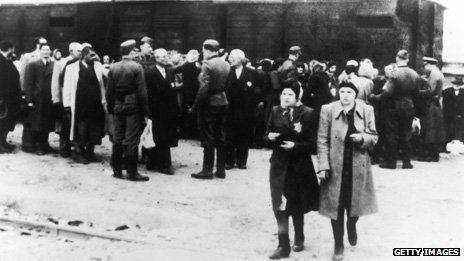 the train. One boy who jumped to freedom that night retains vivid memories, 70 years later.
In February 1943, 11-year-old Simon Gronowski was sitting down for breakfast with his mother and sister in their Brussels hiding place when two Gestapo agents burst in.
They were taken to the Nazis’ notorious headquarters on the prestigious Avenue Louise, used as a prison for Jews and torture chamber for members of the resistance. Read more here
12 Saturday Jan 2019
Posted in Creativity, photo, quote
≈ Comments Off on Creativity
Creativity is piercing the mundane to find the marvelous. Bill Moyers

11 Friday Jan 2019
Posted in Poetry
≈ Comments Off on Pablo’s Poesía
Tags
Por Pablo Neruda
Looking inside
deep down-tongue-less
I stumbled on Pablo
sitting-writing-scratching like a chicken in the dirt
every once in a while a tear would fall
making mud on the floor
sticking to our shoes-making tracks everywhere we went
I asked Pablo for some paper…”and perhaps a pen….?”
He looked up …” No habla ingles “…. he sighed. “Habla en español”
I looked up
way up
and saw my tongue-trying to speak the language of his childhood
July 2006
11 Friday Jan 2019
Posted in Creativity, self control
≈ Comments Off on Self-control and Success
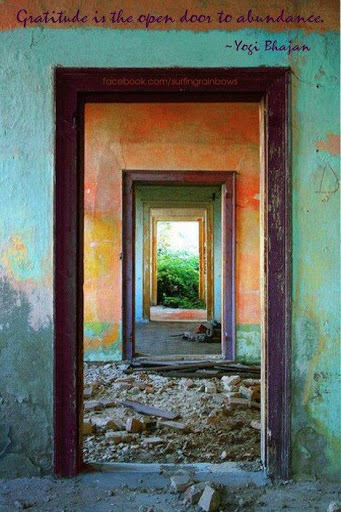 Most of us believe that a certain amount of self-control is crucial for success. In order to succeed in the modern world, you need expertise in some area. Gaining that expertise requires work and practice. The discipline to work or practice at something means that you have to give up things that might be fun right now in order to engage in actions that will be rewarding in the future.
10 Thursday Jan 2019
Posted in quote
≈ Comments Off on courage
09 Wednesday Jan 2019
Posted in Meditation, mindfulness, pain management, research, Wellness
≈ Comments Off on Meditation and Pain management
 Dr. Fadel Zeidan, assistant professor of neurobiology and anatomy at Wake Forest Baptist Medical Center, has studied mindfulness for 15 years and has observed improved health outcomes as a result. “But what if this is all just a placebo?” he wondered. “What if people are reporting improvements in health and reductions in pain just because of meditation’s reputation as a health-promoting practice?” He wanted to find out, so he designed a trials that included a placebo group.


09 Wednesday Jan 2019
Posted in creative, Creativity, Rut
≈ Comments Off on Advice on how to get out of a rut

08 Tuesday Jan 2019
Posted in art, drawings, Mental Health
≈ Comments Off on Philippine rehab uses Art therapy
Tags
MANILA, Sept 14 — A group in Manila are using art therapy to help addicts overcome drug addictions and show Philippine President Rodrigo Duterte that bloody retribution is not the only solution to drugs.
The Centre for Christian Recovery, a religious organisation which manages a small private rehabilitation facility west of Manila, has incorporated drawing into its daily sessions as a way for addicts to express their feelings.
“These drug dependents are not used to saying what they feel,” said Davis Dakis, the programme director.
“They do not know how to express their emotions. So now, through art, they can express whatever they feel.”
The art sessions at the centre, which caters for 40 addicts, comes amid a bloody campaign against drugs since Duterte took office in June.
More than 2,500 people have been killed in the war on drugs, with about 900 deaths a result of police operations, police say.
Owie, a drug user undergoing rehabilitation, said he was afraid of going back on the streets despite his attempts at reformation.
“I hope our president will take a different action. I don’t want it to be like this. It’s as if he wants to just kill all of us addicts,” he said.
“There is still hope for us, it’s not too late to change.” — Reuters
07 Monday Jan 2019
Tags
L’avantage avec les animaux c’est qu’ils t’aiment sans poser de questions = The advantage with animals is that they love you no questions asked
07 Monday Jan 2019
We all know the uncomfortable feeling of anxiety. Our hearts race, our fingers sweat, and our breathing gets shallow and labored. We experience racing thoughts about a perceived threat we fear will be too much to handle. That’s because our “fight or flight” response has kicked in, resulting in sympathetic arousal and a narrowing of attention and focus on avoiding the threat. We seem to be locked in that state, unable to focus on our daily chores or longer-term goals. Below are six strategies that you can use to help relieve your everyday anxiety:
Anxiety makes us feel that a threat is imminent, yet most of the time what we worry most about never happens. By recording our worries—and how few actually came true—we can notice how much we overestimate the prospect of negative events.
Even if a bad event happened, we may still be able to handle it by using coping skills and problem-solving abilities or by enlisting others to help. Although not pleasant, we could still survive encountering a spider, having a panic attack, or losing money. It’s important to realize that very few things are the end of the world.
By deliberately relaxing our muscles we begin to calm down so we can think clearly. If you practice this at first without a threat present, it can start to become automatic and will be easier to use in the moment when you face a threat. Deep breathing engages the parasympathetic nervous system to put the brakes on sympathetic arousal.
The skill of mindfulness involves calmly observing our own reactions, including fear, without panic or feeling compelled to act. It can be taught in therapy and improves with practice.
Acceptance and Commitment Therapy (ACT) is an approach that encourages people to accept the inevitability of negative thoughts and feelings and not try to repress or control them. By directing attention away from the fear and back onto life tasks and valued goals, we can live a full life despite the fear.
Exposure is the most powerful technique for anxiety and it involves facing what we fear and staying in the situation long enough for the fear to habituate or go down, as it naturally does. Fear makes us avoid or run away, so our minds and bodies never learn that much of what we fear is not truly dangerous.
07 Monday Jan 2019
Posted in news
≈ Comments Off on China and US held joint military drills
Despite consistent rhetoric from both Chinese and American governments and media, both countries have routinely held joint military exercises over the years.
” Soldiers from China and the United States wrapped up a week of joint disaster relief drills on Saturday November 17 2018, in a display of cooperation against a backdrop of worsening ties between the two countries over trade, the disputed South China Sea and self-ruled Taiwan.” (this was the 14th time the joint exchange occurred)
READ MORE HERE

REUTERS/Aly Song
06 Sunday Jan 2019
06 Sunday Jan 2019
05 Saturday Jan 2019
Posted in news
≈ Comments Off on China’s consumption of raw materials
Tags
05 Saturday Jan 2019
Posted in emotions, Self expression, Wellness
≈ Comments Off on emotion
Art is the overflow of emotion into action. ― Brian Raif
04 Friday Jan 2019
Posted in art, creative arts therapy, groups, photo set, Therapy
≈ Comments Off on Rough Road/Path photos
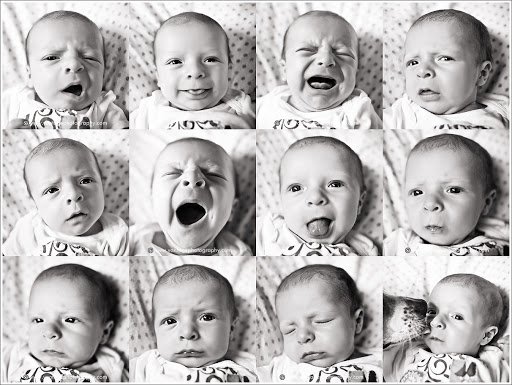
I have been involved in facilitating groups for decades. One of the tools I use for groups of adults, teens, or children are photos. I use photos as a way for folks to become familiar and used to talking and sharing in a group. As a way to indirectly share something of themselves by talking about an image/photo. As a way to begin a conversation about larger issues or deeper issues.
One set of photos I use are Rough Road/Path photos with alcohol addicts and heroin addicts in the beginning of recovery. I spread the photos out on a table and ask the group (usually 10 to 15 men) to pick out one photo that represents their journey in the week or weeks before they came into rehab. Once everyone has chosen a photo I ask them to (one at a time) hold up the photo, describe the photo and why they chose it. The descriptions and stories they tell come from them, their experiences and begin the process of revealing a bit about their