If you want to go fast, go alone. If you want to go far, go with others. African Proverb

08 Sunday Mar 2020
Posted in African Proverb, Uncategorized
08 Sunday Mar 2020
07 Saturday Mar 2020
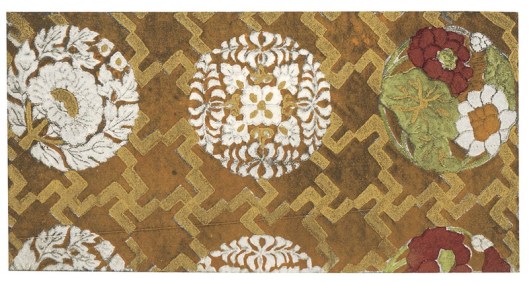
Posted by RichardB | Filed under Japanese Textile Designs
≈ Comments Off on Japanese Textile Designs 117
07 Saturday Mar 2020
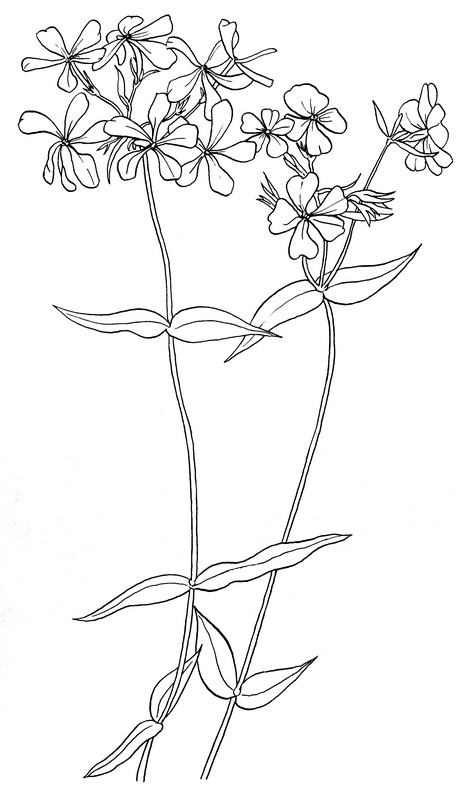
Posted by RichardB | Filed under Coloring Pages
≈ Comments Off on Blue Phlox Coloring Page
05 Thursday Mar 2020
In the next few days, the doors will appear in Reno NV.

A shadow figure is painted on a door from the Lear Theater as part of the art project, Doors to Recovery. The local artist created door represents the addiction and recovery process and will be on display at Junkee Clothing Exchange in Midtown throughout July as part of Artown.(Photo: Andy Barron/RGJ)
You will see them if you stop into city hall or when you’re grabbing a cup of coffee at Dreamer’s Coffee House in Midtown.
They will beckon for you to examine them. Take in their various colors, sculptures and depictions.
They might have you asking yourself, “What are these all about?”
The message can be found in the varying images, including shadows, walking shoes on a path, butterflies and blossoming trees: When one door closes on addiction, another opens to a new life and a second chance.
These are the Doors of Recovery.
The public art project, sponsored by Transforming Youth Recovery, will be on display in multiple locations in downtown and Midtown throughout July as part of Artown.
It will feature 38 local artist-created doors from the Lear Theater representing the transformation process from addiction to recovery. The goal of the project is to raise addiction and recovery awareness and celebrate the youth who are rebuilding their lives today, Transforming Youth Recovery’s Kate High said.
“The doors are brilliant and fantastic. A lot of the artists have experience — some personal, others with their families or loved ones — with addiction, or have lost people they’ve cared about,” High said. “There are a lot of feelings that went into them: ransformation, journey and metamorphosis from dark to light. The artists have all been excited to support a good cause — it is a problem and a disease and not someone’s choice when they started.”
Transforming Youth
A year ago, Stacie Mathewson’s son lost his battle to addiction.
Two years before that, while he was in recovery, she developed a growing interest in helping youth in recovery. She founded the Stacie Mathewson Foundation to raise addiction and recovery awareness and promote education in communities nationwide.
In 2013, she started Transforming Youth Recovery with the mission to “transform youth recovery — one community, one school, one student at a time.”
The organization currently is working to fund 100 collegiate recovery programs and funded the first collegiate pilot program at the University of Nevada, Reno — Nevada Recovery and Prevention (NRAP), High said.
She said in less than two years, Transforming Youth Recovery has tripled the number of collegiate recovery programs across the country, offering hundreds of students support they wouldn’t have otherwise had.
“The goal is to raise awareness of the nature of the disease and to celebrate young people in recovery,” High said. “We want to break stigma of the disease — it’s not a black mark against them — and encourage people to get into recovery. It’s hard and requires support, but it’s possible. Lives can be turned around. It’s the use that cause the behavior and not the person.”
NRAP student worker and member in recovery Jordan Fugate said she understands what it means to turn your life around. She said she was incarcerated at 21, and today, she’s in school, has her own car and is working with the recovery program to assist others in their recovery.
She said she wants to give hope to others.
“In college, alcohol is everywhere and it’s harder to be in recovery,” Fugate said. “But, you don’t have to wait until you hit rock bottom — or even need to be dealing with addiction — you can come connect and make friends, find support and be part of sober activities.”
NRAP currently has about 50 students and 12 core members, ranging from 18 years old to 33. While the main campus is located at UNR, there is also a part-time campus at Truckee Meadows Community College.
“NRAC is two years old, but a lot of people don’t know we’re around,” Fugate said. “This will help make
everyone aware that there are college support groups on the campuses. It’s benefiting those locally, and we wanted to be part of Doors to Recovery to make people aware.”
The program is open to students who are choosing to live a sober lifestyle. It offers peer and professional support, Alcoholic, Eating Disorders and Narcotics Anonymous programs, as well as wellness groups, a grief group and a sexual trauma support group.
“It’s a place to come hang out and meet people,” Fugate said. “This has helped me to live a college lifestyle sober. It’s difficult (for students) when there are bars around campus or casinos for events and restaurants. It might be more difficult to be sober in college in Reno. There is the 24-hour lifestyle here that other colleges don’t have.”
Fugate said for the Doors project, NRAP created an image of a moral compass and various dark and light colors.
“On a panel is a compass because people who get sober talk about their moral compass, and how your values and morals change when you’re an addict,” Fugate said. “There are bright colors at the top and darker colors on the bottom; the light is overtaking the dark.”
Powerful art
The late Moya Olsen Lear gave Mathewson pews from the inside of the Lear Theater many years ago, High said.
She said Mathewson had kept the pews in storage with ideas of transforming and auctioning them off to support Transforming Youth Recovery, but the pews were 15 feet long and weren’t the right fit for the project.
There were, however, dozens of unmarked door panels in the basement of the Lear that wouldn’t be used in the restoration of the building. Mathewson swapped the pews for the door panels.
That was the beginning of Doors to Recovery.
“Art is something that everyone can relate to,” High said. “The doors are celebrating recovery. Art has universal appeal; it’s a way of telling story in so many different ways. It’s society’s way of expressing itself.”
Artist Carol Foldvary-Anderson said getting involved in the project has been a transformational process for her, too.
She said while she hasn’t personally been affected by addiction, she believes everyone can relate to recovering and transitioning into something.
“I think it gives the community an awareness of the transforming aspect of recovery,” Foldvary-Anderson said. “It creates an incentive to seek recovery. Some don’t know it exists or are ashamed they have a problem and they don’t want to share it with anyone. How do you bring yourself to the place for help? I wanted to make my door a beautiful and rewarding place. The awareness for recovery is powerful.”
Initially, she had wanted to create a door that represented three things: peace, happiness and joy. But, as she began working on it, a butterfly image came to her. She said it was iconic for change — they transition into something extremely beautiful and she wanted that to be a big part of her door’s message.
Her door, “Metamorphosis of Change,” features paint, molding and a large, black butterfly with a smaller butterfly on top of it. There are also several mirrors placed along the door.
She said the shadow butterfly represents the hidden nuances we have inside ourselves and the smaller butterfly is who we are and who we are becoming. The mirrors are the reflective side of ourselves — look at what you are doing and keep tabs on yourself.
“For me, it was a personal growth, as the artist creating this. I went through transitions and changes just working on this as far as what I first submitted (for the project) and what it turned out being,” Foldvary-Anderson said. “A lot of artists showed frustration, agony and pain in their art. I wanted to show the other side: a place of beauty.”
05 Thursday Mar 2020
Posted in Depression, TedTalks, youtube
≈ Comments Off on What is #depression? – Helen M. Farrell
Tags
04 Wednesday Mar 2020
Tags
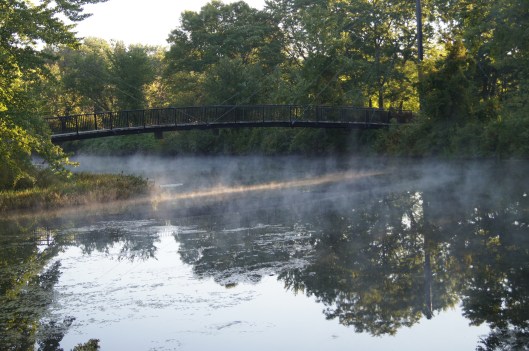
Sometimes, if you stand on the bottom rail of a bridge and lean over to watch the river slipping slowly away beneath you, you will suddenly know everything there is to be known. Pooh’s Little Instruction Book
03 Tuesday Mar 2020
Posted in Meditation, mindfulness
≈ Comments Off on Meditation for as short as 8 weeks can change your brain
Tags
 Participants in the study spent close to a half-hour every day meditating or practicing some other mindfulness exercise (notable because most people associate meditation with sitting and thinking quietly, and that’s not the only type of exercise done in the study) for about eight weeks. They got MRIs of their brains before and after the eight week exercise, and when the study was over, many of the study’s 16 participants showed significant changes in the areas of the brain associated with behavior, memory, and stress. For more click the link below.
http://lifehacker.com/5989078/how-meditating-for-eight-weeks-can-boost-your-brain
03 Tuesday Mar 2020
Posted in Awareness, creative, Emotional Intelligence, groups
≈ Comments Off on Emotional Intelligence
Tags
I often work with groups using lists. In movement therapy as well as psychotherapy, educational and process oriented groups lists are a great structure for groups to explore thoughts, and/or feelings. Here is a list that often comes up in groups ten suggestions about feelings.
1. Become emotionally literate. Label your feelings, rather than labeling people or situations.
Use three word sentences beginning with “I feel”.
Start labeling feelings; stop labeling people & situations
“I feel impatient.” vs “This is ridiculous.” I feel hurt and bitter”. vs. “You are an insensitive jerk.”
“I feel afraid.” vs. “You are driving like an idiot.”
2. Distinguish between thoughts and feelings.
Thoughts: I feel like…& I feel as if…. & I feel that
Feelings: I feel: (feeling word)
3. Take more responsibility for your feelings.
“I feel jealous.” vs. “You are making me jealous.”
Analyze your own feelings rather than the action or motives of other people. 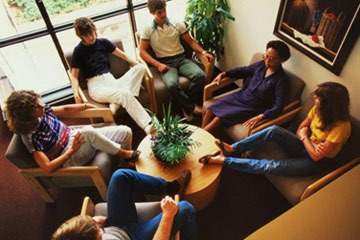 Let your feelings help you identify your unmet emotional needs.
4. Use your feelings to help make decisions
“How will I feel if I do this?” “How will I feel if I don’t?”
“How do I feel?” “What would help me feel better?”
Ask others “How do you feel?” and “What would help you feel better?”
5. Use feelings to set and achieve goals
– Set feeling goals. Think about how you want to feel or how you want others to feel. (your employees, your clients, your students, your children, your partner)
– Get feedback and track progress towards the feeling goals by periodically measuring feelings from 0-10. For example, ask clients, students, teenagers how much they feel respected from 0 to 10.
6. Feel energized, not angry.
Use what others call “anger” to help feel energized to take productive action.
7. Validate other people’s feelings.
Show empathy, understanding, and acceptance of other people’s feelings.
8. Use feelings to help show respect for others.
How will you feel if I do this? How will you feel if I don’t? Then listen and take their feelings into consideration.
9. Don’t advise, command, control, criticize, judge or lecture to others.
Instead, try to just listen with empathy and non-judgment.
10. Avoid people who invalidate you. While this is not always possible, at least try to spend less time with them, or try not to let them have psychological power over you.
02 Monday Mar 2020
Tags
Top Songs I listened to in 2019: Riff Cohen – Dis Moi
Riff Cohen is an Israeli singer-songwriter, actress, and musician who performs songs in Hebrew, French and Arabic.
I have a 16,000 plus digital audio collection and I use Media Monkey to manage my files. One feature of Media Monkey is you can sort your collection based on the number of times played. This playlist is based on the top music and/or music video files I played/listened/streamed from my server in 2019. Complete Playlist HERE
01 Sunday Mar 2020
29 Saturday Feb 2020

Posted by RichardB | Filed under Seguy Art Deco Designs
≈ Comments Off on Seguy Art Deco Designs 117
28 Friday Feb 2020

28 Friday Feb 2020
Teenagers who smoked marijuana daily for three years performed poorly on memory tasks and showed abnormal changes in brain structure, according to a Northwestern Medicine study. Researchers in Chicago observed the brains of teenagers who were heavy users of marijuana. In those individuals, memory-related structures in the brain appeared to shrink and collapse inward, possibly indicating a decrease in neurons.
These abnormalities were recorded two years after the teens stopped using marijuana, possibly indicating long-term effects, and look similar to schizophrenia-related brain abnormalities.
The brains were shaped more abnormally for individuals who began marijuana use at a younger age, according to the reports, which suggest that memory regions of the brain are more susceptible to the drug at earlier ages.
The research was published in the December issue of Schizophrenia Bulletin.
26 Wednesday Feb 2020
Posted in Awareness, breathing, grounding, Mental Health
≈ Comments Off on breathing
Tags
When we come out of the womb and take our first inhale and when we pass away and take our last exhale the breath is primal and fundamental to are being.
Since breathing is something we can control and regulate, it is a useful tool for achieving a relaxed and clear state of mind. Here are some simple breathing exercises:
Exhale completely through your mouth, making a whoosh sound.
Close your mouth and inhale quietly through your nose to a mental count of four.
Hold your breath for a count of seven.
Exhale completely through your mouth, making a whoosh sound to a count of eight.
This is one breath. Now inhale again and repeat the cycle three more times for a total of four breaths.
Place one hand on your chest and the other on your abdomen. When you take a deep breath in, the hand on the abdomen should rise higher than the one on the chest. This insures that the diaphragm is pulling air into the bases of the lungs.
After exhaling through the mouth, take a slow deep breath in through your nose imagining that you are sucking in all the air in the room and hold it for a count of 7 (or as long as you are able, not exceeding 7)
Slowly exhale through your mouth for a count of 8. As all the air is released with relaxation, gently contract your abdominal muscles to completely evacuate the remaining air from the lungs. It is important to remember that we deepen respirations not by inhaling more air but through completely exhaling it.
Repeat the cycle four more times for a total of 5 deep breaths and try to breathe at a rate of one breath every 10 seconds (or 6 breaths per minute). At this rate our heart rate variability increases which has a positive effect on cardiac health.
Once you feel comfortable with the above technique, you may want to incorporate words that can enhance the exercise. Examples would be to say to yourself the word, relaxation (with inhalation) and stress or anger (with exhalation). The idea being to bring in the feeling/emotion you want with inhalation and release those you don’t want with exhalation.
In general, exhalation should be twice as long as inhalation. The use of the hands on the chest and abdomen are only needed to help you train your breathing. Once you feel comfortable with your ability to breathe into the abdomen, they are no longer needed.
26 Wednesday Feb 2020
Posted in Handout, recovery, relapse stages
≈ Comments Off on Relapse Stages
One of the hand outs I use with groups. This is a shorten version of Relapse Stages and just a starting off point for further discussion.
First stage – I am un aware. I don’t see it, and have no idea I am in trouble. (people around us may notice subtle changes in attitude and behavior).
Second Stage – We become restless, incurable and discontent. Our focus shifts from internal to external, we stop focusing on ourselves and start focusing on other people around us. We start blaming; acting the victim, fear and anger start to become evident.
Third stage – Unresolved feelings occur and they are not dealt with in a healthy manner. We go into the emotional and physical withdrawal, than start to isolate. Negative attitudes start to predominate such as compulsive behavior, we start discounting recovery, we may engage in magical thinking.
Fourth stage – A crisis in our life provides the excuse for us to start using it again, or we create a crisis that rationalizes are returned to use. In other words, we have made the decision to use, and are ready to light the fuse.

As we move through the stages of relapse, a few different things are occurring. Firstly, the need to regain our ‘right’ to re-engage in our addiction seems to make sense. We talk ourselves into the false belief that this time we can control it.
There’s a gradual and progressive destabilization of our lifestyle. Lastly, Stress and Stressors will accelerate this process.
25 Tuesday Feb 2020
Posted in Communication, Expectations, Racial stereotypes, research
≈ Comments Off on How racial stereotypes impact communication
Tags
Racial stereotypes and expectations can impact the way we communicate and understand others, according to UBC research.
The new study, published in the Journal of the Acoustical Society of America, highlights how non-verbal “social cues” – such as photographs of Chinese Canadians – can affect how we comprehend speech.
“This research brings to light our internal, biases, and the role of experience and stereotypes, in how we listen to and hear each other,” says Molly Babel, the paper’s lead author and an assistant professor with UBC’s Department of Linguistics.
One of the study’s tasks involved participants from the UBC community transcribing pre-recorded sentences amid background static. The sentences were recorded by 12 native speakers of Canadian English. Half of the speakers self-identified as White, and the other half self-identified as Chinese. All speakers were born and raised in Richmond, B.C., which is south of Vancouver.
The pre-recorded sentences were accompanied by either black and white photos of the speakers, or by an image of three crosses. Overall, listeners found the Chinese Canadians more difficult to understand than the White Canadians – but only when they were made aware that the speaker was Chinese Canadian due to the photo prompt.
Participants were also asked to rate the strength of the accents of the speakers. They were asked to listen to two sentences from each speaker – one accompanied by the speaker’s photo, the other by an image of crosses. “Once participants were aware that they were listening to a White Canadian, suddenly the candidate was perceived as having less of a foreign accent and sounding more like a native speaker of Canadian English,” says Babel.
“It tells us as listeners that we need to be sensitive about the stereotypes that we carry,” notes Jamie Russell, the study’s co-author who was an undergraduate honours student in UBC’s Department of Linguistics during the project.
Background
The study, “Expectations and Speech Intelligibility,” is published in the Journal of the Acoustical Society of America. The authors are Molly Babel and Jamie Russell, both of UBC’s Department of Linguistics.
The study involved five tasks: speech perception in noise, accentedness rating, an implicit measure of ethnic bias, an explicit measure of ethnic bias and a social network self-assessment.
24 Monday Feb 2020
Tags
I have a 16,000 plus digital audio collection and I use Media Monkey to manage my files. One feature of Media Monkey is you can sort your collection based on the number of times played. This playlist is based on the top music and/or music video files I played/listened/streamed from my server in 2019.
Laboratorium Pieśni – Song Laboratory (world/ethno/spiritual/mystic folk music) is a group of female singers from Poland, created in 2013. Using traditional, polyphonic singing they perform songs from all over the world, mainly: Ukraine, Balkans, Poland, Belarus, Georgia, Scandinavia and many other places. They sing a capella as well as with shaman drums and other ethnic instruments (shruti box, kalimba, flute, gong, zaphir and koshi chimes, singing bowls, rattles etc.), creating a new space in a traditional song, adding voice improvisations, inspired by sounds of nature, often intuitive, wild and feminine.
24 Monday Feb 2020
23 Sunday Feb 2020




 RichardbBrunner