Tags
FRONTLINE – Chasing Heroin
22 Friday Apr 2022

22 Friday Apr 2022
Tags
08 Friday Jan 2021
Posted in Addiction
≈ Comments Off on Why Do We Get Addicted
Tags
Think about an experience that makes you feel good. It could be successfully completing a project at work, eating a warm chocolate chip cookie or taking a swig of whiskey. It could be a puff of a cigarette or a shopping trip. A dose of Vicodin or a hit of heroin.
Those experiences don’t automatically lead to addiction. So what makes a particular habit or substance an addiction? What propels some people to seek out these experiences, even if they are costly or detrimental to their health and relationships? 
“Addiction is a biopsychosocial disorder. It’s a combination of your genetics, your neurobiology and how that interacts with psychological and social factors,” said Maureen Boyle, a public health advisor and director of the science policy branch at the National Institute on Drug Abuse. That means it’s a lot like any other chronic disorder, such as type 2 diabetes, cancer and heart disease. And just like other chronic diseases, addiction is both preventable and treatable, Boyle said, but added that if left untreated, it can last a lifetime. [Do Smokers’ Lungs Heal After They Quit?]
The mutual mechanism
Though everyone’s path to addiction is different — whether he or she tries a drug or a behavior because it’s what that person’s parents or peer do, or just out of curiosity — what’s common across all substance and behavioral addictions is their stunning ability to increase levels of an important chemical in the brain called dopamine, Boyle told Live Science.
Dopamine is a molecule that ferries messages across the brain’s reward center. It’s what gives people the feeling of pleasure and reinforces behaviors critical for survival, such as eating food and having sex.
When someone uses a drug or engages in a pleasurable experience, the same natural reward circuitry is activated. “The problem with drugs is that they do the job better than natural rewards,” said Dr. Hitoshi Morikawa, an associate professor of neuroscience at the University of Texas at Austin.
Different drugs tap into the dopamine reward system in different ways. Marijuana and heroin have a chemical structure similar to another neurotransmitter and can trick some brain cells into activating neurons that use dopamine. Cocaine and amphetamines, on the other hand, prolong the effect of dopamine on its target neurons, disrupting normal communication in the brain.
How quickly each drug can get into the brain, and how powerfully it activates neural circuits, determines how addictive it will be, Morikawa told Live Science. Some modes of use, like injecting or snorting a drug, make the drug’s effects almost immediate. “That’s why heroin, for example, is the last drug you want to take,” he said. “It’s very addictive.”
From experimenting to getting hooked
As individuals continue with addictive habits or substances, the brain adapts. It tries to reestablish a balance between the dopamine surges and normal levels of the substance in the brain, Morikawa said. To do this, neurons begin to produce less dopamine or simply reduce the number of dopamine receptors. The result is that the individual needs to continue to use drugs, or practice a particular behavior, to bring dopamine levels back to “normal.” Individuals may also need to take greater amounts of drugs to achieve a high; this is called tolerance.
Without dopamine creating feelings of pleasure in the brain, individuals also become more sensitive to negative emotions such as stress, anxiety or depression, Morikawa said. Sometimes, people with addiction may even feel physically ill, which often compels them to use drugs again to relieve these symptoms of withdrawal. [Booze Snooze: Why Does Alcohol Make You Sleepy, Then Alert?]
Eventually, the desire for the drug becomes more important than the actual pleasure it provides. And because dopamine plays a key role in learning and memory, it hardwires the need for the addictive substance or experience into the brain, along with any environmental cues associated with it — people, places, things and situations associated with past use. These memories become so entwined that even walking into a bar years later, or talking to the same friends an individual had previously binged with, may then trigger an alcoholic’s cravings, Morikawa said.
Brain-imaging studies of people with addiction reveal other striking changes as well. For example, people with alcohol-, cocaine- or opioid-use disorders show a loss in neurons and impaired activity in their prefrontal cortex, according to a 2011 review of studies published in the journal Nature Reviews Neuroscience. This erodes their ability to make sound decisions and regulate their impulses.
Risk factors
Some people are more susceptible to these extreme neurobiological changes than others, and therefore more susceptible to addiction. Not everyone who tries a cigarette or gets morphine after a surgery becomes addicted to drugs. Similarly, not everyone who gambles becomes addicted to gambling. Many factors influence the development of addictions, Boyle said, from genetics, to poor social support networks, to the experience of trauma or other co-occurring mental illnesses.
One of the biggest risk factors is age. “The younger someone is, the more vulnerable they are to addiction,” Boyle said. In fact, a federal study from 2014 found that the majority (74 percent) of 18- to 30-year-olds admitted to treatment programs had started using drugs at age 17 or younger.
Additionally, like most behavioral and mental health disorders, there are many genes that add to a person’s level of risk or provide some protection against addiction, Boyle said. But unlike the way in which doctors can predict a person’s risk of breast cancer by looking for mutations in a certain gene, nobody knows enough to be able to single out any gene or predict the likelihood of inheriting traits that could lead to addiction, she said.
31 Thursday Dec 2020
Generation X writer Neal Pollack thought he had it all: a good writing career, a strong marriage, even a lucrative 3-day run on “Jeopardy”! That brought him national attention. Like many in his generation, he also smoked a lot of marijuana. He had discovered that food, music and even his beloved yoga was much better when he smoked. In 2014, as several states in the country legalized pot, Pollack scored a writing gig for a marijuana site that provided free weed. He saw his drug use as harmless and joked about it often in his writing. But as more states, including California, began to legalize the drug, Pollack’s life began to fall apart, in part because of his drug use. Both of his parents died and he soon found himself spiraling out of control, sometimes in public. By 2018, Pollack admitted publicly he had a marijuana addiction and set about to conquer it, through honesty . . . and humor. Pollack’s new book, Pothead, is about coming to terms with his marijuana problems just as the country increased its recreational availability. The book is a cautionary and timely tale for those who think the drug isn’t dangerous and can’t cause serious addictive problems. Join us for a special evening program as Pollack discusses his story with Los Angeles novelist Bucky Sinister.
09 Wednesday Dec 2020
Posted in Addiction
≈ Comments Off on Addiction Hijacks the Brain
Tags
You’ve probably heard of the brain’s reward network. It’s activated by basic needs — including food, water and sex — and releases a surge of the feel-good neurotransmitter dopamine when those needs are met. But it can also be hijacked by drugs, which lead to a greater dopamine release than those basic needs. 
But the reward network isn’t the only brain network altered by drug use. A new review concluded that drug addiction affects six main brain networks: the reward, habit, salience, executive, memory and self-directed networks.
In 2016, a total of 20.1 million people ages 12 and older in the U.S. had a substance-use disorder, according to the National Survey on Drug Use and Health, an annual survey on drug use. And drug addiction, regardless of the substance used, had surprisingly similar effects on the addicted brain, said the new review, published yesterday (June 6) in the journal Neuron.
The review looked at more than 100 studies and review papers on drug addiction, all of which studied a type of brain scan called functional magnetic resonance imaging (fMRI).
More than half of the studies out there look at the effects of drug use on the reward network, said Anna Zilverstand, lead author of the new review and an assistant professor of psychiatry at the Icahn School of Medicine at Mount Sinai in New York City. [7 Ways Alcohol Affects Your Health]
“Because we showed that the effects are very distributed across the six different networks … [we can conclude that] an approach that only looks at one of these networks isn’t really justified,” Zilverstand told Live Science. “This [finding] will hopefully lead other researchers to look beyond the reward network.”
For example, the memory network is pretty much ignored in research on substance-use disorders, Zilverstand said. This network allows humans to learn non-habit-based things, such as a new physics concept or a history lesson. Some research has suggested that in people with substance-use disorders, stress shifts the person’s learning and memory away from the memory network to the habit network, which drives automatic behavior, such as seeking and taking drugs.
Another less-studied network is the self-directed network, which is involved in self-awareness and self-reflection, the review said. In people with addictions, this network has been associated with increasing craving.
Two other networks are involved in substance-use disorders: The executive network is normally responsible for goal-maintaining and execution, but drugs can alter this network as well, reducing a person’s ability to inhibit their actions. The salience network picks up important cues in a person’s environment and redirects the individual’s attention to them. (In people with drug addiction, attention is redirected toward drugs, increasing craving and drug-seeking.)
Which comes first, the brain activity or the drug use?
“For me, the most surprising [finding] was how consistent the effects were across addictions,” Zilverstand said. What’s more, “the fact that the effects are quite independent of the specific drug use points to them being something general that might actually precede drug use rather than be a consequence of drug use.”
Zilverstand said she hopes that more studies will look at whether some people have abnormal brain activity in these six networks naturally and if that activity just gets exacerbated if they begin drug use. It’s important to know if some of these traits precede drug use; if that’s the case, it might be possible to identify people who are prone to addiction and intervene before an addiction begins, she said.
Some research has pointed toward this possibility already. For example, studies have shown that some people have “difficulties … inhibiting impulsiveness before drug use,” Zilverstand said. “Some of these impairments precede drug use, and they may become worse with more drug use, but they exist before the problem escalates.”
The good news, however, is that activity in four of these networks — executive, reward, memory and salience — moves back toward “normal” once drug use ends. “We know that four of the networks (partially — not fully) recover but not yet what happens to the other two networks,” Zilverstand said in an email.
Zilverstand added that she’s particularly excited about an ongoing study called the Adolescent Brain Cognitive Development (ABCD) Study, which is tracking 10,000 children across the U.S. from around ages 9 or 10 to age 20 (the children are now around 13). Some of these individuals will inevitably become addicted to drugs, most likely marijuana or alcohol, Zilverstand said.
“We’ll be able to see if the effects that we found [in the review] exist in youth who have not yet abused drugs,” she said, and she predicted that researchers will be able to find a lot of the effects identified in the review in the six brain networks.
The authors noted that because some regions of the brain are very small — for example, the amygdala, which is found toward the center of the brain — the studies can’t identify strong signals from those areas on brain scans. So, it’s possible that drugs affect additional networks in the brain that are hidden because of the limitations of our technologies, Zilverstand said.
“We don’t want to conclude that [those effects] don’t exist,” she said.
03 Tuesday Nov 2020
Posted in Addiction, Creative Therapy Tools, Marijuana, Research
≈ Comments Off on Marijuana Addiction in the Age of Legal Weed
Tags
Generation X writer Neal Pollack thought he had it all: a good writing career, a strong marriage, even a lucrative 3-day run on “Jeopardy”! That brought him national attention. Like many in his generation, he also smoked a lot of marijuana. He had discovered that food, music and even his beloved yoga was much better when he smoked. In 2014, as several states in the country legalized pot, Pollack scored a writing gig for a marijuana site that provided free weed. He saw his drug use as harmless and joked about it often in his writing. But as more states, including California, began to legalize the drug, Pollack’s life began to fall apart, in part because of his drug use. Both of his parents died and he soon found himself spiraling out of control, sometimes in public. By 2018, Pollack admitted publicly he had a marijuana addiction and set about to conquer it, through honesty . . . and humor. Pollack’s new book, Pothead, is about coming to terms with his marijuana problems just as the country increased its recreational availability. The book is a cautionary and timely tale for those who think the drug isn’t dangerous and can’t cause serious addictive problems. Join us for a special evening program as Pollack discusses his story with Los Angeles novelist Bucky Sinister.
14 Wednesday Oct 2020
We’re told studies have proven that drugs like heroin and cocaine instantly hook a user. But it isn’t that simple – little-known experiments over 30 years ago tell a very different tale.
Drugs are scary. The words “heroin” and “cocaine” make people flinch. It’s not just the associations with crime and harmful health effects, but also the notion that these substances can undermine the identities of those who take them. One try, we’re told, is enough to get us hooked. This, it would seem, is confirmed by animal experiments. 
Many studies have shown rats and monkeys will neglect food and drink in favour of pressing levers to obtain morphine (the lab form of heroin). With the right experimental set up, some rats will self-administer drugs until they die. At first glance it looks like a simple case of the laboratory animals losing control of their actions to the drugs they need. It’s easy to see in this a frightening scientific fable about the power of these drugs to rob us of our free will.
But there is more to the real scientific story, even if it isn’t widely talked about. The results of a set of little-known experiments carried out more than 30 years ago paint a very different picture, and illustrate how easy it is for neuroscience to be twisted to pander to popular anxieties. The vital missing evidence is a series of studies carried out in the late 1970s in what has become known as “Rat Park”. Canadian psychologist Bruce Alexander, at the Simon Fraser University in British Columbia, Canada, suspected that the preference of rats to morphine over water in previous experiments might be affected by their housing conditions.
To test his hypothesis he built an enclosure measuring 95 square feet (8.8 square metres) for a colony of rats of both sexes. Not only was this around 200 times the area of standard rodent cages, but Rat Park had decorated walls, running wheels and nesting areas. Inhabitants had access to a plentiful supply of food, perhaps most importantly the rats lived in it together.
Rats are smart, social creatures. Living in a small cage on their own is a form of sensory deprivation. Rat Park was what neuroscientists would call an enriched environment, or – if you prefer to look at it this way – a non-deprived one. In Alexander’s tests, rats reared in cages drank as much as 20 times more morphine than those brought up in Rat Park.
Inhabitants of Rat Park could be induced to drink more of the morphine if it was mixed with sugar, but a control experiment suggested that this was because they liked the sugar, rather than because the sugar allowed them to ignore the bitter taste of the morphine long enough to get addicted. When naloxone, which blocks the effects of morphine, was added to the morphine-sugar mix, the rats’ consumption didn’t drop. In fact, their consumption increased, suggesting they were actively trying to avoid the effects of morphine, but would put up with it in order to get sugar.
‘Woefully incomplete’
The results are catastrophic for the simplistic idea that one use of a drug inevitably hooks the user by rewiring their brain. When Alexander’s rats were given something better to do than sit in a bare cage they turned their noses up at morphine because they preferred playing with their friends and exploring their surroundings to getting high.
Further support for his emphasis on living conditions came from another set of tests his team carried out in which rats brought up in ordinary cages were forced to consume morphine for 57 days in a row. If anything should create the conditions for chemical rewiring of their brains, this should be it. But once these rats were moved to Rat Park they chose water over morphine when given the choice, although they did exhibit some minor withdrawal symptoms.
You can read more about Rat Park in the original scientific report. A good summary is in this comic by Stuart McMillen. The results aren’t widely cited in the scientific literature, and the studies were discontinued after a few years because they couldn’t attract funding. There have been criticisms of the study’s design and the few attempts that have been made to replicate the results have been mixed.
Nonetheless the research does demonstrate that the standard “exposure model” of addiction is woefully incomplete. It takes far more than the simple experience of a drug – even drugs as powerful as cocaine and heroin – to make you an addict. The alternatives you have to drug use, which will be influenced by your social and physical environment, play important roles as well as the brute pleasure delivered via the chemical assault on your reward circuits
It suggests that even addictions can be thought of using the same theories we use to think about other choices, there isn’t a special exception for drug-related choices. Rat Park also suggests that when stories about the effects of drugs on the brain are promoted to the neglect of the discussion of the personal and social contexts of addiction, science is servicing our collective anxieties rather than informing us
13 Tuesday Oct 2020
Tags
08 Tuesday Sep 2020
Posted in Addiction, Creative Therapy Tools
≈ Comments Off on Why Do We Get Addicted
Think about an experience that makes you feel good. It could be successfully completing a project at work, eating a warm chocolate chip cookie or taking a swig of whiskey. It could be a puff of a cigarette or a shopping trip. A dose of Vicodin or a hit of heroin.
Those experiences don’t automatically lead to addiction. So what makes a particular habit or substance an addiction? What propels some people to seek out these experiences, even if they are costly or detrimental to their health and relationships? 
“Addiction is a biopsychosocial disorder. It’s a combination of your genetics, your neurobiology and how that interacts with psychological and social factors,” said Maureen Boyle, a public health advisor and director of the science policy branch at the National Institute on Drug Abuse. That means it’s a lot like any other chronic disorder, such as type 2 diabetes, cancer and heart disease. And just like other chronic diseases, addiction is both preventable and treatable, Boyle said, but added that if left untreated, it can last a lifetime. [Do Smokers’ Lungs Heal After They Quit?]
The mutual mechanism
Though everyone’s path to addiction is different — whether he or she tries a drug or a behavior because it’s what that person’s parents or peer do, or just out of curiosity — what’s common across all substance and behavioral addictions is their stunning ability to increase levels of an important chemical in the brain called dopamine, Boyle told Live Science.
Dopamine is a molecule that ferries messages across the brain’s reward center. It’s what gives people the feeling of pleasure and reinforces behaviors critical for survival, such as eating food and having sex.
When someone uses a drug or engages in a pleasurable experience, the same natural reward circuitry is activated. “The problem with drugs is that they do the job better than natural rewards,” said Dr. Hitoshi Morikawa, an associate professor of neuroscience at the University of Texas at Austin.
Different drugs tap into the dopamine reward system in different ways. Marijuana and heroin have a chemical structure similar to another neurotransmitter and can trick some brain cells into activating neurons that use dopamine. Cocaine and amphetamines, on the other hand, prolong the effect of dopamine on its target neurons, disrupting normal communication in the brain.
How quickly each drug can get into the brain, and how powerfully it activates neural circuits, determines how addictive it will be, Morikawa told Live Science. Some modes of use, like injecting or snorting a drug, make the drug’s effects almost immediate. “That’s why heroin, for example, is the last drug you want to take,” he said. “It’s very addictive.”
From experimenting to getting hooked
As individuals continue with addictive habits or substances, the brain adapts. It tries to reestablish a balance between the dopamine surges and normal levels of the substance in the brain, Morikawa said. To do this, neurons begin to produce less dopamine or simply reduce the number of dopamine receptors. The result is that the individual needs to continue to use drugs, or practice a particular behavior, to bring dopamine levels back to “normal.” Individuals may also need to take greater amounts of drugs to achieve a high; this is called tolerance.
Without dopamine creating feelings of pleasure in the brain, individuals also become more sensitive to negative emotions such as stress, anxiety or depression, Morikawa said. Sometimes, people with addiction may even feel physically ill, which often compels them to use drugs again to relieve these symptoms of withdrawal. [Booze Snooze: Why Does Alcohol Make You Sleepy, Then Alert?]
Eventually, the desire for the drug becomes more important than the actual pleasure it provides. And because dopamine plays a key role in learning and memory, it hardwires the need for the addictive substance or experience into the brain, along with any environmental cues associated with it — people, places, things and situations associated with past use. These memories become so entwined that even walking into a bar years later, or talking to the same friends an individual had previously binged with, may then trigger an alcoholic’s cravings, Morikawa said.
Brain-imaging studies of people with addiction reveal other striking changes as well. For example, people with alcohol-, cocaine- or opioid-use disorders show a loss in neurons and impaired activity in their prefrontal cortex, according to a 2011 review of studies published in the journal Nature Reviews Neuroscience. This erodes their ability to make sound decisions and regulate their impulses.
Risk factors
Some people are more susceptible to these extreme neurobiological changes than others, and therefore more susceptible to addiction. Not everyone who tries a cigarette or gets morphine after a surgery becomes addicted to drugs. Similarly, not everyone who gambles becomes addicted to gambling. Many factors influence the development of addictions, Boyle said, from genetics, to poor social support networks, to the experience of trauma or other co-occurring mental illnesses.
One of the biggest risk factors is age. “The younger someone is, the more vulnerable they are to addiction,” Boyle said. In fact, a federal study from 2014 found that the majority (74 percent) of 18- to 30-year-olds admitted to treatment programs had started using drugs at age 17 or younger.
Additionally, like most behavioral and mental health disorders, there are many genes that add to a person’s level of risk or provide some protection against addiction, Boyle said. But unlike the way in which doctors can predict a person’s risk of breast cancer by looking for mutations in a certain gene, nobody knows enough to be able to single out any gene or predict the likelihood of inheriting traits that could lead to addiction, she said.
01 Tuesday Sep 2020
Posted in Addiction, Creative Therapy Tools
≈ Comments Off on Addiction Hijacks the Brain
You’ve probably heard of the brain’s reward network. It’s activated by basic needs — including food, water and sex — and releases a surge of the feel-good neurotransmitter dopamine when those needs are met. But it can also be hijacked by drugs, which lead to a greater dopamine release than those basic needs. 
But the reward network isn’t the only brain network altered by drug use. A new review concluded that drug addiction affects six main brain networks: the reward, habit, salience, executive, memory and self-directed networks.
In 2016, a total of 20.1 million people ages 12 and older in the U.S. had a substance-use disorder, according to the National Survey on Drug Use and Health, an annual survey on drug use. And drug addiction, regardless of the substance used, had surprisingly similar effects on the addicted brain, said the new review, published yesterday (June 6) in the journal Neuron.
The review looked at more than 100 studies and review papers on drug addiction, all of which studied a type of brain scan called functional magnetic resonance imaging (fMRI).
More than half of the studies out there look at the effects of drug use on the reward network, said Anna Zilverstand, lead author of the new review and an assistant professor of psychiatry at the Icahn School of Medicine at Mount Sinai in New York City. [7 Ways Alcohol Affects Your Health]
“Because we showed that the effects are very distributed across the six different networks … [we can conclude that] an approach that only looks at one of these networks isn’t really justified,” Zilverstand told Live Science. “This [finding] will hopefully lead other researchers to look beyond the reward network.”
For example, the memory network is pretty much ignored in research on substance-use disorders, Zilverstand said. This network allows humans to learn non-habit-based things, such as a new physics concept or a history lesson. Some research has suggested that in people with substance-use disorders, stress shifts the person’s learning and memory away from the memory network to the habit network, which drives automatic behavior, such as seeking and taking drugs.
Another less-studied network is the self-directed network, which is involved in self-awareness and self-reflection, the review said. In people with addictions, this network has been associated with increasing craving.
Two other networks are involved in substance-use disorders: The executive network is normally responsible for goal-maintaining and execution, but drugs can alter this network as well, reducing a person’s ability to inhibit their actions. The salience network picks up important cues in a person’s environment and redirects the individual’s attention to them. (In people with drug addiction, attention is redirected toward drugs, increasing craving and drug-seeking.)
Which comes first, the brain activity or the drug use?
“For me, the most surprising [finding] was how consistent the effects were across addictions,” Zilverstand said. What’s more, “the fact that the effects are quite independent of the specific drug use points to them being something general that might actually precede drug use rather than be a consequence of drug use.”
Zilverstand said she hopes that more studies will look at whether some people have abnormal brain activity in these six networks naturally and if that activity just gets exacerbated if they begin drug use. It’s important to know if some of these traits precede drug use; if that’s the case, it might be possible to identify people who are prone to addiction and intervene before an addiction begins, she said.
Some research has pointed toward this possibility already. For example, studies have shown that some people have “difficulties … inhibiting impulsiveness before drug use,” Zilverstand said. “Some of these impairments precede drug use, and they may become worse with more drug use, but they exist before the problem escalates.”
The good news, however, is that activity in four of these networks — executive, reward, memory and salience — moves back toward “normal” once drug use ends. “We know that four of the networks (partially — not fully) recover but not yet what happens to the other two networks,” Zilverstand said in an email.
Zilverstand added that she’s particularly excited about an ongoing study called the Adolescent Brain Cognitive Development (ABCD) Study, which is tracking 10,000 children across the U.S. from around ages 9 or 10 to age 20 (the children are now around 13). Some of these individuals will inevitably become addicted to drugs, most likely marijuana or alcohol, Zilverstand said.
“We’ll be able to see if the effects that we found [in the review] exist in youth who have not yet abused drugs,” she said, and she predicted that researchers will be able to find a lot of the effects identified in the review in the six brain networks.
The authors noted that because some regions of the brain are very small — for example, the amygdala, which is found toward the center of the brain — the studies can’t identify strong signals from those areas on brain scans. So, it’s possible that drugs affect additional networks in the brain that are hidden because of the limitations of our technologies, Zilverstand said.
“We don’t want to conclude that [those effects] don’t exist,” she said.
11 Tuesday Aug 2020
Posted in Addiction, Creative Therapy Tools
≈ Comments Off on Drug addiction is complex
Tags
We’re told studies have proven that drugs like heroin and cocaine instantly hook a user. But it isn’t that simple – little-known experiments over 30 years ago tell a very different tale.
Drugs are scary. The words “heroin” and “cocaine” make people flinch. It’s not just the associations with crime and harmful health effects, but also the notion that these substances can undermine the identities of those who take them. One try, we’re told, is enough to get us hooked. This, it would seem, is confirmed by animal experiments. 
Many studies have shown rats and monkeys will neglect food and drink in favour of pressing levers to obtain morphine (the lab form of heroin). With the right experimental set up, some rats will self-administer drugs until they die. At first glance it looks like a simple case of the laboratory animals losing control of their actions to the drugs they need. It’s easy to see in this a frightening scientific fable about the power of these drugs to rob us of our free will.
But there is more to the real scientific story, even if it isn’t widely talked about. The results of a set of little-known experiments carried out more than 30 years ago paint a very different picture, and illustrate how easy it is for neuroscience to be twisted to pander to popular anxieties. The vital missing evidence is a series of studies carried out in the late 1970s in what has become known as “Rat Park”. Canadian psychologist Bruce Alexander, at the Simon Fraser University in British Columbia, Canada, suspected that the preference of rats to morphine over water in previous experiments might be affected by their housing conditions.
To test his hypothesis he built an enclosure measuring 95 square feet (8.8 square metres) for a colony of rats of both sexes. Not only was this around 200 times the area of standard rodent cages, but Rat Park had decorated walls, running wheels and nesting areas. Inhabitants had access to a plentiful supply of food, perhaps most importantly the rats lived in it together.
Rats are smart, social creatures. Living in a small cage on their own is a form of sensory deprivation. Rat Park was what neuroscientists would call an enriched environment, or – if you prefer to look at it this way – a non-deprived one. In Alexander’s tests, rats reared in cages drank as much as 20 times more morphine than those brought up in Rat Park.
Inhabitants of Rat Park could be induced to drink more of the morphine if it was mixed with sugar, but a control experiment suggested that this was because they liked the sugar, rather than because the sugar allowed them to ignore the bitter taste of the morphine long enough to get addicted. When naloxone, which blocks the effects of morphine, was added to the morphine-sugar mix, the rats’ consumption didn’t drop. In fact, their consumption increased, suggesting they were actively trying to avoid the effects of morphine, but would put up with it in order to get sugar.
‘Woefully incomplete’
The results are catastrophic for the simplistic idea that one use of a drug inevitably hooks the user by rewiring their brain. When Alexander’s rats were given something better to do than sit in a bare cage they turned their noses up at morphine because they preferred playing with their friends and exploring their surroundings to getting high.
Further support for his emphasis on living conditions came from another set of tests his team carried out in which rats brought up in ordinary cages were forced to consume morphine for 57 days in a row. If anything should create the conditions for chemical rewiring of their brains, this should be it. But once these rats were moved to Rat Park they chose water over morphine when given the choice, although they did exhibit some minor withdrawal symptoms.
You can read more about Rat Park in the original scientific report. A good summary is in this comic by Stuart McMillen. The results aren’t widely cited in the scientific literature, and the studies were discontinued after a few years because they couldn’t attract funding. There have been criticisms of the study’s design and the few attempts that have been made to replicate the results have been mixed.
Nonetheless the research does demonstrate that the standard “exposure model” of addiction is woefully incomplete. It takes far more than the simple experience of a drug – even drugs as powerful as cocaine and heroin – to make you an addict. The alternatives you have to drug use, which will be influenced by your social and physical environment, play important roles as well as the brute pleasure delivered via the chemical assault on your reward circuits
It suggests that even addictions can be thought of using the same theories we use to think about other choices, there isn’t a special exception for drug-related choices. Rat Park also suggests that when stories about the effects of drugs on the brain are promoted to the neglect of the discussion of the personal and social contexts of addiction, science is servicing our collective anxieties rather than informing us
06 Thursday Aug 2020
Tags
If anything deserves to be called “the establishment view,” it is what Johann Hari — in his new book on addiction and the war on drugs, Chasing the Scream: The First and Last Days of the War on Drugs — calls the pharmaceutical model of addiction.
The pharmaceutical model says that addiction is about chemicals. Addiction is a chronic incurable disease of the brain. The brain’s pleasure centers are hijacked.
The pharmaceutical model may be the conventional wisdom, but it is certainly not without controversy. Researchers such as Gene Heyman and Bruce K. Alexander have long questioned whether the data support this picture.
As Hari reminds us, heroin use was rampant among U.S. soldiers stationed in Vietnam during that conflict. According to one study he cites, 20 percent of these American servicemen were heroin users. Over 85 percent of these users gave up heroin when they got home, the book says; they simply stopped taking the drug.
How do we reconcile this fact with the idea that the drug hijacks the brain and takes over? If that’s true, you wouldn’t expect a change of scenery (coming home from Vietnam) all by itself to break the neuro-chemical stranglehold. Alternatively, you might speculate that perhaps these heroin users were not really addicted. That the fact that they stopped proves this. But then we face a new problem: If the addiction is a chemical effect of the drug, then why weren’t they addicted?
Indeed, as Heyman claims in his book, there is good evidence that most addicts in the general population, as a matter of fact, eventually stop using drugs. They stop because they get to a point where they want or need or find that they are able to stop. They decide to stop. Now, this doesn’t fit very well with the conventional wisdom. You can’t simply decide to give up other diseases like diabetes or heart disease!
Or consider the fact that, as Hari explains, actual chemical dependence seems to be only a small part of drug addiction. If addiction were just about chemicals, then you would expect that the availability of nicotine patches — which can deliver smokers every bit of the nicotine they would get from a cigarette — would, in one fell swoop, eliminate the feeling that one needs to smoke. But not so. Only 17.7 percent of smokers using nicotine patches, according to Hari, break their addiction to smoking.
Hari also describes a fascinating reverse case. At some point in the 70s, heroin interdiction in Vancouver was so effective that there was virtually no heroin on the streets. This didn’t stop dealers from selling white powder and calling it heroin, and it didn’t stop addicts from hustling to get their hands on this powder so that they could shoot up. If it is the chemical itself that drives addiction and controls the addict, then you would have expected that Vancouver’s junkies, deprived of real heroin, would have been weened of their dependence.
That this didn’t happen is striking evidence — assuming the anecdote, originally reported by Alexander, is true — that not only is the chemical itself not sufficient to explain addiction, it isn’t even necessary.
Data like these suggest that addictions, although they no doubt interact with neural chemistry, can’t adequately be understood alone in neuro-chemical terms. And this is because it is people, not brains, that get hooked. To understand the actions of addicts, you need to look at their lives as a whole. When doctors claim, as they do, that addiction is a disease of the brain, they are saying something that is either trivially true (that the brain plays a role in addiction) or something entirely false (that the brain is the whole story).
It is true, as the old commercial made vivid, that a rat in a cage will forego water to self-administer morphine every time — and will continue to do so until it is dead. But, maybe, it’s not the morphine that best explains this but, rather, the fact that the sorry rat is locked up exposed, in complete isolation from its fellows, in an otherwise empty cage.
This observation led Alexander to wonder: Would a rat in a richer environment — one including not only water and morphine, but also other rats and good food and interesting landscapes — take the same self-destructive course of action? Or, rather, would this other rat find itself so totally dominated by the rewards that the drug alone provides? To investigate this, Alexander designed “rat parks” that were much larger, interesting and hospitable environments in which communities of rats were placed. He found that happy rats in happy rat parks behaved more like casual human drinkers than liked crazed addicts, in that they limited themselves to small amounts of morphine.
This result is striking — and it certainly corresponds to my own personal experience of addiction. I have known addicts, but I have known many more drug users who were not addicted.
Now, Hari is convinced that Alexander has unlocked the true essence of addiction. Addiction is caused by isolation. And the cure for addiction, it follows, is love. We need to give the addict back his or her feeling of connection to others.
This is a beautiful idea — and I like beautiful ideas. I also think that it gets something right. Addicts are disconnected and isolated. But we need to be careful in drawing a too-speedy conclusion. The fact that being isolated is a cause of addiction doesn’t yet clarify how sociality, love, friendship, isolation, etc., function in the lives of addicts. In particular, it doesn’t mean that you can fix addiction with love.
One reason love might not be all you need is that it could be that the wounds that lead us to turn to drugs, to really give ourselves over to drugs, might have their roots in our early lives. It’s hard to simply “get over” early childhood trauma. (Hari also celebrates the work of Mate Gabor, a clinician who argues, in ways that some thinkers worry might be a bit reductive, that the sources of addiction lie in trauma.)
But there is a deeper reason to worry that love couldn’t suffice. Whatever its causes, addiction would seem to be — something like this is Heyman’s view — a disorder of one’s ability to connect to others and value the things that human beings tend usually to value (such as food, exercise, sex, family, work). The remarkable and striking thing about many addicts is that they opt for self-medication over encounter — they turn inward and shut out the world.
It might be right, as Hari claims, that we would fix addiction if we could restore in the addict a sense of connection with the world around him or her, and with other people. But that’s not a prescription as much as it is a statement of the problem. Addicts are shut off.
28 Tuesday Jul 2020
Posted in Addiction, Creative Therapy Tools
≈ Comments Off on Addiction: Is Love All You Need?
If anything deserves to be called “the establishment view,” it is what Johann Hari — in his new book on addiction and the war on drugs, Chasing the Scream: The First and Last Days of the War on Drugs — calls the pharmaceutical model of addiction.
The pharmaceutical model says that addiction is about chemicals. Addiction is a chronic incurable disease of the brain. The brain’s pleasure centers are hijacked.
The pharmaceutical model may be the conventional wisdom, but it is certainly not without controversy. Researchers such as Gene Heyman and Bruce K. Alexander have long questioned whether the data support this picture. 
As Hari reminds us, heroin use was rampant among U.S. soldiers stationed in Vietnam during that conflict. According to one study he cites, 20 percent of these American servicemen were heroin users. Over 85 percent of these users gave up heroin when they got home, the book says; they simply stopped taking the drug.
How do we reconcile this fact with the idea that the drug hijacks the brain and takes over? If that’s true, you wouldn’t expect a change of scenery (coming home from Vietnam) all by itself to break the neuro-chemical stranglehold. Alternatively, you might speculate that perhaps these heroin users were not really addicted. That the fact that they stopped proves this. But then we face a new problem: If the addiction is a chemical effect of the drug, then why weren’t they addicted?
Indeed, as Heyman claims in his book, there is good evidence that most addicts in the general population, as a matter of fact, eventually stop using drugs. They stop because they get to a point where they want or need or find that they are able to stop. They decide to stop. Now, this doesn’t fit very well with the conventional wisdom. You can’t simply decide to give up other diseases like diabetes or heart disease!
Or consider the fact that, as Hari explains, actual chemical dependence seems to be only a small part of drug addiction. If addiction were just about chemicals, then you would expect that the availability of nicotine patches — which can deliver smokers every bit of the nicotine they would get from a cigarette — would, in one fell swoop, eliminate the feeling that one needs to smoke. But not so. Only 17.7 percent of smokers using nicotine patches, according to Hari, break their addiction to smoking.
Hari also describes a fascinating reverse case. At some point in the 70s, heroin interdiction in Vancouver was so effective that there was virtually no heroin on the streets. This didn’t stop dealers from selling white powder and calling it heroin, and it didn’t stop addicts from hustling to get their hands on this powder so that they could shoot up. If it is the chemical itself that drives addiction and controls the addict, then you would have expected that Vancouver’s junkies, deprived of real heroin, would have been weened of their dependence.
That this didn’t happen is striking evidence — assuming the anecdote, originally reported by Alexander, is true — that not only is the chemical itself not sufficient to explain addiction, it isn’t even necessary.
Data like these suggest that addictions, although they no doubt interact with neural chemistry, can’t adequately be understood alone in neuro-chemical terms. And this is because it is people, not brains, that get hooked. To understand the actions of addicts, you need to look at their lives as a whole. When doctors claim, as they do, that addiction is a disease of the brain, they are saying something that is either trivially true (that the brain plays a role in addiction) or something entirely false (that the brain is the whole story).
It is true, as the old commercial made vivid, that a rat in a cage will forego water to self-administer morphine every time — and will continue to do so until it is dead. But, maybe, it’s not the morphine that best explains this but, rather, the fact that the sorry rat is locked up exposed, in complete isolation from its fellows, in an otherwise empty cage.
This observation led Alexander to wonder: Would a rat in a richer environment — one including not only water and morphine, but also other rats and good food and interesting landscapes — take the same self-destructive course of action? Or, rather, would this other rat find itself so totally dominated by the rewards that the drug alone provides? To investigate this, Alexander designed “rat parks” that were much larger, interesting and hospitable environments in which communities of rats were placed. He found that happy rats in happy rat parks behaved more like casual human drinkers than liked crazed addicts, in that they limited themselves to small amounts of morphine.
This result is striking — and it certainly corresponds to my own personal experience of addiction. I have known addicts, but I have known many more drug users who were not addicted.
Now, Hari is convinced that Alexander has unlocked the true essence of addiction. Addiction is caused by isolation. And the cure for addiction, it follows, is love. We need to give the addict back his or her feeling of connection to others.
This is a beautiful idea — and I like beautiful ideas. I also think that it gets something right. Addicts are disconnected and isolated. But we need to be careful in drawing a too-speedy conclusion. The fact that being isolated is a cause of addiction doesn’t yet clarify how sociality, love, friendship, isolation, etc., function in the lives of addicts. In particular, it doesn’t mean that you can fix addiction with love.
One reason love might not be all you need is that it could be that the wounds that lead us to turn to drugs, to really give ourselves over to drugs, might have their roots in our early lives. It’s hard to simply “get over” early childhood trauma. (Hari also celebrates the work of Mate Gabor, a clinician who argues, in ways that some thinkers worry might be a bit reductive, that the sources of addiction lie in trauma.)
But there is a deeper reason to worry that love couldn’t suffice. Whatever its causes, addiction would seem to be — something like this is Heyman’s view — a disorder of one’s ability to connect to others and value the things that human beings tend usually to value (such as food, exercise, sex, family, work). The remarkable and striking thing about many addicts is that they opt for self-medication over encounter — they turn inward and shut out the world.
It might be right, as Hari claims, that we would fix addiction if we could restore in the addict a sense of connection with the world around him or her, and with other people. But that’s not a prescription as much as it is a statement of the problem. Addicts are shut off.
23 Thursday Jul 2020
Tags
For those suffering depression or anxiety, using cannabis for relief may not be the long-term answer.
That’s according to new research from a team at Colorado State University seeking scientific clarity on how cannabis — particularly chronic, heavy use — affects neurological activity, including the processing of emotions. 
Researchers led by Lucy Troup, assistant professor in the Department of Psychology, have published a study in PeerJ describing their findings from an in-depth, questionnaire-based analysis of 178 college-aged, legal users of cannabis. Recreational cannabis became legal in Colorado in 2014. Since then, seven other states have enacted legalization for recreational use, while many others allow medical use.
“One thing we wanted to focus on was the significance of Colorado, the first state to legalize recreational cannabis, and its own unique population and use that occurs here,” Troup said.
Through the study, which was based solely upon self-reported use of the drug, the researchers sought to draw correlations between depressive or anxious symptoms and cannabis consumption.
They found that those respondents categorized with subclinical depression, who reported using the drug to treat their depressive symptoms, scored lower on their anxiety symptoms than on their depressive symptoms – so, they were actually more depressed than they were anxious. The same was true for self-reported anxiety sufferers: they were found to be more anxious than they were depressed. MORE HERE
15 Wednesday Jul 2020
Posted in Addiction, Uncategorized, youtube
14 Tuesday Jul 2020
Posted in Addiction, Creative Therapy Tools
≈ Comments Off on TEDx: What causes opioid addiction?
Tags
12 Tuesday May 2020
Posted in Acceptance, Addiction, photo, quote, Wellness
≈ Comments Off on Acceptance
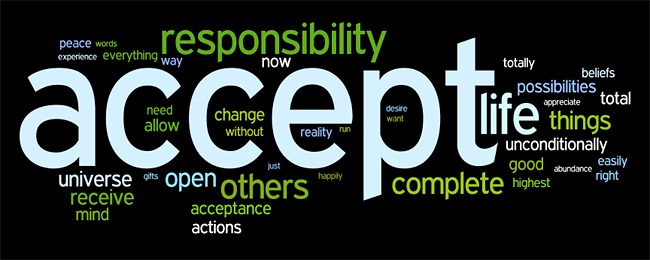
Acceptance is outcomes without attachments, guilt, shame, remorse, self pity, resentment, fear, anger, etc. These are the tools of the disease of addiction. To maintain Recovery One must maintain a state of Acceptance.
23 Thursday Apr 2020
A family of eight outside Boston is struggling with their second-oldest son’s heroin addiction. Recently, he overdosed, and paramedics revived him with Narcan. Click for NBC clip (requires flash player).
30 Monday Mar 2020
Posted in Addiction, Creative Therapy Tools, YouTube
≈ Comments Off on Maz Jobrani Sobriety & the Struggle to Overcome Addiction
Tags
05 Thursday Mar 2020
In the next few days, the doors will appear in Reno NV.

A shadow figure is painted on a door from the Lear Theater as part of the art project, Doors to Recovery. The local artist created door represents the addiction and recovery process and will be on display at Junkee Clothing Exchange in Midtown throughout July as part of Artown.(Photo: Andy Barron/RGJ)
You will see them if you stop into city hall or when you’re grabbing a cup of coffee at Dreamer’s Coffee House in Midtown.
They will beckon for you to examine them. Take in their various colors, sculptures and depictions.
They might have you asking yourself, “What are these all about?”
The message can be found in the varying images, including shadows, walking shoes on a path, butterflies and blossoming trees: When one door closes on addiction, another opens to a new life and a second chance.
These are the Doors of Recovery.
The public art project, sponsored by Transforming Youth Recovery, will be on display in multiple locations in downtown and Midtown throughout July as part of Artown.
It will feature 38 local artist-created doors from the Lear Theater representing the transformation process from addiction to recovery. The goal of the project is to raise addiction and recovery awareness and celebrate the youth who are rebuilding their lives today, Transforming Youth Recovery’s Kate High said.
“The doors are brilliant and fantastic. A lot of the artists have experience — some personal, others with their families or loved ones — with addiction, or have lost people they’ve cared about,” High said. “There are a lot of feelings that went into them: ransformation, journey and metamorphosis from dark to light. The artists have all been excited to support a good cause — it is a problem and a disease and not someone’s choice when they started.”
Transforming Youth
A year ago, Stacie Mathewson’s son lost his battle to addiction.
Two years before that, while he was in recovery, she developed a growing interest in helping youth in recovery. She founded the Stacie Mathewson Foundation to raise addiction and recovery awareness and promote education in communities nationwide.
In 2013, she started Transforming Youth Recovery with the mission to “transform youth recovery — one community, one school, one student at a time.”
The organization currently is working to fund 100 collegiate recovery programs and funded the first collegiate pilot program at the University of Nevada, Reno — Nevada Recovery and Prevention (NRAP), High said.
She said in less than two years, Transforming Youth Recovery has tripled the number of collegiate recovery programs across the country, offering hundreds of students support they wouldn’t have otherwise had.
“The goal is to raise awareness of the nature of the disease and to celebrate young people in recovery,” High said. “We want to break stigma of the disease — it’s not a black mark against them — and encourage people to get into recovery. It’s hard and requires support, but it’s possible. Lives can be turned around. It’s the use that cause the behavior and not the person.”
NRAP student worker and member in recovery Jordan Fugate said she understands what it means to turn your life around. She said she was incarcerated at 21, and today, she’s in school, has her own car and is working with the recovery program to assist others in their recovery.
She said she wants to give hope to others.
“In college, alcohol is everywhere and it’s harder to be in recovery,” Fugate said. “But, you don’t have to wait until you hit rock bottom — or even need to be dealing with addiction — you can come connect and make friends, find support and be part of sober activities.”
NRAP currently has about 50 students and 12 core members, ranging from 18 years old to 33. While the main campus is located at UNR, there is also a part-time campus at Truckee Meadows Community College.
“NRAC is two years old, but a lot of people don’t know we’re around,” Fugate said. “This will help make
everyone aware that there are college support groups on the campuses. It’s benefiting those locally, and we wanted to be part of Doors to Recovery to make people aware.”
The program is open to students who are choosing to live a sober lifestyle. It offers peer and professional support, Alcoholic, Eating Disorders and Narcotics Anonymous programs, as well as wellness groups, a grief group and a sexual trauma support group.
“It’s a place to come hang out and meet people,” Fugate said. “This has helped me to live a college lifestyle sober. It’s difficult (for students) when there are bars around campus or casinos for events and restaurants. It might be more difficult to be sober in college in Reno. There is the 24-hour lifestyle here that other colleges don’t have.”
Fugate said for the Doors project, NRAP created an image of a moral compass and various dark and light colors.
“On a panel is a compass because people who get sober talk about their moral compass, and how your values and morals change when you’re an addict,” Fugate said. “There are bright colors at the top and darker colors on the bottom; the light is overtaking the dark.”
Powerful art
The late Moya Olsen Lear gave Mathewson pews from the inside of the Lear Theater many years ago, High said.
She said Mathewson had kept the pews in storage with ideas of transforming and auctioning them off to support Transforming Youth Recovery, but the pews were 15 feet long and weren’t the right fit for the project.
There were, however, dozens of unmarked door panels in the basement of the Lear that wouldn’t be used in the restoration of the building. Mathewson swapped the pews for the door panels.
That was the beginning of Doors to Recovery.
“Art is something that everyone can relate to,” High said. “The doors are celebrating recovery. Art has universal appeal; it’s a way of telling story in so many different ways. It’s society’s way of expressing itself.”
Artist Carol Foldvary-Anderson said getting involved in the project has been a transformational process for her, too.
She said while she hasn’t personally been affected by addiction, she believes everyone can relate to recovering and transitioning into something.
“I think it gives the community an awareness of the transforming aspect of recovery,” Foldvary-Anderson said. “It creates an incentive to seek recovery. Some don’t know it exists or are ashamed they have a problem and they don’t want to share it with anyone. How do you bring yourself to the place for help? I wanted to make my door a beautiful and rewarding place. The awareness for recovery is powerful.”
Initially, she had wanted to create a door that represented three things: peace, happiness and joy. But, as she began working on it, a butterfly image came to her. She said it was iconic for change — they transition into something extremely beautiful and she wanted that to be a big part of her door’s message.
Her door, “Metamorphosis of Change,” features paint, molding and a large, black butterfly with a smaller butterfly on top of it. There are also several mirrors placed along the door.
She said the shadow butterfly represents the hidden nuances we have inside ourselves and the smaller butterfly is who we are and who we are becoming. The mirrors are the reflective side of ourselves — look at what you are doing and keep tabs on yourself.
“For me, it was a personal growth, as the artist creating this. I went through transitions and changes just working on this as far as what I first submitted (for the project) and what it turned out being,” Foldvary-Anderson said. “A lot of artists showed frustration, agony and pain in their art. I wanted to show the other side: a place of beauty.”
28 Friday Feb 2020
Teenagers who smoked marijuana daily for three years performed poorly on memory tasks and showed abnormal changes in brain structure, according to a Northwestern Medicine study. Researchers in Chicago observed the brains of teenagers who were heavy users of marijuana. In those individuals, memory-related structures in the brain appeared to shrink and collapse inward, possibly indicating a decrease in neurons.
These abnormalities were recorded two years after the teens stopped using marijuana, possibly indicating long-term effects, and look similar to schizophrenia-related brain abnormalities.
The brains were shaped more abnormally for individuals who began marijuana use at a younger age, according to the reports, which suggest that memory regions of the brain are more susceptible to the drug at earlier ages.
The research was published in the December issue of Schizophrenia Bulletin.
 RichardbBrunner