• Home
  • Music
  • About
  • Contact
  • CreativeTherapyTools.com

RichardbBrunner

~ creative arts therapist

RichardbBrunner

Category Archives: Creativity

The Creative Life and Well-Being

15 Wednesday Jan 2025

Posted by RichardB in creative, Creativity, Health, Intuition

≈ Comments Off on The Creative Life and Well-Being

Tags

wellness

The Creative Life is full of new possibilities, discoveries, exploration, experimentation, self-expression, and invention. It’s a habit, a way of being, a style of existing. But is the Creative Life full of well-being?

Depends on how you define well-being.
In recent years, psychologists have taken a deeper look at well-being. The traditional approach to well-being focuses on hedonic pleasures and positive emotions. However, while positive emotions often accompany happiness, the mere experience of positive emotions is not necessarily an indicator of happiness, and the presence of negative emotions doesn’t necessarily decrease one’s well-being. This deeper approach to well-being, often described as “eudaimonic well-being”, focuses on living life in a full and deeply satisfying way.
What are the six dimensions of eudaimonic well-being?:

  1. Autonomy (“I have confidence in my opinions, even if they are contrary to the general consensus“)
  2. Environmental mastery (“I am quite good at managing the many responsibilities of my daily life”)
  3. Personal growth (“I think it is important to have new experiences that challenge how you think about yourself and the world”)
  4. Positive relations with others (“People would describe me as a giving person, willing to share my time with others”)
  5. Purpose in life (“Some people wander aimlessly through life, but I am not one of them”)
  6. Self-acceptance (“I like most aspects of my life”)

a step forward

24 Saturday Aug 2024

Posted by RichardB in Creativity, Health, photo, quote, the unknown

≈ Comments Off on a step forward

When you get to the end of knowing what to do, take a step into the unknown …. of creativity. RichardbBrunner

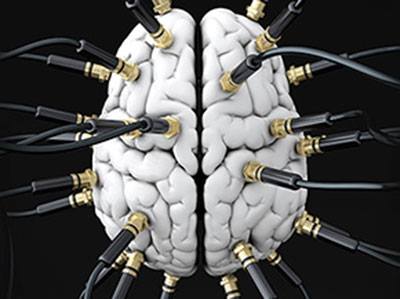
Some creative people have “unique brain connectivity”

10 Wednesday Apr 2024

Posted by RichardB in Creativity, Uncategorized

≈ Comments Off on Some creative people have “unique brain connectivity”

Tags

brain, Creativity, study

The latest research into creativity compares the brain function of exceptionally creative visual artists and scientists with a highly educated group.

Scientists used functional magnetic resonance imaging (fMRI) to scan participants’ brains while they performed tasks that tested creative thinking.

The researchers found that the brains of exceptionally creative people worked differently and had a unique brain connectivity pattern compared to the control group

The study was published in Psychology of Aesthetics, Creativity, and the Arts.

The neuroscience of creativity

27 Wednesday Mar 2024

Posted by RichardB in brain, creative arts therapy, Creativity, Mental Health

≈ Comments Off on The neuroscience of creativity

Tags

brain, creative

Do you have to be intelligent to be creative? Can you learn to be more creative? In this episode, we speak with neuropsychologist Rex E. Jung, PhD, who studies intelligence, creativity and brain function. He discusses why – even if it sounds counterintuitive – intelligence and creativity may not have all that much in common.

Transcript of an interview with Audrey and Rex Jung from the APA website.

Audrey Hamilton: Do you have to be intelligent to be creative? Can you really learn to be more creative? In this episode, we speak with one neuropsychologist who studies intelligence, creativity and brain function. He talks about why – even if it sounds counterintuitive – intelligence and creativity may not have all that much in common. I’m Audrey Hamilton and this is “Speaking of Psychology.”

Rex Jung is an assistant professor of neurosurgery at the University of New Mexico and a practicing clinical neuropsychologist in Albuquerque. He studies both brain disease and what the brain does well – a field of research known as positive neuroscience. His research is designed to relate behavioral measures, including intelligence, personality and creativity to brain function and structure. He has published research articles across a wide-range of topics including traumatic brain injury, lupus, schizophrenia, intelligence and creativity. Welcome, Dr. Jung.

Rex Jung: Thank you, Audrey.

Audrey Hamilton: Could you first of all explain neuroimaging and tell our listeners how it helps researchers understand how people think and act?

Rex Jung: Sure. So, neuroimaging is the tool that we use to measure the brain and there’s lots of different neuroimaging techniques. I use three main neuroimaging techniques – the first that I learned in graduate school was magnetic resonance microscopy, which sounds kind of complicated. But, it is a technique that basically looks at the chemicals in your brain. It’s in a standard MRI machine like you would go to get your knee scanned. But, using some sophisticated techniques you can look at certain chemicals in the brain. Some of those chemicals are very involved in important neuronal processes. And we’ve correlated those with behavior.

A different technique is called diffusion tensor imaging, which allows us to look at water movement in the brain. And this is important because there’s lots of tubes going through your brain like the wires that connect up your computer to the Internet. And these tubes, called axons, are connecting up different processing modules of your brain and those have to be healthy. So, we can look at the health of those axons, those myelinated axons, the fatty sheath like the insulation that surrounds those tubes.

The third technique that we use is just structural magnetic resonance imaging and that allows us to look at the processing modules of the brain – the cortical thickness – the computers that are on the surface of the brain and how much or little of that you have on the surface of the brain. Those are the three main techniques that I use. There’s functional imaging, fMRI, that most people have heard of where you’re looking a blood flow, as well. Those are ways that we measure brain structure and function and this gives us the ability to do scientific measures that then we can correlate to behavioral measures in psychology.

Audrey Hamilton: Does being highly creative mean you’re also more intelligent?

Rex Jung: Not necessarily. There’s a controversy about this in the psychological literature and some people have found correlations between creativity and intelligence. They’re usually pretty low, this association. And some people make a lot of that, this low association. But usually, because this association between creativity and intelligence is low, it means that you don’t necessarily have to be intelligent to be creative. So, I spent over a decade studying intelligence. It’s one of the reasons I started studying creativity because it seemed like something distinctly different and interesting than intelligence, which I have studied. I work with very highly intelligent people in academia and scientists and not all of them are creative. Why is that? If they do go together I would be working with all of the creative people in my city in Albuquerque, but that wasn’t the case so creativity seemed to be something different.

Audrey Hamilton: Can a person learn to become more creative or simply gain intelligence?

Rex Jung: There are some tools and techniques that can help people to be more creative. We’re starting to learn more about creativity and it’s one of the things that I’m excited about in terms of creativity is that there might be ways to increase your creative capacity.

Intelligence unfortunately seems to be much more under tight genetic control. The genetic correlates of intelligence are high, like .75. So, if you have twins – they’re going to be identical twins – their correlation of their intelligence with one another is going to be very, very high. So that implies that the genetic involvement of that capacity is under much more tight control than the environment would be.

With creativity, we don’t have that information and I’m hopeful that you can modulate or modify creative cognition much more than intelligence. There are studies out there that have shown increases in intelligence scores of two, maybe three points on a particular measure, which are not particularly high. But those are also controversial. Some have been replicated. Some haven’t been replicated. And we really don’t see that in terms of intelligence. With creativity, there’s a pitched effort to try to increase creativity scores on some of these measures and we’re seeing some good initial results and I’m very hopeful about that.

Audrey Hamilton: How does the way a person’s brain works and is structured influence how creative or intelligent he or she is?

Rex Jung: The research that we’ve done shows that the brain organization of intelligence and creativity are quite different. So, when you think about those measures that I talked about, those neuroimaging measures, the brain of someone who is intelligent – think of bigger, better, stronger, faster – all the measures are pointing to higher integrity of the brain of someone who has high intelligence. So, the cortical mantle is thicker, the white matter, the wires are more myelinated, the water can travel faster and in a coherent direction, you have more of these certain chemicals that I was talking about.

cr

Audrey Hamilton: It’s beefed up.

Rex Jung: It’s beefed up, yes. So you can have a better organized brain.

With creativity, the story was different. In different regions of the brain, we were seeing weaker connections, thinner cortex and different levels of these same biochemicals. So, it was really clear from these studies that intelligence and creativity were different because we were seeing different pictures in the measures we were taking of the brain. But I tend to look at creativity and intelligence as two different kinds of reasoning. That creativity is kind of reasoning without all of the information present. So, call it abductive reasoning. But, you have hypothesis testing about how the world could work without all of the information present. So, you have to use abstraction and metaphor and stuff like that about this might look like this or this might be this way.

With intelligence, you’re using deductive reasoning, where it’s rule-based reasoning where a equals b and that’s the way it goes. You have a rule for how this relationship works. So, creativity and intelligence are probably different types of reasoning. Both are very adaptive, but they’re just different for different types of problems that you have to solve out in the world.

Audrey Hamilton: Is real creativity rare? How about genius?

Rex Jung: So, creativity is common and genius is a lot more rare than we would believe. The term genius gets thrown around a lot. But, I think genius is rare because that combination of brain organization where you have high fidelity, beefed up brain in certain regions and then kind of down regulated brain in other regions is really going to be kind of rare where that is present in the same brain. So, to have that back and forth between intelligence and creativity, the ability to do both of those reasoning processes well, where you can do first approximations, hypothesis testing, abstraction and then create a rule, a novel and useful rule out of nothing before is rare and that is true genius.

Audrey Hamilton: Well great. Thank you so much for joining us, Dr. Jung. It’s been very, very interesting.

Rex Jung: Great. Thank you, Audrey.

Being Creative & Meditation

20 Wednesday Mar 2024

Posted by RichardB in Creativity, grounding, Meditation, mindfulness

≈ Comments Off on Being Creative & Meditation

Tags

create, Creativity, meditation, mindfulness

Certain meditation techniques can promote creative thinking, even if you have never meditated before. This is the outcome of a study by cognitive psychologist Lorenza Colzato and Dominique Lippelt at Leiden University, published in Mindfulness.MP900309017

Long-lasting influence

The study is a clear indication that you don’t need to be an experienced meditator to profit more from meditation. The findings support the belief that meditation can have a long-lasting influence on human cognition, including how we conceive new ideas. Besides experienced meditators, also novices may profit from meditation.

Different techniques, different effects

But the results demonstrate that not all forms of meditation have the same effect on creativity. Test persons performed better in divergent thinking (= thinking up as many possible solutions for a given problem) after Open Monitoring meditation (= being receptive to every thought and sensation). The researchers did not see this effect on divergent thinking after Focused Attention meditation (=focusing on a particular thought or object.)

Setup of the study

Print40 individuals participated in this study, who had to meditate for 25 minutes before doing their thinking tasks. There were both experienced mediators and people who never meditated before. The study investigated the influences of different types of meditative techniques on the two main ingredients of creativity:

  • Divergent thinking Allows for many new ideas to be generated. It is measured using the so-called Alternate Uses Task method where participants are required to think up as many uses as possible for a particular object, such as a pen.
  • Convergent thinking Convergent thinking, on the other hand, is a process whereby one possible solution for a particular problem is generated. This is measured using the Remote Associates Task method, where three unrelated words are presented to the participants, words such as ‘time’, ‘hair’ and ‘stretch’. The participants are then asked to identify the common link: in this case, ‘long’.

Lorenza S. Colzato, Ayca Szapora, Dominique Lippelt, Bernhard Hommel. Prior Meditation Practice Modulates Performance and Strategy Use in Convergent- and Divergent-Thinking Problems. Mindfulness, 2014; DOI: 10.1007/s12671-014-0352-9

Watch “How Do Creative People Think?”

27 Friday Oct 2023

Posted by RichardB in Creativity

≈ Comments Off on Watch “How Do Creative People Think?”

Tags

Creativity, Thinking

Watch “The Neuroscience of Creativity, Perception, and Confirmation Bias | Beau Lotto | Big Think”

04 Friday Aug 2023

Posted by RichardB in Creativity

≈ Comments Off on Watch “The Neuroscience of Creativity, Perception, and Confirmation Bias | Beau Lotto | Big Think”

Tags

Creativity, Neuroscience, Perception

Cédric Villani on the 7 Ingredients of Creativity

29 Tuesday Sep 2020

Posted by RichardB in creative, Creativity, YouTube

≈ Comments Off on Cédric Villani on the 7 Ingredients of Creativity


Hospital art therapy program helps children express themselves

13 Thursday Aug 2020

Posted by RichardB in art, Art Therapy, Creativity, Health, kids

≈ Comments Off on Hospital art therapy program helps children express themselves

Tags

Art Therapy, creative

Nathan Allen loves the colour blue.

His T-shirt is blue, the blanket wrapped around his knees is blue, and his eyes, bright under his baseball cap, are blue.

But blue is also a feeling, and after spending months undergoing near-daily dialysis at the Hospital for Sick Children, who could blame an 11-year-old for feeling a bit down?msclip-176

Nathan was referred to the hospital’s new on-staff art therapist to help him cope with his emotions. And when Jennifer Bassin came to visit recently week with her case of supplies, he chose the colour blue to start on a sculpture of a car.

“Shocking,” jokes his mom, Judy Chapman.

Nathan was diagnosed with a bilateral Wilms’ tumour, a rare cancer of the kidneys mostly affecting children, at age 5. He started chemo and radiation and had a partial nephrectomy in both kidneys. His left kidney never worked properly again, and after almost five years of remission, cancer returned to his right kidney.

Now he undergoes chemo once every three weeks and dialysis five days a week. That’s a lot of poking and prodding for an 11-year-old who would prefer to be playing defence on the Georgina Blaze novice hockey team and cuddling his 3-year-old beagle, Daisy, at home in Keswick, Ont.

After three more chemo treatments, Nathan can go home. His parents are training to do at-home dialysis and counting down the days until Nathan can receive a new kidney. His mom is praying she can eventually donate one of her own.

Until then, he looks forward to his weekly sessions with Bassin. She visits during the two-and-a-half-hour dialysis process, and they paint or sculpt while the machine whirs in the background.

“It absorbs some of the time,” Nathan says. “I like to build stuff.”

Bassin has brought something called a 3Doodler — a cross between a hot glue gun and a tiny 3D printer, which can make plastic sculptures. This day, after he makes the car, she asks Nathan to make something that resembles his idea of cancer.

“A big, black, blob,” he says.

Nathan is an outpatient but most of Bassin’s patients are long-term in-patients at Sick Kids who have chronic illnesses, complex medical histories or have faced traumatic injuries.

Since the program started in May, she does art therapy just two days a week and sees between four and eight children aged 4 to 18. Psychiatric patients have benefited from art therapy at Sick Kids in the past, but this is the first year the new program, which is entirely funded by donations, has been extended to medical patients.

“Art therapy is taking the language children already speak and meeting them at that level,” Bassin said. “You don’t have to be good at art to participate in art therapy. It doesn’t have to be about the painting or about the drawing. It’s more about finding something they enjoy that we can use as a tool to explore how they’re feeling.”

One patient, who had recently been in a traumatic boat accident, sculpted a vessel out of clay — and then smashed it against the wall in a moment of catharsis. Some enjoy the physicality of painting big murals, and some like to rip up what they’ve drawn. Another drew a landscape so she could imagine herself outside the hospital, at a picnic.133741-133461

“When you create something outside of you, you can really treat it like it’s at a distance, and it makes it safer for us to explore a little bit.”

Making art helps young patients take back some control in their lives, if only for an hour. Some patients are content with their creation, and others want to delve deeper into their feelings, Bassin says.

Nathan’s family hopes he can go home in late September, when he can rejoin his classmates in Grade 6 and go back to being an annoying older brother to his sister Emma, 7. He’s still quiet, but less withdrawn after a session, his mom says.

As he paints a mask green, with blue lips and black eyes, Bassin asks Nathan if he has a plan.

“Nope,” he says. “Just going step by step.”

The Hospital for Sick Children

Creativity: The science behind the madness

13 Thursday Aug 2020

Posted by RichardB in Creativity, Uncategorized

≈ Comments Off on Creativity: The science behind the madness

Tags

Creativity

Creativity

07 Friday Aug 2020

Posted by RichardB in creative arts therapy, Creativity, photo, quote

≈ Comments Off on Creativity

Creativity is allowing yourself to make mistakes. Art is knowing which ones to keep.

Scott Adams


people-29_thumb.jpg

What is Mindfulness ?

06 Thursday Aug 2020

Posted by RichardB in Creativity, Meditation, mindfulness, Wellness

≈ Comments Off on What is Mindfulness ?

Tags

About, learn, meditation, mindfulness

Mindfulness is a concentrated state of awareness that can help us see and respond to situations with clarity and without getting carried away by emotions or the constant chatter in our heads. Mindfulness enables us to:

· Better manage tension and stress

· Enhance objectivity, mental focus

· Communicate and make decisions more effectively

· Improve productivity

· Quiet’s noise in the mind

Meditationmsclip-139

Meditation is the tool we use to cultivate mindfulness. With meditation, you intentionally pay attention to a particular object as a way to strengthen concentration. There are thousands of meditative techniques: Tai Chi, yoga, focusing on the breath and using a mantra are all examples. People often think that meditating “correctly” means clearing all thought from the mind. This is a myth. The mind never stops thinking – it’s when we get caught up in our thoughts that we lose mindfulness. By witnessing thoughts, allowing them to pass, and returning to your chosen object of focus, you can actually build the muscle of concentration. Think of meditation as a fitness routine for the mind.

Are there other benefits to mindfulness?

In addition to boosting brain power, numerous research studies have shown significant physical benefits including:

· Reduced blood pressure

· Lowered cholesterol levels

· Enhanced immune function

· Reduced headache, migraine, back pain

· Improved respiratory function

Mindfulness does not require a particular set of beliefs in order to learn and practice – it is a quality of mind, accessible and available to all.

Mindfulness allows us to live every moment fully without the filters of bias, judgment or emotional reaction.

Mindfulness helps the body cope with physical challenges such as headaches, back pain and even heart disease.

Mindfulness keeps us from reacting too quickly – it helps increase the gap between impulse and action.

Creativity: The science behind the madness

21 Tuesday Jul 2020

Posted by RichardB in Creative Therapy Tools, Creativity

≈ Comments Off on Creativity: The science behind the madness

Tags

Creativity

Don’t think

19 Sunday Jul 2020

Posted by RichardB in create, Creativity, quote

≈ Comments Off on Don’t think

Tags

create, ray, think

Don’t think. Thinking is the enemy of creativity. It’s self-conscious, and anything self-conscious is lousy. You can’t try to do things. You simply must do things. Ray Bradbury

image

the creative individual

09 Thursday Jul 2020

Posted by RichardB in brain, Creativity

≈ Comments Off on the creative individual

People are more creative than others and are literally bubbling with ideas, while others rarely or never show signs of creativity. What should we look for when searching for creative people?
Creativity can quite simply be defined as the capacity to come up with new ideas to serve a purpose. Creativity is thus one of the most important sources of renewal. Creativity contributes to innovation and improvements in working life, commerce and industry.

No wonder employers want creative employees in areas where it is essential to come up with proposals for new products and services, and new ways of doing things.
The creative personality
Professor Øyvind L. Martinsen at BI Norwegian Business School has conducted a study to develop a personality profile for creative people: Which personality traits characterize creative people?
The study was conducted with 481 people with different backgrounds. The segment consists of various groups of more or less creative people.

  • The first group of creative people consists of 69 artists working as actors or musicians in a well-known symphony orchestra or are members of an artist’s organization with admission requirements.
  • The second group of creative people consists of 48 students of marketing.
  • The remaining participants in the study are managers, lecturers and students in programs that are less associated with creativity than marketing.

The creativity researcher mapped the participants’ personality traits and tested their creative abilities and skills through various types of tasks.
Seven creativity characteristics
In his study Martinsen identifies seven paramount personality traits that characterize creative people:
• 1. Associative orientation: Imaginative, playful, have a wealth of ideas, ability to be committed, sliding transitions between fact and fiction.
• 2. Need for originality: Resists rules and conventions. Have a rebellious attitude due to a need to do things no one else does.
• 3. Motivation: Have a need to perform, goal-oriented, innovative attitude, stamina to tackle difficult issues.
• 4. Ambition: Have a need to be influential, attract attention and recognition.
• 5. Flexibility: Have the ability to see different aspects of issues and come up with optional solutions.
• 6. Low emotional stability: Have a tendency to experience negative emotions, greater fluctuations in moods and emotional state, failing self-confidence.
• 7. Low sociability: Have a tendency not to be very considerate, are obstinate and find faults and flaws in ideas and people.
Among the seven personality traits, associative orientation and flexibility are the factors that to the greatest extent lead to creative thinking.
“Associative orientation is linked to ingenuity. Flexibility is linked to insight,” says the professor. The other five characteristics describe emotional inclinations and motivational factors that influence creativity or spark an interest in creativity.
“The seven personality traits influence creative performance through inter-action,” Martinsen points out.
Øyvind L. Martinsen. The Creative Personality: A Synthesis and Development of the Creative Person Profile. Creativity Research Journal, 2011; 23 (3): 185 DOI: 10.1080/10400419.2011.595656


continual

15 Wednesday Apr 2020

Posted by RichardB in Creativity, photo, quote

≈ Comments Off on continual

Creativity is a continual surprise. ― Ray Bradbury

PhotoMix-0099.jpg

Walking and creativity

01 Wednesday Jan 2020

Posted by RichardB in Creativity

≈ Comments Off on Walking and creativity

When the task at hand requires some imagination, taking a walk may lead to more creative thinking than sitting, according to research published by the American Psychological Association.
“Many people anecdotally claim they do their best thinking when walking,” said Marily Oppezzo, PhD, of Santa Clara University. “With this study, we finally may be taking a step or two toward discovering why.”

While at Stanford University’s Graduate School of Education, Oppezzo and colleague Daniel L. Schwartz, PhD, conducted studies involving 176 people, mostly college students. They found that those who walked instead of sitting or being pushed in a wheelchair consistently gave more creative responses on tests commonly used to measure creative thinking, such as thinking of alternate uses for common objects and coming up with original analogies to capture complex ideas. When asked to solve problems with a single answer, however, the walkers fell slightly behind those who responded while sitting, according to the study published in APA’s Journal of Experimental Psychology: Learning, Memory and Cognition.
While previous research has shown that regular aerobic exercise may protect cognitive abilities, these researchers examined whether simply walking could temporarily improve some types of thinking, such as free-flowing thought compared to focused concentration. “Asking someone to take a 30-minute run to improve creativity at work would be an unpopular prescription for many people,” Schwartz said. “We wanted to see if a simple walk might lead to more free-flowing thoughts and more creativity.”
Of the students tested for creativity while walking, 100 percent came up with more creative ideas in one experiment, while 95 percent, 88 percent and 81 percent of the walker groups in the other experiments had more creative responses compared with when they were sitting. If a response was unique among all responses from the group, it was considered novel. Researchers also gauged a participant’s total number of responses and whether a response was feasible and appropriate to the constraints of the task. For example, “Putting lighter fluid in soup is novel, but it is not very appropriate,” Oppezzo said.
Marily Oppezzo, Daniel L. Schwartz. Give your ideas some legs: The positive effect of walking on creative thinking.. Journal of Experimental Psychology: Learning, Memory, and Cognition, 2014; DOI: 10.1037/a0036577


The Creative Life and Well-Being

24 Tuesday Dec 2019

Posted by RichardB in creative, Creativity, Health, Intuition

≈ Comments Off on The Creative Life and Well-Being

The Creative Life is full of new possibilities, discoveries, exploration, experimentation, self-expression, and invention. It’s a habit, a way of being, a style of existing. But is the Creative Life full of well-being?
Depends on how you define well-being.
In recent years, psychologists have taken a deeper look at well-being. The traditional approach to well-being focuses on hedonic pleasures and positive emotions. However, while positive emotions often accompany happiness, the mere experience of positive emotions is not necessarily an indicator of happiness, and the presence of negative emotions doesn’t necessarily decrease one’s well-being. This deeper approach to well-being, often described as “eudaimonic well-being”, focuses on living life in a full and deeply satisfying way.
What are the dimensions of eudaimonic well-being? Psychologist Carol Ryff makes the case for no less than six dimensions of eudaimonia:

  1.  Autonomy (“I have confidence in my opinions, even if they are contrary to the general consensus“)
  2. Environmental mastery (“I am quite good at managing the many responsibilities of my daily life”)
  3. Personal growth (“I think it is important to have new experiences that challenge how you think about yourself and the world”)
  4. Positive relations with others (“People would describe me as a giving person, willing to share my time with others”)
  5. Purpose in life (“Some people wander aimlessly through life, but I am not one of them”)
  6. Self-acceptance (“I like most aspects of my life”)

See more at: http://www.creativitypost.com/psychology/the_creative_life_and_well_being

Cédric Villani on the 7 Ingredients of Creativity

03 Tuesday Dec 2019

Posted by RichardB in creative, Creativity, youtube

≈ Comments Off on Cédric Villani on the 7 Ingredients of Creativity


Music Therapy

27 Wednesday Nov 2019

Posted by RichardB in Creativity, Health, Journaling, Wellness, Yoga

≈ Comments Off on Music Therapy

Most everyone enjoys listening to music. Some of us play music as well. Music has a therapeutic effect and can be used to enhance or even change how we feel. According to the American Music Therapy Association: Music Therapy is an established health profession in which music is used within a therapeutic relationship to address physical, emotional, cognitive, and social needs of individuals. After assessing the strengths and needs of each client, the qualified music therapist provides the indicated treatment including creating, singing, moving to, and/or listening to music. Through musical involvement in the therapeutic context, clients’ abilities are strengthened and transferred to other areas of their lives. Music therapy also provides avenues for communication that can be helpful to those who find it difficult to express themselves in words. Research in music therapy supports its effectiveness in many areas such as: overall physical rehabilitation and facilitating movement, increasing people’s motivation to become engaged in their treatment, providing emotional support for clients and their families, and providing an outlet for expression of feelings.
As a Creative Arts Therapist I use music to support individuals and groups when they are engaged in a therapeutic process. Whether it’s movement, art or guided meditation the music enhances focus for the participants. I often hear people report that the music helped them to get in touch with feelings and/or explore them on a deeper level.
← Older posts

instagram

Follow RichardbBrunner on WordPress.com
  • Tumblr
  • YouTube

Create a free website or blog at WordPress.com.

Privacy & Cookies: This site uses cookies. By continuing to use this website, you agree to their use.
To find out more, including how to control cookies, see here: Cookie Policy
  • Subscribe Subscribed
    • RichardbBrunner
    • Join 491 other subscribers
    • Already have a WordPress.com account? Log in now.
    • RichardbBrunner
    • Subscribe Subscribed
    • Sign up
    • Log in
    • Report this content
    • View site in Reader
    • Manage subscriptions
    • Collapse this bar
 

Loading Comments...