• Home
  • Music
  • About
  • Contact
  • CreativeTherapyTools.com

RichardbBrunner

~ creative arts therapist

RichardbBrunner

Category Archives: Health

Healing with art

22 Monday Jul 2019

Posted by RichardB in art, Creativity, Health, Wellness

≈ Comments Off on Healing with art

Tags

health

Gripping a cane to stabilize his stride, Bradley Books walked past the Firehouse Arts Center in Longmont, promising himself that one day his paintings and drawings would hang on the white walls.

Now four years later, the 37-year-old is inside on a weekly basis, without his cane, and facilitating a monthly program, Art of Possibility, which helps developmentally-disabled participants heal through artistic expression.

“My favorite is they always ask, ‘When are we coming back?’ And to know that’s how they feel, that then encourages me to keep working with it,” he said.

The program is two-fold because working with others also helps Books restore mentally and physically from pain that sometimes still paralyzes his mind and body. MORE HERE

Music Therapy

12 Wednesday Jun 2019

Posted by RichardB in Creativity, Health, Journaling, Wellness, Yoga

≈ Comments Off on Music Therapy

Most everyone enjoys listening to music. Some of us play music as well. Music has a therapeutic effect and can be used to enhance or even change how we feel. According to the American Music Therapy Association: Music Therapy is an established health profession in which music is used within a therapeutic relationship to address physical, emotional, cognitive, and social needs of individuals. After assessing the strengths and needs of each client, the qualified music therapist provides the indicated treatment including creating, singing, moving to, and/or listening to music. Through musical involvement in the therapeutic context, clients’ abilities are strengthened and transferred to other areas of their lives. Music therapy also provides avenues for communication that can be helpful to those who find it difficult to express themselves in words. Research in music therapy supports its effectiveness in many areas such as: overall physical rehabilitation and facilitating movement, increasing people’s motivation to become engaged in their treatment, providing emotional support for clients and their families, and providing an outlet for expression of feelings.
As a Creative Arts Therapist I use music to support individuals and groups when they are engaged in a therapeutic process. Whether it’s movement, art or guided meditation the music enhances focus for the participants. I often hear people report that the music helped them to get in touch with feelings and/or explore them on a deeper level.

University of California-Sleep Disorders

05 Wednesday Jun 2019

Posted by RichardB in Health, Wellness, youtube

≈ Comments Off on University of California-Sleep Disorders

Tags

health, sleep, uc

Do we really need to sleep? Dr. Thomas Neylan looks at intrinsic sleep disorders such as sleep apnea and insomnia and what to do if they affect you. Dr. Elissaios Karageorgio looks at how aging affects sleep and Dr. Rochelle Zak looks at the neurophysiology of sleep.

Study cools idea behind hot yoga

29 Wednesday May 2019

Posted by RichardB in Health, Relaxation, Stress, Wellness, Yoga

≈ Comments Off on Study cools idea behind hot yoga

Tags

hot yoga, research, study


A small study sponsored by the American Council on Exercise is one of the first to look at whether hot yoga offers any more bang for your buck than traditional yoga. The study recruited 20 healthy men and women between 19 and 44, each of whom took a 60-minute yoga class in both a room heated to 21 C and one heated to 31 C. The classes were taken 24 hours apart and were led by the same instructor and featured the same poses.

Each subject wore a heart-rate monitor and swallowed an ingestible core body temperature sensor before taking part in the class. Core body temperature was recorded five minutes before the class, every five minutes during the class and five minutes after the class.

Heart rate was recorded every minute, with subjects also ranking their perceived rate of exertion on a scale from 6 to 20.

In the end, the researchers, who hailed from the Department of Exercise and Sport Science at the University of Wisconsin-La Crosse, noted very little difference in the core temperature and heart rate of the participants despite the difference in temperature between the two classes. Core temperature for the hot yoga participants was 37.6 C versus 37.4 C for the cooler studio.

As for the intensity of the workouts, both yoga practices would be classified as “light exercise,” with heart rate averaging about 56 per cent of maximum during the regular yoga class as compared to 57 per cent of maximum heart rate during the hot yoga class.
Read the entire article here.

Different Cultures Enhances Creativity

27 Monday May 2019

Posted by RichardB in Creativity, emotions, Health, Relaxation, Wellness

≈ Comments Off on Different Cultures Enhances Creativity

Creativity can be enhanced by experiencing cultures different from one’s own, according to a study in Personality and Social Psychology Bulletin (published by SAGE).msclip-210.jpg

Three studies looked at students who had lived abroad and those who hadn’t, testing them on different aspects of creativity. Relative to a control group, which hadn’t experienced a different culture, participants in the different culture group provided more evidence of creativity in various standard tests of the trait. Those results suggest that multicultural learning is a critical component of the adaptation process, acting as a creativity catalyst.
The researchers believe that the key to the enhanced creativity was related to the students’ open-minded approach in adapting to the new culture. In a global world, where more people are able to acquire multicultural experiences than ever before, this research indicates that living abroad can be even more beneficial than previously thought.
“Given the literature on structural changes in the brain that occur during intensive learning experiences, it would be worthwhile to explore whether neurological changes occur within the creative process during intensive foreign culture experiences,” write the authors, William W. Maddux, Hajo Adam, and Adam D. Galinsky. “That can help paint a more nuanced picture of how foreign culture experiences may not only enhance creativity but also, perhaps literally, as well as figuratively, broaden the mind.
The article “When in Rome… Learn Why the Romans Do What They Do: How Multicultural Learning Experiences Facilitate Creativity” in the June 2010 issue of Personality and Social Psychology Bulletin is available free for a limited time here.
Source: SAGE Publications

Evidence based Yoga 2

08 Wednesday May 2019

Posted by RichardB in Health, Wellness, Yoga

≈ Comments Off on Evidence based Yoga 2

Tags

activities, ADHD, adherents, alignment, analysis, Another, asanas, assessments, asthma, attention, attitude, author, authors, Back, behavior, benefits, Both, bronchodilator, Cardiovascular, cases, Cochrane, composition, concentration, conclusions, consensus, deficit, difference, disease, disorder, disorders, efficacy, energy, Europe, Evidence, Except, factors, handouts, harmony, Hatha, health, improvement, inadequacies, India, Indian, indices, instructor, intervention, interventions, Iyengar, life, lifestyle, literature, measures, medication, medicine, meditation, metabolic, method, methodology, origins, outcome, output, Overall, pain, Patients, persons, philosophy, postures, pranayama, purposes, questionnaire, Raja, RCTs, relaxation, resistance, response, restriction, results, selection, self, sessions, Spirometry, status, stimulus, subjects, symptoms, syndrome, techniques, therapy, times, tolerance, tradition, treatment, trend, viniyoga, week, weeks

Yoga is a mind and body practice in complementary medicine with origins in ancient Indian philosophy. Part two of evidence based Yoga:

Carpal tunnel syndrome A randomized, single-blind controlled trial of 42 patients with carpal tunnel syndrome assigned subjects to either a yoga treatment group or a wrist splint group, each 8 weeks in duration. Twice a week, the yoga group practiced postures specifically designed to strengthen and stretch each joint in the upper body. Yoga participants showed improvement in grip strength, pain levels, and Phalen’s sign when compared to the wrist splint group. Nerve conduction studies were not performed.15 A Cochrane review of 21 trials that evaluated the clinical outcome of nonsurgical treatment of carpal tunnel syndrome reported that 8 weeks of yoga practice significantly reduced pain as compared to wrist splinting. The yoga was described as having a “significant short-term benefit,” though the duration of this benefit is unknown.16

Depression A 2004 review of five RCTs that evaluated yoga-based interventions for depression and depressive disorders showed some positive outcomes and no adverse effects on patients’ mild to severe depressive disorders. However, poor study design and incomplete methodologic reporting makes this interpretation preliminary.17 An RCT studying 7 weeks of yoga training in a group of breast cancer survivors showed positive changes in emotional function, depression, and mood disturbance.18 “Yoga and stress management” (in the online version of this article) provides more information on this study and others involving the effects of yoga on stress.

Irritable bowel syndrome In an RCT, treatment with loperamide (Imodium) was compared to treatment with a series of 12 yoga postures practiced twice a day for 2 months in a small sample of patients with clinically diagnosed irritable bowel syndrome. Patients underwent measurement of surface electrogastrography, and trait and state anxiety tests were administered before, during, and up to 2 months after treatment. Both intervention groups demonstrated a decrease in bowel symptoms and state anxiety.19

Menopausal symptoms In a recent pilot study, 14 postmenopausal women reported via interview and questionnaire a decrease in the severity and frequency of hot flushes after 8 weeks of 90-minute “restorative yoga” classes. Although this initial finding sounds encouraging, this trial had no control group or objective parameter measurements.20 An RCT studying postmenopausal sleep quality divided 164 women into groups who participated in either 4 months of low-intensity yoga, a moderate-intensity walking program, or a wait-list control group. This study reported no statistically significant interventional effects of any treatment on total sleep quality or on any individual sleep quality domain.21

Multiple sclerosis An RCT of 57 subjects with clinically defined multiple sclerosis were assigned to weekly Iyengar yoga class plus home practice, a cycling program, or a wait-list control group for 6 months. Results showed that both active interventions produced significant improvement in perceived levels of energy and reduced fatigue; however, the specific effects of the yoga practice were not isolated.22 Osteoarthritis In a pilot study, 11 deconditioned, yoga naive subjects with a clinical diagnosis of knee osteoarthritis showed improvements in pain and knee stiffness after 8 weeks of yoga training. The group performed modified Iyengar yoga sessions once a week.23


Seizure disorders In 2000, a systematic review of the published literature revealed that only one study was able to meet the selection criteria for reliable research design. The reviewers concluded that no available evidence pointed to yoga therapy as an efficacious treatment for epilepsy.24

Strength and flexibility In a recent study on the fitness related effects of hatha yoga, 10 yoga-naïve and previously untrained subjects aged 18 to 27 years participated in 85 minutes of pranayama and hatha yoga practice twice a week for 8 weeks. These subjects showed significant improvement in upper and lower body muscular strength, endurance, and flexibility. No statistically significant change in body composition or pulmonary function was observed.13
In a partial RCT with a longer time frame, 54 subjects aged 20 to 25 years participated in either 5 months of yoga instruction or no activity. After that time period, both groups practiced yoga for an additional 5 months. The group practicing 10 months of yoga showed significant improvements in shoulder, trunk, hip, and neck flexibility, as well as a reported improved performance during submaximal exercise testing.25
A well-executed study compared subjects who underwent 24 hours of hatha yoga classes over 8 weeks with a control group. The yoga training group showed a 13% to 35% improvement in flexibility, balance, and muscular endurance. The authors concluded that hatha yoga practice has significant effects on balance and flexibility.26


REFERENCES

1. Tindle HA, Davis RB, Phillips RS, Eisenberg DM. Trends in use of complementary and alternative medicine by US adults: 1997-2002. Altern Ther Health Med. 2005;11(1):42-49.
2. Carrico M. Yoga Journal’s Yoga Basics: The Essential Beginner’s Guide to Yoga for a Lifetime of Health and Fitness. New York, NY: Henry Holt and Company; 1997.
3. Nayak NN, Shankar K. Yoga: a therapeutic approach. Phys Med Rehabil Clin N Am. 2004;15(4): 783-798, vi.
4. Innes KE, Bourguignon C, Taylor AG. Risk indices associated with the insulin resistance syndrome, cardiovascular disease, and possible protection with yoga: a systematic review. J Am Board Fam Pract. 2005;18(6):491-519.
5. Raub JA. Psychophysiologic effects of Hatha yoga on musculoskeletal and cardiopulmonary function: a literature review. J Altern Complement Med. 2002;8(6):797-812.
6. Luskin FM, Newell KA, Griffith M, et al. A review of mind-body therapies in the treatment of musculoskeletal disorders with implications for the elderly. Altern Ther Health Med. 2000;6(2): 46-56.
7. Jensen PS, Kenny DT. The effects of yoga on the attention and behavior of boys with attentiondeficit/ hyperactivity disorder (ADHD). J Atten Disord. 2004;7(4):205-216.
8. Kirkwood G, Rampes H, Tuffrey V, et al. Yoga for anxiety: a systematic review of the research evidence. Br J Sports Med. 2005;39(12):884-891.
9. Krisanaprakornkit T, Krisanaprakornkit W, Piyavhatkul N, Laopaiboon M. Meditation therapy for anxiety disorders. Cochrane Database Syst Rev. 2006;(1):CD004998.
10. Sabina AB, Williams AL, Wall HK, et al. Yoga intervention for adults with mild-to-moderate asthma: a pilot study. Ann Allergy Asthma Immunol. 2005;94(5):543-548.
11. Vendanthan PK, Kesavalu LN, Murthy KC, et al. Clinical study of yoga techniques in university students with asthma: a controlled study. Allergy Asthma Proc. 1998;19(1):3-9.
12. Sherman KJ, Cherkin DC, Erro J, et al. Comparing yoga, exercise, and a self-care book for chronic low back pain: a randomized, controlled trial. Ann Intern Med. 2005;143(12):849-856.
13. Tran MD, Holly RG, Lashbrook J, Amsterdam EA. Effects of Hatha yoga practice on the healthrelated aspects of physical fitness. Prev Cardiol. 2001;4(4):165-170.
14. Clay CC, Lloyd LK, Walker JL, et al. The metabolic cost of Hatha yoga. J Strength Cond Res. 2005;19(3):604-610.
15. Garfinkel MS, Singhal A, Katz WA, et al. Yoga-based intervention for carpal tunnel syndrome: a randomized trial. JAMA. 1998;280(18):1601-1603.
16. O’Connor D, Marshall S, Massy-Westropp N. Nonsurgical treatment (other than steroid injection) for carpal tunnel syndrome. Cochrane Database Syst Rev. 2003(1):CD003219.
17. Pilkington K, Kirkwood G, Rampes H, Richardson J. Yoga for depression: the research evidence. J Affect Disord. 2005;89(1-3):13-24.
18. Culos-Reed SN, Carlson LE, Daroux LM, Hately-Aldous S. A pilot study of yoga for breast cancer survivors: physical and psychological benefits. Psycho Oncol. 2006;15(10):891-897.
19. Taneja I, Deepak KK, Poojary G, et al. Yogic versus conventional treatment in diarrheapredominant irritable bowel syndrome: a randomized control study. Appl Psychophysiol Biofeedback. 2004;29(1):19-33.
20. Cohen BE, Kanaya AM, Macer JL, et al. Feasibility and acceptability of restorative yoga for treatment of hot flushes: a pilot trial. Maturitas. 2007;56(2):198-204.
21. Elavsky S, McAuley E. Lack of perceived sleep improvement after 4-month structured exercise programs. Menopause. 2007;14(3, pt 1):535-540.
22. Oken BS, Kishiyama S, Zajdel D, et al. Randomized controlled trial of yoga and exercise in multiple sclerosis. Neurology. 2004;62(11):2058-2064.
23. Kolasinski SL, Garfinkel M, Tsai AG, et al. Iyengar yoga for treating symptoms of osteoarthritis of the knees: a pilot study. J Altern Complement Med. 2005;11(4):689-693.
24. Ramaratnam S, Sridharan K. Yoga for epilepsy. Cochrane Database Syst Rev. 2000(3):CD001524.
25. Ray US, Mukhopadhyaya S, Purkayastha SS, et al. Effect of yogic exercises on physical and mental health of young fellowship course trainees. Indian J Physiol Pharmacol. 2001;45(1):37-53.
26. Boehde D, Porcari JP, Greany J, et al. The physiological effects of 8 weeks of yoga training. J Cardiopulm Rehabil. 2005;25(5):290.

Meditation has Long-term Effects on the Brain

08 Wednesday May 2019

Posted by RichardB in Creativity, emotions, grounding, Health, Meditation, mindfulness, Wellness, YouTube

≈ Comments Off on Meditation has Long-term Effects on the Brain

Tags

brain, meditation, mindfulness

According to scientists from Harvard and Boston University, meditation produces enduring changes in emotional processing in the brain according to an article published in November of 2012 in the journal Frontiers in Human Neuroscience.

Researchers trained people with one of two different types of meditation, mindful meditation and compassionate meditation over an 8 week period. They measured activity in the brain using functional MRIs 3 weeks before the study and at 3 weeks after and noted what happened to areas of the brain related to compassion. They found the those people who learned compassionate meditation had a different and more loving response 3 weeks after the course even when not meditating.

How art aided Andrew Marr’s recovery

24 Wednesday Apr 2019

Posted by RichardB in art, Health, Journaling, lifestyle, Therapy, Wellness

≈ Comments Off on How art aided Andrew Marr’s recovery

Tags

health, recovery, wellness

“When I started to recover in hospital, one of my early frustrations was that I found I wanted to draw.

Drawing does for me what others find in meditation, prayer or gardening. It is my way of connecting to the world; it is not just making images but drinking in and praising what’s around me.

Returning to the world as I did after my stroke, you look at it with fresh eyes. You want to absorb all you see. That meant being able to draw again and art aided my recovery and charted it.” Read more: http://www.dailymail.co.uk/home/event/article-2442555/BBCs-Andrew-Marr-Knowing-I-able-draw-realise-I-going-OK.html#ixzz2gwenGqUy

Why We Get Fat: Diet Trends and Food Policy

17 Wednesday Apr 2019

Posted by RichardB in food, Health, lifestyle, Wellness, YouTube

≈ Comments Off on Why We Get Fat: Diet Trends and Food Policy

Tags

diet, fat, food, Policy, stanford medicine, trends

Hospital art therapy program helps children express themselves

09 Tuesday Apr 2019

Posted by RichardB in Art Therapy, creative arts therapy, Health, kids, Wellness

≈ Comments Off on Hospital art therapy program helps children express themselves

Nathan Allen loves the colour blue.

His T-shirt is blue, the blanket wrapped around his knees is blue, and his eyes, bright under his baseball cap, are blue.

But blue is also a feeling, and after spending months undergoing near-daily dialysis at the Hospital for Sick Children, who could blame an 11-year-old for feeling a bit down?

Nathan was referred to the hospital’s new on-staff art therapist to help him cope with his emotions. And when Jennifer Bassin came to visit recently week with her case of supplies, he chose the colour blue to start on a sculpture of a car.

“Shocking,” jokes his mom, Judy Chapman.e826d-creatiggggvity

Nathan was diagnosed with a bilateral Wilms’ tumour, a rare cancer of the kidneys mostly affecting children, at age 5. He started chemo and radiation and had a partial nephrectomy in both kidneys. His left kidney never worked properly again, and after almost five years of remission, cancer returned to his right kidney.

Now he undergoes chemo once every three weeks and dialysis five days a week. That’s a lot of poking and prodding for an 11-year-old who would prefer to be playing defence on the Georgina Blaze novice hockey team and cuddling his 3-year-old beagle, Daisy, at home in Keswick, Ont.

After three more chemo treatments, Nathan can go home. His parents are training to do at-home dialysis and counting down the days until Nathan can receive a new kidney. His mom is praying she can eventually donate one of her own.

Until then, he looks forward to his weekly sessions with Bassin. She visits during the two-and-a-half-hour dialysis process, and they paint or sculpt while the machine whirs in the background.

“It absorbs some of the time,” Nathan says. “I like to build stuff.”

Bassin has brought something called a 3Doodler — a cross between a hot glue gun and a tiny 3D printer, which can make plastic sculptures. This day, after he makes the car, she asks Nathan to make something that resembles his idea of cancer.

“A big, black, blob,” he says.

Nathan is an outpatient but most of Bassin’s patients are long-term in-patients at Sick Kids who have chronic illnesses, complex medical histories or have faced traumatic injuries.

Since the program started in May, she does art therapy just two days a week and sees between four and eight children aged 4 to 18. Psychiatric patients have benefited from art therapy at Sick Kids in the past, but this is the first year the new program, which is entirely funded by donations, has been extended to medical patients.

“Art therapy is taking the language children already speak and meeting them at that level,” Bassin said. “You don’t have to be good at art to participate in art therapy. It doesn’t have to be about the painting or about the drawing. It’s more about finding something they enjoy that we can use as a tool to explore how they’re feeling.”

One patient, who had recently been in a traumatic boat accident, sculpted a vessel out of clay — and then smashed it against the wall in a moment of catharsis. Some enjoy the physicality of painting big murals, and some like to rip up what they’ve drawn. Another drew a landscape so she could imagine herself outside the hospital, at a picnic.

“When you create something outside of you, you can really treat it like it’s at a distance, and it makes it safer for us to explore a little bit.”

Making art helps young patients take back some control in their lives, if only for an hour. Some patients are content with their creation, and others want to delve deeper into their feelings, Bassin says.

Nathan’s family hopes he can go home in late September, when he can rejoin his classmates in Grade 6 and go back to being an annoying older brother to his sister Emma, 7. He’s still quiet, but less withdrawn after a session, his mom says.

As he paints a mask green, with blue lips and black eyes, Bassin asks Nathan if he has a plan.

“Nope,” he says. “Just going step by step.”

The Hospital for Sick Children

5 steps to get you motivated to Exercise

13 Wednesday Mar 2019

Posted by RichardB in Exercise, Health, Wellness

≈ Comments Off on 5 steps to get you motivated to Exercise

Tags

Exercise. wellness, health

You know you should do it. And you know why: Exercising — simply put, moving instead of sitting — is critical for safeguarding your health and setting a good example for your kids. So why does it seem so hard to get yourself moving?

The truth is: You can. But knowing how and why to exercise isn’t enough. You need to develop the right mind-set to get and stay motivated.

“Change is hard!” says certified health behavior coach Shelly Hoefs, fitness supervisor at the Mutch Women’s Center for Health Enrichment in Sioux Falls, S.D. “When we try to start exercising, we think of all the excuses for not doing it and all the things that have gotten in the way before. Getting fit starts to seem overwhelming. And that makes it feel stressful. Before long, we don’t want to do it anymore.”

Here are five steps to get you moving in the right direction — and keep you going.

aid0117_760_427auto.jpg

  1. Find Personal Motivation to Exercise

What you need to get you up off the couch is a reason that’s important to you. At first, that may be some external factor, says Cal Hanson, director of the Sanford Wellness Center in Sioux Falls, S.D. It could be a number on the scale that surprises you or your doctor’s recommendation that you need to move more to stay healthy.

There are all kinds of benefits to getting fit. Which matters most to you? Something as simple as taking a walk after dinner every night helps to:

  • control your weight
  • strengthen your bones
  • enhance your muscles
  • reduce your risk for heart disease, type 2 diabetes, and some types of cancer

Plus, by becoming active, you’re being a good role model for your children.

These benefits may get you started, but they may not cut it when it comes to keeping you moving day after day, Hanson says. To keep up your motivation to exercise over time, you also need to find your internal motivators. Maybe taking a yoga class leaves you feeling more energized or less stressed. Maybe a run or walk every day helps you let go of stress. Hanson says these are the kind of rewards that are meaningful to you on a personal level and that can help keep you motivated.


  1. Set Realistic Goals to Get Fit

CDC guidelines call for adults to do 2 1/2 hours of moderate-intensity aerobic exercise a week. That’s a 30-minute walk five days a week. If you kick it up a notch — jogging or running, for example – it can be 15 minutes a day, five days a week.

You can aim for these exercise guidelines, but don’t try to meet them at the start. “People lose their motivation to exercise when they try to do too much too soon,” says Hanson.

So instead of walking for 30 minutes a day right off the bat, start out doing 15 minutes a day, two or three days a week.

Set weekly goals, gradually adding more time and intensity. At the end of each week, take a look at how you did. If you reached your goal, celebrate! “And if you didn’t reach your goal,” Hanson says, “think about what went wrong and how you’re going to respond differently next time.”


  1. Stop Thinking of It as Exercise — Do Something You Enjoy

You don’t have to go to the gym to get a good workout. It’s all about moving more — however you do it. For some people, going to the gym provides structure that helps them focus and a sense of accomplishment when they’re done. For others, it’s a chore — one they wind up avoiding as often as they can.

What else can you do? Almost anything that gets you — and your family — moving:

  • Walk the dog, or walk a neighbor’s dog. They’ll be grateful for the help!
  • Have dance contests with the kids instead of watching TV.
  • Go to the park and play hide-and-seek.
  • Shoot hoops with the kids.
  • Walk or bike to the store instead of driving, or park far away from the entrance.
  • Get off the train a stop early and walk the rest of the way to your office.

If you think about it, you’re surrounded by opportunities to get more active. Find the ones that you get excited about. You’re more likely to keep doing them if you’re having fun.

exercise-bike-foldable-stationary-528-1000.jpg

  1. Plan How to Fit Exercise Into a Hectic Schedule

For busy parents, a major obstacle to getting fit is lack of time. If you wait for time to open up, chances are you won’t be able to squeeze in a walk or a dance class very often. To avoid getting sidetracked by the daily demands of life, try these tips:

  • “Sit down with your schedule and really carve out blocks of time,” says psychologist Susan Bartell, PsyD, author of  Susan’s Fit and Fun Family Action Plan.Put it in your calendar like any other appointment.
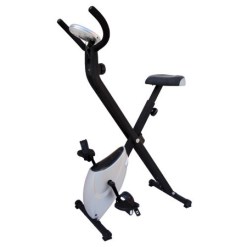
  • Add physical activity to things you already do. For example, pedal a stationary bike while reading or watching TV. Or take a walk with a friend to catch up instead of calling each other on the phone.
  • Plan activities you can do with your kids, such as going for bike rides or skating. Not only will you find more time for fitness, you’ll help inspire your kids to move more.

If you plan ahead for potholes on the road to fitness, you’re more likely to stay on course, Bartell says. “When you think through solutions to problems in advance, you’re less likely to give up when a pothole comes along.”


  1. Bounce Back from Setbacks

You’ve set a reasonable fitness goal. You’ve prepared for potential problems. Yet somehow you still didn’t make it to the gym today as you had planned. Don’t let that be your downfall.

“For many people, this is a slippery slope,” Hanson says. “It reminds them of times when they failed before, and they begin to think of themselves as exercise failures.”

When this happens, it’s time for an attitude adjustment so you don’t completely lose your motivation to exercise. If you miss the gym on Monday, that doesn’t mean your whole week is shot, Hanson says. It simply means you need to hit the gym on Tuesday or take the dog for an extra-long walk tonight.

Knowing how to exercise isn’t just a matter of learning how to use your body to hold a yoga pose or swing a racquet. It also involves learning how to use your mind to propel yourself into action and stick with a fitness routine.

“Start thinking of yourself as someone who exercises,” says Hoefs. “Eventually, that will become your identity”.

aid0117_760_427auto.jpg

Meditation has Long-term Effects on the Brain

25 Monday Feb 2019

Posted by RichardB in Health, Meditation, mindfulness, Relaxation, Wellness

≈ Comments Off on Meditation has Long-term Effects on the Brain

According to scientists from Harvard and Boston University, meditation produces enduring changes in emotional processing in the brain according to an article published in November of 2012 in the journal Frontiers in Human Neuroscience.
Researchers trained people with one of two different types of meditation, mindful meditation and compassionate meditation over an 8 week period. They measured activity in the brain using functional MRIs 3 weeks before the study and at 3 weeks after and noted what happened to areas of the brain related to compassion. They found the those people who learned compassionate meditation had a different and more loving response 3 weeks after the course even when not meditating.

Therapy dogs

15 Friday Feb 2019

Posted by RichardB in Health, Relaxation, Stress, Therapy Dogs

≈ Comments Off on Therapy dogs

Tags

dogs, pets, therapy, wellness

A therapy dog is a dog trained to provide affection and comfort to people in hospitals, retirement homes, nursing homes, schools, hospices, people with learning difficulties, and stressful situations, such as disaster areas.keystoneTherapyDogs
Therapy dogs come in all sizes and breeds. The most important characteristic of a therapy dog is its temperament. A good therapy dog must be friendly, patient, confident, gentle, and at ease in all situations. Therapy dogs must enjoy human contact and be content to be petted and handled, sometimes clumsily.
A therapy dog’s primary job is to allow unfamiliar people to make physical contact with it and to enjoy that contact. Children in particular enjoy hugging animals; adults usually enjoy simply petting the dog. The dog might need to be lifted onto, or climb onto, an individual’s lap or bed and sit or lie comfortably there. Many dogs contribute to the visiting experience by performing small tricks for their audience or by playing carefully structured games. In hospice environments, therapy dogs can play a role in palliative care by reducing death anxiety.Therapy-dogs

Habits

04 Monday Feb 2019

Posted by RichardB in Health, Psychoeducation, Research, Wellness

≈ Comments Off on Habits

Tags

habits

DESPITE the best intentions for the new year, the reality is that by next month, gym memberships will lapse, chocolate will replace carrots and Candy Crush will edge out Moby Dick.

It’s not (only) that we’re undisciplined slugs. It’s that much of what we know — or think we know — about habits is wrong. Here’s a primer that might help keep you off the couch and on the treadmill.

MYTH 1 We fail to change our habits — or start good new ones — because we lack willpower.

Not really, said Wendy Wood, a professor of psychology and business at the University of Southern California. Willpower, she said, is more about looking at those yummy chocolate chip cookies and refusing them. A good habit ensures you’re rarely around those chocolate chip cookies in the first place.

To create or change a habit, you have to think much more about altering your environment and patterns of living than work on steeling your mind, Professor Wood said, because “behavior is very much a product of environment.”

Habits — at least good ones — exist so we don’t have to resist temptation all the time. Imagine if every morning you had a debate with yourself about eating cake or cereal for breakfast. Instead, most of us form the habit of eating something relatively healthy for breakfast, which bypasses the lure of the cake altogether.

That’s why it’s sometimes easiest to start or break a habit during a major transition. This may sound counterintuitive, but a new house, job or relationship breaks old patterns, said Gretchen Rubin, author of the forthcoming book, “Better Than Before: Mastering the Habits of Our Everyday Lives.”

“People say wait a few days to get settled, but don’t,” she said. “Start right away.”

MYTH 2 We fall back on bad habits when stressed. In fact, good habits persist even in times of high anxiety, Professor Wood said. A study of which Professor Wood was one of the co-authors found that students who already had unhealthy diets would eat junk food when stressed, but those who already had the habit of eating well — or of reading a newspaper or of going to the gym — were just as likely to do that.

MYTH 3 It takes about 21 days to break or make a habit.

That number seems to have cropped up in the 1960s and somehow became “fact” with no real proof. But in 2009, researchers in Britain decided to take a deeper look by studying how long it took participants to learn new habits, such as eating fruit daily or going jogging. The average was 66 days.

But individuals’ times varied greatly, from 18 days to 245 days, depending on temperament and, of course, the task involved. It will most likely take far less time to get into the habit of eating an apple every afternoon than of practicing the piano for an hour a day.

MYTH 4 You need positive thinking to break or make a habit.

“We find positive fantasy is not helpful and may even be hurtful when trying to reach a desired future or fulfill a wish,” said Gabriele Oettingen, a professor of psychology at New York University and the University of Hamburg.

Over years of research, she discovered that people need to pair optimistic daydreams about the future with identifying and imagining the obstacles that prevent them from reaching that goal — something she calls mental contrasting.

Say you want to stop being a procrastinator. The first step is easy. Imagine how it will feel if your work is completed with plenty of time to spare, if you can sleep instead of pulling an all-nighter, said Professor Oettingen, author of “Rethinking Positive Thinking.”

But don’t just resolve to stop procrastinating. The second step is to identify what holds you back from changing yourself. Is it fear that you won’t succeed? Is it the adrenaline rush of frantically working at the last minute? Is it because of negative feelings toward a boss or teacher?

The mental contrasting needs to be in the right order. It’s important to “experience our dreams, then switch gears and mentally face reality,” Professor Oettingen said.

Doing it the opposite way — imagining the obstacles and then fantasizing about changing habits — doesn’t seem to work as well, research shows.

MYTH 5 Doing things by rote, or habit, isn’t good in most cases. It’s better to be mindful of everything we do.

Research shows that most people repeat about 40 percent of their activities almost every day.

“We only have so much room in our brain,” said Ian Newby-Clark, an associate professor of psychology at the University of Guelph in Canada. “It would be incredibly taxing if we had to mindfully plan every step of our day.” Habits free us up so we can think about other things.

And while some habits are objectively bad — smoking, say, or being consistently late — most are subjective. “Habits are only good or bad to the extent they’re consistent or inconsistent with your goals,” Professor Wood of U.S.C. said. It’s a bad habit when “it starts interfering with other goals you have.”

For example, many people said their resolution this year was to cut down the time they spend online.

But why? Because it’s an inherently bad thing to do? Or is it an obstacle to spending more time reading books or riding a bike or learning to knit?

After thinking about it, you may choose to spend less time on your computer or phone. Or you might decide it’s not so terrible in limited doses and shed the habit of feeling guilty about it.

MYTH 6 Everything in moderation.

“There’s a real difference among people about how easily they adapt to habits,” Ms. Rubin said. Some see habits as liberating; some see them as a trap. Some prefer to make a huge change all at once; others proceed step by step.

“I’m in the small minority that loves habits,” Ms. Rubin said, adding that she tends to find it easier to abstain from certain things altogether. For example, she eats no carbohydrates.

“People said I was doomed to failure, but it’s not true,” she said. But, she noted, “it’s a mistake to think the abstainer is more disciplined. For me it’s easier to be an abstainer than have to deliberate each time whether I can eat something or not. Others would go nuts if they abstain.”

That’s why you shouldn’t listen to people who tell you you’re doing it wrong if it works for you, she said.

Also, people shouldn’t fear that their habit will dissolve if they don’t practice it daily.

“If you lapse once or twice, you’re not ruined,” Professor Wood said. “That’s a misconception.”

And that leads to …

MYTH 7 Shame and guilt keep you on track.

No. People need to be kinder to themselves, showing self-compassion if they lapse, Ms. Rubin said. But it’s a fine balance between treating yourself kindly and making endless rationalizations and excuses.

“I might mindfully make an exception,” she said, such as choosing to eat a traditional Christmas cake every year. “But I’m not making excuses in the moment: I’ll hurt the hostesses’ feelings. You only live once. It’s the holidays.”

One last piece of advice: If you want to be in better shape, get a dog. Professor Wood said studies show dog owners have lower body mass indexes. But here’s the catch: That’s only true if you walk the animal.


Somaliland & mental health conditions

29 Tuesday Jan 2019

Posted by RichardB in Health, Mental Health, people, PTSD

≈ Comments Off on Somaliland & mental health conditions

Tags

Mental Health, PTSD, Somaliland, War

Interesting article about Somaliland facing an ‘explosion’ of mental health conditions. From The Guardian.

Amina usually takes her brother to the clinic by force. He doesn’t like going. “I feel very bad when I take him there. I have to do it but I cry at the same time,” says the young mother who lives in downtown Hargeisa, capital of the breakaway republic of Somaliland.
“We have no choice but to take him. What else can we do for him?” Amina* adds, visibly pained.
Her 38-year-old brother Bulhan* has on four occasions been admitted to the Macruuf Relief Organisation, a privately run mental health clinic in Hargeisa, one of many that have been established in recent years.
These under-resourced private centres operate largely without scrutiny from the authorities. Chaining patients is common, as is confinement without consent, practices that Human Rights Watch saysviolate “basic international standards prohibiting ill-treatment, and may constitute torture”.

See the full article at The Guardian.

http://www.theguardian.com/global-development/2016/jan/22/somaliland-explosion-mental-health-conditions

Different Cultures Enhances Creativity

27 Wednesday Sep 2017

Posted by RichardB in Creativity, emotions, Health, Relaxation, Wellness

≈ Comments Off on Different Cultures Enhances Creativity

Creativity can be enhanced by experiencing cultures different from one’s own, according to a study in Personality and Social Psychology Bulletin (published by SAGE).art can

Three studies looked at students who had lived abroad and those who hadn’t, testing them on different aspects of creativity. Relative to a control group, which hadn’t experienced a different culture, participants in the different culture group provided more evidence of creativity in various standard tests of the trait. Those results suggest that multicultural learning is a critical component of the adaptation process, acting as a creativity catalyst.
The researchers believe that the key to the enhanced creativity was related to the students’ open-minded approach in adapting to the new culture. In a global world, where more people are able to acquire multicultural experiences than ever before, this research indicates that living abroad can be even more beneficial than previously thought.
“Given the literature on structural changes in the brain that occur during intensive learning experiences, it would be worthwhile to explore whether neurological changes occur within the creative process during intensive foreign culture experiences,” write the authors, William W. Maddux, Hajo Adam, and Adam D. Galinsky. “That can help paint a more nuanced picture of how foreign culture experiences may not only enhance creativity but also, perhaps literally, as well as figuratively, broaden the mind.
The article “When in Rome… Learn Why the Romans Do What They Do: How Multicultural Learning Experiences Facilitate Creativity” in the June 2010 issue of Personality and Social Psychology Bulletin is available free for a limited time here.
Source: SAGE Publications

Newer posts →

instagram

Follow RichardbBrunner on WordPress.com
  • Tumblr
  • YouTube

Blog at WordPress.com.

Privacy & Cookies: This site uses cookies. By continuing to use this website, you agree to their use.
To find out more, including how to control cookies, see here: Cookie Policy
  • Subscribe Subscribed
    • RichardbBrunner
    • Join 491 other subscribers
    • Already have a WordPress.com account? Log in now.
    • RichardbBrunner
    • Subscribe Subscribed
    • Sign up
    • Log in
    • Report this content
    • View site in Reader
    • Manage subscriptions
    • Collapse this bar
 

Loading Comments...